

Birds of Lake Nakuru
There is something memorable about approaching Lake Nakuru in the early morning. The landscape opens from wooded slopes towards a broad lake basin, birds move between shoreline feeding areas, and the surrounding grasslands gradually become active with wildlife. For visitors who look beyond the park’s famous rhinos and flamingos, Lake Nakuru National Park offers one of Kenya’s most interesting combinations of birdwatching and conventional game viewing.
The birds of Lake Nakuru include flamingos, pelicans, storks, herons, cormorants, eagles, woodland species and numerous smaller birds. More than 450 bird species have been recorded in the park, reflecting the diversity of habitats within and around the lake basin.
Lake Nakuru is often described as a flamingo destination, but travellers should understand that the lake is not permanently covered in pink birds. Its water levels and ecological conditions have changed substantially over the years. Flamingos move between suitable Rift Valley lakes according to food availability, water chemistry and other environmental factors.
For this reason, the most rewarding Lake Nakuru Birdwatching Safari is one that explores the whole park. Rather than concentrating exclusively on the shoreline, visitors should allow time for acacia woodland, grassland, elevated viewpoints and the lake’s accessible margins. This guide explains how to organise a birdwatching visit, which habitats deserve attention, what birds may be encountered and how to combine Lake Nakuru with other destinations in Kenya’s Great Rift Valley.
Where Is Lake Nakuru National Park?
Lake Nakuru National Park lies beside Nakuru city in Kenya’s Great Rift Valley, northwest of Nairobi. The park surrounds Lake Nakuru and protects a mixture of aquatic and terrestrial habitats.
Travellers commonly reach the park by road from Nairobi. Depending on traffic, departure point and the route used, the journey usually takes approximately three to four hours, although delays can extend travelling time. Lake Nakuru is also accessible from Lake Naivasha, making the two destinations a natural combination for visitors interested in birds and wildlife.
Nakuru city provides accommodation, shops, medical facilities and other services. Visitors can choose between staying inside the national park and using accommodation outside its boundaries. The park is managed by the Kenya Wildlife Service, and visitors must follow the applicable entry procedures, access rules and conservation regulations.
Because water levels can affect particular tracks and viewing areas, the route used during a game drive should be determined by current conditions rather than an outdated map or itinerary.
What Makes Lake Nakuru an Important Birdwatching Destination?
Lake Nakuru’s bird diversity is closely connected to the variety of habitats protected within the national park. The alkaline lake attracts aquatic birds when water chemistry, depth and food availability are suitable. Surrounding grasslands provide habitat for open-country species, while woodland supports hornbills, woodpeckers, starlings and other birds. Rocky slopes and elevated areas introduce additional habitats and observation opportunities.
This diversity means that a birdwatcher can encounter species with very different feeding habits during a single excursion. A pelican may be seen moving across the water, a heron standing motionless near the shore, a roller watching for insects from a branch and a raptor soaring above the grassland.
Lake Nakuru is also part of a larger network of Rift Valley wetlands. Birds, particularly flamingos and some other waterbirds, move between lakes as environmental conditions change. Protecting individual lakes is therefore only one part of conserving the wider bird community.
Best Birdwatching Areas in Lake Nakuru National Park
The Lake Shoreline
Accessible shoreline areas are particularly important for observing waterbirds. Depending on current conditions, birdwatchers may encounter flamingos, pelicans, storks, herons, egrets and other aquatic species. The shoreline can also provide opportunities to observe feeding behaviour. Different birds exploit different food sources and water depths.
Flamingos filter small organisms from suitable water, while herons search for fish and other prey in shallow areas. However, the lake’s extent has changed over time, and some traditional viewing points may no longer offer the same access or appearance. Visitors should rely on their guide’s current knowledge and remain on permitted tracks.
Baboon Cliff
Baboon Cliff is one of the park’s recognised viewpoints. From its elevated position, visitors can appreciate the lake basin and surrounding landscapes. The viewpoint is useful for understanding how the lake, grasslands and woodland fit together. Birdwatching opportunities vary, but visitors may observe birds associated with rocky habitats and the surrounding open landscape. The viewpoint is also attractive to photographers interested in broader landscape compositions.
Lion Hill
Lion Hill provides another perspective across parts of Lake Nakuru National Park. The surrounding habitats may support woodland birds and raptors. Visitors should explore the area according to current road conditions and park access arrangements.
Acacia Woodland
Woodland areas deserve particular attention because they support birds that are easily overlooked by visitors concentrating on flamingos. Rollers, hornbills, starlings, woodpeckers, weavers and other species may be encountered. Birdwatchers should examine exposed branches, tree trunks and the lower vegetation. Early morning is often productive because many birds are actively feeding and calling.
Open Grasslands
Grasslands provide habitat for ground-feeding birds and hunting raptors. Birdwatchers may encounter francolins, bustards and other open-country species in suitable areas. Some birds are difficult to detect because their plumage blends into dry vegetation. Slow driving and careful scanning can be more productive than moving quickly between wildlife sightings.
Flamingos at Lake Nakuru: What Visitors Should Expect
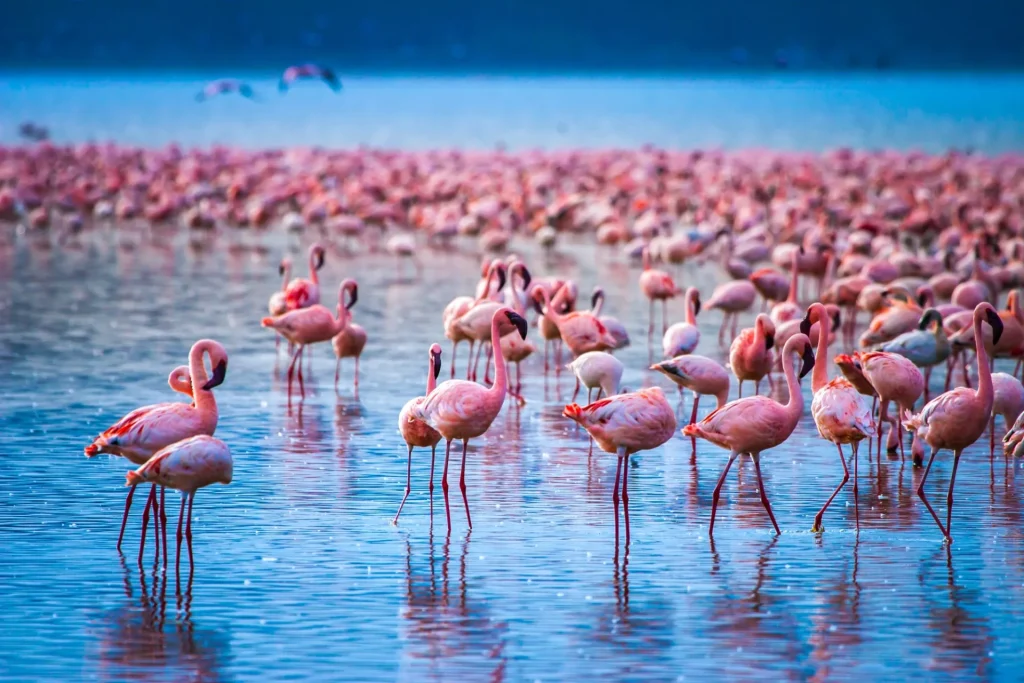
The most frequently asked question about Flamingos in Lake Nakuru is whether they can still be seen. The answer is that flamingos may be present, but their numbers vary considerably.
Historically, the lake supported spectacular gatherings of lesser flamingos, sometimes creating the appearance of a pink band around the shoreline. Changes in lake levels, salinity and available food have influenced these concentrations. Flamingos are mobile birds and may move between different lakes in response to suitable feeding conditions. Travellers should therefore avoid booking a safari on the assumption that historical concentrations will be present.
Lesser Flamingos
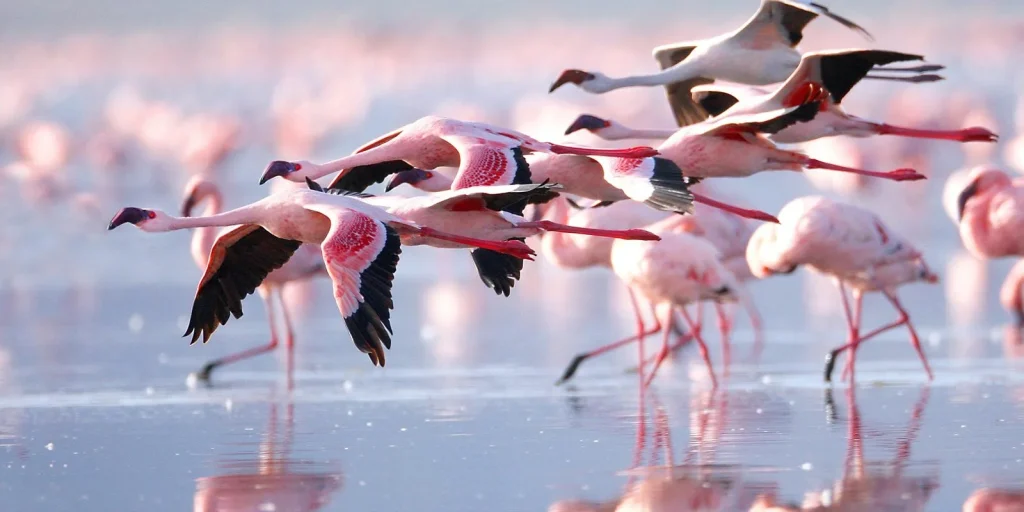
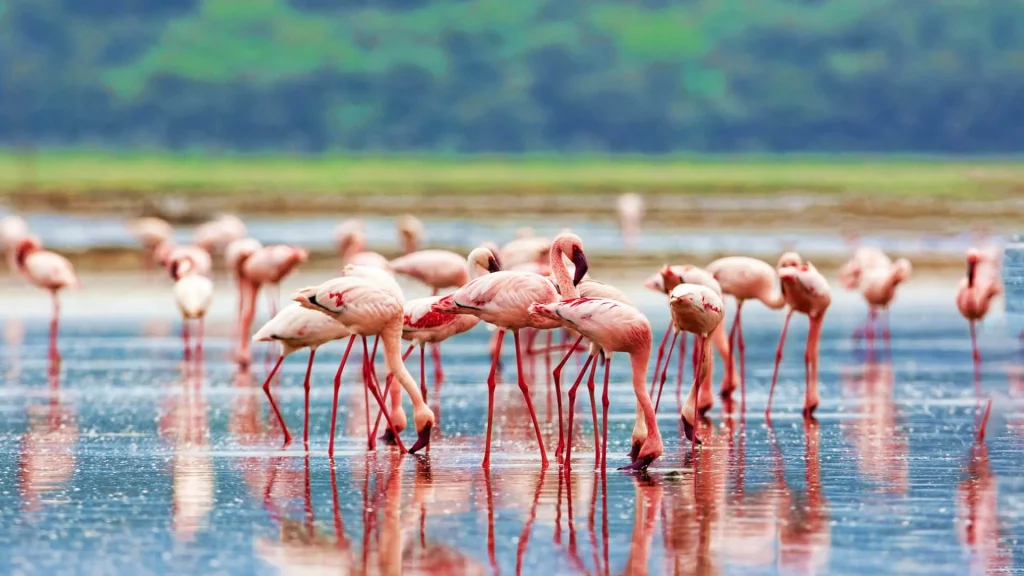
Lesser Flamingos are particularly associated with alkaline lakes supporting suitable microscopic food sources. Their feeding adaptations allow them to filter organisms from the water. They are generally smaller than greater flamingos and have darker bills.
Greater Flamingos
Greater Flamingos are larger and generally paler. Their bills and feeding behaviour differ from those of lesser flamingos. Both species may occur in suitable East African wetlands.
Can Flamingos Be Seen Throughout the Year?
There is no fixed period that guarantees large flamingo gatherings. Seasonal rainfall, lake chemistry, food availability and movements between wetlands all influence their presence. Visitors who specifically want to photograph large concentrations should ask for recent local observations before travelling. Even when flamingo numbers are modest, Lake Nakuru remains a rewarding birdwatching destination.
Other Waterbirds to Watch
Great White Pelican
The Great White Pelican is one of the most impressive large waterbirds associated with suitable lake habitats. Its broad wings and enormous bill make it recognisable. Pelicans may be observed resting, swimming or flying in groups.
Yellow-billed Stork
The Yellow-billed Stork searches for prey in shallow water. Its specialised bill and deliberate feeding movements are fascinating to observe.
African Spoonbill
The African Spoonbill has a flattened bill used to detect prey while sweeping through shallow water.
Grey Heron
The Grey Heron often waits motionless before striking at fish or other suitable prey.
Great Egret
The Great Egret is a tall white bird associated with shallow wetland habitats.
Cormorants
Cormorants are specialised diving birds that pursue fish underwater. They may be observed swimming, feeding or resting with their wings spread. Each species contributes to the ecological complexity of the lake.
Birds of Prey and Woodland Species
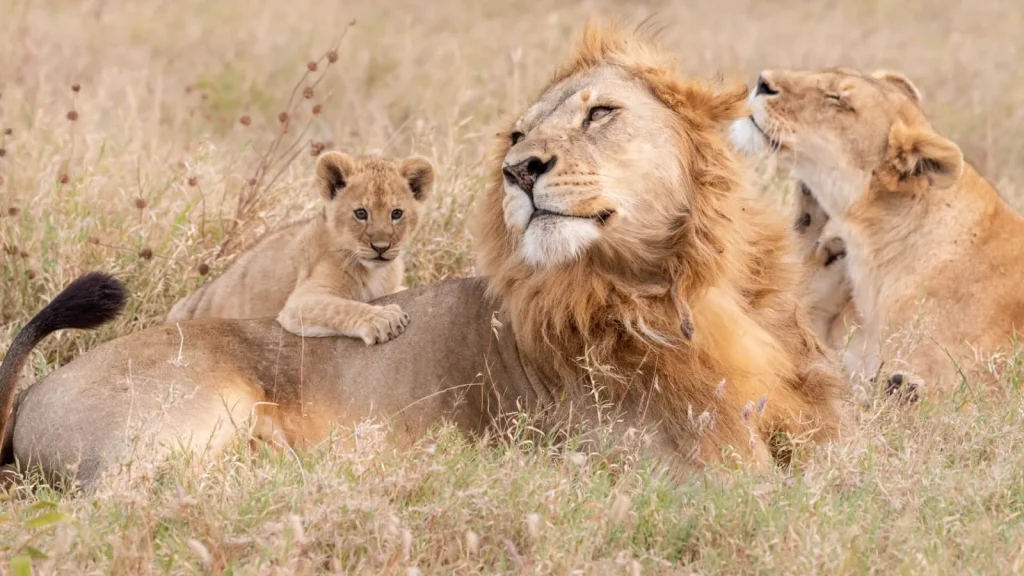
Birdwatching in Lake Nakuru is not limited to waterbirds. The park’s terrestrial habitats support various raptors and woodland birds. Birds of prey may be seen soaring above open country or resting on exposed branches. Potential species include bateleurs, eagles and other raptors associated with suitable savannah environments. Vultures may also occur, playing an important role in consuming carrion.
Woodland birdwatching may reveal colourful rollers, hornbills, woodpeckers and starlings. These species can be especially rewarding for visitors who want to build a varied bird list. An experienced guide can help distinguish similar birds by their calls, behaviour, size and plumage.
Best Time for Birdwatching in Lake Nakuru
Birdwatching in Lake Nakuru is possible throughout the year. The most suitable period depends on whether the traveller is interested in general bird diversity, migratory birds, photography or combining birdwatching with mammal viewing.
From approximately November to April, many migratory birds from the northern hemisphere are present in suitable Kenyan habitats. Rainfall may stimulate breeding activity and influence food availability. However, heavy rain can affect road access and observation conditions. The generally drier periods often provide more predictable conditions for game drives. For flamingos, current ecological conditions are more important than a simple seasonal recommendation.
Morning Birdwatching
Morning excursions often offer cooler temperatures and active bird behaviour. The light may also be softer, making photography more rewarding.
Afternoon Birdwatching
Afternoon drives can provide additional opportunities to observe birds as they move between feeding and resting areas. The quality of light improves as the sun becomes lower, although conditions vary. A full-day programme allows visitors to experience both periods.
Lake Nakuru Bird Photography Tips
Lake Nakuru Bird Photography can be particularly rewarding for travellers interested in waterbirds and raptors. A telephoto lens helps capture detailed images without approaching wildlife too closely. For flamingos, wider compositions can sometimes be more effective than tightly framed portraits, especially when birds are spread across the lake.
Large birds such as pelicans and storks offer opportunities to photograph flight and feeding behaviour. Woodland birds may require more patience because branches and vegetation can obstruct the view. Photographers should consider the direction of light and avoid shooting distant subjects through strong midday heat shimmer. A private safari vehicle can be helpful when extended observation is permitted. Wildlife should never be chased or disturbed to create a photograph.
Suggested Two-Day Lake Nakuru Birdwatching Safari
Day 1: Nairobi to Lake Nakuru National Park
Depart Nairobi in the morning and travel northwest towards Nakuru. The journey crosses the Rift Valley landscape, with travel time depending on traffic and the chosen route. Arrive at the park and complete the applicable entry procedures. Begin exploring suitable woodland and grassland habitats.
Look for rollers, hornbills, raptors and other terrestrial birds before continuing towards accessible lake viewpoints. After lunch, enjoy an afternoon game drive focusing on waterbirds and other wildlife. Depending on natural movements, you may also encounter rhinos, buffaloes, giraffes and other mammals. Return to your selected lodge or hotel for dinner and overnight accommodation.
Day 2: Morning Birdwatching and Onward Travel
Begin early with a morning game drive. Visit productive birdwatching areas according to current access and wildlife conditions. Look for waterbirds along suitable lake margins and explore additional woodland habitats. After the morning excursion, depart towards Nairobi, Lake Naivasha or another destination. Travellers with specialist birdwatching interests may benefit from an additional night.
Combining Lake Nakuru with Lake Naivasha
Lake Naivasha is one of the most logical destinations to combine with Lake Nakuru. The two lakes offer contrasting ecological experiences. Lake Naivasha is a freshwater environment where fish eagles, kingfishers, cormorants and other aquatic birds may be observed. Lake Nakuru is an alkaline lake with different water chemistry and a history of important flamingo concentrations.
Visiting both allows birdwatchers to compare bird communities and feeding adaptations. A combined itinerary can also include woodland excursions, boat activities around Naivasha and traditional wildlife viewing. For travellers with limited time, this is an effective way to experience several Rift Valley habitats.
Lake Nakuru Accommodation Options
Accommodation can be arranged inside the park or in nearby Nakuru city and surrounding areas. The best choice depends on budget, preferred comfort and the importance of early morning access. Staying inside the park may reduce travel time before game drives. Accommodation outside the park may offer additional choices at different price levels.
At Safari Trips to Kenya, we organise accommodation according to four broad categories. Essential properties prioritise practicality and value. Comfort accommodation provides additional amenities while maintaining a reasonable balance between cost and convenience. Premium options offer enhanced facilities and carefully selected locations. Signature properties are suitable for travellers seeking more distinctive, high-end experiences. Specific lodges should be selected according to availability, location and the final itinerary.
How Much Does a Lake Nakuru Birdwatching Safari Cost?
The cost depends on several factors. These include the number of travellers, accommodation category, transport arrangements, guiding requirements and the number of park entries. A private safari vehicle generally costs more per person for a solo traveller than for a small group sharing the vehicle. Specialist bird guides may involve additional fees. Park entry charges can change and may differ according to visitor category.
Travellers should request an itemised quotation showing what is included rather than relying on an outdated published price. International flights, travel insurance, optional activities and personal expenses should be identified separately where applicable.
Practical Birdwatching Tips
- Bring binoculars even if you are primarily interested in photography.
- Use a field guide or bird identification application to distinguish similar species.
- Wear neutral-coloured clothing, sun protection and a light jacket for cooler mornings.
- Carry drinking water; a telephoto lens helps bird photography but a camera is not essential.
- Allow sufficient time at productive locations; some birds appear only after quiet observation.
- Explore woodland and grassland habitats as well as the lake shoreline for a varied bird list.
Responsible Birdwatching and Conservation
Lake Nakuru’s birdlife depends on the health of its lake and surrounding habitats. Changes in water levels, pollution, habitat disturbance and other environmental pressures can affect birds. Visitors should follow all Kenya Wildlife Service regulations. Vehicles must remain on authorised tracks.
Birds should not be approached closely enough to interrupt feeding, resting or breeding. Feeding wild birds is inappropriate because it alters natural behaviour. Visitors should avoid leaving litter and should respect sensitive wetland areas. Responsible tourism helps protect the habitats that make Lake Nakuru valuable.
Frequently Asked Questions
Is Lake Nakuru still good for birdwatching?
Yes. The park supports a wide variety of waterbirds, woodland birds, grassland species and raptors, even when flamingo concentrations are modest.
Are flamingos guaranteed?
No. Flamingo numbers change with environmental conditions and movements between Rift Valley lakes.
How long should I spend in Lake Nakuru?
A full day provides a useful introduction. One or two nights allows a more relaxed programme with multiple observation sessions.
Can I combine birdwatching with rhino viewing?
Yes. Lake Nakuru is an established rhino conservation area, although individual sightings are not guaranteed.
Is Lake Nakuru suitable for beginners?
Yes. Many larger birds are relatively conspicuous, making the park suitable for travellers developing an interest in birdwatching.
Can I visit Lake Nakuru from Nairobi in one day?
A day trip is possible, but the road journey makes it a long day. Staying overnight generally allows more time for wildlife observation.
Plan Your Lake Nakuru Birdwatching Safari
The birds of Lake Nakuru provide an excellent reason to explore one of Kenya’s most distinctive national parks. From flamingos and pelicans to woodland birds and powerful raptors, the park rewards visitors who look beyond its most famous attractions.
Safari Trips to Kenya can organise a private Lake Nakuru Birdwatching Safari, combine the park with Lake Naivasha or include it in a longer Kenya wildlife itinerary. Share your preferred dates, number of travellers and birdwatching interests with our team to request a personalised safari proposal.