
ShabaNational Reserve
Volcanic Wilderness, Rare Northern Wildlife and Quiet Safaris in Kenya’s Samburu Ecosystem
Shaba National Reserve is one of northern Kenya’s most distinctive and least crowded safari landscapes: semi-arid plains, volcanic hills, rocky outcrops, acacia bushland, doum palms, riverine vegetation and rare wildlife of the wider Samburu ecosystem.
Its identity is remote wilderness, volcanic scenery, northern specialist wildlife and quiet game drives — not enormous vehicle concentrations or a single famous spectacle. Grevy’s zebras, reticulated giraffes and cats occur. Sightings are never guaranteed.
- LocationIsiolo County, northern Kenya
- Famous forVolcanic scenery, quiet wilderness and Special Five
- Best ForPhotography, northern wildlife and repeat safari travellers
- Typical Stay2–3 nights on a northern Kenya circuit
- Signature wildlifeGrevy’s zebra, reticulated giraffe, gerenuk, oryx, ostrich
- EcosystemSamburu–Buffalo Springs–Shaba
Overview
Shaba lies in the same northern conservation landscape as Samburu and Buffalo Springs. Nature Kenya describes it as a semi-arid Key Biodiversity Area of striking volcanic rock, sweeping plains and northern wildlife.
The landscape is more rugged and volcanic than many travellers expect. That remoteness suits photographers, birders, couples and anyone who already knows Kenya’s famous parks and wants a different rhythm.
There is no Shaba child silo. Plan it with Samburu safaris, Buffalo Springs and northern conservancies. A strong itinerary is Nairobi → Ol Pejeta → Samburu → Buffalo Springs → Shaba.
- Volcanic hills and rock
- Samburu Special Five
- Samburu National Reserve
- Buffalo Springs
Why Visit Shaba?
Shaba is far less famous internationally than the Mara or Amboseli. Quieter roads, fewer vehicles and more landscape-focused drives are the point.
A quieter northern safari
Slower wildlife viewing and a stronger feeling of remoteness — especially valuable for repeat Kenya visitors.
Northern specialist wildlife
Grevy’s zebra, reticulated giraffe, gerenuk, Beisa oryx and Somali ostrich give Shaba a different identity from southern parks. Sightings are never guaranteed.
Volcanic landscapes
Dark lava-derived rock, rugged hills and Shaba Hill scenery distinguish it visually from much of Samburu.
Riverine wildlife
Denser vegetation around water can be among the most productive viewing — elephants, crocodiles and birds included.
Joy Adamson country
Shaba is part of the conservation story associated with Joy Adamson. Treat that as history and landscape, not a guaranteed wildlife encounter.
Understanding the Shaba Landscape
Ecology is shaped by water and geology. Dry plains, acacia bushland, volcanic rock, riverine vegetation and doum palms sit together.
Dry plains
Open semi-arid ground for Grevy’s zebras, oryx, gerenuks and ostriches.
Volcanic rock
The visual signature that separates Shaba from neighbouring Samburu and Buffalo Springs.
Riverine vegetation
Greener corridors around permanent or seasonal water — often the most productive wildlife hours.
Doum palms
A northern Kenya photographic motif against volcanic hills and dry light.
Top Things to Do in Shaba
Morning game drives
Cooler hours for northern specialists and landscape photography on volcanic terrain.
Afternoon game drives
Riverine edges, golden light on rock and a slower search than crowded southern parks.
Specialist northern wildlife
A focused Special Five search — never sold as a completed checklist.
Birdwatching
Vulturine guineafowl, raptors and dry-country birds across plains and riverine cover.
Photography safari
Volcanic rock, doum palms and northern coat patterns — Shaba’s commercial strength.
Slow wildlife observation
Fewer vehicles make it easier to stay with a sighting rather than rotating through a crowd.
Plan a Shaba Safari
Shaba has no child silo in the sitemap. Plan it with Samburu, Buffalo Springs and northern Kenya pages.
- Samburu SafarisPlace Shaba on a quieter northern Kenya circuit with Samburu and Buffalo Springs.
- Samburu Safari PackagesNorthern packages that can add volcanic Shaba after the river reserves.
- Best Time to Visit SamburuSeasonal notes for the Samburu–Buffalo Springs–Shaba landscape.
- Samburu and Ol PejetaWilderness then rhinos. Shaba is not a rhino park.
- Samburu and Masai MaraNorthern specialists then classic grasslands. River crossings are never guaranteed.
- Nairobi to SamburuStart from Nairobi and continue into Shaba on the same northern axis.
Wildlife & Birds
Shaba’s wildlife identity is northern specialists plus a full dry-country cast: elephants, lions, leopards, cheetahs, buffaloes, crocodiles and birds. Nature Kenya highlights Grevy’s zebra, reticulated giraffe and Somali ostrich. Individual sightings can never be guaranteed.
This is not a rhino park. Combine Ol Pejeta or Lewa if rhinos matter. It is not a Mara substitute. Lions occur but Shaba should not be chosen primarily for high-density predator viewing.
Grevy’s zebra
A flagship of northern Kenya and important Shaba habitat. Clearly different from plains zebra. Never guaranteed.
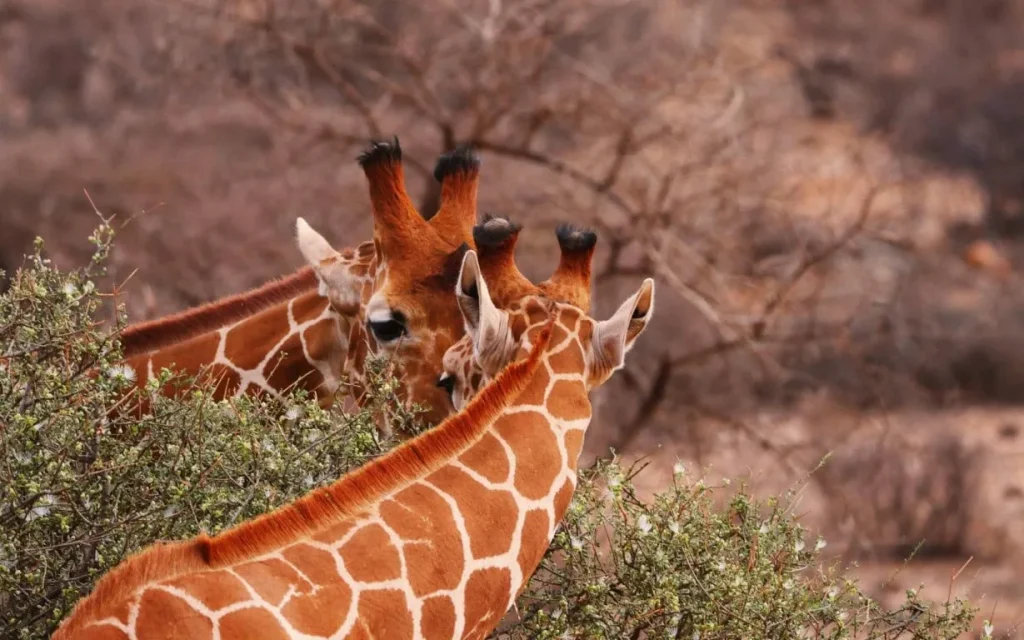
Reticulated giraffe
Northern coat pattern against volcanic rock and acacias — a Shaba photography signature.
Gerenuk, oryx and Somali ostrich
Dry-country specialists that complete the Special Five. Nature Kenya lists ostrich among notable northern species here.
Elephants and buffaloes
Often tied to water and bushland. Buffaloes are powerful — keep distance on any walk.
Cats and crocodiles
Lions, leopards and cheetahs may occur; leopards are elusive. Crocodiles use suitable water. Never promised.
Northern Wildlife Context
Grevy’s zebras, reticulated giraffes and dry-country specialists — sightings are never guaranteed.
- Samburu Special FiveGrevy’s zebra, reticulated giraffe, gerenuk, Beisa oryx and Somali ostrich — never guaranteed.
- Buffalo SpringsNatural springs and quieter game drives across the same dry-country ecosystem.
- Samburu WildlifeThe flagship northern reserve for elephants and Special Five viewing.
- Ol Pejeta ConservancyAdd rhinos — Shaba is not a rhino-focused destination.
Best Time to Visit

Shaba can be visited through much of the year. Dry months often concentrate animals around water; greener months change the look of volcanic hills. Seasonal notes for the cluster live on the Samburu best-time page.
- Dry season
Often clearer views and more predictable water-focused game drives. Days are hot.
- Green season
Lusher hills and sometimes quieter camps. Wildlife can disperse; rain can affect roads.
- What to expect
Warm days, dusty light, cool mornings and a more remote feel than Samburu’s better-known camps.
How to Get There
- Nairobi to Shaba
Integrate the road journey into a northern circuit rather than a very short excursion. A strong line is Nairobi → Ol Pejeta → Samburu / Shaba.
- Flying to Shaba
Airstrips serving the wider northern Kenya safari region can cut time for luxury, honeymoon and short itineraries. Check schedules for travel dates.
Where to Stay
Accommodation is more limited than in the Masai Mara, which reinforces Shaba’s quieter character. Choose for location, wildlife access, comfort, pool, guiding, meals and the ability to combine with Samburu. There is no Shaba lodging URL in the sitemap — use Samburu accommodation pages.
View Shaba LodgesWhere to Stay in Shaba
Fewer lodges than Kenya’s famous parks. Choose for location, guiding and the ability to combine with Samburu.
- Samburu AccommodationFewer lodges than the Mara — that quieter character is part of Shaba. No Shaba lodging URL in the sitemap.
- Luxury Lodges SamburuPremium stays that can combine Shaba game drives with the wider ecosystem.
- Samburu Safari CostNorthern cluster pricing, quoted when we plan rather than as a permanent table.
How Many Days Do You Need in Shaba?
One night is usually too short if Shaba is the primary destination. Two nights work well with Samburu and Buffalo Springs. Three nights suit slower drives, photography and birding. Four or more nights fit photographers, birders, repeat visitors and travellers using one lodge as a base across the ecosystem.
Shaba Safari Cost
Total cost depends on accommodation, reserve fees, private vehicle, travellers, season, flights versus road, and whether Shaba follows Samburu. Official charges can change — we confirm current rates when we quote rather than publishing a permanent table here.
What usually increases the cost
- Scenic luxury camps
- Private vehicles and specialist guiding
- Fly-in connections
- Extra nights for photography
How to keep costs in check
- Combining with an existing Samburu stay
- Two well-paced nights on a northern circuit
- A road safari via Ol Pejeta
- Sharing a vehicle as a small group
First Safari, Families & Practical Planning
Families
Works for families who already enjoy wildlife and can handle heat and longer drives. A private vehicle helps with pace. Very young children may prefer a shorter Samburu stay.
Honeymooners
Quiet wilderness and scenic camps suit couples who want northern Kenya without the Mara’s busiest sightings. River crossings inland are never guaranteed.
What to pack
Neutral clothing, a warm early-drive layer, hat, sunscreen, insect repellent, binoculars, camera, reusable bottle and dust protection for gear.
Responsible travel
Stay on designated roads, keep wildlife distance, never feed animals, keep noise low and follow guide instructions. Remote reserves stay special when visitor pressure stays light.
Shaba vs Samburu and Buffalo Springs
Samburu is stronger for overall recognised wildlife viewing. Buffalo Springs is stronger for natural springs and extra territory across the Ewaso Ng’iro. Shaba is stronger for volcanic landscapes, quiet wilderness and photography. They belong on the same itinerary, not as substitutes.
Shaba is not the Masai Mara. The Mara is stronger for lions, cheetahs, leopards and Great Migration possibilities — river crossings and individual species can never be guaranteed. Shaba is the quieter northern wilderness of volcanic landscapes and dry-country specialists.
Choose Shaba for
- Volcanic scenery and remote atmosphere
- Quieter game drives
- Northern specialist wildlife
- Photography-focused days
Pair with
- Samburu for flagship northern viewing
- Buffalo Springs for springs and extra territory
- Lewa or Ol Pejeta for rhinos
- Mount Kenya for alpine walking
Combine Shaba with Other Destinations
A strong route is Nairobi → Ol Pejeta → Samburu → Buffalo Springs → Shaba.
- Samburu National ReserveThe strongest pairing: recognised northern wildlife plus Shaba’s volcanic quiet.
- Buffalo Springs National ReserveComplete the three-reserve Samburu ecosystem safari.
- Lewa Wildlife ConservancyNorthern specialists plus rhinos on a private conservancy.
- Samburu and Ol PejetaWilderness then rhino conservation on one northern road safari.
- Mount KenyaAlpine walking before a dry-country Shaba stay.
- Meru National ParkA quieter eastern wilderness if you want more remote game drives.
Travel Tips
- Combine Shaba with Samburu and Buffalo Springs rather than treating it as a one-night extra.
- Grevy’s zebras, cats and elephants can never be guaranteed.
- This is not a rhino park — add Ol Pejeta or Lewa if rhinos matter.
- Come for volcanic quiet, not a Mara-style predator density.
FAQs
Where is Shaba National Reserve?
In Isiolo County in northern Kenya, part of the wider Samburu–Buffalo Springs–Shaba ecosystem.
What is Shaba famous for?
Volcanic scenery, quiet wilderness and northern specialist wildlife.
Can I see Grevy’s zebras and reticulated giraffes?
They occur in this dry northern landscape, but sightings are never guaranteed.
Are there elephants, lions or leopards?
Yes, they may occur. Leopards are elusive and cat sightings are never guaranteed.
Are there rhinos?
Shaba is not a rhino-focused destination. Combine Ol Pejeta or Lewa if rhinos matter.
Is Shaba the same as Samburu?
No. They are separate reserves in the same broader northern Kenya ecosystem.
Can I combine Shaba with Samburu and Buffalo Springs?
Yes. That three-reserve safari is the strongest combination.
How many nights should I stay?
Two to three nights works well when combined with the broader Samburu ecosystem.
Is Shaba worth visiting?
Yes, particularly if you want a less crowded northern Kenya safari and volcanic scenery.
Is it good for photography and birding?
Yes. Landscape, northern coat patterns and dry-country birds are among the main reasons to come.
Browse Shaba and Northern Kenya Guides
There is no Shaba child silo — plan with Samburu, Buffalo Springs and northern Kenya pages.
No pages match that search.
Northern Kenya planning 6 pages
Safari combinations 3 pages
Nearby destinations 7 pages
Ready to Explore Shaba?
Shaba is Kenya’s quieter northern wilderness of volcanic landscapes, Grevy’s zebras, reticulated giraffes and rare dry-country wildlife — best as part of the Samburu ecosystem, not a standalone one-night stop.
A strong route is Nairobi → Ol Pejeta → Samburu → Buffalo Springs → Shaba, or Mount Kenya → Lewa → Samburu ecosystem → Shaba.
Tell us your dates, travellers, budget, whether volcanic scenery or Special Five matter most, and whether you also want rhinos or the Mara. We can then send a quote. Individual species are never guaranteed.
- Tailor-Made Safaris
- Best Price Guarantee
- No Hidden Costs
- 24/7 Support
- Local Safari Experts24/7 support in Kenya
- Tailor-Made SafarisPersonalized to your needs
- Best Price GuaranteeNo hidden costs
- Responsible TourismTravel with a positive impact