
Lake NakuruNational Park
Rhinos, Flamingos, Rift Valley Scenery and One of Kenya’s Most Accessible Wildlife Parks
Lake Nakuru National Park is one of Kenya’s most rewarding Great Rift Valley safari destinations, combining rhino viewing, rich birdlife, dramatic escarpments, yellow-barked acacia woodland and the alkaline waters of Lake Nakuru within a compact protected area.
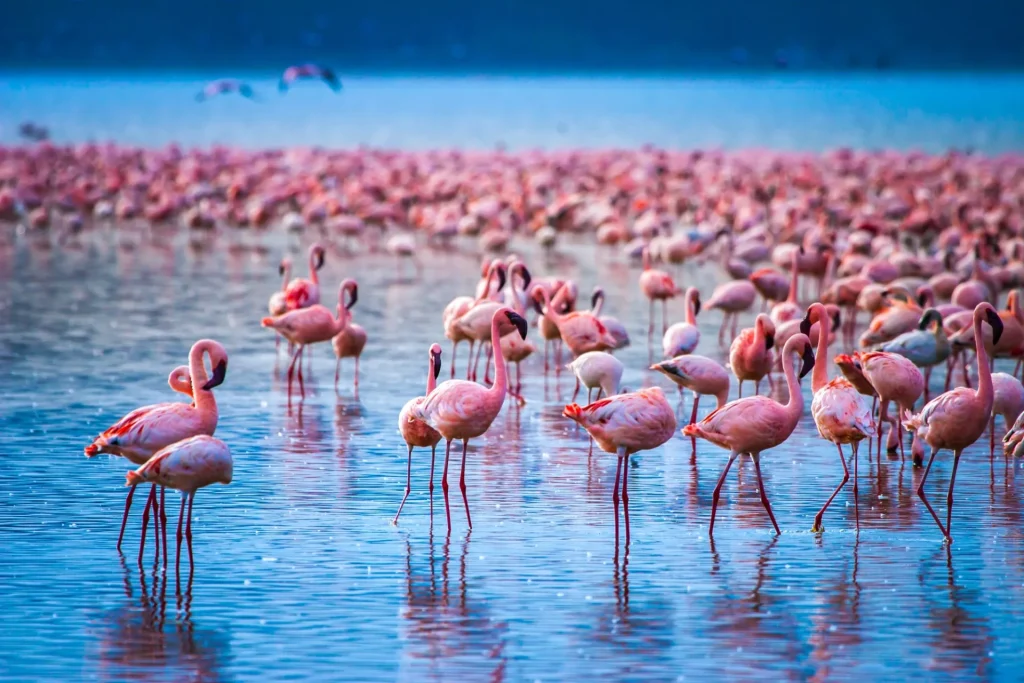
The park became internationally famous for flamingo congregations along the shoreline. Flamingos remain part of Nakuru’s identity, but huge flocks are never guaranteed — lake levels and alkalinity change, and birds move between Rift Valley lakes. Visit for rhinos, giraffes, viewpoints and bird diversity as much as for pink water.
- LocationGreat Rift Valley, immediately south of Nakuru
- Famous forBlack and white rhinos, birdlife and lake scenery
- Best ForRhino viewing, birdwatching, families and road circuits
- Typical Stay1–2 nights
- From NairobiAbout 156 km by road
- BirdlifeAround 450 recorded species
Overview
Located immediately south of Nakuru City and about 156 km northwest of Nairobi, Lake Nakuru is a relatively compact national park of around 188 km². It became Kenya’s first government-managed rhino sanctuary in 1987 and today protects both black and white rhinos.
The landscape mixes alkaline lake, grasslands, yellow acacia woodland, euphorbia forest and rocky escarpments. Baboon Cliff, Lion Hill, Out of Africa viewpoint and Makalia Falls give the park a scenic character that flat-plain destinations do not share.
Rothschild’s giraffes, buffaloes, lions, leopards, waterbuck, zebras, hippos, baboons and colobus monkeys all occur. Individual species can never be guaranteed. The park sits naturally on routes between Nairobi, Lake Naivasha and the Masai Mara, which is why it works so well as a one- or two-night stop on a Kenya road safari.

Why Visit Lake Nakuru National Park?
Lake Nakuru offers a surprisingly complete safari within a comparatively small area — rhinos, woodland giraffes, lake birds and Rift Valley viewpoints without the long internal transfers of Kenya’s largest parks.
One of Kenya’s most important rhino destinations
The park was established as Kenya’s first government-managed rhino sanctuary and supports both black and white rhinos. The compact protected area can make searching for them more practical than in some enormous parks. Sightings are never guaranteed.
Flamingos and extraordinary birdlife
Historically, huge numbers of lesser flamingos sometimes gathered to feed on algae. Numbers fluctuate with rainfall, water levels, alkalinity and food. Millions of flamingos can never be promised. The stronger reason to visit for birds is overall diversity — around 450 recorded species, including pelicans, fish eagles, herons and secretarybirds.
Rothschild’s giraffes
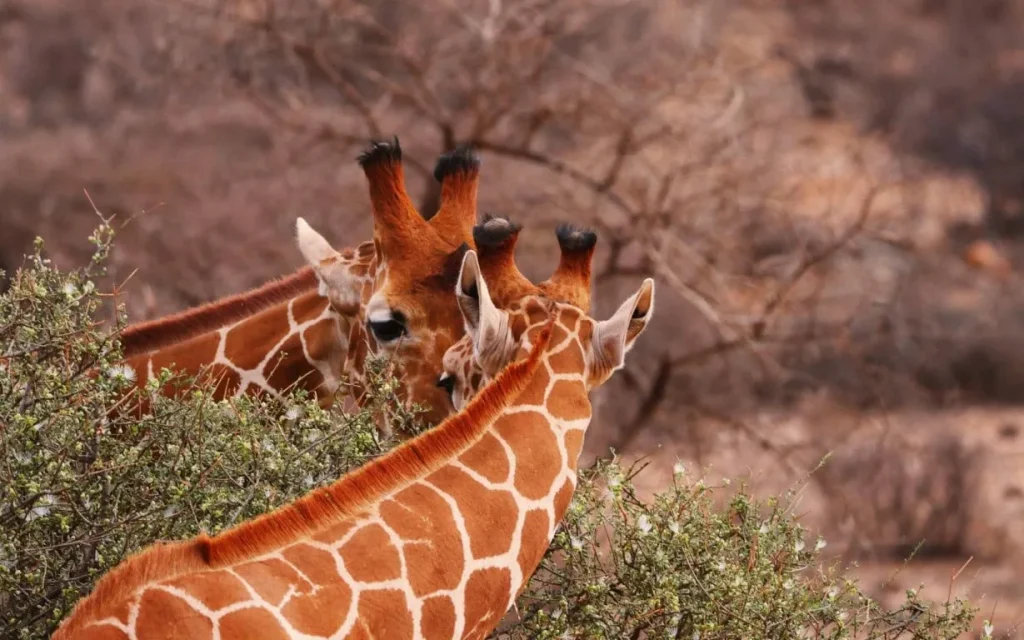
Tall giraffes moving through yellow acacia woodland are among the park’s most attractive scenes. Pale lower legs can give the appearance of white stockings. Combined with lake scenery, this is especially rewarding for photographers. Sightings are never guaranteed.
Excellent scenic viewpoints
Hills and escarpments surround the lake. Baboon Cliff, Lion Hill and Out of Africa viewpoint look across shoreline, woodland and Rift Valley scenery — a different character from parks where you stay almost entirely on flat plains.
Convenient location between Nairobi and the Mara
Nakuru fits a classic Kenya road safari: Nairobi → Lake Nakuru → Masai Mara, or Nairobi → Lake Naivasha → Lake Nakuru → Masai Mara. It is a practical way to add rhinos and Rift Valley scenery before continuing to predator country.
Understanding the Lake Nakuru Landscape
Lake Nakuru National Park is more ecologically diverse than its relatively small size suggests. Changes in the lake’s size, chemistry and shoreline affect flamingos, pelicans, other waterbirds and shoreline vegetation from year to year.
Lake Nakuru
A shallow alkaline lake dominates the centre of the ecosystem. Water levels and chemistry shift with rainfall, which is why flamingo numbers are never a fixed seasonal promise.
Yellow acacia woodland
Yellow-barked acacias provide habitat for giraffes, impalas, waterbuck, bushbuck, monkeys and leopards, and create some of the park’s best photographic backgrounds.
Euphorbia forest
Striking stands of large euphorbia trees give Nakuru a distinctive look alongside lake, grassland and escarpment.
Grasslands
Open grassland supports white rhinos, buffaloes, zebras, waterbuck and impalas. Predators may use the same open ground while hunting.
Rocky escarpments and hills
High ground creates viewpoints and habitat for species such as rock hyrax, and is a large part of why Nakuru feels scenic as well as wildlife-rich.
Top Things to Do in Lake Nakuru

Morning Game Drives
Cooler temperatures and a strong window for rhinos, lions, leopards, giraffes, buffaloes and waterbirds. Morning light also suits photography around the lake.
Rhino Viewing
Guides search open grassland and woodland edges for both black and white rhinos. This is one of the strongest reasons to include Nakuru on a Kenya safari. Sightings are never guaranteed.

Birdwatching
Birding can sit inside a normal game drive or be the main purpose of the visit. Bring binoculars; a private vehicle helps when you want to linger at the shoreline.
Baboon Cliff
One of the park’s classic panoramic views — lake, shoreline, woodland and Rift Valley scenery in a single stop. Especially useful for landscape photography.
Makalia Falls
A waterfall in the southern section of the park. Flow is stronger in wetter periods. The stop adds scenery, birding and a change from shoreline game driving.

Wildlife Photography
Rhinos, giraffes, buffaloes, yellow acacias, lake views and escarpments sit close together. A private vehicle helps photographers stay longer at a scene. Flamingo numbers and individual species can never be guaranteed.
Plan a Lake Nakuru Safari
Catalogs and planning pages for rhino safaris, birding, costs and first-time questions.
- Lake Nakuru SafarisBrowse Nakuru itineraries by duration and camp style.
- Safari PackagesReady-made circuits that include Nakuru with the Mara, Naivasha or Amboseli.
- Things to DoGame drives, rhino viewing, viewpoints, Makalia Falls and birding.
- Safari CostWhat a Lake Nakuru stay actually costs — lodges, fees and transfers.
- Entrance FeesCurrent park-fee notes, quoted when we plan your safari.
- FAQsExtended answers beyond the summary on this page.
Popular Lake Nakuru Safaris
View All Safari Packages15 Days Kenya Reserves Lakes and Southern Parks
A 15 day Kenya journey connecting Nairobi, Ol Pejeta, Samburu or Buffalo Springs, Solio, Lake Nakuru, Maasai Mara,…
Amboseli, Lake Naivasha, Lake Nakuru
View Safari5 Days Lake Nakuru and Maasai Mara Safari
A 5 day Kenya journey connecting Nairobi, Lake Nakuru and Maasai Mara.
Lake Nakuru, Masai Mara, Nairobi
View Safari14 Days Kenya Northern and Southern Wildlife Safari
A 14 day Kenya journey connecting Nairobi, Ol Pejeta, Samburu, Solio, Lake Nakuru, Maasai Mara, Lake Naivasha, Amboseli,…
Amboseli, Lake Naivasha, Lake Nakuru
View Safari16 Days Kenya Northern Reserves Amboseli and Beach
A 16 day Kenya journey connecting Nairobi, Ol Pejeta, Samburu or Buffalo Springs, Solio, Lake Nakuru, Maasai Mara,…
Amboseli, Diani Beach, Lake Naivasha
View Safari8 Days Kenya Rhinos Lakes and Maasai Mara
A 8 day Kenya journey connecting Nairobi, Ol Pejeta, Solio, Lake Nakuru, Maasai Mara and Lake Naivasha.
Lake Naivasha, Lake Nakuru, Masai Mara
View Safari10 Days Kenya Northern Reserves and Maasai Mara
A 10 day Kenya journey connecting Nairobi, Ol Pejeta, Samburu or Buffalo Springs, Solio, Lake Nakuru, Maasai Mara…
Lake Naivasha, Lake Nakuru, Masai Mara
View Safari

Wildlife & Birds
Lake Nakuru is a rhino destination first, with both black and white rhinos in a compact sanctuary landscape. Rothschild’s giraffes, buffaloes, lions, leopards, zebras, waterbuck, hippos and primates complete a mixed Rift Valley safari. Sightings can never be guaranteed.
Flamingos made the park famous, but they should not be the only reason to visit. Water levels change flamingo distribution across the Rift. The park remains worthwhile for rhinos, giraffes, viewpoints and around 450 recorded bird species even when flamingo numbers are low.
Black rhinos
Browsers that often use thicker vegetation. Finding one can be a major safari highlight and is never promised.
White rhinos
Grazers more often associated with open grassland, and often easier to observe than black rhinos — still never guaranteed.
Rothschild’s giraffes
Frequently seen in acacia woodland and open areas. Pale lower legs can look like white stockings.
Buffaloes
Common large mammals, sometimes in substantial herds near the lake or grasslands.
Lions
Present in the park. Because Nakuru is smaller than the Mara, drives can search several habitats in a short time. Sightings vary.
Leopards
Woodland and rocky terrain suit them, but they remain elusive. Treat a sighting as a bonus.
Waterbuck and hippos
Waterbuck are characteristic of Nakuru’s mix of water and woodland. Hippos use suitable aquatic sections; locations change with water conditions.
Birds and flamingos
Greater and lesser flamingos may occur, along with pelicans, fish eagles, herons, egrets, hamerkops, grebes and raptors. Huge flamingo flocks are never guaranteed.
Wildlife & Bird Guides
Rhinos, flamingos and mixed Rift Valley wildlife — sightings are never guaranteed.
- Lake Nakuru WildlifeRhinos, giraffes, buffaloes and predators — never guaranteed.
- Lake Nakuru RhinosBlack and white rhinos in a compact Rift Valley sanctuary.
- Lake Nakuru FlamingosFlamingos may occur; huge flocks are never guaranteed.
- Birds of Lake NakuruAround 450 recorded species across lake, woodland and grassland.
Best Time to Visit

Lake Nakuru can be visited throughout the year. Unlike migration-dependent destinations, its principal mammals are resident. Elevation makes mornings cooler than Tsavo or Samburu; middays are still warm. Dress in layers. Flamingo numbers depend on conditions across several Rift Valley lakes and can never be guaranteed.
- Drier periods
Often easier road travel, shorter grass and more predictable mammal viewing. Good conditions for rhino loops on open ground.
- Wetter periods
Greener scenery, dramatic skies, stronger Makalia Falls flow and excellent birding. Heavy rain can occasionally affect tracks.
- Flamingo timing
There is no reliable calendar for enormous flamingo congregations. Ask for current local information shortly before travel rather than relying on older photographs.
How to Get There

- Nairobi to Lake Nakuru
The usual option. Kenya Wildlife Service places the park about 156 km northwest of Nairobi on the Nairobi–Nakuru highway, with Main Gate, Lanet Gate and Nderit Gate. Driving time depends on Nairobi traffic and stops. Easy to fold into Nairobi → Nakuru → Masai Mara, or Nairobi → Naivasha → Nakuru → Mara.
- Flying to Lake Nakuru
Naishi Airstrip can be used, but road travel is more practical for most conventional Kenya itineraries that already include Nakuru as a Rift Valley stop.
Where to Stay
Stay inside the park for quicker game drives and a wilderness feel, or around Nakuru for a wider hotel choice and often lower room rates. Distance from the gate still decides how the morning feels. Match the lodge to itinerary length — one night is common on a Mara circuit; two nights suit birding and photography.
View Lake Nakuru LodgesWhere to Stay at Lake Nakuru
Lodges inside the park or hotels around Nakuru. Location decides how early the first drive starts.
How Many Days Do You Need at Lake Nakuru?
The park is compact. A Nairobi day trip is possible but makes a long day. One night works extremely well on a Kenya road safari: an afternoon drive, then a morning drive before continuing. Two nights are better for photographers, birdwatchers, families and travellers who want more time searching for rhinos. Three nights are usually unnecessary on a first-time Kenya circuit unless Nakuru is a specialist wildlife or photography priority.
Lake Nakuru Safari Cost
Price depends on accommodation, travellers, season, private or shared vehicle, starting point, safari length, park fees and the next destination. Nakuru is often most cost-effective as part of a longer road itinerary rather than a standalone safari. Park fees can change — we confirm current rates when we quote rather than publishing a permanent table here.
What makes a Lake Nakuru safari more expensive
- Staying inside the park at a premium lodge
- Private vehicles
- Photography-focused guiding
- Single-room occupancy
- Two-night stays
How to reduce the cost
- Combining Nakuru with a Mara road safari
- Mid-range or town-side hotels
- Travelling as a small private group
- One well-paced night on a longer circuit
First Safari, Families & Practical Planning
Is Lake Nakuru Good for a First Kenya Safari?
Yes — especially as part of a multi-park itinerary rather than as the only destination. Nakuru adds rhinos, birds and Rift Valley scenery that complement Amboseli elephants and Mara predators.
Families
Compact game drives, rhinos, giraffes, buffaloes, monkeys and scenic stops work well with children. A private vehicle gives the most flexibility on pace and picnic timing.
What to Pack
Neutral clothing, a fleece for cool mornings, hat, sunscreen, binoculars and a rain jacket in wetter months. Birdwatchers should prioritise good binoculars. Kenya’s national parks are plastic-free — bring a reusable bottle.
Responsible Travel
Keep wildlife distance, stay on authorised roads, never feed baboons or leave food at picnic sites, keep noise low and follow guide instructions. Do not assume drone use is permitted.
Lake Nakuru vs Lake Naivasha and the Mara
Nakuru and Naivasha are often confused because both are Rift Valley lakes. They are quite different. Nakuru is a national-park game drive for rhinos, lions, giraffes and birds. Naivasha is stronger for boat safaris, hippos, Crescent Island and nearby Hell’s Gate. Visit both when the itinerary allows.
Nakuru is considerably smaller than the Masai Mara and is not a substitute. Nakuru is stronger for rhinos, lake scenery, birdlife and compact viewing. The Mara is stronger for predators, huge savannah and Great Migration possibilities — river crossings and individual species can never be guaranteed. They complement each other extremely well.
Choose Lake Nakuru for
- Black and white rhinos
- Lake and escarpment scenery
- Birdlife, including flamingos when conditions allow
- A compact stop on a Nairobi–Mara road safari
Pair with
- Masai Mara for predators and open plains
- Lake Naivasha for boats and hippos
- Amboseli for elephants and Kilimanjaro
- Samburu or Ol Pejeta on a longer northern circuit
Combine Lake Nakuru with Other Destinations
Classic Kenya road circuits that stop at Nakuru between Nairobi and the Mara.
- Masai Mara + Lake NakuruRhinos and Rift Valley scenery, then classic Mara grasslands. River crossings are never guaranteed.
- Nairobi to Lake NakuruA focused rhino and bird safari from Nairobi by road.
- Mara, Naivasha and NakuruBoat time at Naivasha plus a national-park game drive at Nakuru.
- Mara, Nakuru and AmboseliElephants and Kilimanjaro, rhinos in the Rift, then Mara predators.
- Lake NaivashaThe natural Rift Valley pairing: boats and hippos, not a rhino park.
- Masai MaraBig-cat country after a compact rhino stop. River crossings are never guaranteed.
Travel Tips
- One night is enough for most Mara-circuit travellers; two nights suit birders and photographers.
- Do not plan the trip around millions of flamingos. Water levels change flamingo numbers across the Rift.
- Nakuru is not an elephant park — add Amboseli, Tsavo or the Mara if elephants are a priority.
- Never feed baboons or leave food at picnic sites.
- Rhinos, leopards, lions and flamingo flocks can never be guaranteed.
FAQs
Where is Lake Nakuru National Park?
The park is in Kenya’s Great Rift Valley, immediately south of Nakuru City.
How far is Lake Nakuru from Nairobi?
Approximately 156 km by road according to Kenya Wildlife Service. Actual driving time depends on Nairobi traffic, road conditions and stops.
What is Lake Nakuru famous for?
Rhinos, flamingos, birdlife and Rift Valley scenery. Today it should be planned as a rhino and bird destination, not only a flamingo lake.
Are there still flamingos at Lake Nakuru?
Yes, flamingos may occur, but numbers fluctuate substantially with water levels, alkalinity and food. Enormous historical concentrations should never be guaranteed.
Can you see rhinos?
Lake Nakuru is one of Kenya’s important rhino conservation areas and supports both black and white rhinos. No individual sighting can be guaranteed.
Are there elephants?
Lake Nakuru is not an elephant safari destination. Travellers whose priority is elephants should combine it with Amboseli, Samburu, Tsavo or the Masai Mara.
How many days do I need?
One or two nights is sufficient for most conventional Kenya safari itineraries. One night is the usual Mara-circuit stop; two nights suit birding and photography.
Can I combine it with Masai Mara or Lake Naivasha?
Yes. Nairobi → Naivasha → Nakuru → Masai Mara is one of the most practical Kenya road routes. Nakuru and Naivasha provide complementary experiences rather than duplicates.
Is Lake Nakuru good for families?
Yes. Compact game drives and mixed wildlife — rhinos, giraffes, buffaloes, monkeys and birds — suit families, especially with a private vehicle.
Is Lake Nakuru worth visiting without flamingos?
Yes. Rhino conservation, other wildlife, bird diversity, woodland scenery and viewpoints are major attractions in their own right.
What are the entrance fees?
Kenya Wildlife Service fees can change. We confirm current non-resident rates when we quote rather than publishing a permanent table on this page.
What is the best time to visit?
The park can be visited throughout the year because its principal mammal populations are resident. There is no reliable season for guaranteeing huge flamingo flocks.
Browse Lake Nakuru Guides
Already know what you need — rhinos, flamingos, fees, a packing list? Search below, or open a topic and jump straight in.
No pages match that search.
Safari planning 3 pages
Wildlife and birds 4 pages
When, cost and access 8 pages
Where to stay 1 page
Ready to Explore Lake Nakuru?
Lake Nakuru works exceptionally well as part of a broader Kenya safari. For many travellers, one night adds rhinos, Rift Valley scenery and birdlife between Nairobi and the Masai Mara. Two nights are better for photographers and birdwatchers.
A particularly strong itinerary is Nairobi → Lake Naivasha → Lake Nakuru → Masai Mara. For a longer Kenya safari, add Amboseli before the Rift Valley.
Tell us your dates, travellers, preferred accommodation level, budget, number of safari days, whether rhinos or birdwatching matter most, and which other Kenya destinations you want to visit. We can then design the route around your interests.
- Tailor-Made Safaris
- Best Price Guarantee
- No Hidden Costs
- 24/7 Support
- Local Safari Experts24/7 support in Kenya
- Tailor-Made SafarisPersonalized to your needs
- Best Price GuaranteeNo hidden costs
- Responsible TourismTravel with a positive impact