

Great Migration Kenya vs Tanzania
Choosing between Kenya and Tanzania for the Great Wildebeest Migration is one of the most important decisions when planning an East African safari. Both countries offer extraordinary wildlife experiences, but the timing, landscapes, travel logistics and safari styles can be quite different.
Kenya's Masai Mara National Reserve is particularly famous for its July-to-October migration season, when large wildebeest herds often move into the northern part of the greater Serengeti–Mara ecosystem. Tanzania's Serengeti National Park offers opportunities to encounter the migration during different stages of the annual cycle, including the southern plains calving season, movements through the western corridor and the dramatic northern Serengeti river crossings.
Neither country is universally better. The ideal destination depends on when you are travelling, which migration events interest you most, how much time you have and the type of safari experience you prefer. Travellers visiting in August or September may find Kenya particularly appealing because substantial herds are often present in the Masai Mara. Those travelling between January and March may prefer Tanzania's southern Serengeti and Ndutu region, where the calving season is a major wildlife attraction. Understanding these differences helps you avoid one of the most common migration safari mistakes: booking the right destination during the wrong part of the migration cycle.
Great Migration Kenya vs Tanzania: Quick Comparison
| Feature | Kenya: Masai Mara | Tanzania: Serengeti |
|---|---|---|
| Main migration attraction | Northern migration herds and Mara River crossings | Calving, seasonal movements and northern river crossings |
| Popular migration period | July–October | Different areas throughout much of the year |
| River crossings | Mara River within the Kenyan ecosystem | Mara River in northern Serengeti and Grumeti-area crossings |
| Calving season | Not the main calving destination | Southern Serengeti and Ndutu, generally January–March |
| Safari landscape | Open grasslands, riverine woodland and rolling plains | Vast plains, kopjes, woodland and varied habitats |
| Typical access | Nairobi by road or light aircraft | Arusha and regional airstrips, depending on the itinerary |
| Short safari suitability | Often convenient from Nairobi | Depends strongly on the selected Serengeti region |
| Multi-park combinations | Lake Nakuru, Amboseli and other Kenyan destinations | Ngorongoro, Tarangire and Lake Manyara |
| Accommodation | Budget-oriented to highly luxurious | Budget-oriented to highly luxurious |
| Best choice | Often excellent for a shorter peak-season migration safari | Particularly versatile for following different migration stages |
This comparison describes general travel patterns rather than guaranteed wildlife locations. The two ecosystems are connected, and migrating animals move according to rainfall and grazing conditions rather than a fixed schedule.
Understanding the Great Wildebeest Migration
The Great Wildebeest Migration involves the seasonal movement of enormous numbers of wildebeest across the Serengeti–Mara ecosystem. Zebras and other grazing animals participate in related movements, while predators take advantage of the changing distribution of prey.
The migration is commonly described as a circular journey, but its actual routes are much more complex. Herds split into separate groups, use different grazing areas and sometimes reverse direction. Rainfall influences grass growth, which in turn affects where animals gather. This ecological process explains why the migration cannot be assigned to one country for the entire year. Kenya and Tanzania provide different windows into the same wildlife phenomenon.
The Great Migration Calendar: Kenya vs Tanzania
Choosing the correct destination begins with understanding the approximate annual migration pattern.
| Month | General Migration Focus | Destination to Consider |
|---|---|---|
| January | Southern plains and calving preparations | Tanzania |
| February | Peak calving period in many years | Tanzania |
| March | Southern Serengeti and Ndutu grazing | Tanzania |
| April | Movement through southern and central areas | Tanzania |
| May | Central and western Serengeti movements | Tanzania |
| June | Western and northern movement | Tanzania |
| July | Northern Serengeti and possible arrival in Masai Mara | Kenya or Tanzania |
| August | Northern herds and possible Mara River crossings | Kenya or Tanzania |
| September | Northern migration concentrations | Kenya or Tanzania |
| October | Variable northern movements and southward return | Kenya or Tanzania |
| November | Herds often moving through Serengeti areas | Tanzania |
| December | Movement towards southern grazing regions | Tanzania |
This calendar is an approximate planning guide. Rainfall can alter the timing by several weeks or more, and different herds may occupy different regions simultaneously. The most effective safari planning approach is to select the part of the migration cycle you want to experience and then choose accommodation in the relevant region.
Kenya's Masai Mara: The Classic Migration Safari
The Masai Mara is one of Africa's best-known safari destinations. Its open grasslands, established safari infrastructure and extensive wildlife populations make it especially attractive during the northern migration season. Between approximately July and October, migrating wildebeest frequently enter the Kenyan ecosystem from the Serengeti. During productive migration periods, visitors may encounter large herds grazing across open plains, moving between feeding areas or gathering near riverbanks.
The reserve is also known for lions, cheetahs, leopards, elephants, buffaloes, giraffes and numerous other resident animals. This diversity is important because migration sightings cannot be guaranteed on any particular day.
Advantages of a Kenya Migration Safari
A Kenya Migration Safari can be particularly convenient for travellers beginning their journey in Nairobi. The Masai Mara can be reached by road or scheduled light-aircraft services, making it possible to organise relatively short itineraries. A three- or four-day safari may provide meaningful wildlife-viewing opportunities, although longer stays are preferable for visitors specifically interested in river crossings.
Kenya also offers attractive combinations with other destinations, including Lake Nakuru National Park and Amboseli National Park. For travellers who want to combine the migration with rhino viewing, elephant photography or a wider Kenyan wildlife circuit, these additional destinations can provide useful variety.
Limitations of a Kenya Migration Safari
The most important limitation is seasonality. The main migrating herds are not reliably present in the Masai Mara throughout the year, and travellers visiting in February should not expect the same migration experience commonly associated with August. The reserve can also attract substantial visitor numbers during peak migration periods. Popular crossing locations may become busy, making responsible guiding and realistic expectations particularly important.
Tanzania's Serengeti: Migration Across a Vast Ecosystem
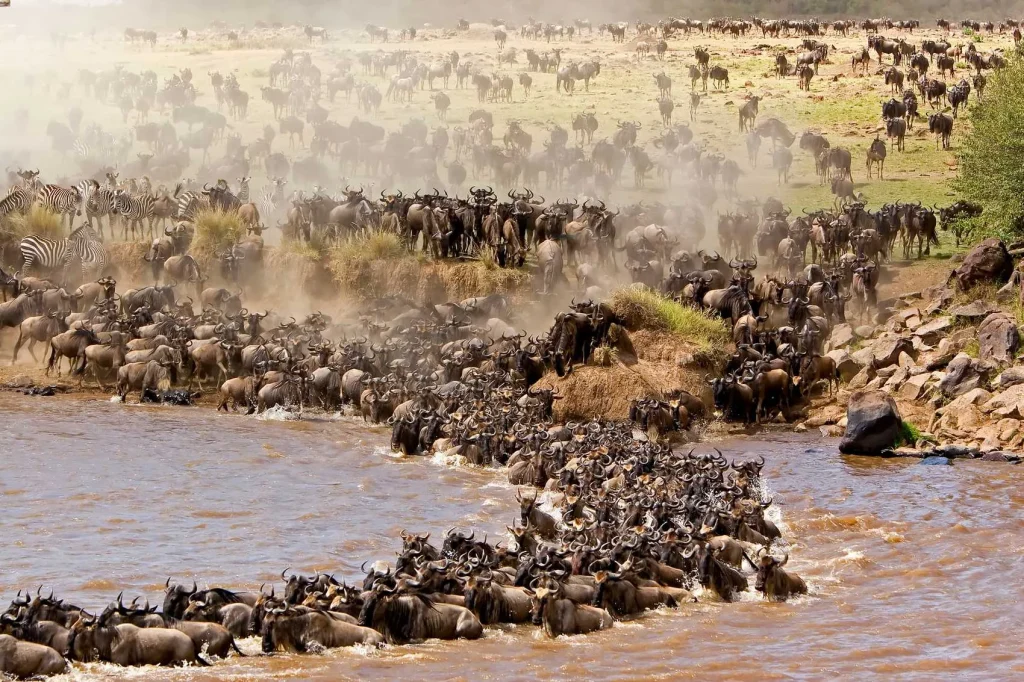
The Serengeti offers a broader range of seasonal migration experiences because different parts of the ecosystem are important at different times of the year. Its extensive landscapes include short-grass plains, woodland, rocky kopjes, river systems and open savannah. The southern Serengeti and Ndutu area are particularly important during the calving season. Central and western areas may become relevant as the herds move north, while the northern Serengeti is associated with Mara River crossings. This geographical diversity makes Tanzania an excellent choice for travellers who want to experience a specific migration phase outside Kenya's main season.
Advantages of a Tanzania Migration Safari
A Tanzania Migration Safari offers opportunities to encounter different stages of the migration across much of the annual cycle. Travellers interested in newborn wildebeest may choose the southern Serengeti during the calving season, while those interested in river crossings may consider the northern Serengeti during the middle of the year. Tanzania also combines naturally with other well-known safari destinations, including the Ngorongoro Crater, Tarangire National Park and Lake Manyara National Park. These combinations can provide a diverse safari involving different habitats and wildlife species.
Limitations of a Tanzania Migration Safari
The Serengeti is geographically extensive, and travel distances between regions can be substantial. A lodge in central Serengeti may be poorly positioned for northern river crossings during a particular period. Likewise, accommodation in northern Serengeti is not ideal for a traveller whose primary goal is the southern calving season. Selecting the correct region is therefore essential.
Some itineraries involve long road journeys, while fly-in arrangements can increase the overall cost. Travellers should also consider the time required to reach the relevant wildlife areas rather than assuming that any Serengeti lodge offers convenient access to the migration.
Masai Mara vs Serengeti: Which Is Better for River Crossings?
Both Kenya and Tanzania offer opportunities to witness Mara River crossings. The river flows through the northern Serengeti and Masai Mara ecosystem, and wildebeest may cross at different locations. A common misconception is that all famous river crossings occur in Kenya. In reality, significant crossing activity can also occur in northern Tanzania.
Mara River Crossings in Kenya
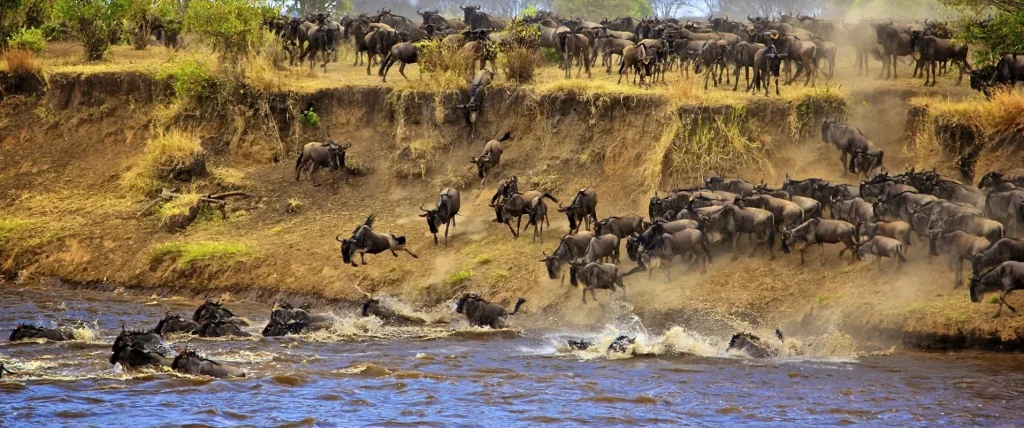
The Masai Mara is strongly associated with dramatic river-crossing photographs. During the main migration season, large groups may gather near established crossing areas. Visitors sometimes observe animals entering the water, negotiating currents and climbing difficult riverbanks. However, crossings are unpredictable and can occur at locations away from a particular safari vehicle.
Mara River Crossings in Tanzania
Northern Serengeti also offers river-crossing opportunities. Some animals may cross the Mara River multiple times while moving between grazing areas. The presence of herds on either side of the river does not guarantee a crossing, and visitors should expect periods of waiting.
Which Country Has Better Crossings?
Neither country can guarantee a better crossing on a particular date. The best choice depends on where the herds are located, the position of your camp, current conditions and the amount of time available. Travellers with a strong interest in crossings should consider staying several nights in a suitably located camp rather than relying on a single game drive.
Tanzania Is the Stronger Choice for Calving Season
One of Tanzania's most distinctive migration experiences is the Serengeti Calving Season. During approximately January to March, large numbers of wildebeest gather on the southern Serengeti and Ndutu plains. The calving peak commonly occurs around February, although the exact timing depends on seasonal conditions. Large numbers of calves may be born within a relatively short period.
This concentration of vulnerable young animals can attract predators, creating opportunities to observe fascinating ecological interactions. Lions, cheetahs, hyenas and other predators may be active around the herds. However, dramatic hunts and predator encounters are natural events and cannot be guaranteed. For travellers visiting during January or February, southern Tanzania is generally a more appropriate migration destination than Kenya's Masai Mara.
Which Country Offers Better Big Five Viewing?
Both countries provide opportunities to see many of Africa's most sought-after mammals. The Masai Mara is particularly well known for lions, leopards, elephants and buffaloes. Rhinoceros sightings within the Mara are much less predictable, and travellers interested in rhinos may consider combining the reserve with Lake Nakuru or another suitable Kenyan destination.
In Tanzania, the Serengeti supports lions, leopards, elephants and buffaloes, while the Ngorongoro Crater is often included in itineraries focused on broader wildlife diversity. Rhino sightings remain dependent on location and circumstances. The Big Five should not be treated as a guaranteed checklist. A well-designed safari prioritises quality wildlife observation and appropriate destination selection rather than promising every species.
Comparing Safari Landscapes and Photography
The Masai Mara and Serengeti share ecological connections but offer different visual experiences.
Masai Mara Landscapes
The Masai Mara is characterised by open grasslands, rolling terrain, scattered trees and riverine habitats. These landscapes can be excellent for photographing large grazing herds and predators in relatively open surroundings. The reserve's varied topography also provides attractive opportunities for environmental wildlife photography.
Serengeti Landscapes
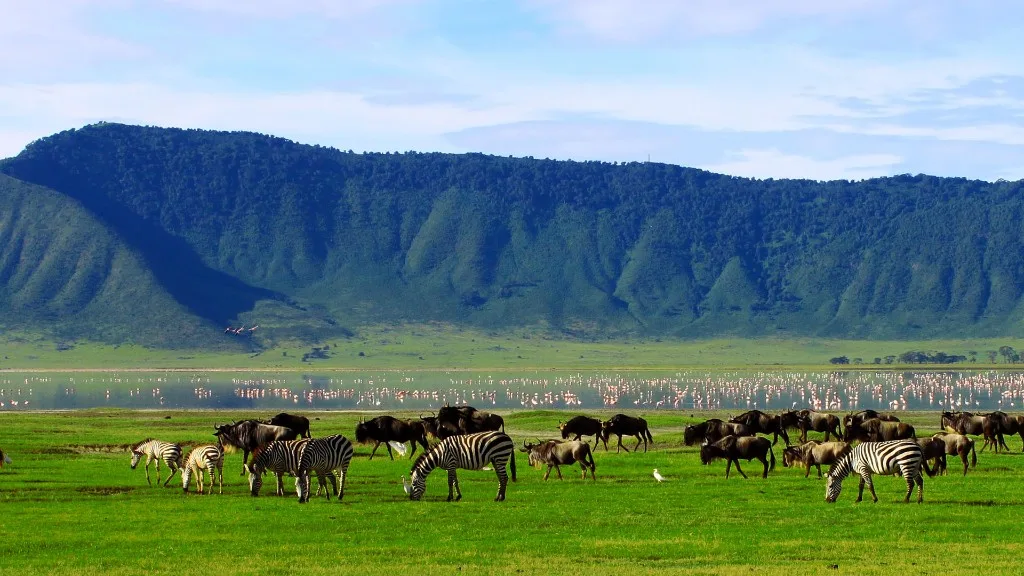
The Serengeti covers a much larger area and includes a wider range of habitats. Its southern plains can create striking images of enormous herds against expansive horizons. Rocky kopjes provide distinctive landscape features, while woodland and river systems add variety. The northern Serengeti offers different photographic conditions from the southern calving plains.
Which Is Better for Photography?
The answer depends on the subject. For large herds during the northern migration season, either destination can be outstanding. For newborn wildebeest and calving-related behaviour, Tanzania is the stronger choice. For a short safari focused on open-grassland wildlife photography from Nairobi, Kenya may be more convenient. Photographers should also consider vehicle arrangements, guide flexibility and the number of nights available.
Kenya vs Tanzania Safari Costs
The cost of a migration safari depends on far more than the country. Major factors include:
- Accommodation category and season
- Transport and park fees
- Group size and itinerary length
Accommodation Costs
Both countries offer accommodation ranging from practical camps to luxury tented properties. Peak migration dates can attract higher demand, particularly for camps located near important wildlife areas. A premium camp in either country may cost considerably more than a simpler property elsewhere.
Road Transport
Road safaris can be economical for groups sharing a vehicle. However, long driving distances increase transport time and may influence the number of nights required. The Masai Mara is relatively accessible from Nairobi, while some Serengeti regions require longer transfers from Arusha.
Domestic Flights
Fly-in safaris reduce time spent travelling overland. They can be particularly useful for accessing remote northern Serengeti camps or reaching the Masai Mara quickly. Flight costs depend on routing, schedules, baggage allowances and other factors.
Park and Conservation Fees
Entry fees and conservation charges vary by destination and can change. Travellers should request a current quotation that clearly identifies included fees. It is unwise to compare safari prices without checking whether both packages include equivalent park access, accommodation, transport and activities.
Private Safari vs Group Safari
Both Kenya and Tanzania offer private and shared safari arrangements.
Private Migration Safari
A Private Kenya Safari or Private Tanzania Safari provides greater control over the daily schedule. This can be particularly valuable for photographers, families and travellers interested in spending longer periods observing particular animals. Private guiding also allows the itinerary to be adapted more closely to personal interests, subject to park rules and practical conditions.
Group Migration Safari
A Kenya Group Safari or shared Tanzania safari can reduce the per-person cost of transport and guiding. Group departures are useful for solo travellers and visitors with a fixed budget. However, participants generally follow a predetermined itinerary, and time spent at individual sightings may depend on the group's preferences. Travellers should confirm group size, vehicle seating arrangements and accommodation standards before booking.
How Many Days Do You Need for the Great Migration?
The appropriate duration depends on your destination and travel style.
Three to Four Days
A short Masai Mara Migration Safari can work well for travellers beginning in Nairobi. The itinerary should allow sufficient time for game drives rather than devoting most of the trip to road transfers. A short Serengeti safari may also be possible, particularly with flights, but the logistics depend on the region selected.
Five to Seven Days
Five to seven days allow a more balanced experience. In Kenya, travellers can combine the Masai Mara with another destination or spend additional nights exploring different parts of the ecosystem. In Tanzania, this duration may support a Serengeti-focused itinerary combined with another northern-circuit destination.
Eight to Twelve Days
A longer itinerary allows more time for wildlife observation and a wider range of landscapes. Travellers may combine the Masai Mara with Amboseli and Lake Nakuru, or the Serengeti with Ngorongoro and Tarangire. A cross-border itinerary can also be considered, provided sufficient time is allowed for transfers and border formalities.
Can You Visit Both Masai Mara and Serengeti?
Yes. A Kenya and Tanzania Safari can combine the Masai Mara and Serengeti. However, the two protected areas are not connected by a straightforward international tourist road crossing through the park boundary. Cross-border travel requires appropriate immigration procedures and practical transport arrangements. Depending on the itinerary, travellers may use designated road border crossings or flights connecting regional safari destinations.
A combined safari can be excellent for visitors with sufficient time, but it is not always the most efficient choice for a short holiday. If your primary goal is to observe the migration during one specific week, concentrating on the most suitable region may provide more productive wildlife-viewing time.
Best Safari Combinations in Kenya
Masai Mara and Lake Nakuru
A Masai Mara and Lake Nakuru Safari combines open-grassland wildlife viewing with a different Rift Valley environment. Lake Nakuru is particularly relevant for travellers interested in rhinoceros conservation and birdlife. The combination can provide useful wildlife diversity within a relatively compact Kenya itinerary.
Masai Mara and Amboseli
A Masai Mara and Amboseli Safari combines migration-season wildlife opportunities with Amboseli's famous elephant populations and views towards Mount Kilimanjaro when weather conditions allow. The journey between these destinations requires careful planning, and a flight connection may be considered for travellers with limited time.
Masai Mara and Diani Beach
Travellers seeking a combination of wildlife and relaxation can add a stay on Kenya's coast. A Masai Mara and Diani Beach Holiday allows visitors to experience safari landscapes before spending several days beside the Indian Ocean. Transport connections should be planned around available flight schedules and the chosen accommodation.
Best Safari Combinations in Tanzania
Serengeti and Ngorongoro Crater
The Serengeti and Ngorongoro Safari is a classic northern Tanzania combination. Ngorongoro offers a distinctive volcanic landscape and concentrated wildlife-viewing opportunities within the crater. The Serengeti provides expansive ecosystems and seasonal migration experiences.
Serengeti and Tarangire
Tarangire is known for elephants, baobab landscapes and seasonal wildlife concentrations. Combining Tarangire with the Serengeti creates an itinerary featuring different habitats and wildlife-viewing conditions.
Serengeti and Zanzibar
A Serengeti and Zanzibar Safari combines mainland wildlife viewing with an Indian Ocean beach holiday. This option is particularly appealing to honeymooners and travellers who want a relaxed conclusion to their safari. Flight schedules and transfer arrangements should be confirmed when designing the itinerary.
Choosing Accommodation in Either Country
Safari Trips to Kenya uses four practical accommodation categories to help travellers compare options:
- Essential accommodation focuses on value and functional comfort, often suited to travellers prioritising game drives over luxury facilities.
- Comfort accommodation provides a balance of convenience, private facilities and organised safari services.
- Premium accommodation generally offers more spacious rooms or tents, attentive service and additional comfort.
- Signature accommodation is designed for travellers seeking highly personalised experiences and elevated luxury.
Across all categories, location remains crucial. A well-positioned camp can reduce daily transfer time and improve access to the wildlife areas most relevant to your chosen season.
Common Mistakes When Booking a Migration Safari
Travellers planning a migration safari often make these mistakes:
- Assuming the migration is always in the Masai Mara
- Choosing a Serengeti lodge without considering which region the herds are likely to occupy
- Underestimating the unpredictability of river crossings — a large herd near a river does not mean a crossing will occur during the next hour or even the next day
- Booking too few nights, which reduces flexibility for travellers whose main interest is a specific wildlife event
- Comparing safari prices without examining inclusions — a lower quotation may exclude park fees, transfers, meals or activities included in another package
Practical Advice for Planning Your Migration Safari
Use this practical sequence when planning your trip:
- Begin by choosing your preferred travel month
- Identify the migration phase that best matches your interests: calving, large grazing herds, river crossings or general predator activity
- Select the country and region accordingly
- Allow enough nights to accommodate unpredictable wildlife movements
- Choose accommodation based on location as well as comfort
- Confirm whether the safari includes private or shared transport, park entry, guiding, meals and relevant transfers
- For international travel, verify passport validity, visa or electronic travel authorisation requirements, health recommendations and insurance coverage using current official guidance
A knowledgeable safari operator can help coordinate these details and avoid unnecessary transfers.
Frequently Asked Questions
Is Kenya or Tanzania better for the Great Migration?
Kenya is often especially attractive during August and September, while Tanzania offers access to different migration stages throughout the annual cycle. The best choice depends on travel dates and interests.
Which country is better for river crossings?
Both Kenya's Masai Mara and Tanzania's northern Serengeti offer opportunities to see Mara River crossings. Neither can guarantee a crossing.
Is the Great Migration in Kenya all year?
No. The main migrating herds are generally associated with the Masai Mara during approximately July through October.
Is the Great Migration in Tanzania all year?
Different parts of Tanzania's Serengeti ecosystem are important during much of the annual migration cycle, but herds do not remain in one location throughout the year.
Where is the best place to see wildebeest calving?
The southern Serengeti and Ndutu region are the principal destinations associated with the main calving season.
Is Masai Mara cheaper than Serengeti?
Not necessarily. Costs depend on travel dates, accommodation, transport, park fees and group size. Comparable quotations are needed for a fair assessment.
Can I see the Big Five in both countries?
Both countries provide opportunities to see Big Five species, but sightings depend on the destinations included and cannot be guaranteed.
Is a five-day migration safari enough?
Five days can provide a rewarding experience when the itinerary is focused on the correct region. Travellers seeking particular river crossings may benefit from additional nights.
Should I book a private migration safari?
Private safaris are particularly useful for travellers who value flexibility, photography time and personalised guiding. Group safaris can offer better value for those comfortable with a shared schedule.
Plan Your Great Migration Safari with Safari Trips to Kenya
The Great Migration Kenya vs Tanzania decision should begin with your travel dates, wildlife interests and available time. Kenya's Masai Mara is a compelling choice for travellers seeking a relatively accessible northern migration safari during the main season. Tanzania's Serengeti offers a wider variety of migration phases, from the southern calving grounds to northern river crossings. Both destinations reward careful planning, knowledgeable guiding and realistic expectations.
At Safari Trips to Kenya, we help travellers compare safari routes, accommodation standards and travel arrangements to identify the itinerary best suited to their priorities. Whether you prefer a Masai Mara Migration Safari, a broader Kenya wildlife circuit or a combined Kenya and Tanzania holiday, we can help you evaluate the practical options. Contact Safari Trips to Kenya with your preferred travel month, number of travellers, available days and accommodation budget. We will help you choose a safari experience based on the seasonal movement of wildlife rather than unrealistic guarantees.