
Great Migration for First-Time Visitors
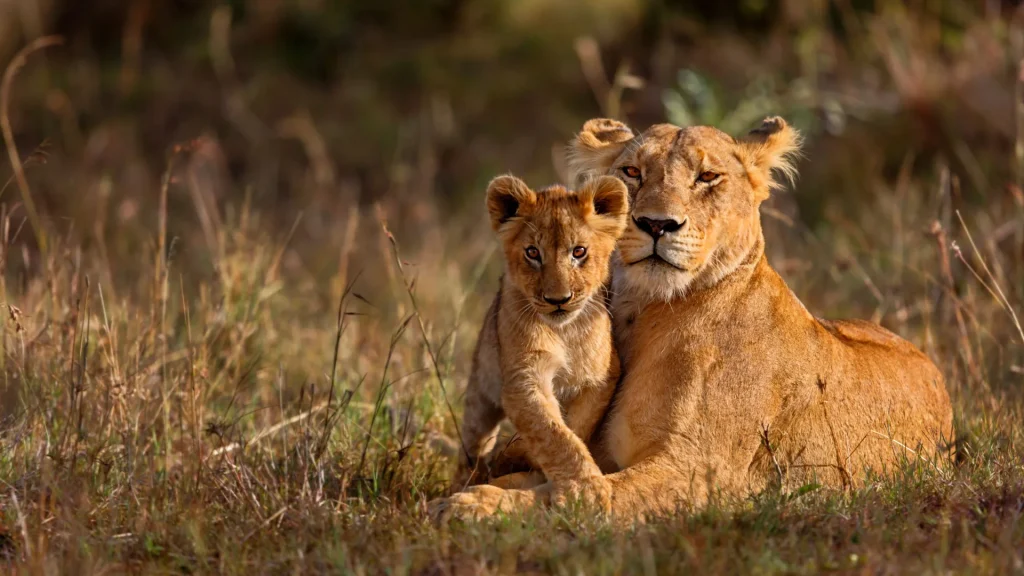
Your first encounter with the Great Wildebeest Migration may not look like the dramatic river-crossing scenes shown in wildlife documentaries. It could begin with a line of wildebeest stretching towards the horizon, a herd of zebras grazing quietly beside them, or a lioness watching the plains from a patch of shade. As the day unfolds, you begin to understand that the migration is not one event but a vast, changing wildlife system.
For first-time visitors, that distinction matters. The Great Migration involves enormous numbers of grazing animals moving between Tanzania’s Serengeti and Kenya’s Masai Mara in response to rainfall and fresh grass. Their movements are seasonal, but they do not follow an exact timetable—a safari planned around realistic expectations can be extraordinary even without a river crossing.
The biggest planning challenge is deciding when to travel and where to stay. Someone visiting in February may have excellent opportunities to observe calving on the southern Serengeti plains, while a visitor travelling in August may focus on northern Serengeti or Masai Mara river-crossing areas. This guide is designed for travellers who have never been on an African safari. It explains what the migration is, which destination to choose, how game drives work, how many days to book, what accommodation is like, and the practical details that make the difference between an exhausting trip and a rewarding wildlife holiday.
What Exactly Is the Great Migration?
The Great Wildebeest Migration is a recurring movement of wildebeest and other grazing animals through the Serengeti–Mara ecosystem. This landscape covers parts of northern Tanzania and southwestern Kenya, including Serengeti National Park, the Masai Mara National Reserve and adjoining conservation lands. Wildebeest move in search of nutritious grazing and water; rainfall affects where fresh grass grows, so it influences the direction and timing of herd movements.
Zebras often occupy overlapping areas, and predators such as lions, cheetahs, leopards and hyenas respond to the presence of prey. The animals are not travelling in one perfectly organised procession—different herds may be separated by considerable distances, some move earlier than others, and local rainfall can change the pattern. For a first-time visitor, the most important lesson is simple: the migration happens throughout the year, but the best location changes with the season.
Why the Great Migration Is Worth Seeing
The migration is famous for its scale, but the experience involves much more than numbers. You may observe wildebeest calves following their mothers, zebras interacting at waterholes, predators resting near grazing herds or vultures circling above the grassland. A knowledgeable guide can explain how these animals influence one another—wildebeest grazing affects vegetation, their movements distribute nutrients across the landscape, and predators and scavengers depend on the seasonal availability of prey. The result is an opportunity to observe a functioning ecosystem rather than isolated animals.
The landscapes are also memorable. The Masai Mara offers rolling grasslands and riverine woodland; the Serengeti includes open southern plains, rocky outcrops, central grasslands and northern river systems. Even quiet moments can be rewarding.
Where Should First-Time Visitors Go?
The choice usually comes down to the Masai Mara in Kenya or the Serengeti in Tanzania. Both are excellent safari destinations, but they suit different travel months.
Masai Mara, Kenya
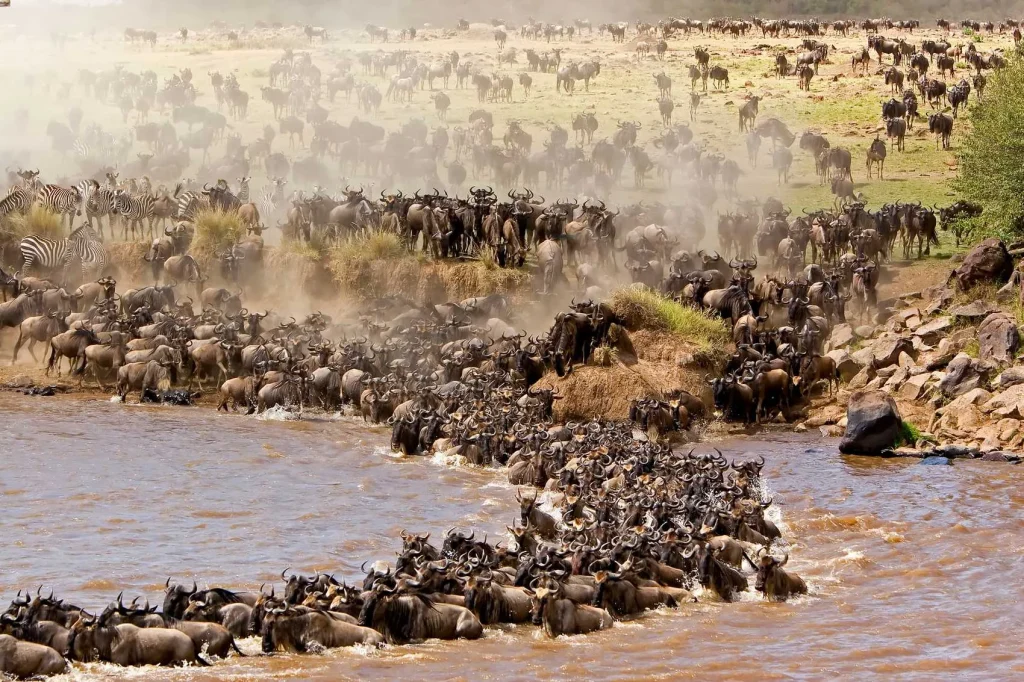
The Masai Mara is particularly attractive during July through October, when substantial migration herds may occupy the Kenyan part of the ecosystem. It is also an excellent destination for resident wildlife—lions, elephants, giraffes, buffalo, cheetahs and other animals occur throughout suitable habitats. For travellers arriving in Nairobi, the Mara can be reached by road or domestic flight, and a Kenya itinerary can also include Lake Nakuru, Amboseli or a coastal holiday.
Serengeti, Tanzania
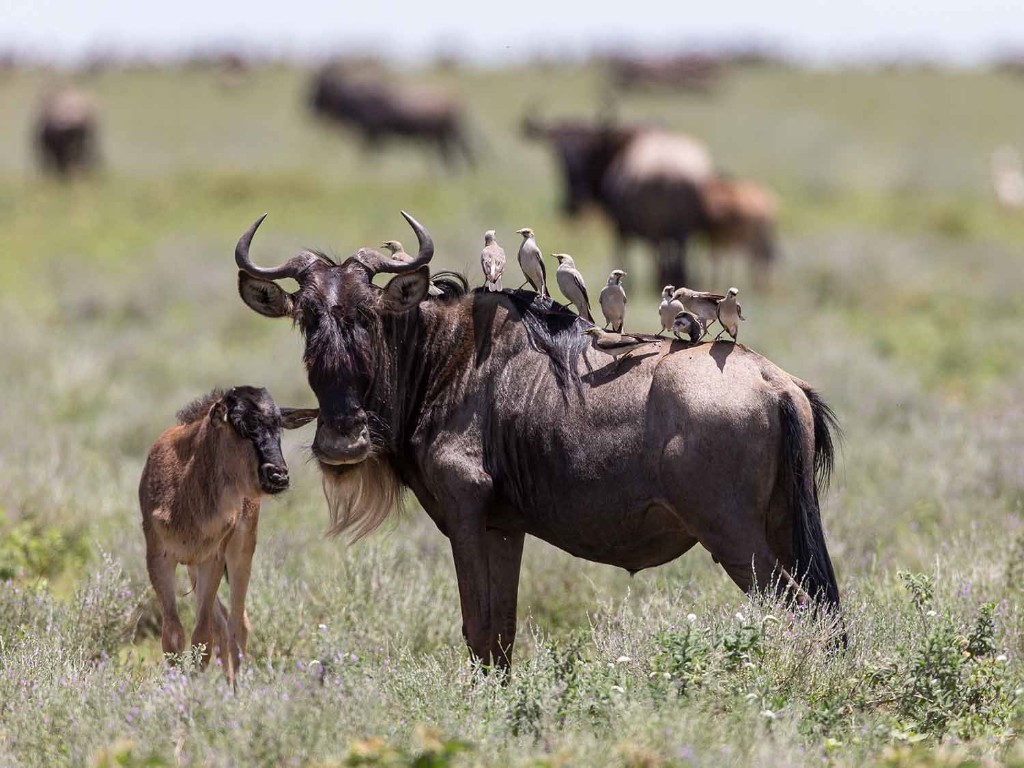
The Serengeti is larger and contains much of the migration’s annual route. It is especially important for the southern calving season around January through March; the central and western regions become relevant during other periods, while the northern Serengeti is associated with the Mara River. The Serengeti is a strong choice for travellers combining migration viewing with Ngorongoro Crater.
Which Is Easier for a First Safari?
If you are travelling in August and want a Kenya-focused holiday, the Masai Mara is a natural choice. If you are travelling in February and specifically want to see large migration herds, the southern Serengeti is generally more suitable. Do not choose a destination solely because it appears in the most famous migration photographs—choose it according to your actual travel month.
The Best Months for First-Time Migration Visitors
The migration is year-round, but different periods offer different experiences.
| Travel period | Principal planning area | Main attraction |
|---|---|---|
| January–March | Southern Serengeti and Ndutu | Calving, grazing herds and predator activity |
| April–May | Central and western Serengeti | Seasonal movement and green landscapes |
| June | Western and northern Serengeti | Herd movements towards northern areas |
| July–September | Northern Serengeti and Masai Mara | Large herds and possible river crossings |
| October | Northern areas and transitional routes | Changing herd movements |
| November–December | Central and southern Serengeti | Southward movements and fresh grazing |
These are broad seasonal patterns, not guaranteed herd locations.
Is August the Best Month?
August is one of the most popular months for northern migration safaris and can offer opportunities to observe large herds in the Masai Mara or northern Serengeti. However, it is also a busy period, and accommodation in convenient locations can become expensive or fully booked. September can be equally rewarding, depending on rainfall and herd movements.
Is February a Good Alternative?
February is an excellent choice for travellers interested in calving. The southern Serengeti can host substantial concentrations of wildebeest and newborn calves, offering a different experience from the northern river-crossing season.
What Happens on a Typical Safari Day?
A conventional safari day usually begins early. Your guide may arrange a morning game drive when temperatures are cooler and animals are often more active. Depending on the lodge and itinerary, you might return for breakfast or take a packed meal into the park. A full-day game drive allows you to explore more distant areas, while separate morning and afternoon drives provide time to rest.
The guide searches for wildlife using experience, recent observations and knowledge of animal behaviour. There may be periods when little appears to happen, then a herd, predator or unusual interaction can transform the experience. This is part of safari travel. Wildlife viewing requires patience, and no guide can control where animals move.
What Is a Game Drive Like?
A game drive takes place in a safari vehicle driven by a professional guide. Vehicles commonly have large windows and roof openings suitable for wildlife viewing, although designs differ. Roads inside parks can be uneven and dusty; you may travel slowly while searching for animals or stop for extended periods to observe behaviour. The guide will explain which areas can be entered and when visitors may leave the vehicle—you should never step outside without permission.
A good guide does more than identify species. They explain tracks, alarm calls, feeding behaviour, habitats and conservation issues. For first-time travellers, this interpretation often becomes one of the most valuable parts of the safari.
Are Mara River Crossings Guaranteed?
No. Mara River crossings are never guaranteed. Wildebeest may gather near the river, hesitate for hours or days, or move away without crossing. Crossings may occur at different locations, some of which are inaccessible from your accommodation. A responsible guide will not force animals towards the water or obstruct their movement. A longer stay increases the time available for observing wildlife but does not guarantee a crossing. If seeing a crossing is your main priority, consider spending at least three or four nights in a suitable northern migration area—even then, plan to appreciate other wildlife encounters.
What Animals Will You See Besides Wildebeest?
A migration safari is also a conventional wildlife safari. In suitable habitats, you may encounter lions, elephants, giraffes, buffalo, zebras, antelope and numerous birds. Cheetahs and leopards are especially exciting sightings, but they are not guaranteed. Hyenas, jackals and vultures contribute to the ecosystem’s predator and scavenger communities. Rhinos are relatively uncommon in many migration-focused areas; travellers who particularly want to see rhinos can consider adding Lake Nakuru or Ol Pejeta in Kenya, or a suitable rhino conservation destination in Tanzania.
How Many Days Should You Book?
For a first migration safari, four or five days in the main wildlife destination is a sensible target when time and budget allow. A three-day Masai Mara safari can be rewarding, but road transfers may occupy much of the first and last days. A four-night stay gives you several full game-drive days; seven or eight days allow a second destination; ten days or longer can support a Kenya–Tanzania journey or a safari followed by a beach holiday. Avoid judging an itinerary only by its total number of days—ask how many full days you will actually spend on game drives.
Sample 5-Day First-Time Masai Mara Safari
Day 1: Nairobi to Masai Mara
Depart Nairobi by road or domestic flight. Arrive at your camp or lodge, settle in, and if timing permits enjoy an introductory afternoon game drive—an opportunity to become familiar with the safari vehicle and wildlife-viewing etiquette.
Day 2: Explore the Masai Mara
Begin early and search for wildlife across the reserve. Your guide may focus on open grassland, woodland or riverine areas depending on current conditions, and you can learn to recognise common antelope, zebra, giraffe and predator species.
Day 3: Migration-Focused Game Drive
During migration season, explore areas where herds have recently been observed. Spend time watching animal behaviour rather than moving constantly between sightings. If a river crossing is possible, your guide will assess access and conditions.
Day 4: Additional Wildlife Viewing
Use the extra day to explore another part of the reserve or return to an area that has been productive—flexibility is valuable because wildlife movements change daily.
Day 5: Return to Nairobi
Enjoy a final game drive if the itinerary allows, then return to Nairobi for your onward arrangements.
Should You Choose a Road Safari or Flying Safari?
Both options have advantages. A road safari is often more economical for a small group sharing a vehicle and allows you to observe changing landscapes on the journey, but the drive from Nairobi to the Masai Mara can take several hours and may be tiring. A flying safari reduces selected transfer times and can be convenient for travellers with limited holiday time. Domestic flights may have luggage weight and bag-type restrictions—your operator should confirm the flight schedule, airstrip and transfer arrangements before booking.
What Is Safari Accommodation Like?
Accommodation ranges from simple camps to luxury lodges. A tented safari camp does not necessarily mean sleeping in a basic camping tent—many permanent tented camps have proper beds, private bathrooms, electricity and restaurant facilities, though facilities vary considerably. Safari Trips to Kenya uses four accommodation categories:
- Essential: Practical, affordable accommodation with core facilities
- Comfort: Established mid-range properties with a balance of comfort and value
- Premium: Higher-end accommodation, often with additional space, facilities or personalised service
- Signature: Distinctive luxury lodges and camps with high levels of service
For a migration safari, location matters as much as accommodation quality—a beautiful lodge far from the relevant wildlife-viewing area may require lengthy daily drives.
How Much Does a First Migration Safari Cost?
The price depends on travel season, accommodation, transport, park fees and the number of travellers. July through September attracts strong demand in the Masai Mara. Private safaris can be more expensive for solo travellers because vehicle and guiding costs are not shared; group departures may reduce those costs. Domestic flights add convenience but usually increase the budget. When comparing quotations, check whether they include park fees, meals, game drives, transfers and accommodation—a cheap headline price is not necessarily good value if important services are excluded.
What Should You Pack?
You do not need elaborate expedition equipment for a conventional vehicle-based safari. Useful items include:
- Lightweight, comfortable clothing in practical colours
- A warm layer for early morning game drives
- Sun protection and a wide-brimmed hat
- Binoculars
- A camera or smartphone
- Comfortable closed shoes
- Personal medication
- A small day bag
- Power adapters and charging equipment
- Dust protection for camera equipment
Pack lightly if your itinerary includes domestic flights with luggage restrictions.
What Should You Wear on Safari?
Comfort matters more than fashion. Neutral colours are practical because they are less conspicuous and often show dust less readily. Avoid relying exclusively on shorts and light shirts—early mornings can be surprisingly cool, so a fleece or lightweight jacket is useful. A rain jacket may be necessary during wetter periods. You do not need specialised camouflage clothing for ordinary safari game drives.
Is a Great Migration Safari Safe?
A professionally organised safari follows established wildlife-viewing and travel procedures. However, wild animals remain unpredictable. Essential safety practices include:
- Always follow the guide’s instructions
- Do not leave the vehicle without permission
- Do not approach or feed animals
- At safari camps, follow staff instructions about walking after dark
- Use escorted pathways where properties require them between tents and communal areas
Travellers should also obtain appropriate travel insurance and check current health and entry requirements.
Can Children Join a Migration Safari?
Yes. Many families enjoy migration safaris, but suitability depends on children’s ages, attention spans and tolerance for long game drives. Some camps have minimum-age policies, and a private safari can be useful because it allows more flexible schedules. Families should also consider the length of road transfers and whether accommodation offers suitable facilities.
Should You Book a Private or Group Safari?
A private safari provides flexibility—you can spend more time watching a particular animal, adjust departure times within park rules and tailor the itinerary to your interests. A group safari may offer better value by sharing transport and guiding costs, but group tours generally follow fixed routes. Before booking, ask about maximum group size, seating arrangements and the exact vehicle type. For photographers, a private vehicle can be particularly useful.
What About Wildlife Photography?
You can take excellent photographs with a smartphone, but a camera with a telephoto lens offers more flexibility for distant animals. A wider lens is useful for landscapes and large herds. Early morning and late afternoon light often creates attractive conditions. Avoid spending the entire safari looking through a screen—some of the most memorable moments are better experienced without immediately reaching for a camera. Never ask a guide to approach wildlife too closely for a photograph.
Can You Combine the Migration With Other Destinations?
Yes. In Kenya, popular combinations include Lake Nakuru, Amboseli, Samburu and the Indian Ocean coast. Lake Nakuru is particularly useful for rhino conservation experiences; Amboseli is famous for elephants and possible views of Mount Kilimanjaro on clear days; Samburu offers distinctive northern Kenya wildlife; Diani or Watamu can provide a relaxing beach extension. In Tanzania, the Serengeti combines naturally with Ngorongoro Crater and other northern safari destinations. Choose additions according to available days rather than trying to visit every park.
Common First-Time Safari Mistakes
Common pitfalls to avoid include:
- Booking the wrong location for your travel month
- Expecting a river crossing on a particular day
- Underestimating driving distances or choosing accommodation without checking its location
- Booking too few nights and spending most of the trip travelling
- Focusing so heavily on the migration that you overlook the rest of the wildlife
A good safari should provide time to observe animals naturally, not simply rush from one famous sighting to another.
Frequently Asked Questions
Do I Need Previous Safari Experience?
No. A professionally guided migration safari is suitable for first-time visitors.
Will I See Thousands of Wildebeest?
Large herds may be encountered in suitable seasonal areas, but numbers and locations vary.
Can I See the Migration in One Day?
You may encounter migrating herds during one game drive, but a single day offers limited flexibility.
Is the Masai Mara Better Than the Serengeti?
The best choice depends on the travel month and preferred experience.
Do I Need a Professional Camera?
No. Binoculars and a smartphone can be sufficient for enjoying the experience.
Are Safari Camps Comfortable?
Many are, but facilities vary by accommodation category.
How Early Should I Book?
Book well ahead for popular migration months, particularly when seeking accommodation in convenient locations.
What Happens if I Do Not See a River Crossing?
You can still enjoy excellent wildlife viewing, landscapes and predator encounters.
Plan Your First Great Migration Safari With Safari Trips to Kenya
Your first migration safari should be exciting without feeling overwhelming. The key is choosing the right region for your travel dates, allowing several game-drive days and understanding that wildlife events cannot be scheduled. Safari Trips to Kenya can help arrange first-time Masai Mara safaris, Serengeti migration journeys and customised Kenya–Tanzania itineraries. Share your preferred travel dates, number of travellers, accommodation category and whether your priority is river crossings, calving or a general wildlife safari. With thoughtful planning and an experienced guide, your first migration safari can become an unforgettable introduction to East Africa’s wildlife.