

Grumeti Migration
The Grumeti Migration is one of the most fascinating stages of the Great Wildebeest Migration, taking place in the western part of Tanzania’s Serengeti ecosystem. While the dramatic Mara River crossings often receive the most attention, the movement of wildebeest through the western corridor reveals another important chapter of the annual migration.
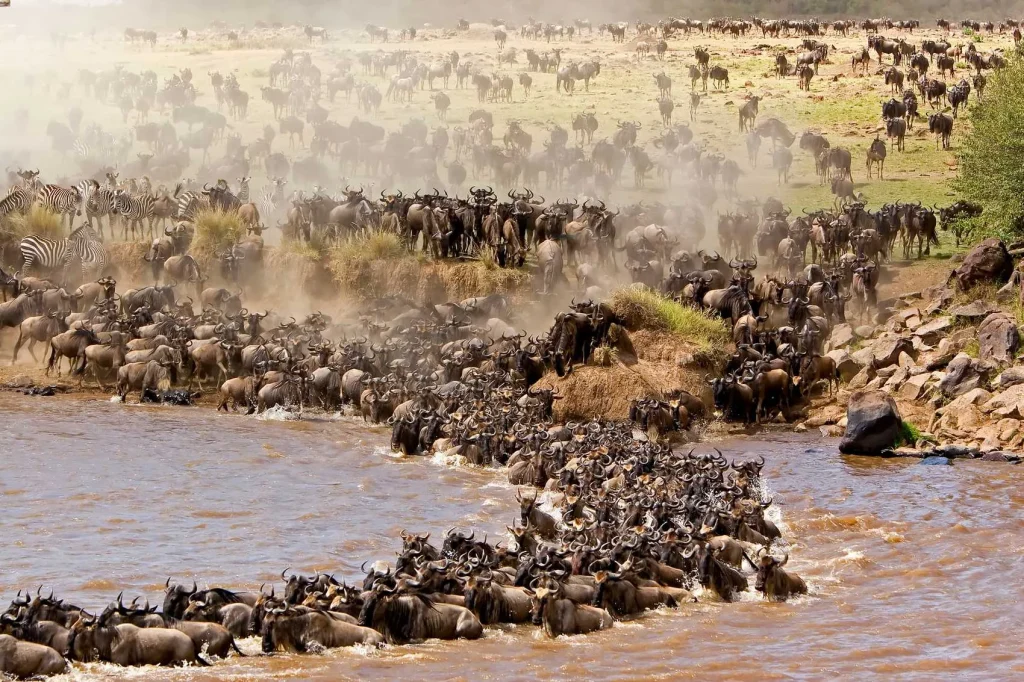
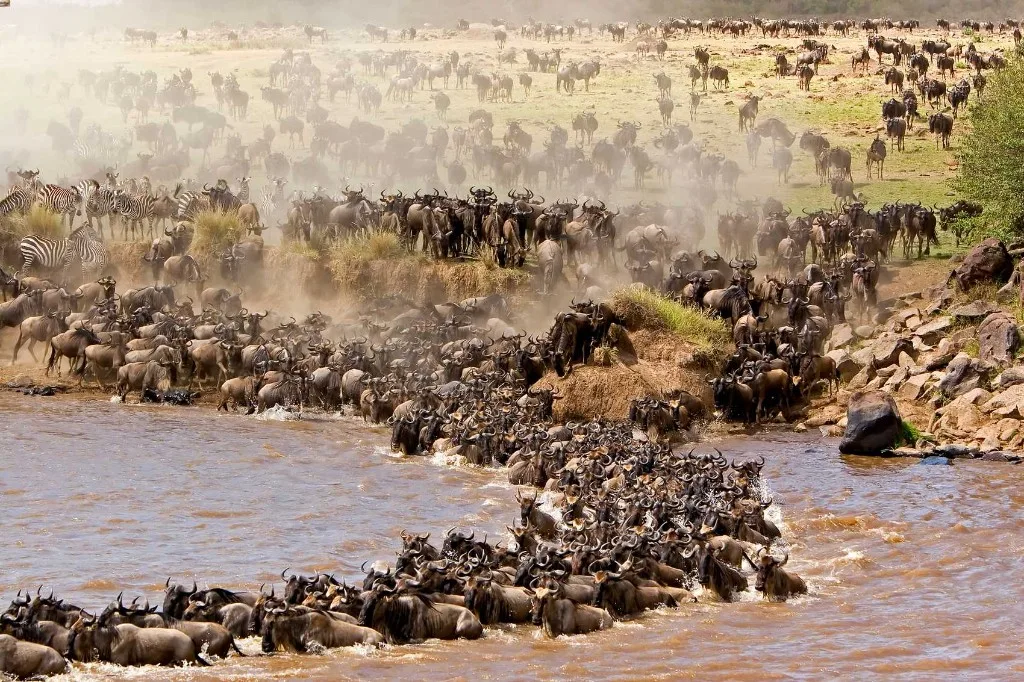
During this stage, large numbers of wildebeest, accompanied by zebras and other grazing animals, may move through the western Serengeti as they follow seasonal grazing opportunities. Some herds encounter the Grumeti River, where water levels, crocodiles and changing conditions can create challenging crossings.
However, the Grumeti Migration should not be understood as a single event that happens on a fixed date. The migration is a continuous movement of animals responding to rainfall, grass growth and environmental conditions. Different groups may travel along different routes, and their timing varies from year to year.
For travellers planning a safari, this distinction is essential. A well-designed Grumeti safari should focus on the wider wildlife experience rather than promising a particular river crossing. This guide explains the Grumeti Migration, its typical seasonal timing, the best areas to consider, accommodation choices and how it fits into a broader Kenya and Tanzania safari.
What Is the Grumeti Migration?
The Grumeti Wildebeest Migration refers to the movement of migratory wildebeest and associated grazing herds through the western Serengeti, including areas associated with the Grumeti River. It forms part of the larger Great Wildebeest Migration, an annual cycle involving vast numbers of wildebeest moving through the Serengeti–Mara ecosystem.
The migration is not a single herd travelling in a perfectly organised circle. Instead, animals may spread across extensive areas and move in different directions depending on available grazing and water. Some groups travel through the western corridor, while others may follow different routes. This is why a migration calendar should be used as a planning guide rather than a guarantee.
Where Does the Grumeti Migration Take Place?
The Grumeti Migration is associated with the western corridor of Serengeti National Park in Tanzania. The Grumeti River flows through this wider landscape. The western corridor includes grassland, woodland and riverine habitats that support a variety of wildlife.
It differs from the open plains of the southern Serengeti and from the northern landscapes associated with the Mara River. The area is also connected to the wider Grumeti conservation landscape. Travellers should distinguish between Serengeti National Park, neighbouring conservation areas and privately managed concessions because access arrangements, accommodation and permitted activities can differ.
When Does the Grumeti Migration Happen?
The western Serengeti is often associated with migration activity around May and June, although timing varies. In some years, significant herds may be present earlier or later. Rainfall patterns strongly influence movements. If grazing remains favourable in one area, animals may stay longer; if conditions change, they may move more quickly. The exact timing of a river crossing cannot be predicted reliably months in advance.
May: Movement Towards the Western Serengeti
During May, migratory herds may begin moving through parts of the central and western Serengeti. Their distribution depends on rainfall and grazing conditions. Some areas may contain large concentrations of animals, while others may be relatively quiet.
June: Western Corridor Activity
June is often associated with the western corridor stage. Herds may move through areas near the Grumeti River. However, not every animal crosses the river, and crossing activity is not continuous.
July: Movement Towards Northern Areas
As the season progresses, many herds move towards northern parts of the ecosystem. The timing and route vary. Travellers interested primarily in northern Serengeti or Masai Mara migration activity should consider the different seasonal windows.
Why Do Wildebeest Move Through Grumeti?
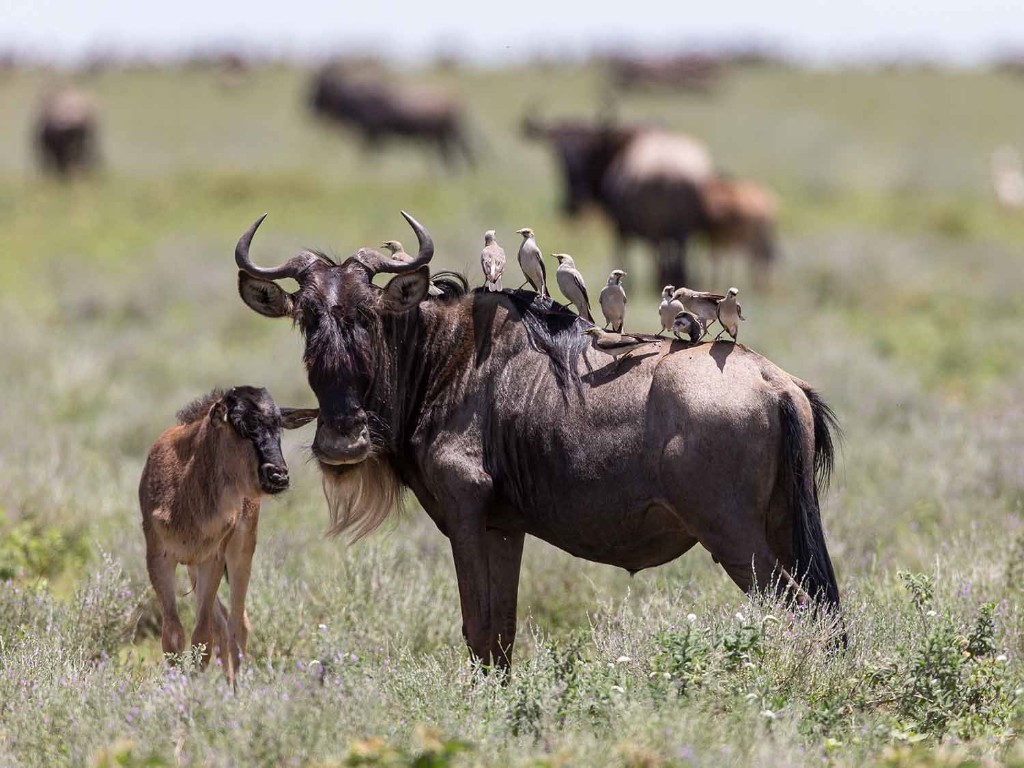
Wildebeest migration is driven largely by access to suitable grazing and water. Rainfall encourages grass growth, and as conditions change, animals move across the ecosystem in search of resources. The migration also supports breeding, predator-prey interactions and wider ecological processes.
The Grumeti stage is one part of this continuous cycle. It should not be viewed as a separate migration unrelated to the Serengeti and Masai Mara.
The Grumeti River and Its Importance
The Grumeti River is an important geographical feature in the western Serengeti. Its water and surrounding vegetation support wildlife. During migration periods, some wildebeest may need to negotiate sections of the river. Water depth, current, banks and animal behaviour influence crossing conditions, and crocodiles inhabit suitable river habitats, adding another natural challenge.
However, river crossings are not guaranteed. Some animals may cross in smaller groups, while others may use different locations or move through areas where the river presents less of an obstacle. The dramatic scenes commonly associated with migration documentaries represent particular moments rather than everyday conditions.
Grumeti River Crossings Versus Mara River Crossings
The Grumeti River and Mara River are different rivers associated with different parts of the migration. The Grumeti is associated with the western Serengeti in Tanzania. The Mara River flows through northern Tanzania and southwestern Kenya.
The Mara River crossings are often associated with the northern migration stage, generally later in the year. Grumeti crossings may occur earlier. However, neither river follows a predictable crossing timetable. The scale, terrain and visibility of individual crossings can differ. Travellers should choose their destination according to the wider wildlife experience and travel dates.
Wildlife Beyond the Migrating Herds
A Grumeti safari is not limited to wildebeest. The western Serengeti supports a variety of wildlife.
Zebras
Zebras often occur alongside wildebeest during migration movements.
Lions
Lions inhabit the wider Serengeti ecosystem and may be encountered in suitable habitats.
Leopards
Leopards are elusive predators associated with woodland and riverine environments.
Cheetahs
Cheetahs occur in suitable open habitats, although sightings are not guaranteed.
Elephants
Elephants may be encountered in the wider western Serengeti.
Giraffes and Antelopes
Giraffes and several antelope species contribute to the region’s wildlife diversity.
Birds
Riverine habitats, woodland and grassland support numerous bird species.
The wider wildlife experience can remain rewarding even when the main migratory herds are elsewhere.
How Is Grumeti Different from the Southern Serengeti?
The southern Serengeti and nearby Ndutu region are especially associated with the calving stage of the migration. This generally occurs earlier in the year, although timing varies. The western corridor becomes important as animals move through the ecosystem during subsequent months.
The landscapes also differ. The southern plains are more open, while the western corridor includes riverine vegetation and woodland. For travellers planning a migration-focused safari, these differences help determine which region is most suitable.
How Is Grumeti Different from the Northern Serengeti?
The northern Serengeti is associated with migration movements near the Mara River. This stage often attracts travellers interested in large river crossings. The western corridor offers a different setting. Its combination of river habitats, woodland and open country can provide varied wildlife viewing. Travellers should not assume that the northern and western migration stages occur simultaneously.
Best Time to Book a Grumeti Safari
Travellers interested in the western corridor stage often consider May and June. However, migration movements vary. A safari planned around a single predicted crossing date carries considerable uncertainty. A more flexible itinerary can improve the overall experience.
If travel dates are fixed, the accommodation location and duration should be selected carefully. Travellers should also consider seasonal road conditions. Rain can affect access and travel times.
How Many Nights Should You Spend in Grumeti?
Two Nights
Two nights may provide a short introduction to the western Serengeti. However, the time available for wildlife viewing can be limited by transfers.
Three Nights
Three nights provides additional opportunities to explore the area. This can be valuable because migration activity changes.
Four Nights or Longer
Longer stays may suit wildlife photographers and travellers with a strong interest in migration behaviour. Additional time does not guarantee a crossing, but it reduces the pressure to experience a particular event immediately.
Where to Stay for the Grumeti Migration
Accommodation in the western Serengeti ranges from tented camps to high-end safari properties. Some camps operate seasonally or position themselves according to expected migration movements. Others remain in established locations.
Travellers should confirm the precise location of the accommodation. A property described as being in the Serengeti may be several hours from the intended western corridor area.
Tented Camps
Tented camps can provide an immersive safari atmosphere. Facilities vary widely, from simple accommodation to extensive luxury amenities.
Permanent Lodges
Permanent lodges may provide established facilities and services. However, their location should be considered carefully.
Mobile Migration Camps
Some operators use mobile or seasonal camps that follow expected migration patterns. These can be relevant for migration-focused itineraries. However, camp movements, dates and availability should be confirmed.
Planning a Grumeti Safari from Kenya
Travellers researching the migration through a Kenya safari website should understand that Grumeti is in Tanzania, not Kenya. A visit requires an itinerary that includes Tanzania. The Grumeti Migration cannot be experienced on an ordinary Masai Mara-only safari.
Travellers may combine Kenya and Tanzania in a longer East African itinerary, subject to entry requirements, transport arrangements and travel time. The route should be designed carefully to avoid unnecessary backtracking. A cross-border safari may involve additional logistics and costs.
Suggested Five-Day Western Serengeti Migration Safari
Day 1: Arrival and Transfer to the Serengeti
Arrive in Tanzania and travel towards the selected Serengeti accommodation. The route depends on the arrival airport and whether the itinerary uses road transport or domestic flights. Enjoy a game drive where time permits and overnight in the Serengeti.
Day 2: Explore the Western Corridor
Begin with a morning game drive and explore suitable western Serengeti habitats. Look for migratory herds and resident wildlife. The guide will adjust the route according to current conditions. Return to accommodation for dinner and overnight.
Day 3: Grumeti Migration Safari
Spend the day exploring areas associated with migration activity. Look for wildebeest, zebras, predators and birds. A river crossing may occur, but it cannot be guaranteed. Continue wildlife viewing during the afternoon.
Day 4: Additional Western Serengeti Game Drives
Enjoy further game drives. The additional day allows time to explore different habitats. Photographers may benefit from changing light and wildlife behaviour. Return for dinner and overnight.
Day 5: Departure or Safari Extension
Enjoy breakfast and a final activity where time permits. Transfer to the next destination or departure point. The itinerary may be extended to other parts of the Serengeti.
Photography During the Grumeti Migration
The western Serengeti can provide excellent wildlife photography opportunities. Large herds create striking scenes across the landscape, and riverine habitats provide different backgrounds from the open southern plains. Morning and late afternoon light can be attractive.
A telephoto lens is useful for distant wildlife, and a wider lens can help capture herds and landscapes. Photographers should avoid focusing exclusively on river crossings. Predator behaviour, grazing herds, birds and environmental details can be equally rewarding.
What to Pack for a Grumeti Safari
Packing thoughtfully helps you stay comfortable during long game drives and variable weather. Useful items include:
- Comfortable clothing in neutral colours, suitable for changing temperatures.
- A light jacket for cooler mornings.
- Sun protection.
- Binoculars to enhance wildlife viewing.
- A camera with suitable lenses.
- Personal medication and essential travel documents.
Travellers using domestic flights should confirm baggage restrictions.
Responsible Migration Viewing
Migration tourism must respect wildlife. Vehicles should follow applicable park and conservation-area regulations. Animals should not be surrounded or deliberately disturbed. Riverbanks can be sensitive areas, and guides should avoid positioning vehicles in ways that interfere with animal movement.
Visitors should never pressure a guide to approach wildlife unsafely. The objective is to observe natural behaviour without changing it.
Frequently Asked Questions About the Grumeti Migration
Where is the Grumeti Migration?
It takes place in the western Serengeti region of Tanzania.
When is the best time to see the Grumeti Migration?
May and June are commonly associated with western corridor migration activity, but timing varies.
Are Grumeti River crossings guaranteed?
No. River crossings depend on animal movements and natural conditions.
Is Grumeti in Kenya?
No. The Grumeti River and western Serengeti migration area are in Tanzania.
Can I combine Grumeti with the Masai Mara?
Yes, within a carefully planned Kenya and Tanzania itinerary.
How many nights should I stay?
Three or more nights can provide a more relaxed migration-focused experience, depending on travel time and budget.
Is the Grumeti Migration different from the Great Migration?
It is one stage of the larger Great Wildebeest Migration.
Plan a Grumeti Migration Safari
The Grumeti Migration offers an opportunity to experience the Great Wildebeest Migration in the distinctive landscapes of Tanzania’s western Serengeti. Its appeal extends beyond dramatic river crossings to include large grazing herds, predators, riverine habitats and the changing seasonal movements of wildlife.
At Safari Trips to Kenya, we can help travellers understand how the Grumeti stage fits into a broader East African safari and explore suitable Kenya–Tanzania itinerary options. The best migration safari is planned around realistic seasonal expectations, suitable accommodation and enough time to enjoy the wildlife that is present.