

Calving Season Photography
Calving Season Photography: Capturing New Life on the Southern Serengeti Plains
A newborn wildebeest struggling to stand beside its mother is one of the most compelling subjects in African wildlife photography. The calf’s first movements are uncertain, yet within a surprisingly short time it may be walking across the grassland alongside the herd. Nearby, other females graze, young animals gather in small groups and predators scan the plains for opportunities. These moments make calving season photography one of the most rewarding wildlife experiences in East Africa.
Unlike the dramatic river crossings of the northern migration, the calving season offers opportunities to photograph behaviour that unfolds across open grasslands: birth, nursing, maternal protection, early movement, social interaction and the constant relationship between predators and prey. The principal calving grounds are located in Tanzania’s southern Serengeti and Ndutu region, where large numbers of migrating wildebeest commonly gather during the early months of the year. For photographers planning a wider Kenya and Tanzania safari, understanding the geography and timing of the migration is essential. At Safari Trips to Kenya, we can help incorporate calving-season photography into a longer East African wildlife journey, with attention to vehicle arrangements, accommodation location and sufficient time in productive areas.
Why Photograph the Wildebeest Calving Season?
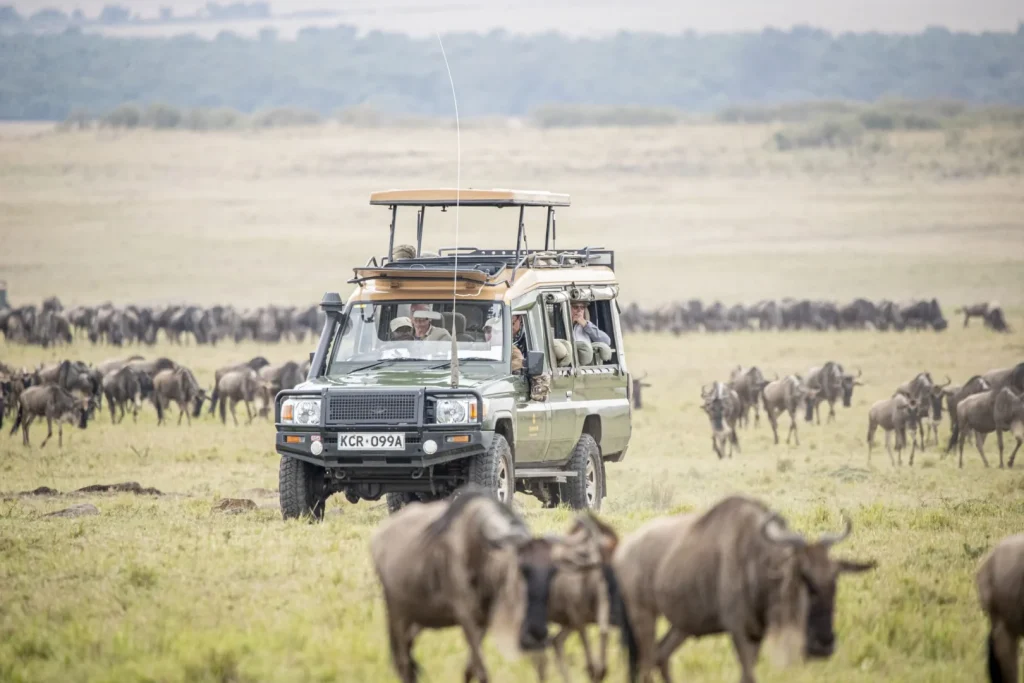
The calving season offers something that conventional safari photography cannot always provide: repeated opportunities to observe the earliest stages of animal life. Photographers may witness newborn calves attempting to stand, mothers cleaning their young or family groups moving together across the plains. The scale of the migration adds another dimension. A single calf can become the subject of an intimate portrait, while a wide landscape image may reveal thousands of wildebeest spread across the grassland.
The season also attracts predators, creating opportunities to document ecological relationships. However, no particular birth, hunt or predator encounter can be guaranteed. Successful photography depends on patience, observation and the ability to work with natural behaviour.
Where Is the Best Place for Calving Season Photography?
Ndutu Region
Ndutu is one of the most recognised locations for wildebeest calving photography. The area includes short-grass plains, woodland edges and seasonal habitats that attract migrating herds. Its relatively open landscapes can provide opportunities for clear views of animals, although wildlife distribution varies according to rainfall and grazing conditions.
Southern Serengeti
The southern Serengeti‘s short-grass plains are important calving habitats. They provide opportunities for photographing large herd concentrations, newborn calves and predators, and the open terrain can be particularly attractive for environmental portraits and wide compositions.
Surrounding Migration Areas
Herds may spread beyond the most frequently visited locations. An experienced guide can help identify suitable areas according to current wildlife movements and access regulations, and photographers should avoid assuming that a single camp or fixed viewpoint will provide the best conditions every day.
Best Time for Calving Season Photography
The main wildebeest calving period is commonly associated with late January through February, sometimes extending into March. February is often considered the peak month, although rainfall influences herd movements and the distribution of animals. Some years may produce earlier or later concentrations, so photographers with flexible travel dates should consider the broader seasonal window rather than relying on one specific week. A longer stay can also improve the chances of encountering varied behaviour.
What Makes Ndutu Special for Wildlife Photographers?
Ndutu combines open grassland with other habitats, creating opportunities to photograph different species and behaviours. The region is associated with wildebeest calving, but photographers may also encounter zebras, gazelles, lions, cheetahs, hyenas and numerous birds. The landscape can change dramatically after rainfall, when fresh grass, shallow water, clouds and changing light create varied photographic conditions. For photographers, this means that even familiar locations may produce very different images from one day to the next.
Photographing Newborn Wildebeest
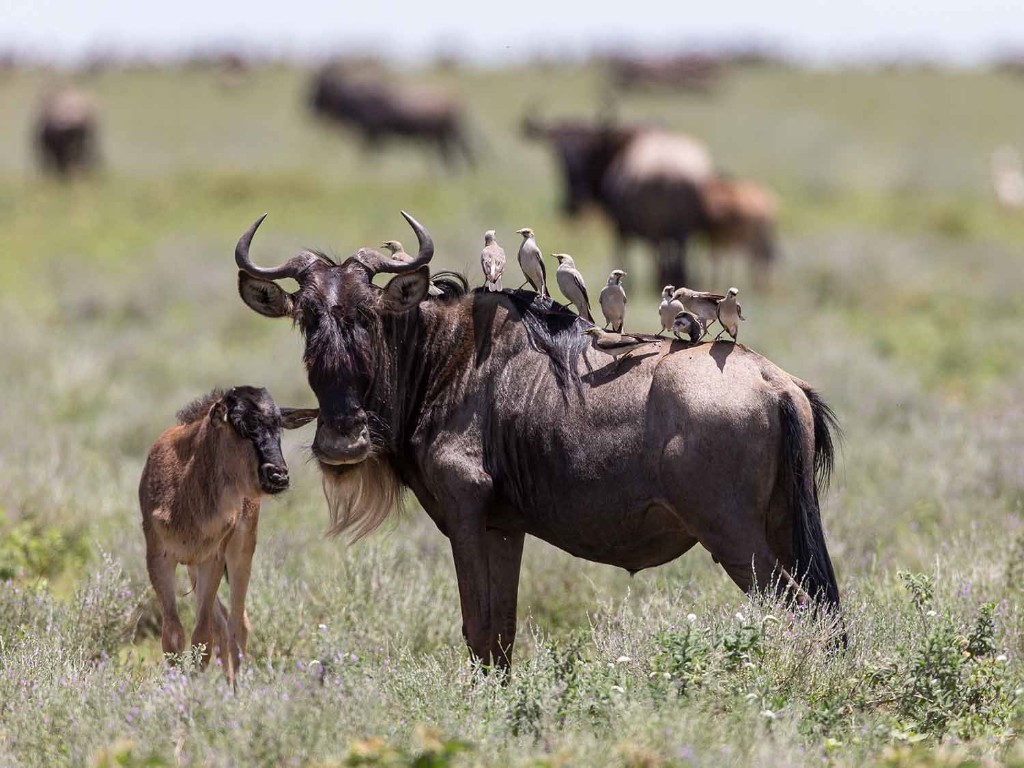
Newborn calves are among the main subjects during calving season, and their early movements can create powerful photographs. A calf attempting to stand may communicate vulnerability and determination, while a mother standing protectively nearby can provide context and emotional depth. However, photographers should never encourage a guide to disturb a mother and calf; the best images often come from waiting quietly at a suitable distance.
- Focus on behaviour: Look for natural interactions such as nursing, grooming and following behaviour.
- Include the environment: A wider composition can show the calf’s relationship with the herd and surrounding landscape.
- Watch the background: Busy backgrounds can distract from the subject; a slight change in vehicle position, where permitted, may improve the composition without disturbing wildlife.
- Be patient: Animals rarely behave according to a photographer’s schedule, and waiting for natural moments is often more rewarding than constantly moving between sightings.
Predator Photography During Calving Season
The concentration of newborn animals attracts predators.
Lions
Lions may be observed resting, travelling, interacting or hunting. Photographers should pay attention to body language and group behaviour, and a lion watching a herd can create a compelling image even when no hunt occurs.
Cheetahs
Cheetahs are particularly well suited to open grassland habitats. Their slender bodies and distinctive markings make them striking photographic subjects, and photographers may encounter resting animals, territorial behaviour or hunting activity.
Spotted Hyenas
Hyenas are often underestimated as photographic subjects, yet they exhibit complex social behaviour and are important predators in the ecosystem.
Jackals
Jackals may be encountered moving through grassland habitats or searching for food. Their smaller size can make longer focal lengths useful.
Ethical Predator Photography
Predator-prey encounters can be emotionally intense, and photographers must allow natural events to unfold without interference. Never ask a guide to block an animal’s escape route, separate a calf from its mother or position the vehicle in a way that alters hunting behaviour. Do not use the vehicle to chase animals, and respect all applicable park and conservation-area regulations. The welfare of wildlife is more important than obtaining a dramatic photograph.
Best Camera Lenses for Calving Season Photography
100–400mm Zoom Lens
A 100–400mm lens is versatile for wildlife photography. It allows photographers to capture individual animals, behavioural interactions and wider scenes without changing lenses constantly.
150–600mm Zoom Lens
A longer zoom can be useful for photographing smaller subjects or animals at greater distances, although long lenses can be heavier and more difficult to handle in moving vehicles.
70–200mm Lens
A 70–200mm lens is useful when animals are relatively close and for environmental compositions.
Wide-Angle Lens
A wide-angle lens can capture expansive grasslands, dramatic skies and large herd concentrations, and is particularly useful for establishing the scale of the migration.
Camera Bodies
A camera with reliable autofocus and good performance in changing light can be helpful. However, successful wildlife photography does not require the most expensive equipment; understanding animal behaviour and composition often matters more than owning the latest camera.
Recommended Camera Settings
Camera settings depend on light, movement and the desired result.
Shutter Speed
Fast-moving animals generally require faster shutter speeds. For running wildlife, photographers may begin around 1/1000 second or faster, adjusting according to conditions. For relatively stationary animals, slower shutter speeds may be practical.
Aperture
A wider aperture can help separate an animal from the background, while a smaller aperture may be preferable when photographing groups or landscapes.
ISO
Automatic ISO can be useful when light changes rapidly, although photographers should monitor image noise and exposure.
Autofocus
Continuous autofocus or animal-detection systems can help track moving subjects. The exact settings depend on the camera model.
Photographing Calves in Motion
Young wildebeest may move suddenly and unpredictably. A continuous autofocus mode can help maintain focus as the animal moves, and burst shooting may capture subtle changes in leg position and expression. However, taking large numbers of images is not a substitute for anticipating behaviour: watch the calf’s body language and the direction of movement, and leave space in the composition for the animal to move into.
Best Light for Calving Season Photography
Early Morning
Early morning often provides soft light and cooler conditions. Animals may be active, and low-angle sunlight can create attractive textures.
Late Afternoon
Late afternoon can produce warm light and long shadows, and is particularly suitable for environmental portraits and silhouettes.
Overcast Conditions
Cloud cover can create soft, even illumination, which may be useful for photographing dark-coated wildebeest without harsh shadows.
Rain and Dramatic Skies
Rain clouds can create atmospheric landscapes. However, equipment should be protected from moisture, and guides must assess road conditions.
Photographing Large Wildebeest Herds
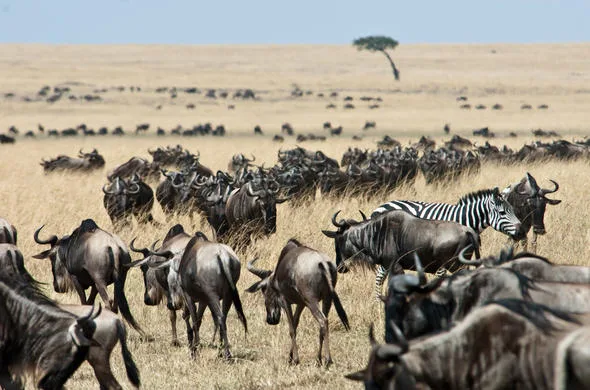
Large herds present a different challenge from individual animal portraits. A telephoto lens can compress the perspective and emphasise density, while a wider lens can show the scale of the landscape. Look for patterns, movement and natural lines formed by animals; dust, backlighting and clouds may add atmosphere. Avoid trying to include every animal in the frame, because a strong composition often focuses on a smaller section of the herd.
Storytelling Through Wildlife Photography
A compelling calving-season portfolio should include more than close-up portraits. Consider photographing the landscape, grazing herds, pregnant females, newborn calves, predators and environmental conditions. Together, these images can tell the story of a season. For example, a sequence might begin with wide photographs of the southern plains, followed by images of calves and their mothers, with predator activity and herd movement adding further context. The aim is to communicate the ecological significance of the calving season rather than simply collect isolated animal photographs.
Choosing a Safari Vehicle for Photography
Vehicle arrangements can strongly influence the photography experience. A private vehicle provides greater flexibility with positioning, waiting times and equipment storage, while shared vehicles can be more economical but may involve competing interests among passengers. Before booking, ask about the vehicle type, roof configuration, number of photographers and available space. A good guide should understand the importance of light direction, background and safe positioning, although all positioning must comply with local regulations and avoid disturbing animals.
Private Versus Group Photography Safaris
A private calving season photography safari allows travellers to set their own pace, and photographers may spend longer at a particular sighting or concentrate on specific subjects. A group photography safari can provide good value and opportunities to learn from other participants, although shared schedules may limit flexibility. The best choice depends on budget, photographic experience and personal preferences.
How Many Days Are Ideal?
Three nights can provide an introduction to the calving season, while four or five nights offer more opportunities to observe different behaviours and lighting conditions. Dedicated photographers may prefer a longer stay, because the additional time can be particularly useful when rainfall and animal movements are unpredictable.
Suggested Six-Day Calving Season Photography Safari
Day 1: Arrival in Arusha
Arrive in Arusha and transfer to your hotel. Meet your guide and review photographic interests, equipment and the itinerary.
Day 2: Arusha to Ndutu
Travel towards the Ndutu region and enjoy wildlife photography along suitable routes before reaching your accommodation.
Day 3: Newborn Wildebeest Photography
Spend the day searching for calving herds, focusing on maternal behaviour, newborn animals and environmental compositions.
Day 4: Predator and Wildlife Photography
Explore suitable habitats for lions, cheetahs, hyenas and other wildlife. Your guide will respond to current conditions and animal activity.
Day 5: Full-Day Ndutu Photography
Enjoy another day of photography, concentrating on subjects or locations that have proved productive. Use the morning and afternoon light to develop a varied portfolio.
Day 6: Return to Arusha
Return towards Arusha for your onward arrangements. The programme can be extended with additional days in the Serengeti or a separate Kenya safari.
Accommodation for Photography Safaris
Accommodation location matters because photographers often want to begin activities early. A camp close to productive wildlife areas can reduce travel time, although herd movements vary, so no location guarantees nearby calving activity. Essential and Comfort properties may suit budget-conscious photographers, while Premium and Signature accommodation can provide additional facilities and comfort. Battery charging, secure equipment storage and meal arrangements are particularly important.
What to Pack for Calving Season Photography
Essential photography and safari items for the southern Serengeti calving season include:
- Camera bodies and lenses suited to wildlife and landscape photography
- Spare batteries, memory cards, lens-cleaning equipment and dust protection
- A rain cover or waterproof camera bag for the wet-season period
- A beanbag for camera support inside a safari vehicle where permitted
- Binoculars for identifying distant subjects
- Lightweight clothing, a warm layer, sunscreen and personal medication
Managing Dust, Rain and Equipment
The southern Serengeti can present challenging conditions for camera equipment. Dust may be present during dry spells, while rain can arrive unexpectedly. Avoid changing lenses unnecessarily in dusty conditions, keep equipment protected when not in use, and carry cleaning materials with time for maintenance at the end of each day. Photographers using several cameras may prefer separate bodies with different lenses attached.
Combining Calving Photography with Kenya
A calving-focused safari can be combined with wildlife photography in Kenya. The Masai Mara offers opportunities to photograph lions, elephants, cheetahs and other resident wildlife. Amboseli is particularly attractive for elephant photography and Mount Kilimanjaro scenery, and Samburu provides opportunities to photograph distinctive northern wildlife. However, the main calving concentrations are generally in Tanzania during February, so a combined itinerary should account for travel distances, border arrangements and seasonal wildlife distribution. Views of Kilimanjaro are atmospheric but never guaranteed.
Calving Season Versus River Crossing Photography
These two migration experiences offer different photographic opportunities. Calving season is associated with newborn animals, maternal behaviour and predator activity on the southern plains. River crossing photography focuses on the movement of herds across rivers in the northern Serengeti and Masai Mara. River crossings can be dramatic but unpredictable, while calving offers broader opportunities to document young animals during the principal birth period, although specific events cannot be guaranteed. Photographers interested in both experiences may need separate journeys at different times of the year.
Common Photography Mistakes
One mistake is spending the entire safari searching for a dramatic predator encounter while ignoring quieter behaviour. Another is using only a long telephoto lens and missing wider environmental compositions. Photographers may also underestimate the importance of background, light direction and patient observation, and excessive vehicle movement can disturb wildlife and reduce opportunities for natural photographs. Finally, travellers should not expect every day to produce exceptional images; wildlife photography requires flexibility and an appreciation of unpredictable conditions.
Frequently Asked Questions
Where Is the Best Place for Calving Season Photography?
The southern Serengeti and Ndutu region are among the principal locations.
Is February the Best Month?
February is commonly associated with peak calving, although timing varies with seasonal conditions.
Can I Photograph Wildebeest Births?
It may be possible, but births cannot be predicted or guaranteed.
What Lens Is Best?
A versatile telephoto zoom such as 100–400mm can be useful, complemented by a wider lens for landscapes.
Do I Need a Private Vehicle?
Not necessarily, but a private vehicle offers greater flexibility for dedicated photographers.
Can I Combine Calving Photography with Kenya?
Yes. A longer itinerary can include the southern Serengeti and Kenyan destinations such as Amboseli or the Masai Mara.
Are Predator Hunts Guaranteed?
No. Predation is a natural and unpredictable process.
Plan Your Calving Season Photography Safari
Calving season photography offers a remarkable opportunity to document new life, herd behaviour and the ecological relationships that shape the Great Wildebeest Migration. From the first movements of newborn calves to the dramatic landscapes of the southern Serengeti, the season provides subjects for both experienced wildlife photographers and enthusiastic beginners. At Safari Trips to Kenya, we can help plan a photography-focused journey with suitable accommodation, guiding and transport arrangements. Contact our team with your preferred travel dates, group size and photography interests to request a personalised Ndutu and Serengeti calving season safari.