
9 DAYS / 8 NIGHTS
9 Days Migration Safari
Plan a 9 Days Migration Safari in Kenya with extended Masai Mara game drives, wildebeest viewing, river crossing opportunities and flexible safari camps.
- Wildlife Safari Private Journey
- Private Safari 4x4 Vehicle
- Expert Guide English Speaking
- All Meals Breakfast, Lunch, Dinner
- 24/7 Support We're here to help
01 Overview
Safari Overview
- Duration 9 days / 8 nights
- Destination Wildebeest Migration
- Starts / ends Nairobi
- Safari style Private safari
- Accommodation Essential · Comfort · Premium · Signature
- Best for Extended migration viewing, flexible Mara
The difference between a short migration safari and a longer stay in the Masai Mara is often the freedom to wait. Wildebeest do not cross rivers according to a visitor's itinerary, predators do not hunt on demand, and large herds may change direction after a night of rainfall. A 9 Days Migration Safari gives travellers more time to follow these natural events without turning every game drive into a race between sightings.
This proposed nine-day Kenya safari concentrates on the Masai Mara National Reserve and the surrounding Mara ecosystem. Rather than combining several distant national parks, it prioritises extended wildlife viewing in one of Africa's most productive savannah landscapes. Eight nights in the Mara region allow repeated visits to different wildlife areas, early morning departures, full-day game drives and flexibility when migration activity develops.
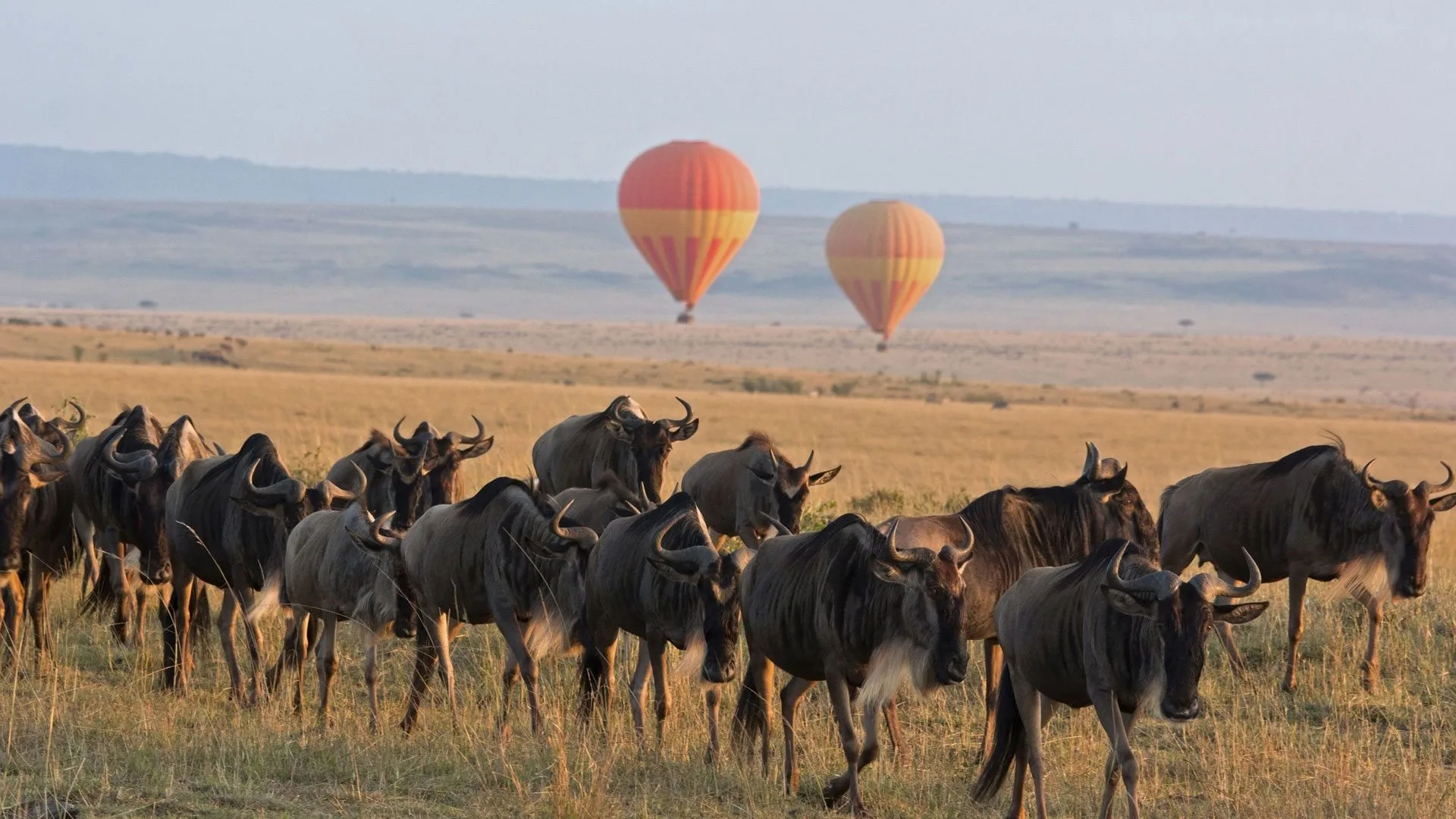
The Great Wildebeest Migration involves enormous numbers of grazing animals moving through the connected Serengeti–Mara ecosystem in response to rainfall, vegetation and water availability. During the usual July-to-October migration period, large herds may occupy the Masai Mara's grasslands, and some animals cross the Mara River. These crossings can be dramatic, but they are only one part of a much larger ecological process.
A longer safari allows travellers to appreciate the migration beyond the riverbanks. Wildebeest and zebras grazing across open plains, lions resting near prey concentrations, spotted hyenas moving through the grass and vultures gathering above a carcass all reveal how the ecosystem functions.
Safari Trips to Kenya can customise this Kenya Migration Safari for couples, families, wildlife photographers and small private groups. Accommodation can be arranged across Essential, Comfort, Premium and Signature categories, depending on the location, facilities and budget preferred.
9 Days Migration Safari Overview
| Duration | 9 days and 8 nights |
|---|---|
| Starting point | Nairobi, Kenya |
| Ending point | Nairobi, Kenya |
| Main destination | Masai Mara National Reserve and the wider Mara ecosystem |
| Suggested accommodation | Eight nights in the Masai Mara region, potentially divided between two suitable areas |
| Safari transport | Private 4x4 safari vehicle with a professional driver-guide |
| Main experiences | Wildlife game drives, migration herd observation, possible Mara River crossings, predator viewing and photography |
| Safari style | Private safari, with suitable small-group arrangements available on request |
The itinerary is designed around a substantial stay in the Mara because wildlife movements cannot be predicted accurately months in advance. Remaining within the ecosystem allows the guide to respond to current conditions rather than spending several days travelling between unrelated destinations.
For travellers who prefer to reduce road travel, domestic flights between Nairobi and a Mara airstrip may be considered. Flight schedules, baggage allowances, transfer arrangements and additional costs must be confirmed during booking.
This itinerary includes eight nights in the Masai Mara region. Depending on accommodation availability and wildlife priorities, the stay may be divided between two different areas to reduce daily travel distances.
Itinerary
- Day 1: Nairobi to Masai Mara, entering the Great Migration Ecosystem
- Day 2: Masai Mara, first Full, day Migration Exploration
- Day 3: Mara River, searching for Migration Crossing Activity
- Day 4: Masai Mara, big Cats and Predator Behaviour
- Day 5: Masai Mara, exploring Different Wildlife Habitats
- Day 6: Masai Mara, following the Herds and Changing Wildlife Activity
- Day 7: Masai Mara, wildlife Photography and Optional Activities
- Day 8: Masai Mara, final Full Day of Migration Viewing
- Day 9: Masai Mara to Nairobi, end of the Safari

02 Itinerary
9 Days Migration Safari: Detailed Itinerary
-

Day 1: Nairobi to Masai Mara – Entering the Great Migration Ecosystem - Main destination
- Masai Mara National Reserve
- Drive time
- 5–7 hours or longer
- Meals
- Dinner
Your safari begins with collection from your Nairobi hotel or another agreed location. After meeting your driver-guide, travel southwest through Kenya's highland countryside towards the Masai Mara. The journey normally takes approximately five to seven hours, depending on road conditions, traffic and the location of your accommodation.
The drive introduces the geographical transition from Nairobi's urban surroundings to the broad landscapes of the Great Rift Valley region. Along the way, suitable stops may be arranged for refreshments, photographs and short breaks.
As you approach the Mara, the scenery changes to open grasslands, rolling hills and scattered woodland. These habitats support the resident wildlife that makes the reserve rewarding throughout the year.
After arrival and lunch, depending on the schedule, enjoy an introductory afternoon game drive. Your guide will explain the current wildlife conditions and discuss possible routes for the following days.
-
Day 2: Masai Mara – First Full-Day Migration Exploration - Main destination
- Masai Mara National Reserve
- Meals
- Breakfast, Lunch, Dinner
Begin with an early game drive across the Mara grasslands. Morning temperatures are often cooler, and some predators may be more active before the heat of the day.
During migration season, the guide will look for concentrations of wildebeest and zebras. Herds may be grazing, travelling between feeding areas or resting after extended movement. Their distribution can change rapidly, making local knowledge and current observations valuable.
The Masai Mara also supports lions, cheetahs, elephants, buffaloes, giraffes, hyenas and many other species. These resident animals provide excellent viewing opportunities even when migration herds are elsewhere.
A full-day game drive with a packed lunch may be arranged when the most promising wildlife areas are far from the camp. Alternatively, travellers may return to the accommodation for lunch before another afternoon outing.
Photography focus: Grazing herds, savannah landscapes and predator activity.
-
Day 3: Mara River – Searching for Migration Crossing Activity - Meals
- Breakfast, Lunch, Dinner
Today's programme may concentrate on accessible areas near the Mara River, depending on current herd movements and the location of your accommodation.
The river is an important habitat for hippos, crocodiles, birds and other wildlife. During migration season, wildebeest and zebras sometimes gather near crossing points, creating opportunities to observe their behaviour.
A herd may approach the river and hesitate for hours. Some animals may enter the water, while others move away without crossing. The guide will assess the situation and follow the relevant wildlife-viewing regulations.
Responsible viewing is particularly important around crossing areas. Vehicles should not block animal movement, crowd sensitive locations or disturb wildlife in an attempt to create a dramatic encounter.
If no crossing occurs, the day can still be rewarding. Riverine woodland, nearby grasslands and water-associated wildlife provide a different experience from the open plains.
Main focus: Mara River habitats and possible migration activity.
-
Day 4: Masai Mara – Big Cats and Predator Behaviour - Main destination
- Masai Mara National Reserve
- Meals
- Breakfast, Lunch, Dinner
The fourth day focuses on the predators that make the Masai Mara one of Africa's most important wildlife destinations.
Lions may be encountered resting in the grass, moving between territories or interacting with other pride members. Their behaviour changes with temperature, prey availability and social circumstances.
Cheetahs often use relatively open habitats where they can scan the landscape for prey. Watching a cheetah search for suitable hunting conditions can be fascinating even when no chase takes place.
Leopards are more elusive and may use woodland, riverine vegetation and other areas offering cover. Finding one requires patience and careful observation.
The guide will adjust the day's route according to wildlife activity. Spending additional time at an interesting sighting can be more rewarding than travelling quickly between distant locations.
Main focus: Lions, cheetahs, leopards and hyenas.
-
Day 5: Masai Mara – Exploring Different Wildlife Habitats - Main destination
- Masai Mara National Reserve
- Meals
- Breakfast, Lunch, Dinner
The Mara ecosystem includes more than open grassland. Riverine woodland, seasonal drainage areas, rolling hills and scattered trees create habitats for different species.
Today's game drives may explore areas that have received less attention during the previous days. The aim is to broaden the wildlife experience and observe how different animals use the landscape.
Elephants may be encountered moving between feeding areas, while giraffes browse among trees and antelopes graze across open plains. Birds of prey, vultures and smaller species also provide interesting opportunities.
Travellers interested in photography may spend additional time observing animal behaviour or experimenting with different compositions. The guide can help position the vehicle appropriately without disturbing wildlife.
Main focus: Habitat diversity, elephants, giraffes and birdlife.
-
Day 6: Masai Mara – Following the Herds and Changing Wildlife Activity - Main destination
- Masai Mara National Reserve
- Meals
- Breakfast, Lunch, Dinner
By the sixth day, your guide will have developed a clearer understanding of wildlife activity during your particular visit. This information can help determine which areas deserve further exploration.
If migration herds are present, the programme may concentrate on their general movements across accessible grassland areas. Large groups of wildebeest and zebras can create impressive scenes even when no river crossing takes place.
The migration also influences other animals. Predators may respond to the availability of prey, while scavengers benefit from carcasses left behind by natural mortality and hunting.
The guide may recommend an extended game drive with a packed lunch when wildlife activity is concentrated far from the accommodation.
Main focus: Migration herds, grazing behaviour and predator–prey relationships.
-
Day 7: Masai Mara – Wildlife Photography and Optional Activities - Main destination
- Masai Mara National Reserve
- Meals
- Breakfast, Lunch, Dinner
The seventh day offers flexibility for travellers with particular interests. Wildlife photographers may wish to concentrate on early morning light, while birdwatchers may prefer habitats supporting raptors and smaller species.
A Masai Mara Hot Air Balloon Safari may be arranged as an optional activity where available. Balloon flights generally begin around sunrise and provide a different perspective of the landscape. Availability, weather conditions and additional charges must be confirmed in advance.
Travellers who prefer to remain on the ground can continue with normal game drives. The guide may revisit areas where interesting wildlife activity was observed earlier in the safari.
An optional cultural visit may also be considered, subject to suitable arrangements and respectful engagement with the host community.
Optional activities: Hot air balloon safari or cultural visit, where available.
-
Day 8: Masai Mara – Final Full Day of Migration Viewing - Main destination
- Masai Mara National Reserve
- Meals
- Breakfast, Lunch, Dinner
The final full day allows another opportunity to explore the most promising wildlife areas. If large migration herds are present near an accessible river crossing location, the guide may recommend returning.
However, the decision should be based on current conditions rather than expectations of a guaranteed crossing. Even during peak season, herds may remain away from the river for extended periods.
Travellers may instead concentrate on resident wildlife, landscapes or species that have been difficult to observe during previous days.
As the afternoon light changes, the Mara's grasslands often provide attractive photographic conditions. This final evening is an opportunity to enjoy the landscape without the pressure of another transfer.
Main focus: Preferred wildlife interests and final migration opportunities.
-
Day 9: Masai Mara to Nairobi – End of the Safari - Main destination
- Masai Mara National Reserve
- Drive time
- 5–7 hours or longer
- Meals
- Breakfast, Dinner
After breakfast, depart the Masai Mara for Nairobi. The road journey normally takes approximately five to seven hours, although traffic and road conditions can extend the transfer.
The return journey provides an opportunity to reflect on the wildlife experiences of the previous eight days. Depending on the season and natural conditions, these may have included large migration herds, predator encounters, elephants, birds and the distinctive landscapes of the Mara ecosystem.
Arrival in Nairobi is generally planned for the afternoon, followed by drop-off at an agreed location. Travellers connecting with international flights should allow sufficient time for road delays and airport procedures.
A domestic flight from the Mara to Nairobi may be arranged as an alternative, subject to availability and additional cost.
03 Rates
Safari rates 2027-2029
Indicative per person. Season, group size and lodge style change the total — your quotation confirms current rates.
-
Essential (Budget)
Essential (Budget)
Budget camps and lodges suit travelers who prioritize wildlife while keeping costs lower.
Great value camps
-
Comfort (Mid-range)
Comfort (Mid-range)
Mid-range tented camps and lodges balance comfort and price with private rooms or tents and en-suite facilities.
Quoted for your dates
-
Premium (Luxury)
Premium (Luxury)
Luxury camps and lodges focus on location, service and more intimate wildlife experiences.
Premium camps and lodges
-
Signature (High-end)
Signature (High-end)
Signature camps and lodges are the most exclusive stays — small, highly private properties with exceptional guiding and setting.
Exclusive signature stays
04 Activities
Safari activities
Game viewing is the core of this itinerary. Optional extras are quoted separately and depend on season, permits and availability. Individual species and river crossings are never guaranteed.

Additional information
Plan This Safari
What Makes a Nine-Day Migration Safari Worthwhile?
The greatest advantage of a 9 Days Masai Mara Safari is flexibility. A two-night visit may provide memorable wildlife encounters, but it offers limited opportunities to respond when the animals are far from the accommodation or when rain affects access to certain tracks.
With eight nights, the guide can explore different sections of the ecosystem. Some days may be devoted to migration herds, while others focus on resident wildlife, birds, landscapes and predator behaviour.
The longer stay also makes it possible to photograph the same species under different conditions. A lion pride that spends one afternoon sleeping may become active the following morning. Elephants may cross open grassland in beautiful evening light after remaining in woodland earlier in the day.
Travellers interested in river crossings benefit from having several possible viewing days. However, additional time improves opportunity rather than guaranteeing an event. Even a nine-day visit cannot promise a crossing because herd movements remain entirely natural.
A longer itinerary is also more comfortable for visitors who prefer not to change accommodation every night. Staying in one or two carefully selected camps reduces packing, transfers and unnecessary interruptions.
Understanding the Great Wildebeest Migration
The migration is an annual movement of grazing animals across the Serengeti–Mara ecosystem, which extends between northern Tanzania and southwestern Kenya.
Wildebeest form the most recognisable component of the movement, accompanied by large numbers of zebras and other herbivores. The animals seek suitable grazing and water as seasonal conditions change.
Although the migration is often illustrated as a circular route, the actual movements are more complicated. Herds can separate into different groups, travel in several directions and revisit grazing areas when conditions remain favourable.
The Masai Mara is generally associated with the northern phase of the migration. During the usual migration season, animals may enter Kenya from the Serengeti, spread across the Mara grasslands and move between different grazing areas.
The Mara River creates one of the migration's most famous obstacles. Some herds cross the river repeatedly, while others remain away from the water. River levels, crossing points, herd behaviour and local conditions influence what happens.
For safari planning, it is important to distinguish between seeing migration herds and witnessing a river crossing. Large grazing concentrations may be observed without any animals entering the river.
Best Time for a 9 Days Migration Safari in Kenya
July – Early Northern Migration Opportunities
July is commonly associated with the arrival of substantial migration herds in the Mara ecosystem. The exact timing depends on rainfall and grazing conditions, and some years may produce earlier or later movements.
Travellers visiting in July may encounter large wildebeest concentrations, but it is important not to assume that river crossings will already be taking place.
August – Popular Migration Viewing Season
August is among the busiest months for Masai Mara Migration Safaris. Large herds may be present, and crossing activity is often possible during this period.
High demand can affect accommodation availability and prices. Popular wildlife sightings may also attract many vehicles, making responsible guiding particularly important.
September – Extended Herd Viewing Opportunities
September can be rewarding for migration viewing, especially when substantial herds remain in the northern ecosystem. Some animals may move repeatedly between grazing areas or across rivers.
The month is also attractive for general wildlife photography because open grasslands provide opportunities to observe predators and large herbivores.
October – Changing Herd Distribution
October is often associated with the later stages of the main migration viewing period in Kenya. Some herds may begin moving south as seasonal conditions change, while others remain where grazing is favourable.
Travellers should rely on current wildlife information rather than assuming all animals leave Kenya on a particular date.
Other Months – Resident Wildlife Safaris
The Masai Mara remains a rewarding wildlife destination outside the main migration period. Lions, cheetahs, leopards, elephants, buffaloes, giraffes, antelopes and many birds are present throughout the year.
A nine-day safari outside migration season may therefore be excellent for travellers interested in predators, photography and a quieter wildlife experience.
Why River Crossings Cannot Be Guaranteed
A Mara River Crossing Safari is one of the most sought-after wildlife experiences in East Africa, but crossings are unpredictable.
Wildebeest may gather near a riverbank and hesitate because of steep slopes, water conditions, crocodiles or the behaviour of other animals. A crossing may begin suddenly or fail to happen at all.
Even when a crossing occurs, the location may be difficult to reach from a particular camp. Some crossing points are far apart, and wildlife-viewing rules limit where vehicles can travel.
A nine-day stay provides additional opportunities to respond to migration activity, but it does not remove these natural uncertainties.
Travellers should therefore approach the safari with an interest in the entire ecosystem rather than judging success solely by whether animals enter the river.
Masai Mara National Reserve and Surrounding Conservancies
The Masai Mara National Reserve is one of Kenya's best-known wildlife areas and contains important sections of the Mara River.
Surrounding conservancies form part of the wider Mara ecosystem. These areas can provide excellent resident wildlife viewing and may offer different accommodation and visitor-management arrangements.
However, conservancy accommodation does not automatically provide unrestricted access to the national reserve. Separate entry fees, access conditions and driving arrangements may apply.
For migration-focused safaris, the location of the accommodation should be considered carefully. A camp that is excellent for general wildlife viewing may not be the most convenient base for reaching particular river areas.
Some travellers may benefit from dividing their eight nights between two locations. This can reduce repeated long drives and provide access to different habitats.
The final accommodation plan should reflect travel dates, current access arrangements and the traveller's interests.
Accommodation Categories for the 9 Days Migration Safari
Essential Safari Accommodation
Essential Masai Mara Camps focus on practical accommodation for travellers who prioritise wildlife activities and affordability. Facilities may be simpler, and some properties are located outside the main reserve.
Comfort Safari Accommodation
Comfort Safari Camps provide a balance between cost, amenities and convenience. They are suitable for couples, families and small groups seeking comfortable accommodation without premium luxury pricing.
Premium Safari Accommodation
Premium Masai Mara Camps may offer more spacious rooms, attractive settings and additional services. Their location can be particularly important for travellers who want to maximise time on game drives.
Signature Safari Accommodation
Signature Safari Camps focus on high-end accommodation, distinctive locations and personalised service. Travellers choosing this category may prioritise privacy, exceptional settings and additional amenities.
Accommodation availability can be limited during the busiest migration months. Early reservations are recommended, especially for travellers who prefer specific locations or room categories.
Private Versus Group Migration Safaris
A Private Masai Mara Safari provides greater flexibility in daily schedules and wildlife-viewing priorities. The guide can adjust routes, spend longer at sightings and respond to changing migration activity.
Private arrangements are particularly suitable for photographers, families and travellers who want a personalised experience.
A Kenya Group Safari may reduce the cost per person when transport and guiding expenses are shared. However, group departures usually operate with more fixed schedules.
For a migration-focused itinerary, flexibility can be especially valuable. Wildlife activity may develop unexpectedly, and different travellers may have different preferences about how long to remain at a sighting.
Small groups with compatible interests can still enjoy an excellent safari, provided expectations are discussed before departure.
How Much Does a 9 Days Migration Safari Cost?
The cost depends on travel dates, accommodation category, transport arrangements, number of participants and applicable reserve fees.
July to October is generally a high-demand period in the Masai Mara. Accommodation rates may be higher, and popular camps can fill well in advance.
A private safari vehicle generally costs more per person for a solo traveller than for a couple or small group sharing the same transport.
Accommodation location can also influence the price. Properties inside the reserve or in particular conservancies may have different fee structures and access arrangements.
Domestic flights, balloon safaris and premium accommodation increase the overall cost when added to the programme.
For an accurate quotation, provide your preferred travel dates, number of travellers and accommodation category.
Responsible Wildlife Viewing During Migration Season
The migration is an important ecological process, and responsible tourism should avoid interfering with animal movements.
Safari vehicles must follow the rules of the relevant reserve or conservancy. Drivers should avoid obstructing crossing points, surrounding animals or creating unnecessary pressure on wildlife.
At river crossings, patience is essential. A dramatic photograph should never take priority over animal welfare.
Travellers should also respect other visitors by avoiding unnecessary crowding and allowing reasonable viewing opportunities.
Choosing a guide who understands wildlife behaviour and conservation principles can improve both the safari experience and the quality of wildlife observation.
Practical Advice for Your Migration Safari
Book early for July to September
Popular camps can become fully booked well in advance during peak migration months. Early planning provides a wider choice of accommodation and vehicle arrangements.
Allow time for wildlife observation
The migration is unpredictable. Avoid planning every game drive around a fixed list of sightings.
Bring suitable clothing
Early mornings can be cool because of the Mara's elevation. Warm layers, comfortable clothing, sun protection and a light waterproof jacket are useful.
Carry binoculars and a camera
Binoculars help with distant wildlife observation. A camera with a zoom lens is useful for photographing animals without approaching them too closely.
Prepare for rough roads
Some safari tracks are uneven, especially after rain. Travellers with mobility concerns should discuss vehicle comfort and daily driving distances before booking.
Check travel requirements
International visitors should verify current Kenyan entry requirements, passport validity and relevant health recommendations before departure.
Book Your 9 Days Migration Safari
A 9 Days Migration Safari is designed for travellers who want time to understand the Masai Mara rather than simply visit it. The extended stay provides opportunities to observe migration herds, predators, elephants, birds and the changing landscapes of the Mara ecosystem.
Safari Trips to Kenya can customise the itinerary according to your preferred dates, accommodation category and wildlife interests. Private departures provide flexibility, while suitable small-group arrangements may be considered for travellers who prefer shared transport.
Contact Safari Trips to Kenya with your travel dates, number of participants and preferred accommodation standard to request a personalised Great Wildebeest Migration Safari quotation.
Planning Questions
Frequently Asked Questions
Is nine days too long for the Masai Mara?
No. Nine days can be particularly rewarding for travellers interested in wildlife behaviour, photography and migration activity. The longer stay provides more opportunities to explore different habitats.
What is the best month for the migration?
July to October is the usual planning window for migration viewing in the Masai Mara. August and September are popular, but herd movements vary between years.
Can we guarantee a Mara River crossing?
No. Crossings depend on natural wildlife behaviour and cannot be scheduled or guaranteed.
Can we see wildlife outside migration season?
Yes. The Masai Mara supports resident lions, cheetahs, leopards, elephants, buffaloes, giraffes and many other animals throughout the year.
Is a private safari better for migration viewing?
A private safari provides greater flexibility, particularly when wildlife activity changes unexpectedly. However, suitable small-group safaris can also be rewarding.
Can we fly from Nairobi to the Mara?
Yes. Domestic flights may be arranged between Nairobi and suitable Mara airstrips, subject to schedules, availability and baggage restrictions.
Can children join this safari?
Yes. The programme can be adapted for families, although parents should consider children's ages, interests and tolerance for long game drives.
Can we combine the safari with another Kenyan destination?
Yes. Additional destinations can be included, although this reduces the time available for migration viewing unless the overall holiday is extended.
05 Request Quote
Request Quote
Tell us your dates, group size, and preferred lodge style — we will send a tailored quote for this safari.
Want to extend your safari?
Add Amboseli, Diani Beach, Tanzania and Zanzibar, or gorilla trekking in Uganda or Rwanda — we tailor the journey to your dates.