
8 DAYS / 7 NIGHTS
8 Days Migration Safari Kenya
Experience an 8 Days Migration Safari Kenya with multiple Masai Mara game drives, wildebeest herds, big cats, Mara River searches and optional balloon safari.
- Wildlife Safari Private Journey
- Private Safari 4x4 Vehicle
- Expert Guide English Speaking
- All Meals Breakfast, Lunch, Dinner
- 24/7 Support We're here to help
01 Overview
Safari Overview
- Duration 8 days / 7 nights
- Destination Wildebeest Migration
- Starts / ends Nairobi
- Safari style Private 4×4 safari
- Accommodation Essential · Comfort · Premium · Signature
- Best for Wildlife viewing, photography
8 Days Migration Safari Kenya – Great Wildebeest Migration, Mara River & Big Cat Adventure
An 8 Days Migration Safari Kenya is designed for travelers who want enough time in the Masai Mara ecosystem to experience the Great Wildebeest Migration properly rather than treating it as a brief stop between several unrelated national parks. The Great Migration is one of the most extraordinary wildlife movements on Earth. Huge numbers of wildebeest, accompanied by zebras and other grazing animals, move continuously through the wider Serengeti–Mara ecosystem in response to rainfall, fresh pasture and water availability. When major herds enter the Kenyan section of the ecosystem, the Masai Mara can become one of the most dramatic wildlife landscapes in Africa.
The plains may contain thousands upon thousands of wildebeest. Long lines of animals can stretch toward the horizon. Zebras move among them. Lion prides position themselves near concentrations of prey.
Spotted hyenas follow the herds. Cheetahs scan open grasslands. Vultures circle above carcasses. And at certain times, some migrating groups approach the Mara River, creating the possibility of the dramatic river crossings for which the migration has become internationally famous.
However, a migration safari must be planned with realistic expectations. The migration does not operate according to a fixed schedule. There is no guaranteed river crossing at 10:00 in the morning. There is no single permanent wildebeest herd that remains in one location for tourists.
The animals move constantly. Rainfall patterns change. Fresh grass develops in different areas. Individual herds can separate and reunite.
One group may cross a river while another remains several kilometers away. For this reason, one of the greatest advantages of an eight-day Kenya migration safari is time. Instead of having only one full day in Masai Mara and hoping that everything happens immediately, travelers have several days to search different migration sectors, follow recent herd movements, visit river areas when conditions look promising and still enjoy the Mara's exceptional resident wildlife.
This itinerary can be operated as:
- Private road safari
- Luxury fly-in safari
- Mid-range migration safari
- Budget migration safari
- Photography safari
- Honeymoon safari
- Family migration safari
- Private conservancy and reserve combination
- Specialist big-cat safari
- Safari-and-beach itinerary
8 Days Migration Safari Kenya at a Glance
- Day 1: Nairobi to Masai Mara – Enter Great Migration Country
- Day 2: Full-Day Masai Mara Migration Safari – Locate Major Wildebeest Herds
- Day 3: Mara River Safari – Search for Crossing Activity
- Day 4: Full-Day Migration Tracking – Wildebeest, Zebras & Predators
- Day 5: Big Cat & Migration Safari – Lions, Cheetahs, Leopards & Hyenas
- Day 6: Northern or Central Mara Migration Exploration – Flexible Herd Tracking
- Day 7: Final Full-Day Migration Safari – Optional Hot-Air Balloon Safari
- Day 8: Masai Mara to Nairobi – Departure or Beach Extension
The exact route inside the Mara should remain flexible. That flexibility is essential because migration conditions can change daily.
Why Eight Days Is Excellent for a Kenya Migration Safari
A migration safari is different from a conventional itinerary focused simply on visiting several parks. The main objective is not to collect destination names. It is to give yourself enough time to experience one extraordinary ecosystem while it is undergoing large-scale seasonal wildlife movement.
Eight days allows travelers to:
- Spend several nights in Masai Mara
- Search multiple migration sectors
- React to changing herd movements
- Dedicate time to the Mara River
- Wait when river conditions look promising
- Move elsewhere when waiting is unlikely to be productive
- Search repeatedly for big cats
- Spend longer at predator sightings
- Include a balloon safari
- Photograph migration at different times of day
- Explore reserve and conservancy areas
- Avoid treating the migration as a rushed checklist experience
The additional time is particularly important for travelers whose main goal is seeing large wildebeest concentrations or possible river-crossing activity.
Itinerary
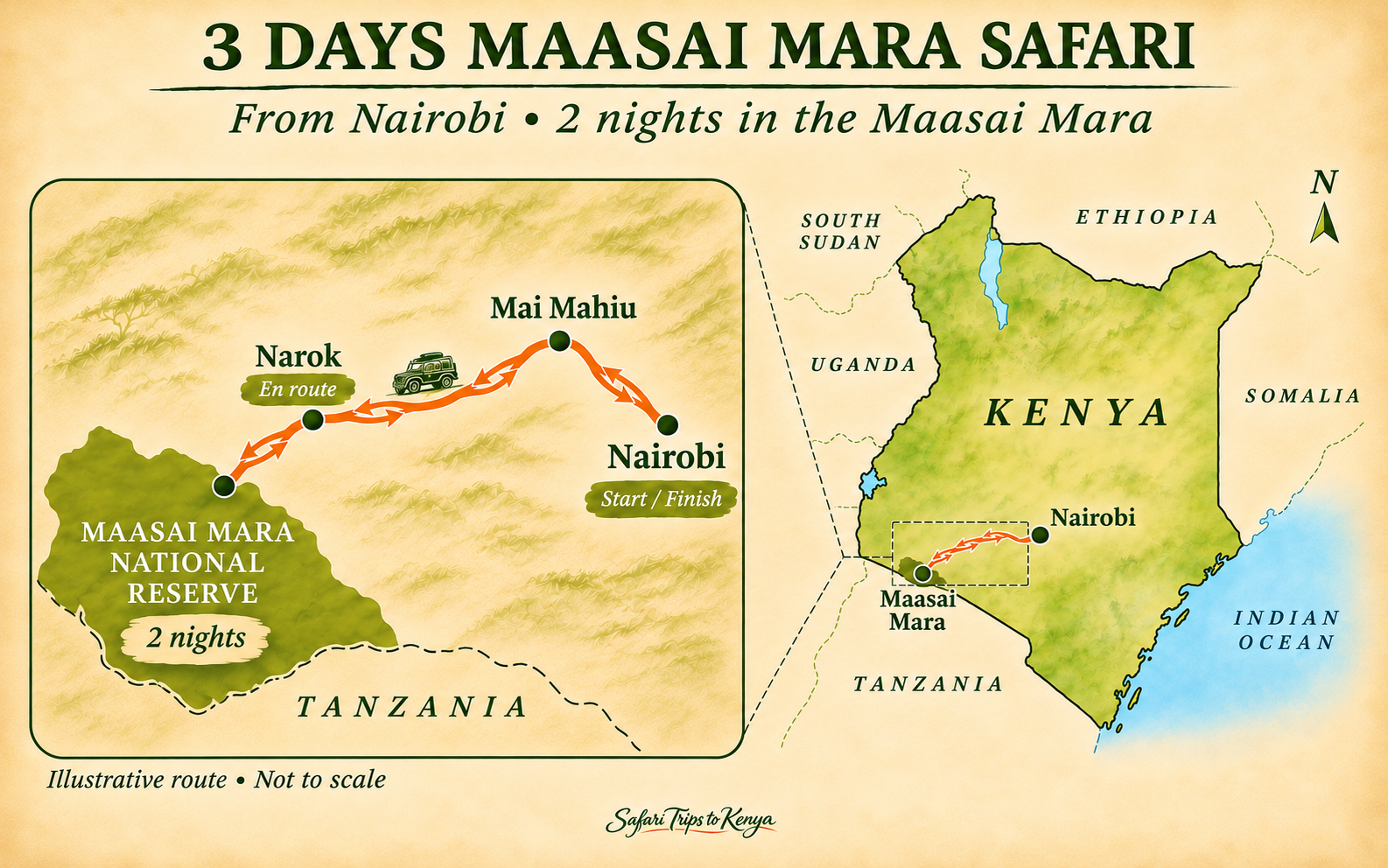
- Day 1: Nairobi to Masai Mara, enter Kenya's Great Migration Ecosystem
- Day 2: Masai Mara Migration Safari – Locate Major Wildebeest & Zebra Herds
- Day 3: Mara River Safari, search for Wildebeest Crossing Activity
- Day 4: Migration Tracking – Follow Herds Across the Mara Plains
- Day 5: Big Cat & Migration Safari, lions, Leopards, Cheetahs & Hyenas
- Day 6: Northern or Central Mara Migration Exploration, flexible Herd Tracking
- Day 7: Final Full, day Migration Safari, optional Hot, air Balloon Safari
- Day 8: Morning game drive – return to Nairobi
02 Itinerary
8 Days Migration Safari Kenya: Detailed Itinerary
-

Day 1: Nairobi to Masai Mara – Enter Kenya's Great Migration Ecosystem - Main destination
- Masai Mara National Reserve
- Drive time
- Road transfer as outlined in the itinerary
- Meals
- Lunch, Dinner
Your 8 Days Migration Safari Kenya begins in Nairobi.
Your professional safari driver-guide will meet you at your hotel, residence, airport or another agreed departure point.
After introductions and luggage loading, the guide will provide a briefing about the safari ahead.
This briefing should include one important point from the beginning:
The migration is natural and unpredictable.
Your guide can use experience, current field information, weather observations and wildlife reports to determine productive areas, but no one can control the location or timing of the herds.
With expectations properly set, begin the journey toward the Masai Mara.
Nairobi to Masai Mara Road Journey
The overland route travels southwest from Nairobi toward the Great Rift Valley.
Depending on traffic, departure time and the chosen route, a short stop may be made at an elevated viewpoint.
From here, travelers can appreciate part of the immense Rift Valley landscape.
Continue toward Narok.
Narok is one of the main gateway towns serving the Mara region.
A comfort and refreshment stop can be arranged before continuing toward your camp.
As you travel farther west and south, the scenery becomes increasingly open.
You may see:
- Maasai homesteads
- Cattle
- Sheep and goats
- Open grasslands
- Acacia trees
- Rolling hills
During peak migration periods, wildlife may begin appearing even before you reach the core reserve.
Arrive at your lodge or tented camp during the afternoon.
Check in and have lunch or refreshments depending on timing.
First Migration Game Drive
After settling in, head out with your guide for the first Masai Mara wildlife drive.
The guide will begin assessing current migration conditions.
Questions that may influence the route include:
- Where were major wildebeest concentrations reported?
- Are herds moving toward or away from river systems?
- Have recent rains changed grazing conditions?
- Are predators concentrated around particular herds?
- Which sectors are currently most productive?
Possible first sightings include: Wildebeest, Plains zebras, Topis, Thomson's gazelles, Grant's gazelles, Elephants, Buffaloes, Giraffes, Lions, Hyenas, Cheetahs.
If major migration herds are nearby, the guide may head directly toward them.
If not, use the afternoon to enjoy resident wildlife while preparing a stronger migration strategy for the following morning.
Your First Wildebeest Herd
Seeing the migration for the first time can be difficult to describe.
The experience is not simply about one animal.
It is about scale.
A few wildebeest become hundreds.
Hundreds become thousands.
The landscape begins filling with dark shapes.
Their calls carry across the plains.
Dust may rise as groups move.
Zebras weave through the herds.
Calves remain close to adults.
Predators watch from surrounding cover.
The sheer number of animals fundamentally changes the feeling of the landscape.
Continue wildlife viewing until late afternoon.
Return to your lodge or camp for dinner.
Destination: Masai Mara ecosystem
Main activities: Nairobi–Masai Mara transfer and afternoon game drive
Migration highlights: First wildebeest herds, zebras, predators and open savannah
Meals: Lunch and dinner depending on arrival time
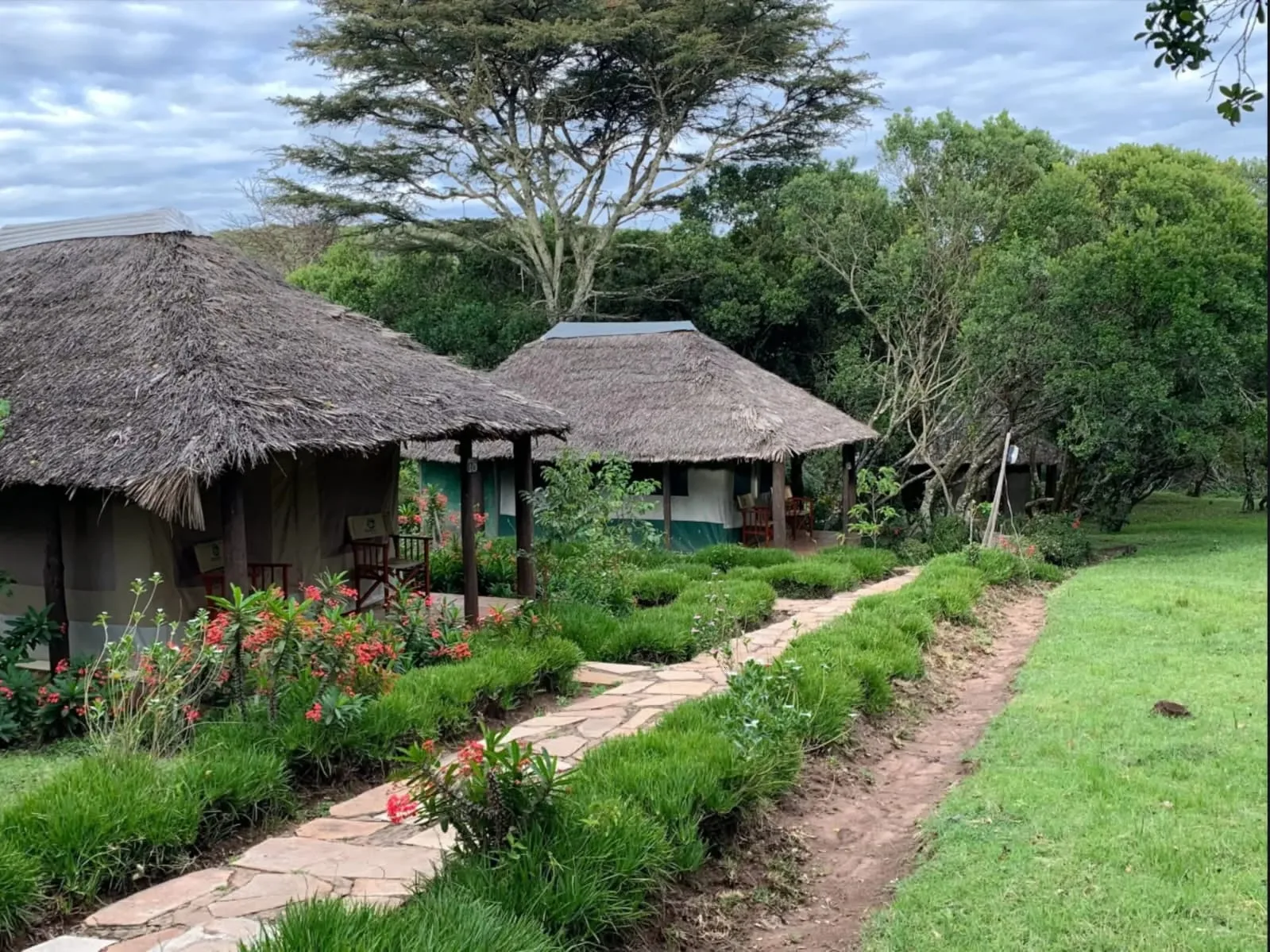
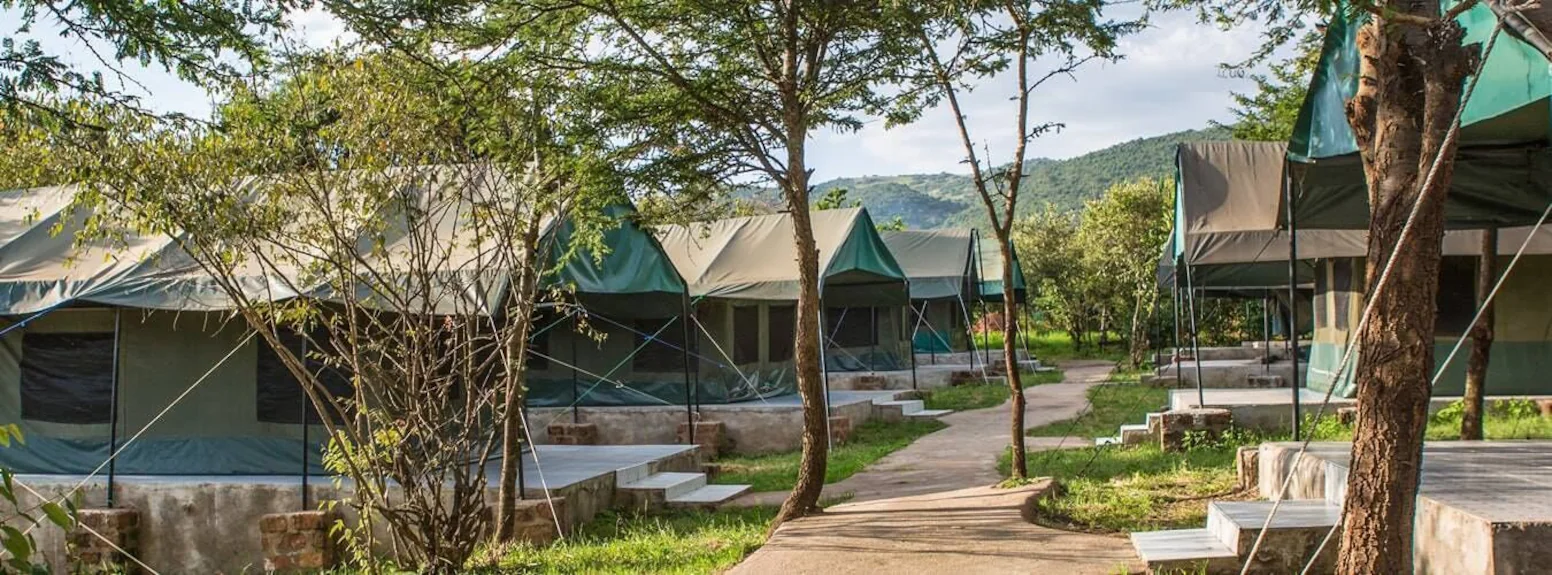
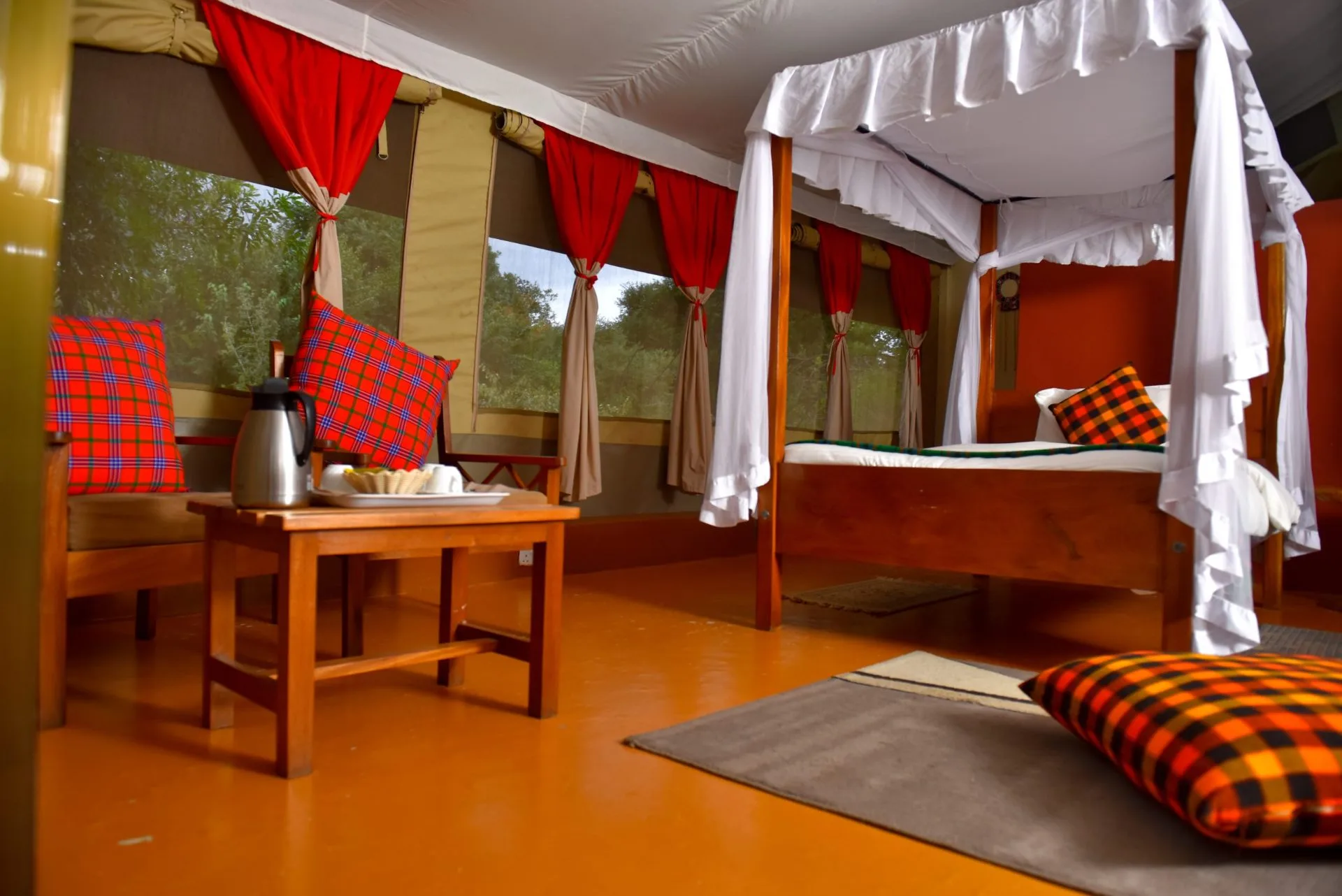
Accommodation: Budget, mid-range, luxury or high-end lodge/tented camp in or around Masai Mara
Where you stay
-
Essential (Budget)
-
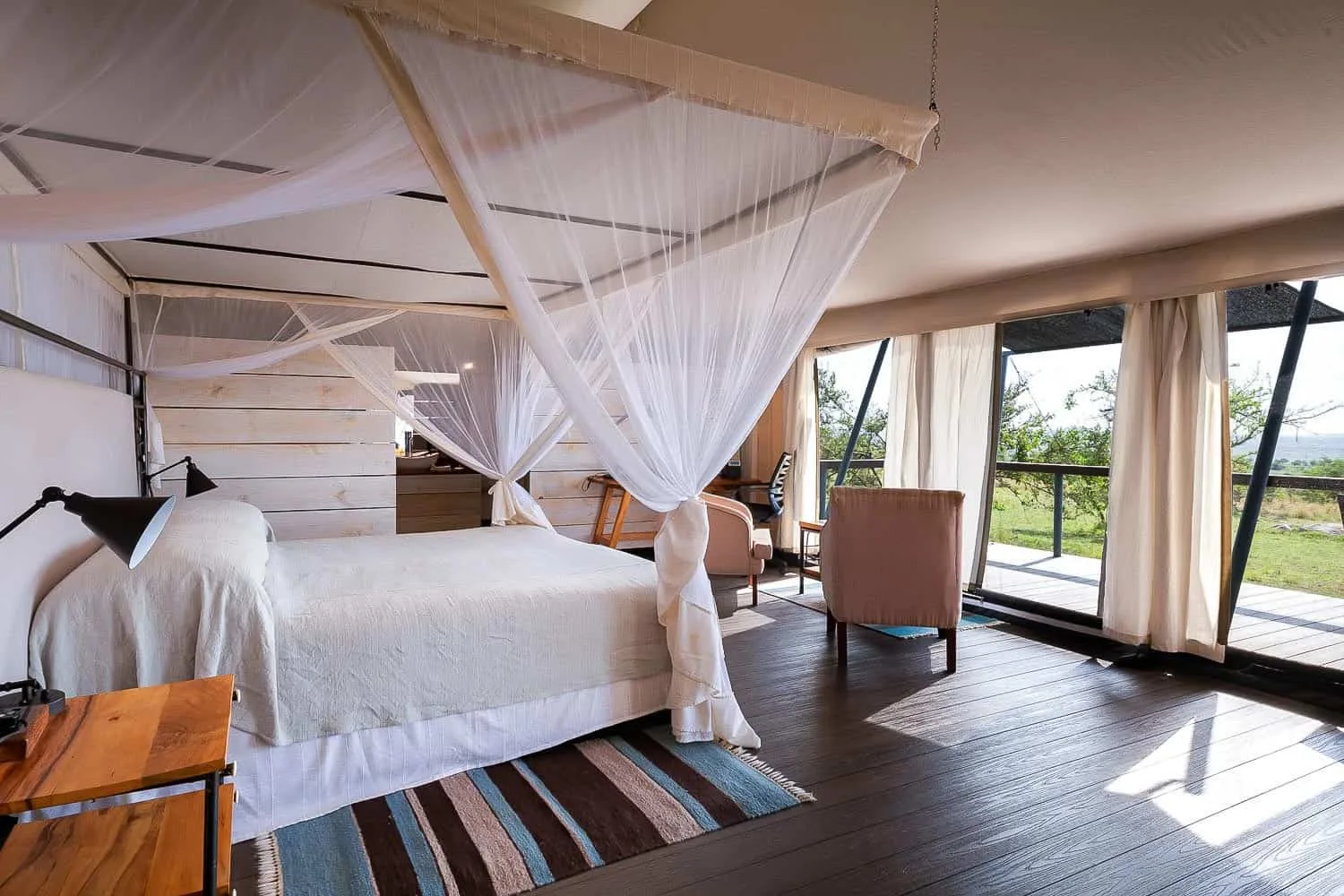
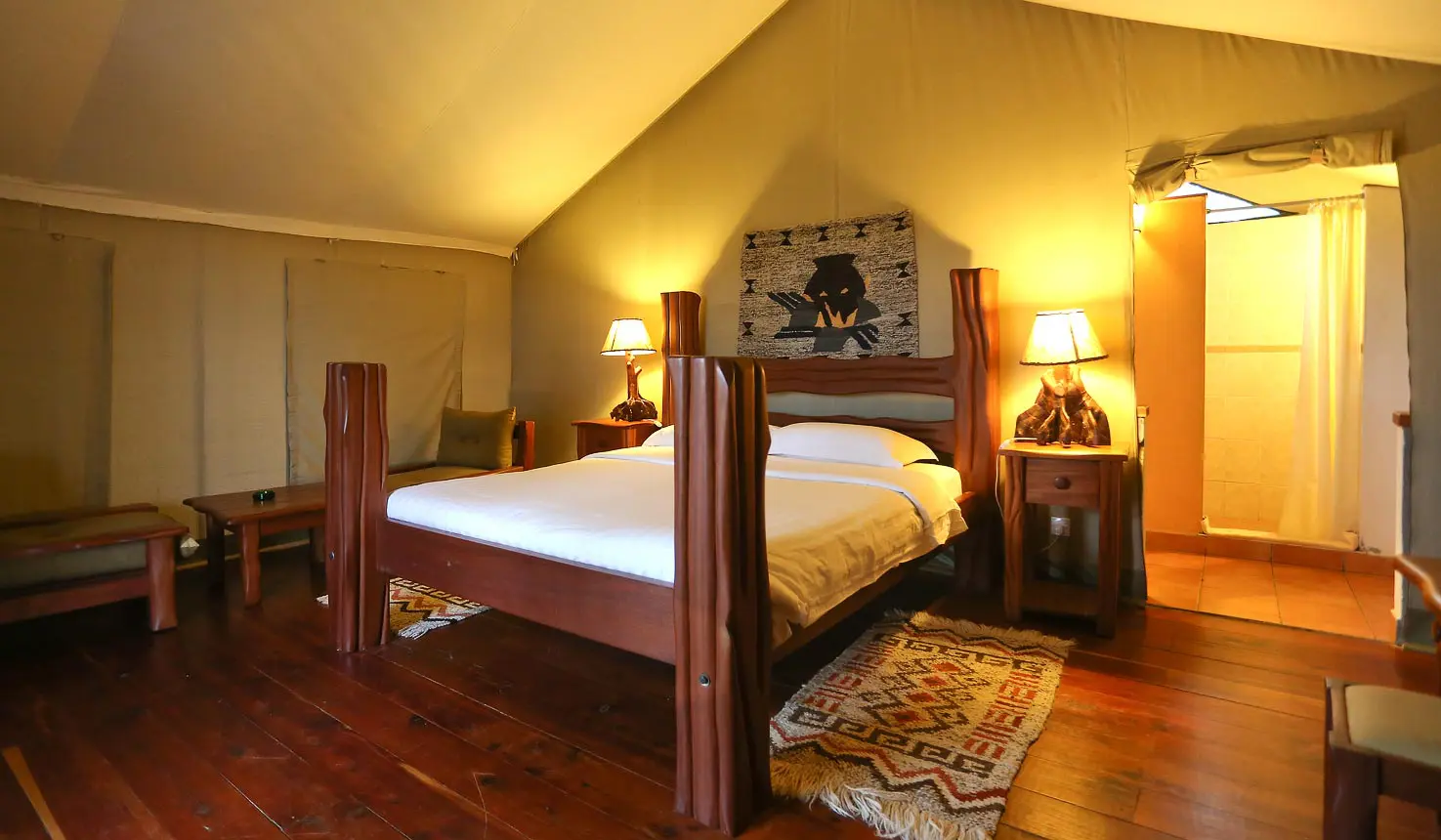
Comfort (Mid-range)
-
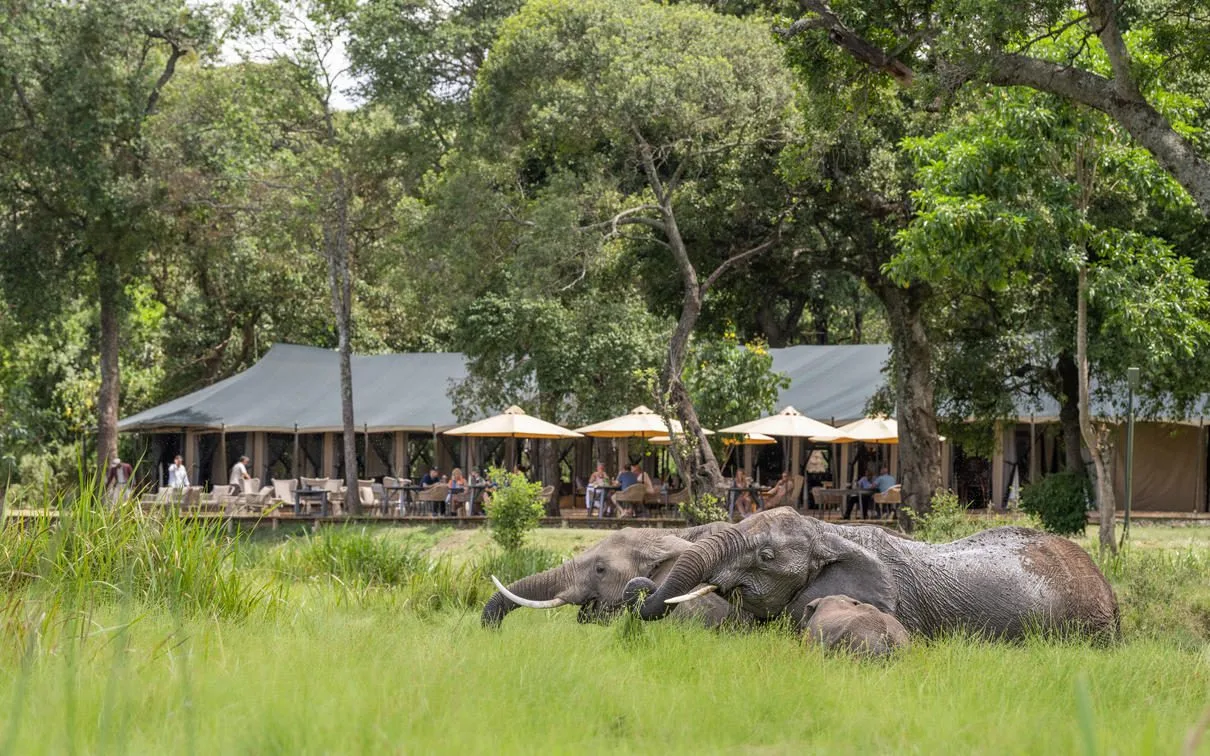
Premium (Luxury)
-
Signature (High-end)
-
Day 2: Full-Day Masai Mara Migration Safari – Locate Major Wildebeest & Zebra Herds - Main destination
- Masai Mara National Reserve
- Meals
- Breakfast, Lunch, Dinner
Wake early for your first full day in migration country.
After breakfast, leave camp with a packed lunch and enough drinking water for a long day in the field.
A full-day drive is often particularly effective on a migration safari because herd concentrations may be far from your accommodation.
Returning to camp for lunch can consume valuable time.
Understanding the Great Wildebeest Migration
The migration is a continuous annual movement through the wider Serengeti–Mara ecosystem.
It is driven primarily by:
- Rainfall
- Fresh grass
- Water
- Seasonal ecological change
Wildebeest do not follow national borders.
They move between Tanzania and Kenya according to environmental conditions.
This is why migration timing should always be described as a broad pattern rather than a rigid calendar.
Searching for the Herds
Your guide may use several sources of information:
- Previous day's sightings
- Other professional guides
- Current rainfall
- Fresh grazing areas
- Animal direction
- River activity
The goal is to find productive concentrations rather than simply drive toward famous landmarks.
Large herds may be spread across:
- Open plains
- River approaches
- Rolling grasslands
- Conservancy areas
- Different reserve sectors
Wildebeest Behavior
Spend time observing how wildebeest behave.
You may see:
- Grazing
- Walking in long lines
- Running suddenly
- Calves following mothers
- Animals gathering around water
- Herds reacting to predators
- Individuals calling constantly
The migration is not continuous running.
Much of the movement is gradual.
Animals feed, rest and then continue.
Why Zebras Migrate with Wildebeest
Zebras frequently travel alongside wildebeest.
The relationship is ecologically useful.
Zebras can eat taller and coarser grass.
Wildebeest often feed on shorter growth.
Together, the species also benefit from having more eyes and ears watching for predators.
Your guide can help interpret these mixed herds.
Lions Following the Migration
Large concentrations of prey create opportunities for lions.
Prides may position themselves near:
- Herd corridors
- River approaches
- Water sources
- Areas of thick grass
Possible sightings include:
- Lionesses watching wildebeest
- Adult males resting
- Cubs
- Lions feeding
- Hunting attempts
- Pride interactions
A hunt may happen at any time, but it cannot be scheduled.
Spotted Hyenas
Hyenas are one of the most important predators in the Mara.
They are capable hunters as well as scavengers.
During migration season, they may follow the herds closely.
Possible behavior includes:
- Hunting
- Feeding
- Clan interactions
- Competition with lions
- Resting near den areas
Cheetahs
Cheetahs often use open plains where smaller antelope species are abundant.
They may be seen:
- Resting
- Walking
- Standing on termite mounds
- Watching gazelles
- With cubs
Although adult wildebeest are usually too large for cheetahs, the wider migration ecosystem supports abundant alternative prey.
Picnic Lunch in the Mara
Enjoy lunch at an approved picnic location.
A packed lunch allows you to remain close to wildlife activity.
After lunch, continue migration tracking.
Herd direction may change considerably during the day.
Continue until late afternoon before returning to camp.
Destination: Masai Mara ecosystem
Main activity: Full-day migration safari
Migration highlights: Major wildebeest herds, zebras, lions, hyenas and cheetahs
Meals: Breakfast, packed lunch and dinner
Accommodation: Same Mara lodge or tented camp
Where you stay
-
Day 3: Mara River Safari – Search for Wildebeest Crossing Activity - Main destination
- Masai Mara National Reserve
- Meals
- Breakfast, Lunch, Dinner
Today focuses more strongly on the Mara River and surrounding migration areas.
Depart early with a packed lunch.
Your guide should first assess whether river activity is genuinely promising.
A good migration safari does not automatically spend every day sitting beside the river.
The decision should depend on herd positions.
Why the Mara River Is Famous
The Mara River has become one of the most recognized symbols of the Great Migration because large wildebeest groups sometimes have to cross it while following seasonal grazing.
The crossings can involve:
- Hundreds of animals
- Thousands of animals
- Strong currents
- Steep riverbanks
- Crocodiles
- Confusion
- Dust
- Extreme noise
The event can be spectacular, dramatic and sometimes difficult to watch.
Are Mara River Crossings Guaranteed?
No.
This cannot be emphasized enough.
A safari company cannot guarantee a crossing.
A guide cannot guarantee a crossing.
A luxury camp cannot guarantee a crossing.
A particular travel month cannot guarantee a crossing.
Wildebeest may reach the riverbank and remain there for hours.
They may then turn around.
They may move upstream.
They may cross after you leave.
They may cross at another site.
Sometimes the animals can appear ready to cross repeatedly and still refuse.
This uncertainty is part of the natural experience.
How Guides Read Herd Behavior
Experienced guides observe:
- Herd density
- Direction of movement
- Animals gathering behind the front line
- Pressure from animals farther back
- Riverbank approach
- Weather
- Recent crossing locations
These signs may indicate increased probability, but they still do not create certainty.
Nile Crocodiles
The Mara River supports large Nile crocodiles.
These reptiles are among the major predators associated with wildebeest crossings.
During an active crossing, crocodiles may take advantage of animals struggling in the water.
However, crocodile attacks represent only one danger.
Other risks include:
- Strong current
- Steep banks
- Crowding
- Exhaustion
- Injury
Hippopotamuses
Hippos also live in the Mara River system.
They may be observed resting in the water during the day.
Despite their appearance, hippos are extremely powerful wild animals.
Viewing should only take place from appropriate positions.
If There Is No Crossing Today
Do not consider the day unsuccessful.
The river ecosystem and surrounding migration areas may still produce: Thousands of wildebeest, Zebra herds, Lions, Hyenas, Cheetahs, Elephants, Hippos, Crocodiles, Vultures, Giraffes, Buffaloes.
The overall migration spectacle is far larger than one river event.
Photographing the Mara River
Photographers should prepare for changing distances.
Useful subjects include:
- Wildebeest gathering
- Herd lines
- Dust
- Crocodiles
- Hippos
- Wide river landscapes
- Predator activity
A telephoto lens is particularly helpful because vehicles may need to remain well away from the crossing edge.
Wildlife welfare and reserve rules must always take priority over photographs.
Return to camp in the evening.
Destination: Mara River / Masai Mara ecosystem
Main activity: Full-day river and migration safari
Migration highlights: Wildebeest gatherings, crocodiles, hippos and possible crossing activity
Meals: Breakfast, packed lunch and dinner
Accommodation: Same Mara lodge or camp
Where you stay
-
Day 4: Full-Day Migration Tracking – Follow Herds Across the Mara Plains - Main destination
- Masai Mara National Reserve
- Meals
- Breakfast, Lunch, Dinner
Day 4 returns the focus to the wider migration rather than only the river.
By now, you will have seen how quickly conditions can change.
A herd that was near the river yesterday may have moved far onto the plains.
Another group may have arrived from a different direction.
Leave early after breakfast.
Why Multiple Migration Days Matter
A major advantage of this itinerary is that a single day's conditions do not determine the entire safari.
With several days:
- You can explore multiple areas
- Herd positions can change
- River activity can develop
- Predators move
- Weather changes
- Light conditions vary
- Photography opportunities improve
This makes the safari significantly more resilient to natural unpredictability.
Long Lines of Wildebeest
One of the most characteristic migration scenes is the formation of long moving lines.
Animals may follow one another across:
- Open plains
- Ridges
- River approaches
- Grasslands
From elevated ground, these lines can appear to stretch for kilometers.
Dust & Migration Photography
During dry periods, enormous groups can create large dust clouds.
This may reduce clarity in some photographs, but it can also create extraordinary atmosphere.
Backlit dust near sunrise or sunset can produce some of the most dramatic migration images.
Calves within the Herd
Younger animals must keep pace with adults.
They remain vulnerable to:
- Lions
- Hyenas
- Other predators
- Separation from the herd
- Exhaustion
Spend time observing how calves move close to adults.
Predator–Prey Ecology
The migration supports one of the world's great predator-prey systems.
Predators may concentrate near large herds.
Your guide can explain: Why lions prefer certain approaches, Why hyenas are successful hunters, Why cheetahs select smaller prey, Why scavengers quickly locate carcasses, How herd size affects predator strategy.
Vultures & Scavengers
Several vulture species may be encountered around carcasses.
Although less glamorous than big cats, scavengers are essential to the ecosystem.
They rapidly remove dead material and help reduce disease transmission.
Migration season provides excellent opportunities to observe this ecological process.
Elephants Among the Herds
Resident elephants continue using the ecosystem during migration.
Seeing an elephant family move through a landscape filled with wildebeest can create spectacular photographs.
The contrast in size is remarkable.
Afternoon Migration Search
After lunch, continue following current wildlife information.
Your guide may change direction completely if another area becomes more productive.
This is why a rigid hour-by-hour itinerary should not be used inside the Mara.
Return to camp in the evening.
Destination: Greater Masai Mara ecosystem
Main activity: Full-day migration tracking
Migration highlights: Herd movement, dust, predators, calves and ecological interpretation
Meals: Breakfast, lunch and dinner
Accommodation: Same Mara lodge or camp
Where you stay
-
Day 5: Big Cat & Migration Safari – Lions, Leopards, Cheetahs & Hyenas - Main destination
- Masai Mara National Reserve
- Meals
- Breakfast, Lunch, Dinner
Today gives additional attention to the predators that make the migration ecosystem so dynamic.
Wake early and leave camp while temperatures remain cool.
Lion Prides
Masai Mara is famous for lions throughout the year.
During migration periods, the abundance of prey can create especially interesting encounters.
You may see:
- Lionesses observing herds
- Adult males
- Cubs
- Lions around a kill
- Hunting behavior
- Pride conflicts
- Lions resting after feeding
The guide can explain how lion prides occupy territories and how migrating prey can affect feeding opportunities.
Leopards
Leopards are less directly associated with open migration herds because they prefer more wooded and riverine habitat.
Nevertheless, the Mara provides excellent leopard possibilities.
Search areas containing:
- Riverine forest
- Mature trees
- Drainage lines
- Dense bushes
A leopard may be found:
- Resting in a tree
- Walking through vegetation
- Feeding
- Watching prey
Sightings remain unpredictable.
Cheetahs
Cheetahs are one of the Mara's most exciting predators.
They are particularly associated with open plains.
Possible observations include:
- A solitary cheetah
- Siblings
- A mother with cubs
- Cheetahs scanning from raised ground
- Hunting attempts
Their reliance on speed makes undisturbed space especially important.
Vehicles should never interfere with a hunt.
Spotted Hyenas
Hyenas may be encountered throughout the day.
They have complex social structures.
You may observe:
- Clan interaction
- Feeding
- Hunting
- Resting
- Communication
- Competition with lions
Jackals
Black-backed jackals can often be found around predator activity.
They may scavenge small remains or hunt independently for smaller prey.
Migration Herds as a Predator Magnet
Large wildebeest concentrations create abundant opportunities but also intense competition.
A kill can attract: Lions, Hyenas, Vultures, Jackals.
Watching these interactions helps travelers understand that migration is not just about wildebeest movement.
It supports an entire ecological community.
Lunch and Afternoon Drive
Enjoy lunch at an approved location.
Spend the afternoon revisiting productive predator territories or moving back toward major wildebeest concentrations.
Return to camp after another full wildlife day.
Destination: Masai Mara
Main activity: Big cat and migration safari
Migration highlights: Lions, leopards, cheetahs, hyenas and predator-prey ecology
Meals: Breakfast, lunch and dinner
Accommodation: Same Mara lodge or camp
Where you stay
-
Day 6: Northern or Central Mara Migration Exploration – Flexible Herd Tracking - Main destination
- Masai Mara National Reserve
- Meals
- Breakfast, Lunch, Dinner
Day 6 is intentionally flexible.
This is exactly how a migration itinerary should be designed.
Your guide evaluates the latest conditions and selects whichever region appears most productive.
You may return toward the Mara River.
You may explore central grasslands.
You may head toward a northern migration sector.
You may concentrate on conservancy areas if your accommodation and access arrangements allow.
Why Flexibility Is Essential
Many safari itineraries fail because they promise too much precision.
A natural ecosystem does not follow a tour operator's timetable.
A good migration safari therefore prioritizes:
- Current wildlife information
- Experienced guiding
- Long enough stay
- Flexible departure
- Suitable accommodation location
- Private vehicle where possible
This approach greatly improves the quality of the trip.
Plains Filled with Wildebeest
If major herds are concentrated in open country, spend time simply observing the scale.
You may see:
- Herds covering entire slopes
- Long lines of movement
- Zebras mixed throughout
- Gazelles feeding nearby
- Predators watching
- Birds following animals
Not every migration experience needs to involve high drama.
The sheer number of animals can be extraordinary in itself.
Elephant, Giraffe & Buffalo Encounters
Resident animals remain important.
Possible sightings include: Elephant families, Masai giraffes, Buffalo herds, Warthogs, Topis, Impalas, Elands.
A well-rounded migration safari should not ignore these species.
Birdwatching During the Migration
The Mara supports excellent birdlife.
Possible species include: Secretary birds, Martial eagles, Bateleurs, Tawny eagles, Vultures, Southern ground hornbills, Ostriches, Bustards, Crowned cranes, Storks, Rollers, Bee-eaters.
Raptors can be especially interesting around predator and scavenger activity.
Optional Conservancy Experience
Travelers staying in or near a private conservancy may have access to additional activities, depending on local rules.
Possible activities include:
- Off-road viewing
- Night game drives
- Walking safaris
- Sundowners
- Bush breakfasts
A conservancy can provide an excellent contrast with the busier core reserve during peak migration season.
Night Game Drive
Where legally permitted, a night game drive may reveal species and behavior not commonly seen during the day.
Possible observations include: Nocturnal predators, Smaller mammals, Night birds, Different lion behavior.
Night drives are not permitted everywhere, so they should only be planned in areas where allowed.
Return to camp after the day's activities.
Destination: Masai Mara ecosystem / relevant conservancy
Main activity: Flexible full-day migration exploration
Optional activities: Conservancy experiences where available
Meals: Breakfast, lunch and dinner
Accommodation: Same Mara lodge or camp
Where you stay
-
Day 7: Final Full-Day Migration Safari – Optional Hot-Air Balloon Safari - Main destination
- Masai Mara National Reserve
- Meals
- Breakfast, Lunch, Dinner
Your last complete day in the Masai Mara provides another major opportunity for migration viewing.
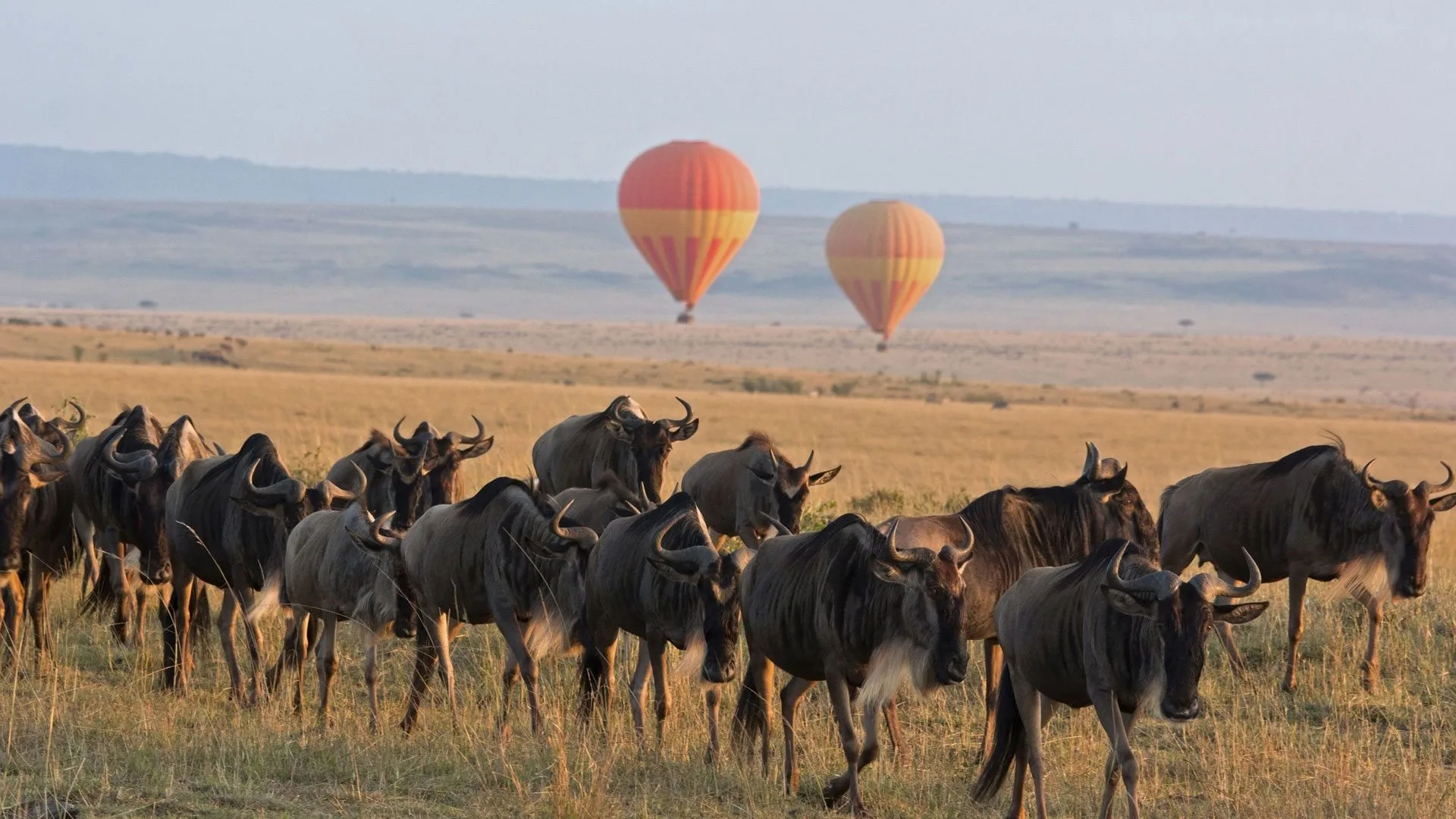
Travelers can begin with a conventional dawn game drive or choose an optional hot-air balloon safari.
Hot-Air Balloon Safari over the Masai Mara
Wake before dawn and transfer to the balloon launch area.
Watch as the balloon is inflated against the dark sky.
After a safety briefing, climb into the basket.
As the balloon rises, the scale of the Masai Mara becomes easier to understand.
Below you may see:
- Wildebeest
- Zebras
- Elephants
- Giraffes
- Buffaloes
- Gazelles
- River systems
- Acacia woodland
- Open plains
During periods of heavy migration activity, enormous herds may be visible from the air.
The balloon's route depends on the wind.
No two flights are identical.
After landing, the experience normally concludes with breakfast according to the operator's arrangement.
Why Ballooning Is Excellent During Migration
From the ground, you experience individual animals and herd behavior.
From the air, you appreciate scale.
A large herd can stretch across an enormous area.
The aerial perspective helps travelers understand why the migration is often described as a landscape-level wildlife phenomenon rather than simply an animal sighting.
Final Mara River Search
If there is promising river activity, use part of Day 7 for one final crossing search.
With several full days already completed, you can make a more informed decision about whether waiting is worthwhile.
If the river appears quiet, continue enjoying the wider migration.
Final Big Cat Search
Use the afternoon to search again for any predator that has remained elusive.
Possible priorities include: Leopard, Cheetah, Lion, Hyena.
A private vehicle gives you the freedom to concentrate on your personal wildlife goals.
Final Mara Sunset
End the final full safari day with the warm evening light across the plains.
Large wildebeest herds in silhouette can create an extraordinary final migration scene.
Where available and permitted, a sundowner can be arranged.
Return to camp for the final dinner.
Destination: Masai Mara ecosystem
Main activities: Full-day migration safari and optional balloon flight
Highlights: Aerial migration views, final river search, big cats and sunset
Meals: Breakfast, lunch and dinner
Accommodation: Same Mara lodge or camp
Where you stay
-
Day 8: Masai Mara to Nairobi – Final Safari Morning & Departure - Main destination
- Masai Mara National Reserve
- Drive time
- Return transfer as outlined in the itinerary
- Meals
- Breakfast, Lunch
Wake for your final morning in the Mara.
Depending on departure arrangements, take a short early game drive or enjoy a relaxed breakfast.
This final morning may provide: Wildebeest herds, Lions, Hyenas, Elephants, Giraffes, Buffaloes, Birds.
Return to camp and prepare for departure.
Road Transfer to Nairobi
The road-safari version returns through Narok toward Nairobi.
Comfort stops can be arranged.
Arrive during the afternoon depending on road and traffic conditions.
Transfer to:
- Jomo Kenyatta International Airport
- Wilson Airport
- Nairobi hotel
- Another agreed location
Fly Masai Mara to Nairobi
Luxury and time-conscious travelers can use a scheduled light-aircraft flight.
Transfer to the relevant Mara airstrip.
Fly to Nairobi, usually arriving at Wilson Airport.
Continue by private transfer to your hotel or international airport.
Your arrival marks the conclusion of the 8 Days Migration Safari Kenya.
Destination: Nairobi
Main activities: Final game viewing and road or air transfer
Meals: Breakfast and other meals according to arrangements
Accommodation: Not included after the safari unless requested
Where you stay
03 Rates
Safari rates 2027-2029
Indicative per person. Season, group size and lodge style change the total — your quotation confirms current rates.
-
Essential (Budget)
Essential (Budget)
Budget camps and lodges suit travelers who prioritize wildlife while keeping costs lower.
Great value camps
-
Comfort (Mid-range)
Comfort (Mid-range)
Mid-range tented camps and lodges balance comfort and price with private rooms or tents and en-suite facilities.
Quoted for your dates
-
Premium (Luxury)
Premium (Luxury)
Luxury camps and lodges focus on location, service and more intimate wildlife experiences.
Premium camps and lodges
-
Signature (High-end)
Signature (High-end)
Signature camps and lodges are the most exclusive stays — small, highly private properties with exceptional guiding and setting.
Exclusive signature stays
04 Activities
Safari activities
Game viewing is the core of this itinerary. Optional extras are quoted separately and depend on season, permits and availability. Individual species and river crossings are never guaranteed.
Additional information
Plan This Safari
What Is the Great Wildebeest Migration?
The Great Wildebeest Migration is a continuous annual movement of large numbers of grazing animals through the Serengeti–Mara ecosystem. This journey takes place across both Tanzania and Kenya. It is best understood as a cycle rather than a journey with a simple beginning and end. The main animals involved are: Blue wildebeest, Plains zebras, Gazelles and other grazers.
The movement is primarily driven by the search for:
- Fresh pasture
- Water
- Suitable seasonal conditions
Why Do Wildebeest Migrate?
Wildebeest depend heavily on rainfall-driven grass growth. As one region becomes dry, they gradually move toward areas where rain has created better feeding conditions. Water availability also influences movement. This is why exact dates change from year to year. Their behavior is therefore tied closely to:
- Rainfall
- Vegetation
- Water
- Seasonal climate
When Is the Great Migration in Kenya?
The Masai Mara is traditionally associated with significant migration activity during roughly July through October. However, this should be treated as a planning window rather than a guarantee. The best migration safari strategy is therefore to combine appropriate travel timing with several nights in the ecosystem. Possible variations include:
- Earlier herd arrival
- Later arrival
- Some herds remaining longer
- Different herd groups occupying separate areas
- Unexpected movement caused by rain
July Migration Safari Kenya
July is often associated with the period when major herds begin entering or spreading through the Mara ecosystem. Depending on rainfall, some animals may already be near river systems while others remain farther south. Early July and late July can sometimes feel very different.
August Migration Safari Kenya
August is widely regarded as one of the strongest periods for migration viewing in the Masai Mara. Possible experiences include: Large wildebeest concentrations, Zebras, Predator activity, Mara River searches.
However, August is also a high-demand month. Good camps can sell out early.
September Migration Safari Kenya
September can provide excellent migration viewing. Large herds may still occupy substantial areas of the Mara. Predator activity remains strong. Photography can be excellent.
October Migration Safari Kenya
October can still produce major migration encounters. However, as seasonal conditions begin changing, herds may gradually shift. Some may start moving back south while others remain in Kenya. The exact timing varies.
Can You See the Migration Outside July–October?
You can see migrating wildebeest at other stages of their annual cycle, but much of that movement occurs in Tanzania rather than Kenya. Travelers whose dates fall outside the main Kenyan migration period may need to consider a Kenya–Tanzania itinerary if following the migration itself is the primary goal.
Mara River Crossings Explained
The famous river crossings are only one component of the migration. The animals are not trying to cross because the river is an attraction. They are moving toward grazing.
If a river lies between the herd and the next feeding area, some animals may need to cross it. The exact point and timing are impossible to predict with certainty.
Why Wildebeest Sometimes Refuse to Cross
Wildebeest may hesitate because of:
- Steep banks
- Water conditions
- Herd pressure
- Unclear movement direction
- Natural caution
They may repeatedly approach and retreat. This is completely normal.
How Long Can You Wait for a Crossing?
There is no universal answer. Sometimes a herd crosses quickly. Sometimes travelers may wait for several hours and see nothing. An experienced guide must balance patience against the possibility that another part of the ecosystem may offer a much better wildlife experience. This decision is easier on a long safari because you have multiple days.
Migration Safari & Big Cats
The Masai Mara is an exceptional predator destination with or without migration. Possible predators include: Lions, Leopards, Cheetahs, Spotted hyenas, Jackals.
The presence of large herbivore concentrations can intensify predator-prey interactions.
Lion Viewing During Migration Season
Lion prides may take advantage of abundant wildebeest. However, migration season does not mean lions hunt continuously. Much of the day is still spent resting. The most interesting moments often come from patiently watching behavior over time.
Leopards During Migration Season
Leopards remain more strongly associated with riverine woodland and areas providing cover. A migration safari should still allocate time to search these habitats.
Cheetahs During Migration Season
Cheetahs benefit from the abundance of smaller prey within the wider ecosystem. Open plains provide strong opportunities to observe them.
Hyenas During Migration Season
Hyenas can become especially visible. Their feeding opportunities increase, but they also hunt actively. Migration season provides excellent opportunities to appreciate them as sophisticated predators rather than merely scavengers.
Migration Safari & the Big Five
The traditional Big Five are:
- Lion
- Leopard
- Elephant
- Rhinoceros
- African buffalo
Masai Mara provides excellent opportunities for: Lion, Leopard, Elephant, Buffalo.
Rhinoceros are not usually the strongest component of a dedicated migration itinerary. Travelers prioritizing all five can add:
- Lake Nakuru
- Ol Pejeta
An extension is generally preferable to reducing migration time.
Migration Safari Accommodation
Camp location is particularly important. A very luxurious property located far from current migration areas may require long daily transfers. A simpler camp in a better migration position can sometimes provide a stronger wildlife experience. Consider:
- Travel month
- Historical migration patterns
- Reserve access
- Conservancy access
- Mara River distance
- Airstrip access
- Wildlife density
- Vehicle regulations
Budget Migration Safari
Budget travelers can use:
- Permanent tented camps
- Simpler lodges
- Road transportation
- Group or private safari vehicle
The wildlife is the same. The main savings come from accommodation and transportation.
Mid-Range Migration Safari
Mid-range camps often provide:
- Ensuite tents
- Comfortable beds
- Hot showers
- Restaurant
- Electricity
- Good wildlife access
This can provide an excellent balance.
Luxury Migration Safari
Luxury versions may include:
- Premium migration camps
- Private conservancy accommodation
- Fly-in transfers
- Private vehicles
- Spacious suites
- Fine dining
- Bush meals
- Sundowners
- Balloon safari
Fly-In Migration Safari
Flying from Nairobi to the Mara can save substantial road time. Benefits include:
- Faster transfer
- More wildlife time
- Less fatigue
- Scenic views
Travelers should confirm baggage restrictions in advance.
Private Vehicle for Migration Safari
A private vehicle is strongly recommended for travelers whose main priority is the migration. Benefits include:
- Longer waiting at promising river sites
- Flexibility to move between sectors
- Better photography positioning
- Freedom to follow herd activity
- No disagreement with unrelated travelers
Group Migration Safari
Group safaris can be more economical. However, travelers must accept shared priorities. One guest may want to wait near the river while another wants to return to camp. A well-structured group safari can still be excellent, but private travel provides greater flexibility.
Migration Photography Safari
Migration season offers exceptional photographic variety. Potential subjects include:
- Huge wildebeest herds
- Zebras
- Dust
- Lions
- Cheetahs
- Leopards
- Hyenas
- River approaches
- Crocodiles
- Vultures
- Elephants
- Savannah landscapes
- Sunset silhouettes
Recommended Photography Equipment
Useful equipment may include:
- Telephoto zoom lens
- Wide-angle lens
- Spare batteries
- Multiple memory cards
- Beanbag
- Lens cloth
- Camera rain/dust cover
- Power bank
A zoom lens can be especially practical because animal distance changes constantly.
Dust Protection During Migration Season
Dry-season game drives can be dusty. Protect sensitive equipment by:
- Keeping cameras inside a bag when not in use
- Using lens cloths
- Avoiding unnecessary lens changes in heavy dust
- Carrying protective covers
Dust may be inconvenient, but it also creates extraordinary atmospheric light.
Family Migration Safari
Families can undertake this itinerary. However, younger children may struggle with:
- Long game drives
- Extended waiting
- Heat
- River-crossing scenes
A family version can include:
- Shorter drives
- Lodge pool time
- Flexible river searches
- Private vehicle
- More breaks
Older children and teenagers often find the migration fascinating.
Honeymoon Migration Safari
A honeymoon version can include:
- Private vehicle
- Romantic tented camp
- Balloon safari
- Sundowners
- Private dining
- Fly-in transfers
- Beach extension
The dramatic wildlife during the day and intimate camp atmosphere at night create an excellent honeymoon combination.
Birdwatching During the Migration
Migration travelers should not overlook the Mara's birds. Possible species include: Vultures, Martial eagles, Tawny eagles, Bateleurs, Secretary birds, Southern ground hornbills, Ostriches, Crowned cranes, Bustards, Storks, Rollers, Bee-eaters.
Birds play major ecological roles in the migration landscape.
8 Days Migration Safari Kenya Cost
The safari price depends on:
- Travel dates
- Number of travelers
- Camp category
- Camp location
- Private or shared vehicle
- Road or air transfers
- Reserve fees
- Conservancy fees
- Balloon safari
- Room type
- Seasonal supplements
Migration season is typically a high-demand period, so accommodation prices may be considerably higher than in quieter months.
Why Migration Safari Costs Are Often Higher
Several factors contribute:
Peak Demand
The Great Migration attracts travelers from around the world.
Camp Location
Well-positioned migration camps can charge premium rates.
Limited Availability
Good properties may sell out early.
Long Game Drives
Migration safaris frequently involve extended field time.
Private Vehicle
A private vehicle adds cost but provides significant flexibility.
Typical Safari Inclusions
Depending on the confirmed quotation, inclusions may include:
- Safari transportation
- Professional safari guide
- Seven nights' accommodation
- Meals specified
- Masai Mara entry fees listed
- Game drives
- Drinking water
- Nairobi pickup
- Nairobi drop-off
- Domestic flights where specified
- Applicable taxes
- Safari planning and operational support
The final confirmed quotation should always be treated as the definitive list.
Typical Safari Exclusions
Possible exclusions include:
- International flights
- Travel insurance
- Entry-related expenses
- Vaccinations
- Personal medical costs
- Tips
- Alcoholic drinks
- Premium beverages
- Laundry
- Hot-air balloon safari unless listed
- Cultural visits unless listed
- Extra accommodation
- Personal purchases
What to Pack for an 8 Days Migration Safari Kenya
Useful items include:
- Lightweight neutral clothing
- Long trousers
- Long-sleeved shirts
- Warm fleece
- Light jacket
- Comfortable closed shoes
- Sun hat
- Sunglasses
- Sunscreen
- Insect repellent
- Binoculars
- Camera
- Telephoto lens
- Spare batteries
- Memory cards
- Power bank
- Personal medication
- Reusable water bottle
- Small day bag
- Travel documents
Early mornings can be cool. Layering is recommended.
How Early Should You Book?
Migration season is highly popular. Last-minute bookings may be possible, but choice can become limited. Travelers should book early if they require:
- Specific camp
- River-access location
- Private vehicle
- Family room
- Honeymoon suite
- Luxury tent
- Balloon safari
- Exact dates
Add Lake Nakuru for Rhinos
Travelers wanting stronger Big Five opportunities can extend the safari with Lake Nakuru. This adds: Black rhino, White rhino, Rothschild's giraffe, Flamingos, Rift Valley scenery.
Add an extra day rather than reducing Masai Mara time if migration remains the primary focus.
Add Ol Pejeta
Ol Pejeta provides another excellent extension for:
- Black rhinos
- White rhinos
- Conservation experiences
- Big Five opportunities
Add Amboseli
Amboseli adds:
- Large elephant herds
- Mount Kilimanjaro
- Wetlands
- Different photography
A longer safari can combine migration with the classic Amboseli elephant experience. Clear views of Mount Kilimanjaro can never be guaranteed.
Add Diani Beach
After seven intensive wildlife days, the coast creates an ideal contrast. A popular extension is 8 Days Migration Safari Kenya + Diani Beach. Enjoy:
- White sand
- Indian Ocean
- Swimming
- Spa
- Snorkeling
- Diving
- Beach resort
Add Zanzibar
Travelers can also continue to Zanzibar for:
- Tropical beach
- Stone Town
- Spice experiences
- Snorkeling
- Diving
- Sailing
Combine Kenya and Tanzania for the Great Migration
A longer safari can follow the migration across both countries. Potential destinations include:
- Masai Mara
- Northern Serengeti
- Central Serengeti
- Ngorongoro Crater
The correct route depends on the month of travel.
Can the 8 Days Migration Safari Kenya Be Customized?
Yes. The 8 Days Migration Safari Kenya is fully customizable. The itinerary should be built around your exact dates and migration priorities. Possible changes include:
- Add more Masai Mara nights
- Combine reserve and conservancy stays
- Stay near different migration sectors
- Add Lake Nakuru
- Add Ol Pejeta
- Add Amboseli
- Use light-aircraft transfers
- Book a private photographic vehicle
- Add balloon safari
- Add cultural visit
- Add Diani Beach
- Add Zanzibar
- Continue into Serengeti
Common Great Migration Misconceptions
“The Wildebeest Cross the Mara River Every Day”
False. Crossings are irregular.
“Migration Season Means All Wildebeest Are in One Place”
False. The migration consists of many herds spread across a vast ecosystem.
“August Guarantees a Crossing”
False. August may provide strong migration conditions, but no natural event can be guaranteed.
“The Migration Is Only Worth Seeing at the River”
False. Watching tens of thousands of wildebeest across open plains can be equally spectacular.
“Predators Only Appear During the Migration”
False. Masai Mara supports excellent resident predator populations year-round.
How to Improve Your Chances of a Great Migration Experience
Several choices can improve the safari.
Spend More Time in the Mara
This is the single most important factor.
Choose Camp Location Carefully
Location can matter more than room luxury.
Use an Experienced Guide
Migration interpretation requires current field knowledge.
Consider a Private Vehicle
This gives you control over waiting and route decisions.
Remain Flexible
Do not force the guide to follow a pre-written daily route when animals have moved elsewhere.
Keep Expectations Realistic
Appreciate the entire ecosystem, not only river crossings.
Who Should Choose the 8 Days Migration Safari Kenya?
This safari is particularly suited to travelers wanting:
- Great Wildebeest Migration
- Large wildebeest herds
- Zebra herds
- Mara River
- Possible river crossings
- Lions
- Leopards
- Cheetahs
- Hyenas
- Nile crocodiles
- Wildlife photography
- Long Masai Mara stay
- Private migration tracking
- Hot-air balloon safari
- Great Migration honeymoon
- Kenya and Tanzania extension
- Safari-and-beach combination
Why Eight Days Gives You a Better Migration Story
A migration safari becomes far more meaningful when you have enough time to understand what is happening. On the first day, you may simply be overwhelmed by the number of animals. By the second day, you begin noticing direction. You understand that some herds are grazing while others are moving.
You begin recognizing how zebras use the same landscape. Then you start noticing predators. A lion pride may position itself near one herd. Hyenas may follow another.
Vultures may reveal a recent kill. At the river, you begin understanding why waiting is so uncertain. You see animals approach. You see them retreat.
You realize that a crossing is not a scheduled show but one unpredictable decision inside a much larger ecological movement. By the final days, the migration is no longer simply “lots of wildebeest.” It becomes a complex living system. That depth is one of the biggest reasons to choose a longer itinerary.
Why the Masai Mara Is Exceptional Even Without a River Crossing
A migration safari should never be judged only by whether you witnessed wildebeest entering the river. Masai Mara remains one of Africa's great wildlife destinations regardless. You may see: Lion cubs playing, A leopard resting in a tree, Cheetahs stalking gazelles, Elephants crossing open grassland, Hyenas interacting around a kill, Hippos in the river, Giraffes silhouetted against sunset, Thousands of wildebeest grazing quietly.
Any one of these can become the highlight of the entire journey. The most rewarding safari travelers therefore remain interested in whatever nature provides rather than becoming fixated on one predicted event.
Book Your 8 Days Migration Safari Kenya
The 8 Days Migration Safari Kenya is designed for travelers who want enough time to experience the Great Wildebeest Migration as a complete ecological phenomenon. Travel from Nairobi into the Masai Mara and spend several days following enormous wildebeest and zebra herds as they move through Kenya's most famous safari ecosystem.
Search open plains where thousands of animals may gather. Explore the Mara River and watch for signs that herds may be preparing to cross. Observe Nile crocodiles and hippos within the river. Follow lion prides positioned close to migrating prey.
Search for cheetahs on the open grasslands, elusive leopards along wooded drainage systems and spotted hyenas moving across the savannah. Rather than relying on a single day, give yourself repeated opportunities.
If the river is quiet one morning, explore the plains. If the herds move overnight, follow them. If a predator encounter develops, stay and observe. If conditions become promising near the river later, return.
Add an optional hot-air balloon safari for an extraordinary aerial view of the Mara and, during strong migration periods, the immense scale of the herds. A flight can never be guaranteed. The itinerary can be customized around your travel dates and preferred style.
Choose budget, mid-range, luxury or ultra-luxury camps. Travel by private road vehicle or scheduled light aircraft. Combine Masai Mara National Reserve with a private conservancy. Add a dedicated photographic vehicle, another migration night, Lake Nakuru for rhinos or Amboseli for elephants and Mount Kilimanjaro.
After the migration, continue to Diani Beach or Zanzibar, or cross into Tanzania to experience another part of the Serengeti–Mara ecosystem. For travelers seeking large wildebeest herds, predator activity, possible Mara River crossings, exceptional wildlife photography and enough time to follow the migration properly, the 8 Days Migration Safari Kenya offers a deep and rewarding experience of one of Africa's greatest natural spectacles.
Individual species, river crossings and mountain views can never be guaranteed.
Planning Questions
Frequently Asked Questions
What is an 8 Days Migration Safari Kenya?
It is a Kenya safari designed around several days in the Masai Mara during the broader period when large wildebeest and zebra herds may be present.
When is the Great Migration in Kenya?
Major migration activity in the Masai Mara is traditionally associated with approximately July through October, but exact timing varies annually.
Is July good for the migration?
Yes, depending on rainfall and herd movement.
Is August good?
August is traditionally one of the strongest months for Masai Mara migration viewing.
Is September good?
Yes. September can provide excellent herd and predator activity.
Can I still see migration in October?
Potentially. Large herds may remain, although movements can become increasingly variable.
Are river crossings guaranteed?
No.
Can my guide predict a crossing?
Your guide can interpret herd behavior and current conditions but cannot guarantee when or where a crossing will occur.
How many days should I spend in Masai Mara for migration?
Several full days are strongly recommended. An eight-day itinerary gives excellent flexibility.
Is the migration only about river crossings?
No. Huge herds, predator activity, plains movement and the wider ecosystem are equally important parts of the experience.
Can I see lions?
Yes. Masai Mara is one of Kenya's best lion destinations.
Can I see cheetahs?
Yes.
Can I see leopards?
Yes, although leopards are elusive.
Can I see hyenas?
Yes. Spotted hyenas are common and especially interesting during migration season.
Can I see elephants?
Yes. Elephants are resident throughout the Mara ecosystem.
Can I see rhinos?
Rhinos are less reliable on a migration-focused Mara itinerary. Add Lake Nakuru or Ol Pejeta if rhinos are important.
Can I take a hot-air balloon safari?
Yes.
Is a private vehicle worth it?
Yes, especially for migration travelers who want maximum flexibility.
Can families book this safari?
Yes, with appropriate pacing.
Is it suitable for honeymooners?
Yes. Romantic camps and luxury fly-in options can be arranged.
Can I use budget accommodation?
Yes.
Can I book luxury camps?
Yes.
Can I fly from Nairobi to Masai Mara?
Yes, scheduled safari flights can be incorporated.
Can I extend to Diani Beach?
Yes.
Can I combine Kenya with Serengeti?
Yes. A longer Kenya–Tanzania migration itinerary can be created.
05 Request Quote
Request Quote
Tell us your dates, group size, and preferred lodge style — we will send a tailored quote for this safari.
Want to extend your safari?
Add Amboseli, Diani Beach, Tanzania and Zanzibar, or gorilla trekking in Uganda or Rwanda — we tailor the journey to your dates.