
3 DAYS / 2 NIGHTS
3 Days Amboseli Fly-in Safari
Plan a 3 Days Amboseli Fly-in Safari with expert guides, game drives and carefully chosen camps. Request a quote.
- Wildlife SafariPrivate Journey
- Private Safari4x4 Vehicle
- Expert GuideEnglish Speaking
- All MealsBreakfast, Lunch, Dinner
- 24/7 SupportWe're here to help
01 Overview
Safari Overview
- Duration3 days / 2 nights
- DestinationAmboseli
- Starts / endsNairobi
- Safari stylePrivate safari
- AccommodationEssential · Comfort · Premium · Signature
- Best forWildlife viewing, photography
3 Days Amboseli Fly-in Safari – Flying Safari from Nairobi to Amboseli
A 3 Days Amboseli Fly-in Safari is one of the most comfortable and time-efficient ways to experience the famous elephant country of southern Kenya. Instead of spending several hours traveling by road between Nairobi and Amboseli, you fly into the Amboseli ecosystem and dedicate more of your three-day trip to game drives, photography, relaxation and wildlife viewing beneath the immense presence of Mount Kilimanjaro.
Amboseli is one of Kenya’s classic safari destinations and is particularly celebrated for its elephants. Large family groups move between the park’s open plains, wetlands, acacia woodland and feeding areas, often providing exceptionally close but respectful wildlife encounters. The sight of elephants moving through the landscape with Mount Kilimanjaro rising in the distance is one of the defining images of East African safari travel.
The park is, however, far more than an elephant destination. During a 3 Days Amboseli Fly-in Safari, you may also encounter lions, cheetahs, spotted hyenas, African buffaloes, Masai giraffes, plains zebras, wildebeests, impalas, gazelles, warthogs, hippos, jackals and a wide variety of birds, although no sighting is guaranteed. Amboseli’s combination of dry plains and permanent or semi-permanent wetlands creates one of the most visually distinctive wildlife environments in Kenya.
Flying makes a three-day safari especially rewarding because a conventional road itinerary uses considerable portions of Day 1 and Day 3 for transport. With a fly-in itinerary, those transfers are significantly reduced. Depending on the scheduled flight, lodge location and operating arrangements, you may reach Amboseli in time for a game drive or lunch on the first day and still enjoy another wildlife experience before flying back to Nairobi on the final day.
This itinerary is particularly well suited to:
- Couples.
- Honeymooners.
- Luxury safari travelers.
- Families.
- Older travelers.
- Wildlife photographers.
- Business travelers with limited free time.
- Visitors combining Kenya with another East African destination.
- Travelers who prefer to avoid long road journeys.
- Guests combining Amboseli with Masai Mara, Samburu or the Kenya coast.
The safari can be arranged using comfortable mid-range lodges, luxury camps or high-end properties depending on your budget and preferred level of exclusivity.
Why Choose a 3 Days Amboseli Fly-in Safari?
The greatest advantage of flying to Amboseli is simple: you spend more time on safari and less time getting there. Amboseli is accessible by road from Nairobi, and a road safari remains an excellent option for many travelers. However, for a short three-day itinerary, several hours of driving in each direction can occupy a substantial portion of the trip. A fly-in safari changes the rhythm completely. Instead of beginning Day 1 with a long road transfer, you travel to the airport, board a light aircraft and reach the Amboseli region much faster. After landing, a representative from your lodge or safari team meets you and transfers you into the wildlife area. Likewise, on Day 3, you may still have time for a morning game drive before returning to the airstrip. For travelers who value comfort and time, this is a significant benefit.
Main Advantages of Flying to Amboseli
A fly-in safari can provide:
- More game-viewing time.
- Less road fatigue.
- Faster access from Nairobi.
- Greater comfort.
- Easier travel for older guests.
- A more relaxed family safari.
- Efficient connections in a luxury itinerary.
- More time to enjoy lodge facilities.
- Easier integration with fly-in Masai Mara trips.
- More opportunities for morning and afternoon game drives.
- A premium safari atmosphere from the beginning of the trip.
Amboseli – Kenya’s Famous Elephant Destination
Amboseli has become internationally associated with elephants. The ecosystem supports important elephant populations, and its relatively open landscapes often allow visitors to observe entire family groups. Elephants may be encountered:
- Moving across dry plains.
- Entering wetlands.
- Feeding on aquatic vegetation.
- Drinking.
- Dust bathing.
- Browsing.
- Protecting calves.
- Interacting socially.
- Walking in long family groups.
These encounters are not simply about seeing an elephant. Amboseli gives travelers an opportunity to observe elephant society. A herd may contain an experienced matriarch, adult females, juveniles and calves of different ages. If you spend sufficient time watching quietly, you may notice:
- Trunk touching.
- Greeting behavior.
- Calves playing.
- Protective positioning by adults.
- Individuals waiting for younger animals.
- Dust bathing.
- Social reassurance.
- Young elephants copying older animals.
This behavioral richness is one of the reasons Amboseli remains such a powerful safari destination.
Mount Kilimanjaro and Amboseli
One of the most recognizable safari scenes in Africa is an elephant walking across Amboseli with Mount Kilimanjaro rising behind it. Kilimanjaro itself lies across the border in Tanzania, but some of its most famous views are from the Kenyan side. The mountain rises dramatically above otherwise relatively flat plains. When atmospheric conditions are favorable, you may see:
- The broad volcanic massif.
- Snow or ice around the summit area.
- Clouds forming around the slopes.
- Elephants crossing below.
- Giraffes in the foreground.
- Acacia silhouettes.
However, Kilimanjaro visibility is never guaranteed. Clouds commonly develop around the mountain, sometimes obscuring it for much of the day. Early morning often provides particularly good opportunities, which is another reason a two-night stay is valuable. With three days in the region, you have multiple chances rather than relying on a single morning.
Why Flying Makes Amboseli Especially Attractive for Short Trips
A three-day safari must use time efficiently. With road travel, the first and final days are partly dominated by transfers. Flying can create a schedule closer to:
- Day 1: Fly to Amboseli + wildlife viewing.
- Day 2: Full safari day.
- Day 3: Morning wildlife viewing + fly back to Nairobi.
That gives the itinerary a stronger safari-to-transfer ratio. For travelers flying long distances internationally to reach Kenya, maximizing actual time with wildlife can justify the additional transport cost.
Itinerary
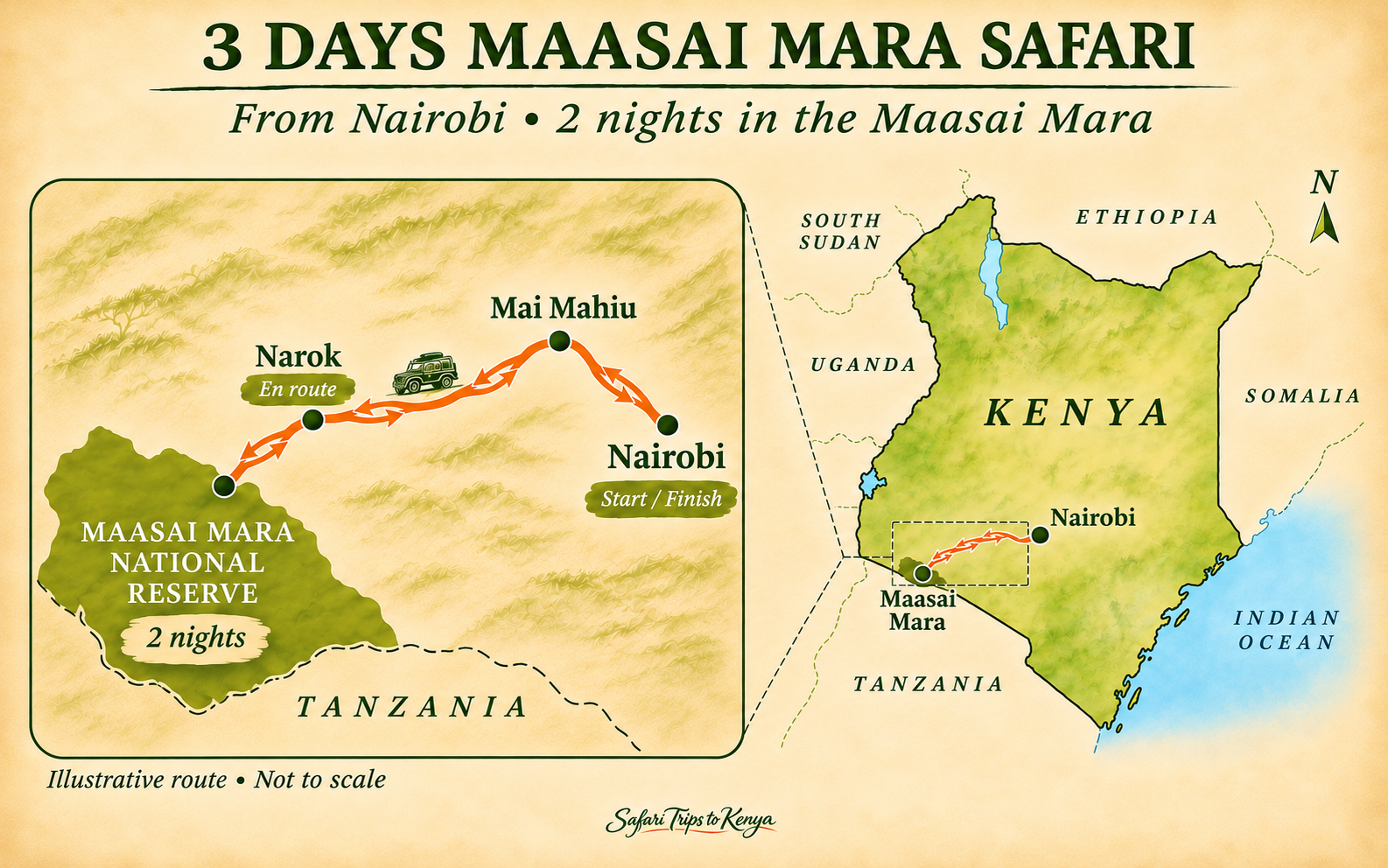
- Day 1:Nairobi, fly to Amboseli, airstrip Transfer, afternoon Game Drive
- Day 2:Amboseli Wildlife Safari
- Day 3:Morning Amboseli Game Drive, fly Back to Nairobi
02 Itinerary
3 Days Amboseli Fly-in Safari: Detailed Itinerary

Day 1: Nairobi – Fly to Amboseli – Airstrip Transfer – Afternoon Game Drive - Main destination
- Amboseli National Park
- Drive time
- Road transfer as outlined in the itinerary
- Meals
- Lunch, Dinner
Your 3 Days Amboseli Fly-in Safari begins in Nairobi. Depending on your hotel location and confirmed flight schedule, you are collected and transferred to the domestic airport used by your safari flight, commonly Wilson Airport for many safari routes. Travelers arriving internationally through Jomo Kenyatta International Airport should understand that the international airport and the domestic safari airport are separate facilities. If connecting directly, adequate transfer time must be allowed for:
- Immigration.
- Baggage collection.
- Road transfer.
- Nairobi traffic.
- Safari airline check-in.
For travelers arriving later in the day, an overnight stay in Nairobi before beginning the safari is often the more comfortable option.
Safari Flight Check-In
On arrival at the domestic airport, complete check-in formalities. Safari flights use much smaller aircraft than major international airlines, and as a result, baggage allowances are also smaller. Travelers should expect:
- Restricted total luggage weight.
- Preference for soft-sided bags.
- Limited baggage compartment space.
- Possible restrictions on large hard suitcases.
Exact baggage rules vary by operator and must be confirmed at the time your safari flights are booked. If you have large international luggage, arrangements may sometimes be made to store unnecessary items in Nairobi while taking only safari essentials with you.
Boarding the Flight to Amboseli
After check-in, board your light aircraft and depart Nairobi. The flight itself becomes part of the safari experience. As the city recedes below, the scenery changes rapidly. Depending on your flight path, weather and seat position, you may see:
- Nairobi’s outskirts.
- Agricultural landscapes.
- Dry plains.
- Settlements.
- Rivers.
- Road networks.
- Increasingly open savannah.
- The greater Amboseli region.
On clear days, Mount Kilimanjaro may even become visible during the approach.
Arriving at the Amboseli Airstrip
Landing at a safari airstrip feels completely different from arriving at a conventional airport. Instead of terminals, baggage belts and large crowds, you arrive in an open wilderness environment. Your lodge representative or safari guide meets you at the airstrip, the luggage is loaded into the safari vehicle, and your transfer toward the lodge begins. Depending on the exact location, wildlife can appear almost immediately, so your airstrip transfer may become your first game drive.
First Wildlife Sightings
Possible wildlife during the transfer includes: Elephants, Zebras, Wildebeests, Giraffes, Gazelles, Warthogs, Buffaloes, Birds.
The transition from aircraft to wildlife viewing can be remarkably fast, which is one of the most attractive aspects of a fly-in safari. You leave Nairobi and, within a relatively short time, you are looking through the open side or roof of a safari vehicle at free-ranging African wildlife.
Arrival at Your Amboseli Lodge or Camp
Reach your selected accommodation and complete check-in. Depending on your flight time, you may arrive for:
- Breakfast.
- Brunch.
- Lunch.
- Afternoon refreshments.
The lodge team explains the daily schedule and property rules. Typical information includes:
- Meal times.
- Game-drive departure times.
- Wildlife safety.
- Escort requirements after dark.
- Electricity and charging.
- Wi-Fi availability.
- Optional activities.
- Swimming pool access.
- Lodge viewing areas.
After lunch, rest before the afternoon safari.
Afternoon Game Drive in Amboseli
Later in the afternoon, begin your first dedicated wildlife drive. The Amboseli landscape is immediately distinctive. Large stretches of apparently dry plain contrast with green wetlands. This apparent contradiction is central to the ecosystem: water originating from the broader Kilimanjaro catchment contributes to springs and marshes within the Amboseli basin, and the wetlands become critical wildlife habitats. As a result, you may move from dusty open plains to lush green feeding areas within a relatively short distance.
First Elephant Encounters
Your first elephant sighting may occur sooner than expected. Amboseli’s elephants can be conspicuous because of the open landscape. A family may move in a line across the plain, another herd may stand in a marsh feeding on wetland vegetation, and a large bull may walk alone between feeding areas. When observing elephants, your guide pays attention to:
- Herd direction.
- Calf positions.
- Ear posture.
- Trunk movements.
- Vocalizations.
- Changes in body language.
The vehicle should never obstruct a herd. If elephants want to cross a track, they should be given enough room.
Elephants in Amboseli’s Marshes
One of the characteristic Amboseli scenes involves elephants entering marshland. The wetlands provide:
- Water.
- Grass.
- Aquatic vegetation.
- Cooling opportunities.
Large elephants may wade through tall green vegetation, and at times their lower bodies disappear almost completely. Calves stay close to adults, and birds may feed nearby. The contrast between enormous elephants and lush marsh vegetation creates exceptional photography.
Searching for Lions
Lions are present within the ecosystem, though sightings are never guaranteed. Your guide searches:
- Open grassland.
- Areas near prey.
- Shade.
- Bushes.
- Water sources.
- Known lion territories.
During the warmest part of the afternoon, lions may remain inactive, and a pride can be almost invisible in grass despite being relatively close. As evening approaches, activity may increase. Possible behavior includes:
- Grooming.
- Stretching.
- Walking.
- Calling.
- Watching prey.
- Cubs playing.
Cheetahs in Amboseli
Cheetahs also use suitable open areas of the ecosystem. They depend on visibility and speed. You may encounter a cheetah:
- Sitting on a rise.
- Walking across a plain.
- Watching gazelles.
- Resting beneath a small shrub.
- Traveling with cubs.
Because cheetahs have relatively light builds, they may be difficult to see in dry grass. Your guide scans carefully for their characteristic body shape.
Spotted Hyenas
Spotted hyenas occur throughout suitable habitat. They may be encountered:
- Walking alone.
- Moving in groups.
- Resting.
- Following predators.
- Feeding.
Hyenas play a complex ecological role as both hunters and scavengers. Their social systems are sophisticated, and sightings can become especially interesting when several individuals interact.
African Buffaloes
Large buffalo herds can be found in productive grazing areas and around wetlands. Buffaloes may spend the warmer hours near water and mud. You may see:
- Large mixed herds.
- Females with calves.
- Old bulls.
- Animals wallowing.
- Oxpeckers feeding on buffaloes.
Buffaloes form one of Africa’s famous Big Five species.
Masai Giraffes
Giraffes are another important part of the Amboseli landscape. They may browse:
- Acacias.
- Shrubs.
- Woodland edges.
Photographers often wait for a giraffe to move into a position where Mount Kilimanjaro can be included in the background. However, the mountain should never become an excuse to pressure guides into driving off-road or disturbing animals. The best photographs come from patience and ethical positioning.
Zebras and Wildebeests
Plains zebras and wildebeests occur in substantial numbers. These grazers may:
- Feed in mixed groups.
- Move between water and grazing.
- Stand alert when predators are near.
- Rest during hotter periods.
Their abundance supports predators including lions and hyenas. Zebras are especially photogenic when arranged in groups against Amboseli’s pale plains.
Hippos and Wetland Wildlife
Hippos are associated with suitable wetland areas. During daylight hours, they typically remain in or near water and may surface briefly before submerging again. Although hippos often look relaxed, they are extremely powerful animals. All observations should therefore remain from safe, authorized locations.
Birdlife on Day 1
Even travelers primarily interested in mammals often notice Amboseli’s birds. The wetlands may support: Herons, Egrets, Storks, Pelicans, Cranes, Ducks, Raptors, Other water-associated species.
Open plains can also support: Ostriches, Secretary birds, Bustards, Ground birds, Raptors.
Birdlife becomes particularly active during favorable seasonal conditions.
Sunset in Amboseli
Late afternoon can produce some of the most memorable safari scenes. The sun lowers behind the landscape, dust catches the light, elephants cross the plains and birds move toward roosts. If Kilimanjaro is visible, your guide may look for a legal and non-intrusive position that allows both mountain and wildlife to be included in photographs. Possible images include: Elephant silhouettes, Giraffes, Zebra herds, Acacia trees, Kilimanjaro, Marsh reflections.
Return to your lodge or camp after the game drive. Enjoy dinner and your first night in the Amboseli ecosystem.
- Accommodation: Mid-range, luxury or high-end lodge/tented camp
- Meals: Lunch and Dinner depending on flight schedule and package
- Main Activities: Nairobi transfer, safari flight, airstrip transfer and afternoon game drive
Where you stay
- Essential (Budget)
- Comfort (Mid-range)
- Premium (Luxury)
- Signature (High-end)
Day 2: Full-Day Amboseli Wildlife Safari - Main destination
- Amboseli National Park
- Meals
- Breakfast, Lunch, Dinner
Day 2 is the main wildlife-viewing day of your 3 Days Amboseli Fly-in Safari. Because there is no long transfer, the day can be structured entirely around wildlife and relaxation. Depending on your lodge, guiding arrangement and preferences, the day may include:
- Early morning game drive.
- Breakfast.
- Midday relaxation.
- Lunch.
- Afternoon game drive.
or:
- Full-day game drive with picnic lunch.
For most fly-in travelers, separate morning and afternoon game drives create the most comfortable rhythm. They allow you to enjoy the lodge during the warmer middle part of the day.
Early Morning Wake-Up
The day may begin before sunrise. Some lodges serve:
- Tea.
- Coffee.
- Light snacks.
before the game drive. The cooler air can feel surprisingly fresh, and a light fleece or jacket is useful, especially in an open safari vehicle. As dawn begins, drive into the park or surrounding wildlife area.
Why Early Morning Is So Important in Amboseli
Early morning offers three major advantages:
Wildlife Activity
Many mammals are more active before temperatures rise.
Photography
Soft light produces richer colors and fewer harsh shadows.
Kilimanjaro Visibility
The mountain is often more likely to be visible before daytime cloud develops, though views are never guaranteed. This combination makes the first hours of Day 2 among the most important of the entire safari.
Sunrise and Kilimanjaro Photography
If the sky is clear, Mount Kilimanjaro may dominate the horizon. The mountain can appear so large that it seems almost disconnected from the flat plains below. Your guide may look for wildlife positioned naturally in the foreground. Potential photographic subjects include: Elephant herd beneath Kilimanjaro, Giraffe crossing, Zebra group, Wildebeests, Acacia trees, Birds.
The mountain can disappear behind cloud quickly, so take photographs when conditions are favorable rather than assuming there will be another chance later.
Morning Elephant Movements
Elephants may be moving between overnight feeding areas and wetlands. Family groups can appear more active than during the heat of midday. You may observe:
- Herds walking in lines.
- Calves moving between adults.
- Elephants feeding.
- Dust bathing.
- Trunk interactions.
- Adults pausing to allow younger animals to catch up.
A patient game drive allows natural behavior to unfold.
Understanding Elephant Family Structure
Elephant families are generally centered around related females. An experienced female often plays a leadership role, and she may possess decades of knowledge about:
- Water sources.
- Seasonal feeding areas.
- Travel routes.
- Threats.
- Other elephants.
Young males eventually become more independent, while females typically remain more closely connected to family groups. Watching these relationships adds depth to the safari.
Elephant Communication
Elephants communicate using:
- Vocalizations.
- Low-frequency sounds.
- Trunk touching.
- Ear movement.
- Body posture.
- Physical contact.
Some communication occurs at frequencies humans may not easily hear. Observers can nevertheless notice visible social interactions. A calf that becomes nervous may move directly toward its mother, adults may touch trunks, and a herd may suddenly become coordinated and begin moving in one direction.
Searching for Predators in the Morning
Your guide may devote significant time to predator areas. Early morning can reveal: Lions returning from nighttime movements, Hyenas walking toward resting areas, Cheetahs beginning to hunt, Jackals, Other smaller predators.
Tracks in the soil can indicate recent movements. Your guide may examine:
- Paw prints.
- Direction of travel.
- Age of tracks.
- Prey behavior.
- Vulture activity.
These clues help transform a game drive into an interpretive wildlife experience.
Lions in Amboseli
A lion encounter can take many forms. You may see:
- A pride resting.
- Females with cubs.
- Males walking.
- Lions feeding.
- Lions watching zebras.
- Young individuals playing.
- Adults roaring.
If a pride is resting, spend time waiting. A completely inactive group can become suddenly interesting when one animal stands, interacts with another or begins moving, though sightings can never be guaranteed.
Cheetah Behavior
Cheetahs must balance hunting opportunities with competition from stronger predators. They frequently favor open terrain where they can see danger and prey. You may observe:
- A cheetah scanning the horizon.
- Cubs climbing on a mound.
- Individuals walking.
- Resting.
- Stalking.
Responsible safari vehicles should give hunting cheetahs enough room.
Amboseli Wetlands
The wetlands are among the ecological highlights of Day 2. The transition from dry ground to lush green marshland is striking. Animals attracted to wetlands may include: Elephants, Buffaloes, Hippos, Zebras, Wildebeests, Waterbirds.
The marshes remain critical because surface conditions elsewhere may become extremely dry. This concentration of wildlife can produce excellent game viewing.
Observation Hill
Depending on your exact itinerary, access arrangements and current park regulations, you may visit Observation Hill. The hill provides an elevated perspective over parts of the Amboseli ecosystem. From the viewpoint you may appreciate:
- Wetlands.
- Plains.
- Wildlife movements.
- Distant hills.
- Kilimanjaro when visible.
It is particularly useful for understanding the relationship between different habitats. From ground level, each marsh or plain can feel separate. From an elevated viewpoint, you can see how they fit together within the broader basin.
Landscape Photography from Observation Hill
Photographers can use a wider lens to capture:
- Wetland patterns.
- Wildlife herds.
- Roads.
- Escarpment and plains.
- Mountain views.
- Sky.
The hill provides a different photographic opportunity from ordinary wildlife portraits. It helps tell the broader ecological story of Amboseli.
Birdwatching in Amboseli
Amboseli is exceptionally rewarding for birdwatchers because of the variety of wet and dry habitats. Potential bird groups include: African fish eagles, Secretary birds, Grey crowned cranes, Herons, Egrets, Pelicans, Storks, Kingfishers, Hornbills, Rollers, Bee-eaters, Ostriches, Bustards, Vultures, Eagles, Weavers, Lapwings.
Bird-focused travelers should notify us before booking so more time can be allowed for identification.
Wetland Birds
Around marshes, you may see:
- Wading birds.
- Fishing birds.
- Waterfowl.
- Raptors hunting nearby.
Watching several species feeding in the same wetland demonstrates the complexity of the ecosystem. One species may probe mud, another hunts fish, another follows large mammals, and others rest on exposed banks.
Midday Return to the Lodge
After the morning drive, return to the lodge for breakfast or brunch depending on your schedule. The midday hours can then be spent relaxing. Possible activities include:
- Swimming.
- Reading.
- Resting.
- Enjoying the view.
- Reviewing photographs.
- Charging cameras.
- Having lunch.
- Watching wildlife from lodge grounds where possible.
Luxury properties may offer additional amenities. This slower midday period helps avoid safari fatigue.
Why a Fly-in Safari Can Feel More Luxurious
Luxury is not simply about expensive accommodation. Time itself becomes a form of luxury. Instead of spending much of your trip in transit, flying allows more time for:
- Rest.
- Game drives.
- Meals.
- Photography.
- Lodge facilities.
- Private experiences.
This makes the itinerary feel considerably less rushed.
Afternoon Game Drive
Later in the afternoon, return to the wildlife area. The temperature gradually decreases and animals become more active. Your guide may revisit productive areas or concentrate on species missed in the morning. If Kilimanjaro was hidden earlier, the evening may provide another chance. If elephants were abundant, you might focus on predators, and if lions remain elusive, additional time can be devoted to likely territory.
Buffaloes in the Afternoon
Buffaloes may gather around water or move into grazing areas. Large herds provide dramatic images. Look closely and you may notice:
- Calves.
- Oxpeckers.
- Cattle egrets.
- Dominant bulls.
- Old solitary males.
Buffaloes are strong and should always be given sufficient space.
Giraffes at Sunset
Giraffes are particularly striking during the final hours of daylight. Their height creates strong silhouettes, and the long neck and angular body form an instantly recognizable shape against a bright sky. A giraffe passing beneath Kilimanjaro can become one of the defining images of the trip.
Zebras in Evening Light
Zebra stripes create strong contrast as the light softens. Possible compositions include:
- Individual portraits.
- Family groups.
- Zebras with wildebeests.
- Dusty movement.
- Mountain background.
Young zebra foals can be especially photogenic.
Sunset Elephant Experience
The perfect Amboseli evening often involves elephants. A family may cross the plain as the sun descends, dust rises around their feet and the landscape becomes golden. Kilimanjaro may appear through a break in the clouds. These moments cannot be scheduled or guaranteed, which is precisely what makes them so powerful when they happen. Return to your lodge for dinner and spend your second night in Amboseli.
- Accommodation: Same or equivalent lodge/tented camp
- Meals: Breakfast, Lunch and Dinner
- Main Activities: Extensive Amboseli wildlife viewing
- Safari Format: Morning and afternoon drives or full-day safari depending on arrangement
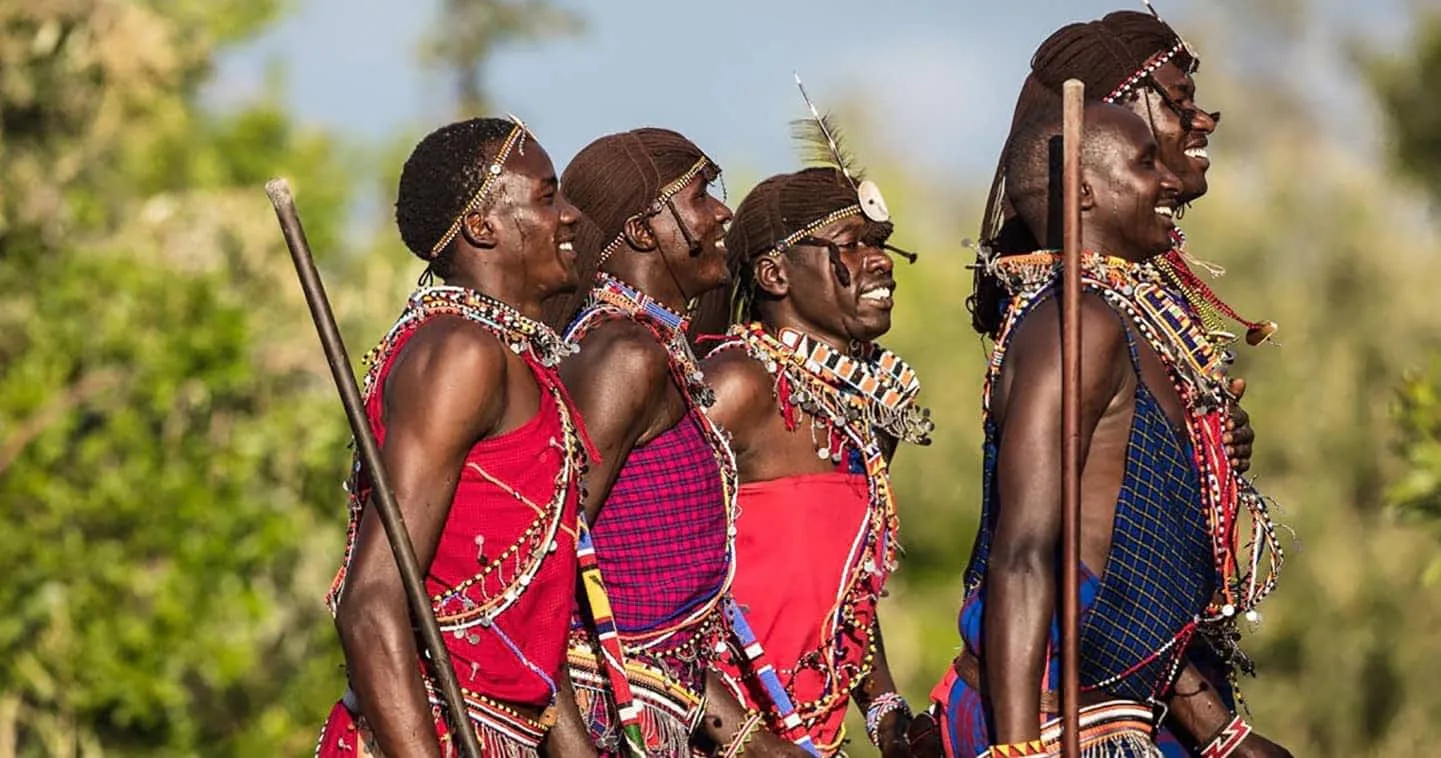
Optional Maasai Cultural Experience
A cultural experience may be arranged in the broader Amboseli region depending on your selected lodge, timing and interests. The Maasai have deep historical connections with the landscapes surrounding Amboseli. A responsible cultural visit can introduce aspects of:
- Livestock keeping.
- Pastoral livelihoods.
- Traditional homesteads.
- Beadwork.
- Clothing.
- Community organization.
- Songs and dances.
- Human-wildlife coexistence.
- Conservation challenges.
Cultural visits should be treated as opportunities for respectful exchange rather than performances staged solely for tourists. Where possible, choose community-led experiences that create direct local benefits.
Cultural Visits and Conservation
Amboseli’s wildlife moves beyond formal national park boundaries, which means conservation depends partly on surrounding community lands. Local people therefore play an essential role in maintaining:
- Wildlife corridors.
- Grazing landscapes.
- Movement routes.
- Habitat.
Understanding the relationship between wildlife, livestock and local communities provides important context for the safari.
Where you stay
Day 3: Morning Amboseli Game Drive – Fly Back to Nairobi - Main destination
- Amboseli National Park
- Drive time
- Return transfer as outlined in the itinerary
- Meals
- Breakfast, Lunch
Wake early for your final morning. Because you are flying rather than driving back to Nairobi, you may have considerably more flexibility to enjoy another wildlife experience before departure, depending on your confirmed flight time. This can be one of the greatest benefits of the fly-in itinerary.
Final Kilimanjaro Opportunity
Step outside or begin the early drive with cameras ready. If Kilimanjaro remained hidden on Day 1 or Day 2, this final morning offers another possibility, although clear views are never guaranteed. Morning cloud conditions can change quickly, and a completely hidden mountain may emerge within minutes. If the view is clear, your guide can look for suitable wildlife foregrounds while staying on approved tracks.
Final Morning Game Drive
Focus on remaining wildlife priorities. You may request more attention to: Elephants, Lions, Cheetahs, Giraffes, Buffaloes, Hippos, Birds, Kilimanjaro photography.
Even if you saw all these animals previously, the final drive can reveal entirely different behavior.
One Last Elephant Encounter
A final elephant encounter is a fitting way to leave Amboseli. Perhaps a family walks toward the wetlands, a large bull crosses the road or calves play in dust. Rather than rushing for the airstrip too early, the flight-based itinerary may allow you to enjoy these final moments.
Breakfast and Check-Out
Return to the lodge for breakfast unless the meal has already been taken. Check out and prepare your luggage. Remember that safari flight baggage rules remain applicable for the return journey. Your bags are loaded into the lodge vehicle for the airstrip transfer.
Airstrip Transfer
The drive to the airstrip often becomes one final mini game drive. Keep your camera accessible. You may encounter: Elephants, Giraffes, Zebras, Gazelles, Birds.
Arrive at the airstrip with sufficient time for your scheduled flight.
Fly from Amboseli to Nairobi
Board the light aircraft and depart the Amboseli region. As the aircraft climbs, you may get one final aerial perspective of the ecosystem, and on a clear day, Kilimanjaro may remain visible. The flight returns toward Nairobi according to the scheduled route. Some services may include additional airstrip stops depending on operational arrangements.
Arrival in Nairobi
After landing, your onward arrangements depend on the rest of your trip. You may:
- Transfer to a Nairobi hotel.
- Transfer to Jomo Kenyatta International Airport.
- Connect to another domestic safari flight.
- Continue to another Kenyan destination.
- Remain in Nairobi for additional activities.
A generous buffer should be allowed before an important international flight. Domestic flight schedules, weather and Nairobi traffic can all create variations.
- Meals: Breakfast and other meals according to flight schedule and package
- Main Activities: Morning game drive, airstrip transfer and flight to Nairobi
Safari Flight Logistics
A fly-in safari is straightforward when properly planned, but travelers should understand several important details.
Baggage Restrictions
Light aircraft cannot carry the same amount or type of luggage as large commercial aircraft. Expect:
- Lower baggage allowance.
- Soft-sided luggage requirements.
- Weight restrictions.
- Limited cabin storage.
Exact limits vary by airline. Always follow the restrictions provided with your confirmed flight documents.
Where you stay
03 Rates
Safari rates 2027-2029
Indicative per person. Season, group size and lodge style change the total — your quotation confirms current rates.
- Essential (Budget)
Essential (Budget)
Budget camps and lodges suit travelers who prioritize wildlife while keeping costs lower.
Great value camps
- Comfort (Mid-range)
Comfort (Mid-range)
Mid-range tented camps and lodges balance comfort and price with private rooms or tents and en-suite facilities.
Quoted for your dates
- Premium (Luxury)
Premium (Luxury)
Luxury camps and lodges focus on location, service and more intimate wildlife experiences.
Premium camps and lodges
- Signature (High-end)
Signature (High-end)
Signature camps and lodges are the most exclusive stays — small, highly private properties with exceptional guiding and setting.
Exclusive signature stays
04 Activities
Safari activities
Game viewing is the core of this itinerary. Optional extras are quoted separately and depend on season, permits and availability. Individual species and river crossings are never guaranteed.

Additional information
Plan This Safari
Why Hard Suitcases Can Be a Problem
Bush aircraft often have small or irregular baggage compartments. A large rigid suitcase may not fit even if its total weight is acceptable. Soft-sided bags are easier to compress. For this reason, safari travelers should plan luggage carefully when their itinerary includes several small-aircraft flights.
Packing for a 3-Day Fly-in Safari
Because the safari is only two nights, you do not need much luggage. Recommended clothing includes:
- Two or three lightweight safari outfits.
- Long trousers.
- Long-sleeved shirt.
- Fleece or light jacket.
- Comfortable shoes.
- Hat.
- Sleepwear.
- Minimal toiletries.
Safari lodges may offer laundry services depending on property. This further reduces the amount you need to carry.
Camera Equipment on the Flight
Photographers should prioritize essential equipment. Useful gear can include:
- Camera body.
- Second camera body if weight permits.
- Telephoto lens.
- Medium-range zoom.
- Wide-angle lens.
- Spare batteries.
- Charger.
- Memory cards.
- Bean bag if practical.
- Lens-cleaning kit.
Avoid excessive equipment that consumes most of the baggage allowance without being used.
Which Airstrip Serves Amboseli?
The correct airstrip depends on:
- Airline.
- Lodge.
- Safari area.
- Flight schedule.
Your safari planner should coordinate the flight with the selected accommodation. Never book a safari flight independently without checking the ground-transfer implications. An apparently small difference in airstrip choice can create an unnecessarily long transfer.
Are Safari Flights Direct?
Not always. Scheduled bush flights may stop at other airstrips. The aircraft can drop off or collect travelers before continuing. This is normal safari aviation practice. Your ticketed itinerary should be treated as the operational guide, but flight patterns can still change.
Are Safari Flights Comfortable?
Safari flights are generally short and practical rather than comparable to long-haul premium airline travel. Cabins can be:
- Compact.
- Noisy.
- Warm depending on weather.
- Limited in overhead storage.
However, many travelers enjoy the experience because:
- Flying time is short.
- Views can be excellent.
- Remote airstrip landings are memorable.
- Travel becomes part of the adventure.
What Happens if the Weather Is Bad?
Flight operations always prioritize aviation safety. Strong weather, poor visibility or operational issues can occasionally affect departure times. Travelers should therefore avoid extremely tight onward international connections. A well-designed itinerary includes enough buffer for realistic African travel conditions.
Shared vs Private Safari Vehicles
A fly-in safari often uses a vehicle provided by the lodge. Depending on your package, this may be:
- Shared with other lodge guests.
- Reserved privately for your booking.
Understanding this difference is very important.
Shared Game Drives
Shared game drives are cost-effective, as you travel with other guests staying at the lodge. Advantages include:
- Lower cost.
- Social experience.
- Standard lodge schedule.
Potential limitations include:
- Less control over route.
- Less time at individual sightings.
- Need to compromise on wildlife interests.
- Less camera space.
Private Game Drives
Private game drives provide:
- Greater flexibility.
- More privacy.
- Better photography.
- Family-friendly scheduling.
- Ability to focus on elephants, predators or birds.
- More space.
We strongly recommend a private vehicle for:
- Serious photographers.
- Honeymooners.
- Families with younger children.
- Travelers with specialized wildlife interests.
Accommodation for the 3 Days Amboseli Fly-in Safari
The lodge choice plays a major role in the overall experience. A fly-in safari is typically more accommodation-centered than a road safari because the lodge often provides:
- Airstrip transfers.
- Game-drive vehicle.
- Resident guide.
- Meals.
- Activities.
- Safari schedule.
Mid-Range Amboseli Fly-in Accommodation
A comfortable mid-range lodge or camp may offer:
- En-suite room or tent.
- Restaurant.
- Bar.
- Lounge.
- Swimming pool.
- Charging facilities.
- Wi-Fi in selected areas.
- Game-drive services.
This category allows travelers to enjoy the efficiency of flying without committing to the highest luxury price point.
Luxury Amboseli Fly-in Accommodation
Luxury properties may provide:
- Spacious safari tents or suites.
- Private verandas.
- Premium beds and bathrooms.
- Fine dining.
- Personalized service.
- Smaller guest numbers.
- Pools.
- Views toward wildlife or Kilimanjaro.
- Enhanced safari activities.
A luxury lodge can transform the safari into a complete wilderness holiday rather than simply a wildlife trip.
High-End Amboseli Fly-in Safari
At the high-end level, the emphasis may be on:
- Privacy.
- Exceptional guiding.
- Premium suite.
- Exclusive location.
- Private vehicle.
- Customized meal experiences.
- Conservancy access.
- Additional activities where permitted.
This style is particularly appropriate for:
- Honeymoons.
- Anniversaries.
- Luxury Africa trips.
- Repeat safari travelers.
Staying Inside the Park vs the Wider Amboseli Ecosystem
Not every premium safari camp is physically inside Amboseli National Park. Some are located in surrounding community conservation areas or private wildlife landscapes. Both approaches have advantages.
Staying Inside or Immediately Adjacent to the National Park
Potential benefits include:
- Easy access to established game-drive routes.
- Wetland wildlife.
- Classic Amboseli scenery.
- Reduced transfer time to central park areas.
Staying in a Conservancy or Private Wildlife Area
Depending on the location and current regulations, advantages can include:
- Lower vehicle density.
- More exclusive atmosphere.
- Additional activities.
- Strong community partnerships.
- Different wildlife landscapes.
Some lodges combine conservancy activities with day access to the national park. Always evaluate the exact safari program rather than choosing accommodation based only on its name.
Wildlife on the 3 Days Amboseli Fly-in Safari
Possible wildlife includes:
Large Mammals
- African elephants.
- African buffaloes.
- Masai giraffes.
- Hippos.
- Plains zebras.
- Wildebeests.
Predators
- Lions.
- Cheetahs.
- Spotted hyenas.
- Jackals.
- Other smaller carnivores.
Antelopes
- Impalas.
- Grant’s gazelles.
- Thomson’s gazelles.
- Water-associated antelope depending on habitat.
Other Wildlife
- Warthogs.
- Baboons.
- Vervet monkeys.
- Smaller mammals.
Can You See the Big Five in Amboseli?
Amboseli is excellent for: Elephants, Buffaloes, Lions.
Leopards may occur within the broader ecosystem but are less commonly encountered than lions. Rhinos are not generally a principal feature of the standard Amboseli wildlife experience. Travelers who specifically want a strong chance of completing the Big Five can combine Amboseli with:
- Ol Pejeta.
- Lake Nakuru.
- Masai Mara.
Best Time for a 3 Days Amboseli Fly-in Safari
Amboseli can be visited year-round. The experience changes with rainfall and seasonal conditions.
Dry-Season Amboseli
Drier periods can offer:
- Strong wildlife concentration.
- Heavy use of wetlands.
- Easier visibility.
- Dusty photography.
- Excellent elephant encounters.
As surrounding areas become drier, wildlife may rely more heavily on permanent water sources.
Green-Season Amboseli
Rain changes the park dramatically. Advantages may include:
- Green plains.
- Dramatic clouds.
- Excellent birdlife.
- Fresh vegetation.
- Beautiful photography.
- Fewer visitors during certain periods.
Wet conditions can occasionally make tracks muddy, but appropriate safari vehicles manage normal conditions.
Kilimanjaro Visibility Through the Year
Mount Kilimanjaro visibility is controlled more by daily atmospheric conditions than by simple calendar promises. Even during generally favorable seasons, the mountain can remain hidden. The best strategy is therefore:
- Stay at least two nights.
- Start game drives early.
- Keep cameras ready.
- Take advantage of clear conditions immediately.
A three-day fly-in safari works well because it provides at least two mornings in the ecosystem depending on flight schedule.
Amboseli Fly-in Safari for Couples
Couples often choose fly-in travel because it creates a more relaxed itinerary. Instead of hours of road travel, you arrive quickly and begin the holiday sooner. A romantic safari can include:
- Luxury tented camp.
- Private game vehicle.
- Scenic lodge.
- Sundowner where offered.
- Private dining.
- Kilimanjaro views.
- Beach extension.
3 Days Amboseli Fly-in Honeymoon Safari
For honeymooners, we can upgrade the itinerary with:
- Premium accommodation.
- Private airstrip transfers.
- Private safari vehicle.
- Special room arrangements.
- Romantic dining where available.
- Additional nights.
- Masai Mara extension.
- Diani Beach extension.
A short Amboseli safari can become part of a wider Kenya safari and beach honeymoon.
Family Amboseli Fly-in Safari
Families can benefit greatly from flying. Children often find long road transfers tiring. The flight reduces this burden and leaves more time for:
- Wildlife.
- Swimming.
- Meals.
- Rest.
- Family activities.
A private vehicle is recommended when traveling with younger children. Parents should provide exact ages when requesting a quote because:
- Child flight fares vary.
- Camp policies differ.
- Room configurations differ.
- Activity restrictions may apply.
Fly-in Safari for Older Travelers
Older guests may particularly appreciate avoiding prolonged road journeys. A fly-in safari reduces:
- Road vibration.
- Long sitting times.
- Travel fatigue.
Travelers with mobility issues should still discuss them before booking because:
- Bush aircraft may have steps.
- Airstrips can have uneven ground.
- Safari vehicles can be high.
- Some tented camps involve walking.
The correct lodge can be selected to accommodate individual needs.
Amboseli Fly-in Safari for Photographers
Flying gives photographers more time in the field, but baggage restrictions require careful planning. A private vehicle is strongly recommended. Benefits include:
- More room for lenses.
- Better vehicle positioning.
- Ability to wait for elephants.
- Focus on Kilimanjaro compositions.
- Flexible departures.
- Less compromise with other travelers.
Amboseli Photography Priorities
Amboseli is especially suited to:
- Elephant photography.
- Environmental wildlife portraits.
- Silhouettes.
- Mountain compositions.
- Wetland scenes.
- Bird photography.
- Dust photography.
- Predator photography.
The best photographic moments often happen early or late in the day.
3 Days Amboseli Fly-in Safari Cost
The safari price depends on several factors.
Domestic Flight Cost
Flying adds a significant transport expense compared with traveling overland. Flight prices can vary according to:
- Travel date.
- Airline.
- Route.
- Child fares.
- Availability.
Accommodation Category
The difference between a comfortable mid-range lodge and an exclusive luxury camp can be substantial. Accommodation is often the largest cost component after park access and flights.
Travel Season
Rates frequently change according to:
- Peak periods.
- Shoulder periods.
- Lower-demand periods.
- Festive dates.
Game-Drive Arrangement
Shared lodge drives generally cost less. A private vehicle may require an additional supplement but can significantly improve the safari experience.
Park and Conservancy Fees
Wildlife-area charges form an important part of the final safari cost. The exact rates applicable on your travel dates should be used in the final quotation.
Optional Activities
Additional activities may increase the cost, including:
- Cultural visits.
- Specialist conservancy experiences.
- Bush meals.
- Private vehicle upgrades.
- Additional transfers.
What Is Typically Included?
The final quotation is always the definitive source, but a typical package may include:
- Nairobi hotel transfer to the safari departure airport where stated.
- Domestic safari flights.
- Airstrip pickup and drop-off.
- Two nights’ accommodation.
- Meals according to lodge plan.
- Game drives.
- Professional safari guiding.
- Park or conservancy fees where specifically included.
- Drinking water during safari activities.
- Applicable lodge services listed in your package.
What Is Usually Excluded?
Unless specifically stated:
- International flights.
- Nairobi hotel accommodation.
- International airport transfer not listed.
- Travel insurance.
- Kenya travel authorization or visa-related costs where applicable.
- Alcoholic beverages not included by lodge.
- Premium drinks.
- Tips.
- Gratuities.
- Laundry where not included.
- Personal purchases.
- Excess baggage.
- Optional private vehicle surcharge.
- Cultural visit fees.
- Other activities not stated in the confirmed itinerary.
3 Days Amboseli Fly-in Safari vs Road Safari
Both are excellent ways to visit Amboseli. The correct choice depends on your priorities.
Choose the Fly-in Safari If:
- Time is limited.
- Comfort is important.
- You want more safari time.
- You dislike long road journeys.
- You are booking a luxury trip.
- You are combining several fly-in destinations.
Choose the Road Safari If:
- Budget is more important.
- You prefer a private vehicle from Nairobi.
- You enjoy overland travel.
- You have more luggage.
- You want maximum road flexibility.
Main Advantage of the Fly-in Option
The greatest advantage is not simply arriving faster. It is the additional quality safari time the flight can create. Instead of spending hours in traffic and transit, you may:
- Watch elephants.
- Photograph Kilimanjaro.
- Rest at the lodge.
- Take another game drive.
- Enjoy the pool.
- Spend time with your family.
For a three-day itinerary, those saved hours matter.
3 Days vs 4 Days Amboseli Fly-in Safari
Three days is excellent for a concentrated safari. Four days offers a slower pace. Choose 3 days if:
- Time is limited.
- Amboseli is part of a larger itinerary.
- You want a short luxury escape.
- You mainly want elephants and Kilimanjaro scenery.
Choose 4 days or more if:
- Photography is a major priority.
- You want additional lodge time.
- You want optional activities.
- You prefer fewer compromises in the daily schedule.
Amboseli Fly-in Safari and Masai Mara
A very popular longer itinerary combines Amboseli and the Masai Mara. The contrast is excellent.
Amboseli Provides:
- Elephants.
- Mount Kilimanjaro when it is clear.
- Wetlands.
- Dry plains.
Masai Mara Provides:
- Lions.
- Leopards.
- Cheetahs.
- Classic savannah.
- Migration possibilities.
Depending on current flight schedules, connections may be direct on certain services or require routing through Nairobi. The exact aviation plan should always be confirmed for your dates.
Amboseli Fly-in Safari and Tsavo
Amboseli also combines naturally with Tsavo. This gives travelers:
- Kilimanjaro scenery.
- Elephants.
- Wetlands.
- Volcanic landscapes.
- Red-dust elephants.
- Greater habitat variety.
Depending on the wider itinerary, road connections may sometimes be more practical than flying between specific sectors.
Amboseli Fly-in Safari and Diani Beach
A classic luxury itinerary is Amboseli Safari + Diani Beach. After game drives in Amboseli, with Kilimanjaro in view only when the weather allows, continue to the Indian Ocean for:
- White-sand beaches.
- Swimming.
- Resort relaxation.
- Water sports.
- Seafood.
- Honeymoon time.
The exact flight routing should be designed around current schedules.
Amboseli Fly-in Safari and Zanzibar
Amboseli can also form part of a longer East African safari-and-beach itinerary combining Kenya with Zanzibar. Regional air connections vary, so the itinerary should be constructed according to actual schedules and immigration requirements.
Responsible Wildlife Viewing in Amboseli
The popularity of Amboseli makes responsible game viewing extremely important. Travelers should support guides who:
- Maintain appropriate distance.
- Avoid surrounding elephants.
- Do not block animal movement.
- Respect designated tracks.
- Limit noise.
- Give predators space.
- Never interfere with hunting.
- Keep vehicles away from very young calves when animals show stress.
The welfare of wildlife must always come before photography.
Responsible Elephant Viewing
Elephant encounters deserve particular care. Warning signs that an elephant may want more space can include changes in:
- Ear position.
- Head posture.
- Trunk position.
- Walking direction.
- Body tension.
Experienced guides understand these signals. Travelers should never pressure a guide to move closer. A relaxed herd behaving naturally provides a much better experience than a stressed animal responding to vehicles.
Who Should Book This Safari?
The 3 Days Amboseli Fly-in Safari is particularly suitable for:
- Luxury travelers.
- Couples.
- Honeymooners.
- Families.
- Older travelers.
- Wildlife photographers.
- Elephant enthusiasts.
- Business travelers with limited time.
- First-time safari guests.
- Repeat safari travelers.
- Visitors combining several fly-in camps.
- Safari-and-beach travelers.
- Travelers who prefer shorter transfers.
Why Fly-in Travelers Often Choose Amboseli
Amboseli fits the fly-in format particularly well because the destination delivers highly recognizable wildlife experiences within a relatively compact area. You can fly into the ecosystem and quickly begin searching for: Elephants, Lions, Buffaloes, Giraffes, Zebras, Kilimanjaro views when the mountain is clear.
This creates a high-value short safari where nearly every daylight hour can contribute to the experience.
Why Three Days Is Ideal
The itinerary gives you:
Day 1
Flight into Amboseli and afternoon wildlife viewing.
Day 2
An uninterrupted full day in the ecosystem.
Day 3
Another morning safari before flying out. That structure provides several different light conditions and wildlife-activity periods. This is particularly important in Amboseli because both elephant movements and Kilimanjaro visibility vary throughout the day.
Why Amboseli Is More Than an Elephant Safari
Elephants are the headline attraction, but a well-guided safari reveals a much more complex ecosystem. During three days you can explore:
- Predator ecology.
- Wetlands.
- Birdlife.
- Herbivore movements.
- Human-wildlife relationships.
- Mountain hydrology.
- Seasonal change.
The experience becomes richer when travelers understand why the landscape supports so much wildlife.
Book Your 3 Days Amboseli Fly-in Safari
Experience one of Kenya’s most iconic wildlife destinations without spending long hours on the road. A 3 Days Amboseli Fly-in Safari takes you from Nairobi into the heart of southern Kenya’s elephant country, giving you more time for wildlife and less time in transit. Fly above Kenya’s changing landscapes, land at a remote safari airstrip, meet your guide and begin exploring almost immediately. You may watch elephant families cross dusty plains and see buffaloes feeding around wetlands. Search for lions beneath acacia trees, and look for cheetahs on open ground. Photograph giraffes, zebras and wildebeests, and listen to the calls of wetland birds. When the clouds lift, look south toward the immense summit of Mount Kilimanjaro. After two nights in the wilderness, enjoy a final morning game drive before flying comfortably back to Nairobi or continuing your wider Kenya safari. Wildlife sightings and mountain views are never guaranteed.
Choose Your 3 Days Amboseli Fly-in Safari Style
We can customize the itinerary as a:
- Mid-Range Amboseli Fly-in Safari
- Luxury Amboseli Fly-in Safari
- High-End Amboseli Fly-in Safari
- Private Amboseli Fly-in Safari
- Amboseli Honeymoon Fly-in Safari
- Family Amboseli Fly-in Safari
- Photography Amboseli Fly-in Safari
- Elephant-Focused Amboseli Safari
- Amboseli and Masai Mara Fly-in Safari
- Amboseli Safari and Beach Holiday
Extend Your Amboseli Fly-in Safari
If you have additional time, consider adding:
- Masai Mara National Reserve – for exceptional predator viewing and Great Migration possibilities.
- Tsavo East and Tsavo West – for red elephants, vast wilderness and volcanic scenery.
- Kenya Coast – for Diani, Mombasa, Watamu or another beach destination.
- Nairobi – for city activities and international flight connections.
- Other East African Safari Destinations – according to exact flight schedules and the wider approved itinerary.
Request a 3 Days Amboseli Fly-in Safari Quote
To prepare an accurate personalized proposal, send us:
- Preferred travel dates.
- Number of adults.
- Number and ages of children.
- Preferred accommodation category.
- Whether you prefer shared or private game drives.
- Nairobi hotel or international flight details.
- Whether elephant photography is a priority.
- Whether you want a cultural experience.
- Whether you are combining Amboseli with Masai Mara or the Kenya coast.
- Any mobility or dietary requirements.
We can then prepare a customized 3 Days Amboseli Fly-in Safari based on your preferred comfort level, wildlife interests and wider Kenya travel plans.
Planning Questions
Frequently Asked Questions
Is a 3 Days Amboseli Fly-in Safari worth it?
Yes, especially when your time is limited and you want to maximize actual safari time.
How long is the flight from Nairobi to Amboseli?
Actual flight duration varies according to airline routing, airstrip and whether additional stops are made. It is substantially faster than the overland journey.
Which Nairobi airport is normally used?
Many domestic safari flights operate from Wilson Airport, although your confirmed flight details should be treated as definitive.
Can we fly directly from Jomo Kenyatta International Airport?
Most conventional bush-safari services use Wilson Airport rather than the international terminal, so a road transfer may be needed.
Which airstrip do we land at?
The correct airstrip depends on your lodge and airline. We coordinate this when confirming the safari.
Can the flight make stops?
Yes. Scheduled bush flights may stop at other airstrips to collect or drop off passengers.
How much luggage can we bring?
Baggage allowance is restricted and varies by airline. Soft-sided luggage is generally recommended or required.
Can I bring a large suitcase?
Large rigid suitcases can be problematic on light aircraft. Storage arrangements in Nairobi may be possible depending on the itinerary.
Can we see elephants?
Yes. Amboseli is one of Kenya’s premier elephant-viewing destinations.
Will we see Mount Kilimanjaro?
Possibly, but visibility depends on weather and cannot be guaranteed.
What time is best for Kilimanjaro views?
Early morning often provides excellent opportunities before cloud develops.
Are there lions in Amboseli?
Yes. Lions occur throughout the ecosystem.
Can we see cheetahs?
Yes. Cheetahs may be encountered in suitable open areas.
Can we see leopards?
Leopards occur in the broader ecosystem but are generally more elusive and less frequently encountered.
Are buffaloes common?
Yes. Buffaloes can often be seen around productive wetland and grazing areas.
Are there hippos?
Yes. Hippos occur in suitable wetland environments.
Can we see the Big Five?
Amboseli offers strong opportunities for elephant, buffalo and lion. It is not usually the best single park for completing all five.
Is Amboseli suitable for birding?
Yes. Its wetlands and dry habitats support an excellent range of birds.
Are the game drives private?
They may be shared or private depending on your package. A private vehicle can be requested.
Can we stay in a luxury camp?
Yes. Amboseli has several categories of accommodation, including luxury and high-end options.
Is the safari suitable for honeymooners?
Yes. The combination of efficient flying, premium lodges, elephants and Kilimanjaro scenery makes it particularly attractive for honeymoon travel.
Is it good for families?
Yes. Flying can be especially convenient for families wanting to avoid several hours of road travel.
Can elderly travelers join?
Yes. The fly-in format can reduce road fatigue, although mobility requirements should be discussed before selecting accommodation.
Is Wi-Fi available?
Many established lodges provide Wi-Fi, typically in common areas or selected rooms. Reliability varies.
Is electricity available?
Most established properties provide charging facilities, often through mains, generators or solar systems.
Can dietary requirements be accommodated?
Most lodges can accommodate common dietary requirements with advance notice.
Can we add a cultural visit?
Yes, depending on lodge location, timing and current community arrangements.
Can we continue directly to Masai Mara?
Potentially, depending on current flight schedules.
Can we continue to the coast?
Yes. The safari can be incorporated into a larger Kenya safari-and-beach itinerary.
What happens if the flight is delayed?
Flight schedules are subject to operational and weather conditions. We recommend adequate connection time for important onward flights.
05 Request Quote
Request Quote
Tell us your dates, group size, and preferred lodge style — we will send a tailored quote for this safari.
Want to extend your safari?
Add Amboseli, Diani Beach, Tanzania and Zanzibar, or gorilla trekking in Uganda or Rwanda — we tailor the journey to your dates.