
10 DAYS / 9 NIGHTS
10 Days Migration Safari
Experience a 10 Days Migration Safari in Kenya with Masai Mara game drives, Great Wildebeest Migration viewing, Lake Nakuru rhinos and beautiful Rift Valley scenery.
- Wildlife Safari Private Journey
- Private Safari 4x4 Vehicle
- Expert Guide English Speaking
- All Meals Breakfast, Lunch, Dinner
- 24/7 Support We're here to help
01 Overview
Safari Overview
- Duration 10 days / 9 nights
- Destination Wildebeest Migration
- Starts / ends On request
- Safari style Private 4×4 safari
- Accommodation Essential · Comfort · Premium · Signature
- Best for Couples, families, first-timers
10 Days Migration Safari in Kenya – Experience the Great Wildebeest Migration
Imagine watching thousands of wildebeest spread across the golden grasslands of the Masai Mara, their movement stirring clouds of dust while lions rest beneath scattered acacia trees. In the distance, zebras gather along the horizon, elephants move through the open savannah, and the Mara River winds through one of Africa's most remarkable wildlife ecosystems.
Our 10 Days Migration Safari in Kenya is designed for travellers who want more than a brief glimpse of the famous Great Wildebeest Migration. It combines outstanding wildlife viewing, beautiful Kenyan landscapes, comfortable safari accommodation and sufficient time to explore the Masai Mara without rushing from one destination to another.
The safari begins in Nairobi and travels through some of Kenya's most rewarding wildlife destinations, including Lake Nakuru National Park, Lake Naivasha, Lake Bogoria and the world-famous Masai Mara National Reserve.
The main highlight is an extended stay in the Masai Mara, where the annual movement of wildebeest, zebras and gazelles creates extraordinary wildlife-viewing opportunities. During the migration season, large herds may gather along the Mara River, where crossings sometimes take place. These events are entirely natural, and their timing cannot be guaranteed.
Beyond the migration, this 10-day Kenya safari itinerary provides opportunities to photograph lions, elephants, giraffes, buffaloes, hippos, crocodiles, antelopes and numerous bird species.
Whether you are planning your first African wildlife safari, celebrating a special occasion or returning to Kenya for a more immersive experience, this journey offers a memorable combination of adventure, comfort and discovery.
Itinerary
- Day 1: Arrival in Nairobi, welcome to Kenya
- Day 2: Nairobi to Lake Nakuru, great Rift Valley and Rhino Safari
- Day 3: Lake Nakuru to Lake Bogoria, flamingos, Hot Springs and Rift Valley Scenery
- Day 4: Lake Bogoria to Lake Naivasha, boat Safari and Lakeside Relaxation
- Day 5: Lake Naivasha to Masai Mara, first Game Drive
- Day 6: Masai Mara Migration Safari – Searching for the Great Herds
- Day 7: Masai Mara River Crossing Safari, exploring the Mara River
- Day 8: Masai Mara Big Five Safari, predators, Elephants and Wildlife Photography
- Day 9: Final Full Day in Masai Mara, sunrise Safari and Optional Hot Air Balloon Experience
- Day 10: Masai Mara to Nairobi, end of Your Kenya Migration Safari
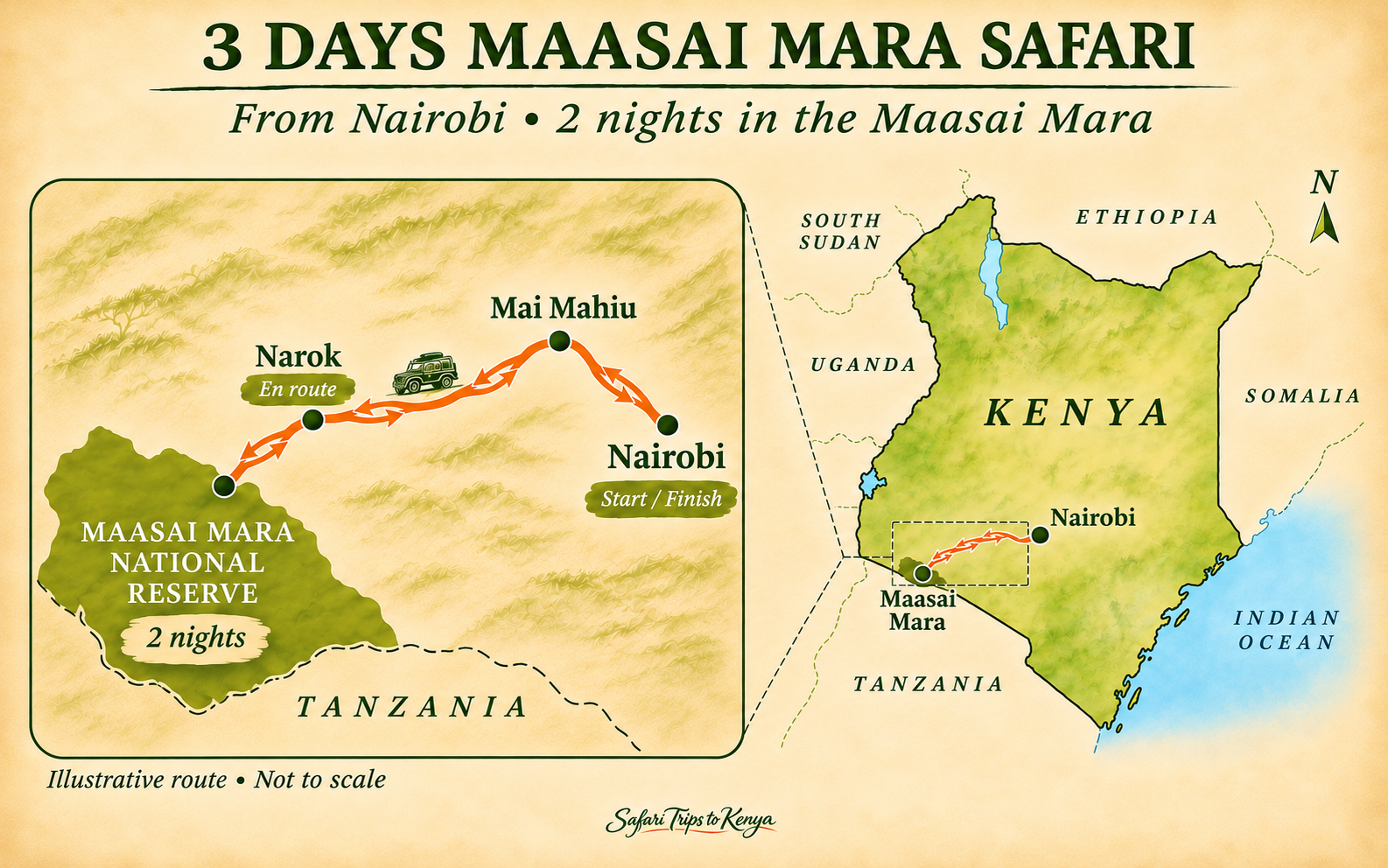
02 Itinerary
10 Days Migration Safari: Detailed Itinerary
-

Day 1: Arrival in Nairobi – Welcome to Kenya - Main destination
- Nairobi
- Meals
- According to the selected hotel package
- Accommodation
- Nairobi hotel
Your 10 Days Kenya Migration Safari begins upon arrival at Jomo Kenyatta International Airport in Nairobi, where a representative from Safari Trips to Kenya will welcome you. After meeting your safari representative, you will be transferred to your hotel in Nairobi. Depending on your arrival time, you may have the opportunity to explore some of the city's attractions or simply relax after your international journey.
Nairobi is one of Africa's most important safari gateways. The city combines modern urban life with remarkable wildlife attractions, including Nairobi National Park, where wild animals inhabit protected grasslands against the backdrop of the city skyline. If you arrive early enough, optional activities may include visiting the Giraffe Centre, exploring the Karen Blixen Museum or enjoying a meal at one of Nairobi's restaurants. These activities can be arranged separately according to your interests and available time.
In the evening, your safari guide will provide a briefing covering the planned itinerary, expected driving times, wildlife-viewing etiquette and practical information for the journey ahead. You will spend your first night in Nairobi, preparing for the adventure into Kenya's wildlife country.
Meals: According to the selected hotel package
-
Day 2: Nairobi to Lake Nakuru National Park – Great Rift Valley and Rhino Safari - Main destination
- Lake Nakuru National Park
- Drive time
- 3–4 hours, excluding sightseeing stops
- Meals
- Breakfast, Lunch, Dinner
After breakfast, depart Nairobi and travel northwest towards Lake Nakuru National Park, passing through the spectacular landscapes of the Great Rift Valley. The journey offers beautiful views of escarpments, agricultural landscapes and small towns. Your guide may stop at a suitable viewpoint, allowing you to appreciate the scale of the valley and take photographs.
Continue to Lake Nakuru, one of Kenya's important wildlife conservation areas. Although historically associated with enormous flamingo gatherings, the lake's bird populations fluctuate with water levels, food availability and changing ecological conditions. The park is particularly well known for its black and white rhinoceroses, making it an excellent destination for visitors interested in Kenya's conservation achievements.
After checking into your lodge and enjoying lunch, head into the park for an afternoon game drive. Search for rhinos, buffaloes, Rothschild's giraffes, zebras, waterbucks and other wildlife. Lions and leopards also inhabit the park, although sightings depend on animal movements and conditions. The surrounding woodland, grassland and lakeshore habitats provide excellent opportunities for photography.
Return to your lodge in the evening for dinner and overnight accommodation.
Accommodation: Lake Nakuru safari lodge
-
Day 3: Lake Nakuru to Lake Bogoria – Flamingos, Hot Springs and Rift Valley Scenery - Main destination
- Rift Valley lodge
- Meals
- Breakfast, Lunch, Dinner
Begin the morning with breakfast before departing towards Lake Bogoria, another fascinating destination within Kenya's Great Rift Valley. Lake Bogoria is a saline, alkaline lake surrounded by dramatic hills and geothermal features. It is especially famous for its seasonal concentrations of lesser flamingos, which feed on microorganisms found in the lake.
The number and distribution of flamingos vary considerably throughout the year, so sightings depend on current ecological conditions. During your visit, explore designated viewing areas where you may observe geothermal steam vents, hot springs and the unusual landscapes created by volcanic activity. Your guide will explain the geological forces responsible for shaping the Rift Valley and the importance of these alkaline lakes to East Africa's bird populations.
The contrast between the blue-green water, surrounding hills and pink flamingo gatherings can create striking photographic scenes. Depending on your accommodation arrangements, you may stay in the Lake Bogoria area or continue to a suitable lodge within the Rift Valley region.
This day provides a welcome contrast to the traditional savannah game drives, highlighting Kenya's geographical and ecological diversity.
Accommodation: Rift Valley lodge
-
Day 4: Lake Bogoria to Lake Naivasha – Boat Safari and Lakeside Relaxation - Main destination
- Masai Mara National Reserve
- Meals
- Breakfast, Lunch, Dinner
After breakfast, travel south through the Great Rift Valley towards Lake Naivasha, a freshwater lake surrounded by farmland, woodlands and scenic volcanic landscapes. Unlike the alkaline lakes of Nakuru and Bogoria, Lake Naivasha supports extensive freshwater habitats that attract a wide variety of bird species and aquatic wildlife.
Upon arrival, check into your lakeside lodge and enjoy lunch before preparing for an afternoon Lake Naivasha boat safari. The boat excursion provides opportunities to observe hippos resting in the water, African fish eagles perched in lakeside trees, cormorants, pelicans, herons and other waterbirds. Your boat guide will explain the lake's ecology and the importance of its freshwater habitats.
Hippos are commonly encountered around the lake, but visitors must always maintain safe distances and follow the instructions of their boat guide. An optional visit to Crescent Island Game Sanctuary can also be arranged, subject to available time and additional entrance fees. This activity allows visitors to experience guided walking opportunities in an area known for giraffes, zebras and antelopes.
Spend the evening relaxing beside the lake, enjoying the peaceful atmosphere before continuing towards the Masai Mara.
Accommodation: Lake Naivasha lodge
-
Day 5: Lake Naivasha to Masai Mara National Reserve – First Game Drive - Main destination
- Masai Mara National Reserve
- Drive time
- 5–6 hours, depending on the route and camp location
- Meals
- Breakfast, Lunch, Dinner
Today marks the beginning of the most anticipated part of your 10 Days Migration Safari. After an early breakfast, depart Lake Naivasha and travel towards the Masai Mara National Reserve, passing through the town of Narok and the surrounding Maasai countryside. As you approach the reserve, the landscape gradually opens into expansive grasslands, rolling hills and scattered acacia trees.
The Masai Mara forms part of the greater Serengeti–Mara ecosystem, one of the world's most important remaining large-mammal migration landscapes. Arrive at your safari camp or lodge in time for lunch, depending on road conditions and accommodation location.
Later in the afternoon, depart for your first game drive in the Masai Mara. The reserve supports an exceptional variety of wildlife, including lions, elephants, buffaloes, giraffes, cheetahs, hyenas, zebras, wildebeest and numerous antelope species. During the migration season, you may begin encountering large herds of wildebeest and zebras moving across the plains in search of grazing.
Your guide will monitor wildlife activity and select suitable viewing areas according to the day's conditions. Return to your camp as the evening light settles over the savannah.
Accommodation: Masai Mara safari lodge or tented camp
-
Day 6: Full-Day Masai Mara Migration Safari – Searching for the Great Herds - Main destination
- Masai Mara National Reserve
- Meals
- Breakfast, Lunch, Dinner
Wake before sunrise and prepare for a full day exploring the Masai Mara National Reserve. Early mornings are particularly rewarding for wildlife photography because the light is soft and temperatures are relatively cool. After breakfast, depart with your guide to search for the large herds associated with the Great Wildebeest Migration.
The migration involves vast numbers of wildebeest, accompanied by zebras and other grazing animals, moving through the Serengeti–Mara ecosystem in response to rainfall, available grass and water. During the main migration months, parts of the Masai Mara may become crowded with animals stretching across the plains.
Your guide will search for areas where the herds are currently concentrated. The presence of so many grazing animals creates opportunities to observe predators, including lions, cheetahs, leopards and spotted hyenas. However, wildlife behaviour is unpredictable, and sightings of hunting activity cannot be guaranteed.
Enjoy a packed picnic lunch at a designated safe location within the reserve. Continue exploring different habitats in the afternoon, looking for elephants, giraffes, buffaloes, topi, gazelles and other resident wildlife. This extended game-drive day is particularly valuable because it allows you to spend more time observing animal behaviour rather than rushing between sightings.
Return to your accommodation in the evening.
Accommodation: Masai Mara safari lodge or tented camp
-
Day 7: Masai Mara River Crossing Safari – Exploring the Mara River - Main destination
- Masai Mara National Reserve
- Meals
- Breakfast, Lunch, Dinner
Today's safari focuses on one of the most famous locations associated with the Great Wildebeest Migration in Kenya: the Mara River. After an early breakfast, depart with your guide towards the river areas accessible from your accommodation.
During the migration season, large groups of wildebeest and zebras sometimes gather along the riverbanks before attempting to cross. The Mara River presents a difficult natural obstacle. Its steep banks, changing water levels and resident Nile crocodiles can make crossings dangerous for migrating animals.
However, it is important to understand that Mara River crossings are never guaranteed. The animals may approach the river and retreat several times. Herds can wait for hours or days before crossing, and sometimes no crossing occurs during a visitor's stay.
Your guide will assess current herd movements and advise whether spending time near the river is worthwhile. Even without an active crossing, the river environment provides opportunities to observe hippos, crocodiles, waterbirds and other wildlife.
You may also explore nearby grasslands where lions, elephants and other animals can frequently be encountered. Enjoy a picnic lunch during the excursion and continue with wildlife viewing in the afternoon.
This day is designed to provide flexibility, allowing your guide to adapt the route according to real wildlife conditions rather than following a rigid schedule. Return to your camp for dinner and overnight accommodation.
Accommodation: Masai Mara safari lodge or tented camp
-
Day 8: Masai Mara Big Five Safari – Predators, Elephants and Wildlife Photography - Main destination
- Masai Mara National Reserve
- Meals
- Breakfast, Lunch, Dinner
After breakfast, enjoy another full day in the Masai Mara National Reserve, this time concentrating on the area's resident wildlife and predator populations. Although the migration attracts international attention, the Masai Mara remains one of Kenya's finest wildlife destinations throughout the year.
Its grasslands support substantial populations of lions, elephants, buffaloes, giraffes, zebras and antelopes. Cheetahs are often associated with the open plains, where their speed and hunting techniques are adapted to relatively unobstructed terrain. Leopards are more elusive and may be found resting in trees or moving through areas with suitable cover.
Your guide will look for tracks, animal calls and other signs that may indicate nearby wildlife activity. This is also an excellent day for African wildlife photography. Rather than concentrating exclusively on large mammals, take time to photograph birds, landscapes, animal interactions and the changing colours of the savannah.
Photographers may particularly appreciate the opportunity to observe elephants moving across open plains, giraffes feeding among trees or lions resting in the shade. During the afternoon, you may choose to return to camp for a short rest before heading out again, depending on the day's game-drive arrangements.
An optional Maasai village visit may be arranged with a participating local community. This provides an opportunity to learn about aspects of Maasai culture, traditional livelihoods and contemporary community life. Such visits should be arranged respectfully and with clear information about any additional charges.
Accommodation: Masai Mara safari lodge or tented camp
-
Day 9: Final Full Day in Masai Mara – Sunrise Safari and Optional Hot Air Balloon Experience - Main destination
- Masai Mara National Reserve
- Meals
- Breakfast, Lunch, Dinner
Your final full day in the Masai Mara offers another opportunity to explore this remarkable ecosystem. For travellers seeking a particularly memorable experience, an optional Masai Mara hot air balloon safari can be arranged at an additional cost. Balloon excursions normally begin before sunrise, allowing guests to watch the savannah gradually emerge in the morning light.
From above, the landscape reveals a different perspective, with winding rivers, open grasslands, scattered trees and wildlife moving through the plains. The balloon experience is weather-dependent and should be booked in advance, particularly during the busy migration season.
Travellers who prefer to remain on the ground will enjoy an early morning game drive with their safari guide. Depending on recent sightings and herd movements, you may revisit productive wildlife areas or explore sections of the reserve not previously covered.
Spend time observing animal behaviour, photographing landscapes and enjoying the atmosphere of the African wilderness. The afternoon can be dedicated to a final game drive or relaxation at your lodge, according to your preferences and the available arrangements.
As the sun sets over the Masai Mara, reflect on the extraordinary wildlife encounters and landscapes experienced throughout the safari.
Accommodation: Masai Mara safari lodge or tented camp
-
Day 10: Masai Mara to Nairobi – End of Your Kenya Migration Safari - Main destination
- Masai Mara National Reserve
- Drive time
- 5–6 hours, depending on road conditions and traffic
- Meals
- Breakfast
After breakfast, check out of your lodge and begin the return journey to Nairobi. The drive takes you through the scenic countryside of southwestern Kenya, passing Maasai settlements, agricultural areas and the landscapes of the Great Rift Valley.
Depending on traffic conditions, you will normally arrive in Nairobi during the afternoon. Your guide will transfer you to Jomo Kenyatta International Airport, your Nairobi hotel or another agreed drop-off location. Travellers departing on international flights should allow sufficient time for road delays, airport check-in and security procedures.
For those wishing to extend their holiday, Safari Trips to Kenya can arrange additional experiences such as an Amboseli National Park safari, a coastal holiday in Diani Beach, or an onward journey to Tanzania.
Your 10 Days Migration Safari in Kenya concludes with memories of remarkable landscapes, exceptional wildlife encounters and the unforgettable atmosphere of the Masai Mara.
03 Rates
Safari rates 2027-2029
Indicative per person. Season, group size and lodge style change the total — your quotation confirms current rates.
-
Essential (Budget)
Essential (Budget)
Budget camps and lodges suit travelers who prioritize wildlife while keeping costs lower.
Great value camps
-
Comfort (Mid-range)
Comfort (Mid-range)
Mid-range tented camps and lodges balance comfort and price with private rooms or tents and en-suite facilities.
Quoted for your dates
-
Premium (Luxury)
Premium (Luxury)
Luxury camps and lodges focus on location, service and more intimate wildlife experiences.
Premium camps and lodges
-
Signature (High-end)
Signature (High-end)
Signature camps and lodges are the most exclusive stays — small, highly private properties with exceptional guiding and setting.
Exclusive signature stays
04 Activities
Safari activities
Game viewing is the core of this itinerary. Optional extras are quoted separately and depend on season, permits and availability. Individual species and river crossings are never guaranteed.
-
Included
Enjoy a scenic boat excursion on Lake
Included in a typical day on this safari. Exact timing follows the confirmed itinerary.
View activity -

Optional
Enjoy opportunities for wildlife photography, birdwatching and
Available at extra cost when conditions, permits and your dates allow. Not guaranteed.
View activity
Additional information
Plan This Safari
What Is the Great Wildebeest Migration?
The Great Wildebeest Migration is one of the world's most remarkable natural wildlife movements. It involves enormous herds of wildebeest, accompanied by zebras and other grazing animals, moving through the connected ecosystems of Tanzania's Serengeti National Park and Kenya's Masai Mara National Reserve.
The animals travel in response to seasonal rainfall, the availability of fresh grass and access to water. Unlike a scheduled event, the migration does not follow an exact timetable. The herds may arrive earlier or later than expected, and their distribution changes according to environmental conditions.
During the northern phase of the migration, large numbers of animals may enter the Masai Mara, creating spectacular wildlife-viewing opportunities. The movement also attracts predators and scavengers, contributing to the complex ecological relationships that make the Serengeti–Mara ecosystem so important.
For safari visitors, the migration offers an opportunity to witness the scale of natural animal movements that have shaped East Africa's grassland ecosystems for generations.
Best Time for a 10 Days Migration Safari in Kenya
The most popular period for a Masai Mara Migration Safari is generally between July and October. However, the exact timing of herd movements varies annually.
July – Arrival of Migrating Herds
July often marks the beginning of significant migration activity in the Masai Mara. Depending on rainfall patterns, wildebeest and zebra herds may begin arriving from the Serengeti. Visitors can enjoy excellent general wildlife viewing, with increasing opportunities to encounter migrating animals.
August – Peak Migration Season
August is traditionally one of the most popular months for a Kenya Wildebeest Migration Safari. Large herds may be present across the Masai Mara, and river crossings are possible. Accommodation demand is usually high, so early reservations are strongly recommended.
September – Excellent Migration and Predator Viewing
September can provide outstanding migration viewing, with large herds often remaining in parts of the Masai Mara. The concentration of grazing animals can create opportunities to observe predator activity. River crossings remain possible but cannot be predicted for a particular day.
October – Late Migration Movements
October may offer opportunities to observe herds moving within the Masai Mara or beginning their return towards Tanzania. The exact timing depends on rainfall and grazing conditions. Travellers visiting during October should remain flexible and understand that some herds may already have moved south.
Important: No safari operator can guarantee a wildebeest river crossing. We recommend booking for the overall wildlife experience, with a crossing treated as an exceptional opportunity rather than a promised event.
Why Spend Several Days in the Masai Mara?
One of the main advantages of this 10 Days Migration Safari is the extended time allocated to the Masai Mara. Shorter itineraries may provide only one or two full game-drive days, leaving limited flexibility when wildlife movements are unpredictable.
A longer stay allows travellers to explore different areas, revisit productive locations and adjust plans according to current conditions. It also reduces the pressure to see everything immediately.
Wildlife photography often requires patience. A lion may remain asleep for several hours before becoming active, while a herd of elephants may take considerable time to approach a suitable viewing location. Spending several days in the reserve creates more opportunities to appreciate these natural behaviours.
It also allows visitors to enjoy the broader ecosystem, including birds, smaller mammals, grassland habitats and the beautiful landscapes that make the Masai Mara special.
Accommodation Options for Your Kenya Migration Safari
Accommodation can be arranged according to your preferred level of comfort and budget.
Essential Safari Accommodation
Our Essential Safari option focuses on clean, comfortable accommodation that provides good value without unnecessary luxury. Properties may include established safari camps or lodges with private bathrooms, comfortable beds and suitable dining facilities. This category is ideal for travellers who prioritise wildlife experiences and affordability.
Comfort Safari Accommodation
The Comfort Safari category offers well-appointed lodges and tented camps with additional amenities. Guests can expect comfortable rooms, attractive surroundings and convenient access to wildlife-viewing areas. This option is particularly suitable for couples, families and travellers seeking a balance between quality and cost.
Premium Safari Accommodation
Our Premium Safari category features higher-end lodges and tented camps offering spacious accommodation, enhanced dining and attentive service. Some properties provide swimming pools, private terraces and scenic locations overlooking wildlife habitats.
Signature Safari Accommodation
The Signature Safari category is designed for travellers seeking an exclusive and highly personalised experience. Depending on the selected property, accommodation may include luxury tented suites, exceptional locations and additional services.
Accommodation availability and exact lodge names will be confirmed in your personalised safari quotation.
How Much Does a 10 Days Migration Safari Cost?
The cost of a 10 Days Migration Safari in Kenya depends on several important factors. The first is your travel season. The period from July to October usually attracts stronger demand for Masai Mara accommodation because of the migration. Lodges and camps may charge higher rates during these months, particularly in August and September.
The second factor is accommodation quality. Essential safari camps generally cost less than premium and signature properties. The third factor is the number of travellers sharing a vehicle. For private safaris, transport and guide costs can be distributed among the group, often reducing the per-person price for couples, families and small groups.
Other considerations include park entrance fees, the precise location of accommodation, optional activities and whether domestic flights are required. We recommend requesting a personalised quotation rather than relying on a generic price that may not reflect actual availability.
Safari Trips to Kenya can prepare quotations for two, four or six travellers, as well as larger groups requiring additional vehicles.
Private Safari or Group Safari – Which Is Better?
Both private Kenya safaris and scheduled group safaris offer advantages. A private safari provides greater flexibility with departure dates, photography stops, daily schedules and accommodation preferences. It is particularly suitable for couples, honeymooners, families and travellers who want a personalised experience.
A group safari allows travellers to share certain transport and guiding costs, potentially making the journey more affordable. Group departures follow scheduled dates and usually have less flexibility than private itineraries.
For guests interested in joining a group, we can advise on available departure dates, vehicle capacity and the accommodation arrangements applicable to that departure.
Wildlife You May See During the Safari
Although the wildebeest migration is the main attraction, this itinerary offers opportunities to observe a wide range of wildlife.
Lions are among the most sought-after animals in the Masai Mara, where prides inhabit the grasslands and surrounding habitats. Cheetahs are particularly associated with open landscapes where they can use their remarkable speed. Leopards are more elusive and are often encountered in areas with trees, riverine vegetation and suitable cover.
Elephants are commonly seen in the Masai Mara and other suitable habitats, sometimes travelling in family groups. Buffaloes can be encountered in both the Masai Mara and Lake Nakuru. Rhinoceroses are an important highlight of Lake Nakuru, although sightings cannot be guaranteed.
Other animals may include giraffes, zebras, wildebeest, topi, impalas, gazelles, waterbucks, hippos, crocodiles, hyenas and jackals. Birdwatchers can also enjoy opportunities to observe eagles, vultures, storks, herons, kingfishers and many other species.
What to Pack for Your Kenya Migration Safari
Packing appropriately will make your Kenya wildlife safari more comfortable. Choose lightweight clothing in neutral colours such as khaki, olive, beige and brown. Early mornings can be cool, particularly during July and August, so a warm fleece or jacket is useful.
Comfortable closed shoes are recommended for travel days and lodge activities. Other useful items include sunscreen, sunglasses, a wide-brimmed hat, insect repellent and personal medication.
A good pair of binoculars can greatly improve wildlife viewing, especially when observing birds or distant predators. Photographers should bring suitable camera equipment, spare batteries, memory cards and protection against dust. A small daypack is useful for carrying personal belongings during game drives.
Book Your 10 Days Migration Safari with Safari Trips to Kenya
A successful migration safari requires more than simply arriving in the Masai Mara during the right month. The location of your accommodation, quality of your safari guide, available time for wildlife viewing and flexibility of your itinerary all influence the experience.
At Safari Trips to Kenya, we design safaris around your preferred travel dates, budget and interests, with an emphasis on meaningful wildlife encounters and realistic expectations.
Whether you prefer an affordable group departure, a comfortable private safari or a premium wildlife holiday, we can help you plan a journey that balances excellent game viewing with comfortable travel arrangements.
Contact our safari planning team to request an updated quotation, discuss migration-season availability and choose the accommodation category that suits your travel style.
Explore Kenya's extraordinary wildlife landscapes and experience the Great Migration with a carefully planned 10 Days Migration Safari.
Planning Questions
Frequently Asked Questions
Is the Great Wildebeest Migration guaranteed?
The Great Migration is a natural, seasonal movement, and its exact location changes throughout the year. Large herds are often present in the Masai Mara between July and October, but their movements cannot be guaranteed on specific dates.
Can I see the Mara River crossing?
Yes, it is possible during the migration season. However, crossings are unpredictable, and no operator can guarantee that a crossing will occur during your visit.
Is this safari suitable for first-time visitors to Kenya?
Yes. The itinerary combines several different wildlife environments and provides an excellent introduction to Kenya's national parks, landscapes and safari experiences.
Can the itinerary be customised?
Yes. The itinerary can be adjusted according to your travel dates, preferred accommodation, available budget and wildlife interests.
Can children join the safari?
Yes. Families can participate, although the itinerary should be adjusted according to children's ages, driving tolerance and the policies of individual accommodation properties.
Do I need a 4x4 vehicle?
A suitable 4x4 safari vehicle is strongly recommended for this itinerary, particularly when travelling on unpaved roads and wildlife-viewing tracks.
How early should I book?
For travel during the main migration season, booking several months in advance is advisable. Popular camps may fill considerably earlier, especially during August and September.
Can I combine the safari with a beach holiday?
Yes. Many travellers combine a Masai Mara Migration Safari with a holiday on Kenya's coast, particularly Diani Beach, Watamu or Mombasa.
05 Request Quote
Request Quote
Tell us your dates, group size, and preferred lodge style — we will send a tailored quote for this safari.
Want to extend your safari?
Add Amboseli, Diani Beach, Tanzania and Zanzibar, or gorilla trekking in Uganda or Rwanda — we tailor the journey to your dates.