
A safari should be built around the traveller, the destination and the time available. Visiting Kenya’s wildlife areas involves more than selecting a list of national parks. Driving distances, seasonal wildlife movements, accommodation locations, park access arrangements and the number of nights in each destination all influence the experience.
At Safari Trips to Kenya, our approach to safari planning begins with these practical considerations. We help travellers explore Kenya through thoughtfully structured itineraries that combine wildlife viewing, landscapes, cultural experiences and opportunities to relax.
Our safari programmes cover some of Kenya’s best-known destinations, including the Masai Mara National Reserve, Amboseli National Park, Lake Nakuru National Park, Tsavo East National Park, Tsavo West National Park and other important wildlife areas. We also develop itineraries combining inland safaris with coastal holidays in destinations such as Diani Beach and Mombasa.
The aim is to make it easier for travellers to understand what each destination offers, how different routes compare and which arrangements suit their budget and interests.
Some visitors want a short wildlife safari from Nairobi. Others prefer a longer journey combining several national parks, private game drives and a few days at the Indian Ocean coast. Families may need a gentler pace, while photographers may want more time in one location to observe animal behaviour.
Rather than assuming every traveller needs the same programme, we focus on creating safari options that can be adapted to individual preferences.
What Is Safari Trips to Kenya?
Safari Trips to Kenya is a Kenya safari travel brand focused on helping visitors discover the country’s wildlife destinations through organised safari packages and customised itineraries.
Our website presents safari experiences for different travel styles, durations and budgets. These include short wildlife tours, longer multi-park journeys, migration-focused safaris, family holidays, private departures, group safari options and combinations of wildlife viewing with beach relaxation.
We believe useful safari planning should begin with clear information. Travellers need to know where they are going, how long the journey takes, what wildlife may be encountered and what services are included in the quoted price.
A well-prepared itinerary should also explain the practical limitations of travel. Wildlife sightings cannot be guaranteed, road journeys can be lengthy, and accommodation availability changes according to the season.
Providing realistic expectations helps travellers make better decisions and enjoy their safari without unnecessary surprises.
Our Approach to Planning Kenya Safaris
The quality of a safari often depends on how well the itinerary matches the traveller’s interests.
A visitor interested in big cats may benefit from spending several nights in the Masai Mara. Someone particularly interested in elephants may want additional time in Amboseli. A traveller seeking a combination of rhinos, birds and Rift Valley scenery may enjoy Lake Nakuru or other suitable conservation areas.
We consider these differences when developing Custom Kenya Safari Itineraries.
Understanding Your Travel Interests
The planning process begins with your priorities. These may include wildlife photography, the Big Five, the Great Wildebeest Migration, family activities, birdwatching, cultural experiences or a relaxing holiday.
Knowing which experiences matter most helps determine where to spend time and which destinations can be combined realistically.
Selecting Suitable Destinations
Kenya has many wildlife areas, but visiting too many parks in a short holiday can result in excessive driving and limited time for game viewing.
We favour routes that provide meaningful time in the destinations included. A three-night stay in one major wildlife area may be more rewarding than three consecutive one-night stops.
Considering Travel Distances
Driving times are an important part of safari planning. Some journeys involve several hours on highways, rural roads and unsealed tracks.
An itinerary should account for these conditions rather than treating every destination as if it were close to the next.
Where appropriate, domestic flights may provide an alternative to lengthy road transfers, subject to schedules, availability and additional cost.
Choosing Accommodation Carefully
Accommodation influences comfort, daily travel time and the overall atmosphere of a safari.
A camp located conveniently for game drives may allow earlier wildlife viewing and reduce time spent travelling to park gates.
We encourage travellers to consider accommodation location alongside room facilities, dining arrangements and price.
Allowing Flexibility
Wildlife activity changes from day to day. Rainfall, vegetation, temperature and animal behaviour influence sightings.
A flexible itinerary allows the guide to respond to current conditions while respecting park regulations and the agreed programme.
Kenya Safari Destinations We Feature
Kenya’s wildlife destinations offer different landscapes and experiences. Understanding these differences is important when choosing a safari.
Masai Mara National Reserve
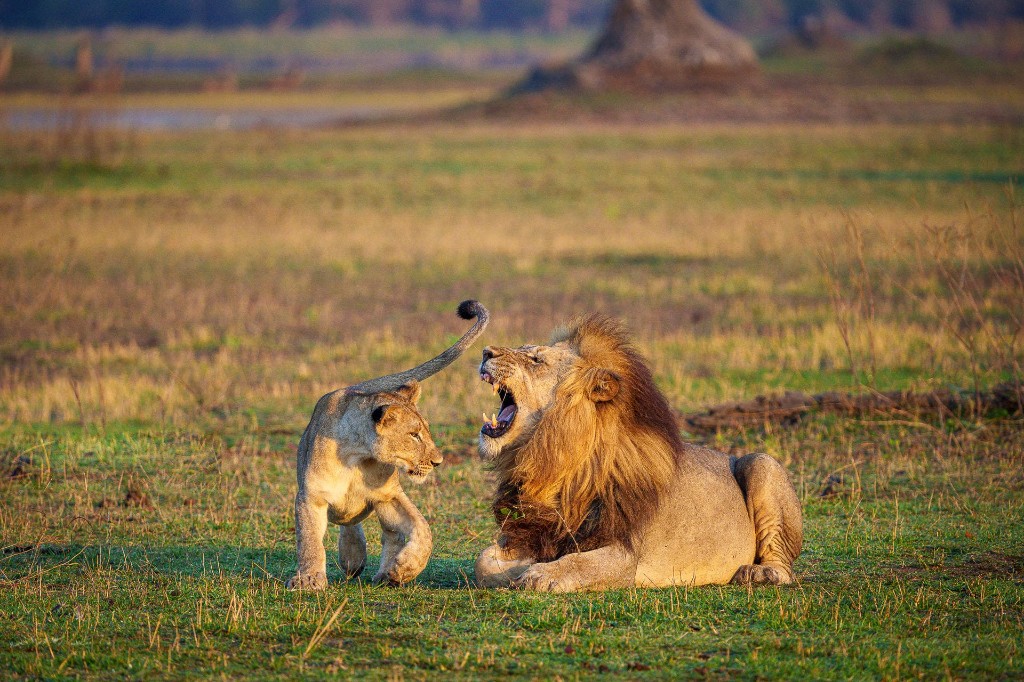
The Masai Mara National Reserve is one of Kenya’s most recognised wildlife destinations. Its open grasslands, rolling hills and riverine habitats support lions, cheetahs, leopards, elephants, buffaloes, giraffes and numerous other species.
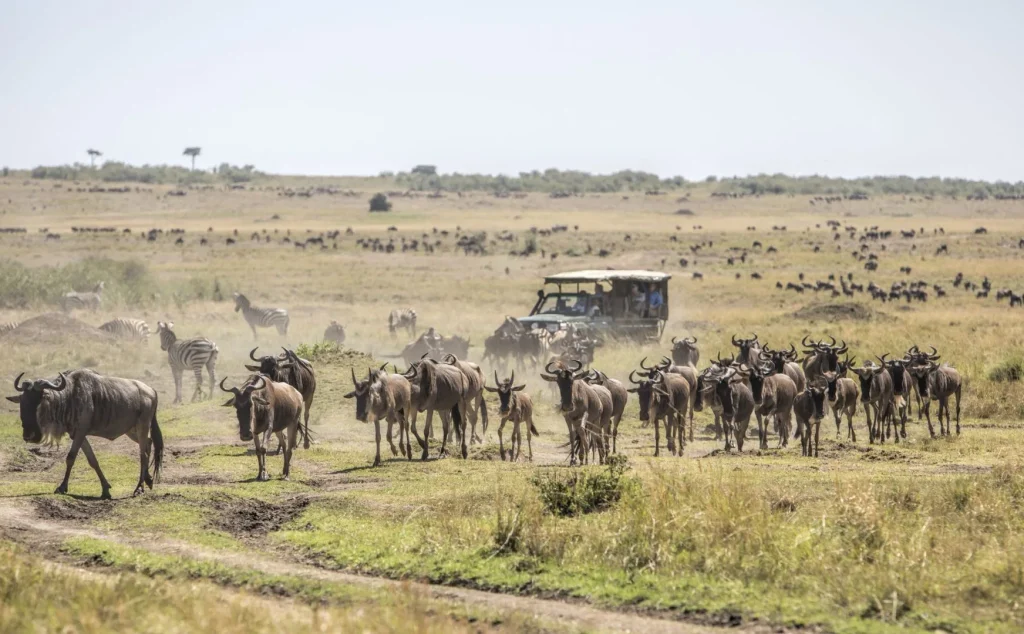
The reserve is also associated with the Great Wildebeest Migration, when large grazing herds may enter the Mara ecosystem from the Serengeti.
Migration activity is generally associated with July to October, although the timing varies according to rainfall and grazing conditions. River crossings cannot be guaranteed.
The Mara is rewarding outside migration season because its resident wildlife remains present throughout the year.
For travellers interested in predators, wildlife photography and extended game drives, the Masai Mara is often an important part of a Kenya safari.
Amboseli National Park
Amboseli National Park is particularly famous for elephants and views towards Mount Kilimanjaro.
The park’s open plains, wetlands and acacia woodland create a distinctive safari environment. Elephant herds may be observed moving between feeding areas and water sources, while other wildlife includes buffaloes, zebras, wildebeest, giraffes and numerous birds.
Clear mornings sometimes provide excellent views of Mount Kilimanjaro, although cloud cover can obscure the mountain.
Amboseli is suitable for travellers who enjoy elephant observation, landscape photography and a relatively compact wildlife destination.
Lake Nakuru National Park
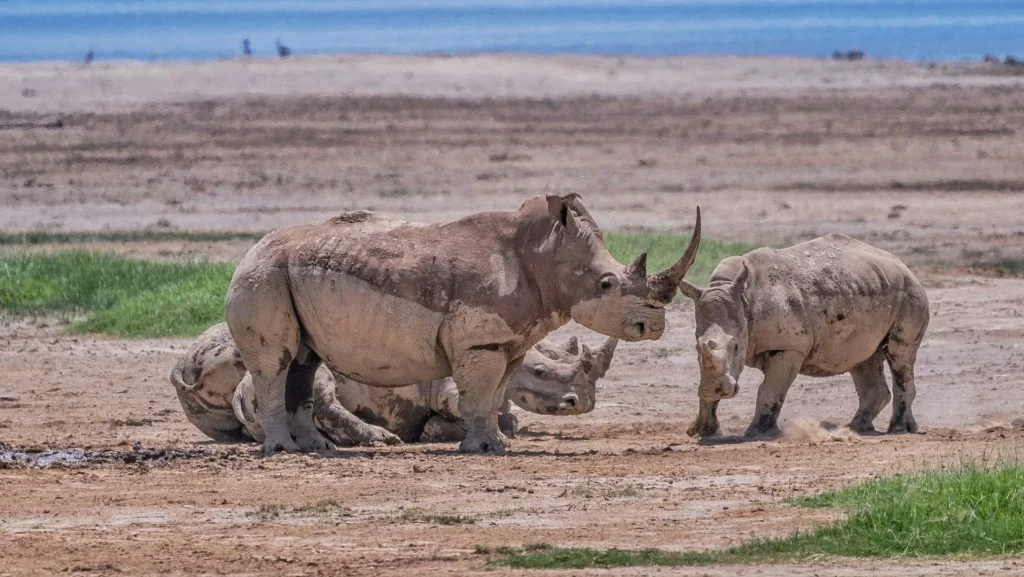
Lake Nakuru National Park is an important rhino sanctuary within Kenya’s Rift Valley region.
The park supports black and white rhinos, along with buffaloes, giraffes, antelopes, birds and other wildlife.
Its habitats include an alkaline lake, woodland, grassland and rocky viewpoints. Flamingos may be present, although their numbers vary according to water levels and ecological conditions.
Lake Nakuru can be included in itineraries combining the Masai Mara with other destinations in central or southern Kenya.
Tsavo East National Park
Tsavo East National Park is known for its extensive landscapes, open habitats and elephants, some of which appear reddish from the area’s iron-rich soil.
The park provides a different safari experience from the Masai Mara, with broad wilderness scenery and a sense of scale.
Tsavo East can be particularly useful for travellers combining a wildlife safari with a holiday on the Kenyan coast.
Tsavo West National Park
Tsavo West National Park offers varied landscapes, including volcanic terrain, woodland, hills and natural springs.
The park supports elephants, buffaloes, giraffes, antelopes and predators, although some animals can be more difficult to locate in denser vegetation.
Tsavo West is often combined with Tsavo East, Amboseli or coastal destinations.
Samburu National Reserve
Samburu National Reserve lies in northern Kenya and offers a distinctive semi-arid landscape.
The reserve is associated with species such as Grevy’s zebra, reticulated giraffe, gerenuk, Beisa oryx and Somali ostrich.
These animals make Samburu particularly interesting for travellers who want to explore wildlife habitats beyond Kenya’s better-known southern parks.
Lake Naivasha and the Rift Valley
Lake Naivasha and its surroundings provide opportunities for birdwatching, scenic excursions and selected activities outside traditional vehicle-based game drives.
The region can be useful as a stop between destinations or as part of a more relaxed itinerary.
Activities must be selected according to the specific location, safety arrangements and the traveller’s interests.
Our Kenya Safari Experiences
Different travellers have different expectations, so we develop safari programmes around several main travel styles.
Private Kenya Safaris
Private Kenya Safaris provide a dedicated vehicle and guide for the travelling party.
This arrangement allows greater flexibility in departure dates, accommodation selection and daily schedules.
Private safaris are suitable for couples, families, friends and travellers who prefer not to share a vehicle with unrelated guests.
They are also useful for photographers who want additional time at wildlife sightings or families who require a more relaxed pace.
Kenya Group Safaris
Kenya Group Safaris offer an alternative for travellers who prefer to share transport and guiding costs.
Group arrangements can be attractive for solo travellers, couples and friends seeking a more affordable safari.
However, group departures generally follow fixed schedules, and participants should be comfortable sharing game drives with other travellers.
The availability of group departures, maximum group size and accommodation arrangements should be confirmed before booking.
Kenya Family Safaris
A Kenya Family Safari should consider the ages, interests and energy levels of everyone travelling.
Young children may prefer shorter game drives and accommodation with suitable family facilities. Teenagers may enjoy wildlife photography, educational activities and longer excursions.
Family itineraries can include rest periods and fewer accommodation changes to make the journey more comfortable.
Kenya Honeymoon Safaris
A Kenya Honeymoon Safari combines wildlife experiences with accommodation and activities suited to couples.
Some travellers prefer private game drives and intimate tented camps, while others want a combination of safari and beach relaxation.
A honeymoon itinerary can include several nights in the Masai Mara or Amboseli followed by time at Diani Beach or another coastal destination.
Kenya Wildlife Photography Safaris
Kenya Wildlife Photography Safaris place greater emphasis on time, light and animal behaviour.
Photographers often benefit from early morning game drives, a dedicated vehicle and sufficient space for camera equipment.
A longer stay in one destination can provide more opportunities to photograph wildlife under different conditions.
Great Wildebeest Migration Safaris
Great Wildebeest Migration Safaris focus on the seasonal movement of grazing animals through the Serengeti–Mara ecosystem.
These itineraries require realistic expectations because herd movements and river crossings cannot be predicted precisely.
We encourage travellers to appreciate the entire wildlife experience rather than expecting a crossing on a particular day.
Kenya Safari and Beach Holidays
Kenya Safari and Beach Holidays combine inland wildlife destinations with the Indian Ocean coast.
A typical programme may include the Masai Mara, Amboseli or Tsavo before continuing to Diani Beach, Mombasa or another coastal destination.
These holidays are suitable for travellers who want active wildlife experiences followed by time to relax.
Our Accommodation Categories
Accommodation preferences vary widely, and price alone does not determine whether a property is suitable for a particular safari.
We use four broad categories to help travellers compare options.
Essential
Essential Safari Accommodation focuses on practical, comfortable lodging with the facilities required for a safari holiday.
This category is suitable for travellers who prioritise wildlife viewing and affordability over luxury amenities.
Comfort
Comfort Safari Accommodation provides a balance between price, room facilities and convenience.
It is suitable for travellers seeking a comfortable base for game drives without the cost of premium accommodation.
Premium
Premium Safari Accommodation may offer more spacious rooms, attractive settings and additional services.
For many travellers, the location of a premium lodge or camp can be as important as its facilities.
Signature
Signature Safari Accommodation focuses on high-end properties, distinctive locations and personalised service.
These arrangements may be suitable for honeymooners, luxury travellers and visitors seeking additional privacy.
Specific properties are selected according to availability, location, travel dates and the requirements of the individual itinerary.
Why Safari Vehicle Choice Matters
Safari transport is an important part of the wildlife experience.
A 4×4 Safari Land Cruiser is often preferred for private wildlife safaris because it is designed for rougher roads and can provide suitable wildlife-viewing arrangements.
Vehicle configuration influences comfort, photography opportunities and the amount of space available for passengers and luggage.
Travellers should confirm the vehicle type, seating arrangements and luggage capacity before booking.
For families and private groups, the number of passengers should be considered carefully. A vehicle that is technically able to carry a certain number of people may not provide the same viewing comfort as one with fewer occupants.
Photographers may prefer additional space for equipment and easier access to different viewing positions.
The Importance of Professional Safari Guiding
A safari guide does more than drive between wildlife sightings.
Good guiding involves understanding animal behaviour, interpreting tracks and signs, identifying birds and explaining the ecological relationships between different species.
A guide also helps manage practical matters such as daily schedules, park regulations, road conditions and communication with accommodation providers.
Wildlife sightings depend on natural conditions, but informed guiding can help travellers understand what they are observing.
For example, watching elephants interact within a family group becomes more meaningful when the guide explains their social behaviour.
Similarly, observing a predator searching for prey can be more interesting when the traveller understands the animal’s hunting strategy and habitat preferences.
Responsible guiding also means knowing when to maintain distance and avoid disturbing wildlife.
Responsible Safari Travel and Conservation
Kenya’s wildlife areas depend on functioning ecosystems, protected habitats and cooperation between conservation organisations, government authorities and surrounding communities.
Tourism can contribute to conservation through park fees, employment and support for local businesses.
However, responsible behaviour is essential.
Safari vehicles should follow the rules of each protected area. Wildlife should never be chased, fed or disturbed for photographs.
Visitors should avoid littering and respect restrictions on leaving vehicles.
Cultural experiences should be arranged respectfully, with clear information about the activity and any applicable charges.
We encourage travellers to understand that conservation involves more than protecting individual animals. It also requires maintaining habitats, wildlife movement corridors and relationships with communities living near protected areas.
How We Help Travellers Plan Their Safari
A useful safari enquiry should provide enough information to develop a realistic itinerary.
Step 1: Share Your Travel Dates
Travel dates influence wildlife conditions, accommodation availability and prices.
If your dates are flexible, alternative periods may offer different advantages.
Step 2: Confirm the Number of Travellers
The number of adults and children affects vehicle arrangements, room configurations and the cost per person.
For families, children’s ages are particularly important when selecting accommodation and activities.
Step 3: Choose Your Preferred Safari Style
Tell us whether you prefer a private safari, a group departure or a combination of wildlife viewing and beach relaxation.
This helps determine the most suitable programme.
Step 4: Select an Accommodation Category
Choose between Essential, Comfort, Premium and Signature accommodation, or request a combination of categories.
A mixed approach can sometimes provide a useful balance between comfort and cost.
Step 5: Identify Your Main Interests
Some travellers prioritise big cats, while others are more interested in elephants, rhinos, birds, photography or cultural experiences.
Knowing your interests helps us allocate time appropriately.
Step 6: Review the Proposed Itinerary
A proposed itinerary should explain the route, number of nights, activities, accommodation and approximate driving times.
Travellers can request adjustments before confirming the booking.
Step 7: Review the Quotation
The quotation should clearly identify included services, exclusions, payment arrangements and relevant booking conditions.
Any uncertainties should be clarified before payment.
Understanding Kenya Safari Prices
The cost of a Kenya Safari Package depends on several factors.
Accommodation category is a major consideration, particularly during peak travel periods.
Park entry fees also contribute to the total price. These charges may vary according to the protected area, visitor category and applicable fee schedule.
Transport arrangements influence the cost per person. Private vehicle expenses are shared among the travellers using that vehicle.
Domestic flights can reduce road travel but generally add to the total cost.
Optional activities such as hot air balloon safaris, cultural visits and specialist experiences may involve additional charges.
A detailed quotation is more useful than a headline price that does not explain what is included.
Travellers should compare the number of nights, accommodation locations, vehicle type, park fees and activities before deciding between safari offers.
Best Time to Visit Kenya for a Safari
Kenya offers wildlife experiences throughout the year, although the conditions vary between regions.
The generally drier months often provide good wildlife viewing because vegetation may be less dense and animals may concentrate around reliable water sources.
The Great Wildebeest Migration is usually associated with the Masai Mara between July and October, although herd movements vary.
The wetter months can provide green landscapes, dramatic skies and rewarding birdwatching.
Travellers interested in photography may prefer different seasons depending on whether they want dry grassland backgrounds or lush green scenery.
The best time ultimately depends on the destinations included and the type of safari experience desired.
Frequently Asked Questions About Safari Trips to Kenya
Can I customise a Kenya safari itinerary?
Yes. Safari itineraries can be adapted according to travel dates, preferred destinations, accommodation category and personal interests.
Do you offer private Kenya safaris?
Private safari arrangements can be planned with a dedicated vehicle and guide, subject to availability and the confirmed booking arrangements.
Are group safari options available?
Suitable group departures may be available for selected itineraries. Travellers should confirm dates, group size and accommodation arrangements before booking.
Can I combine a safari with Diani Beach?
Yes. Kenya safari itineraries can be extended with a coastal holiday in Diani Beach, Mombasa or another suitable destination.
How far in advance should I book?
Early booking is recommended during popular travel periods, especially the main migration season and major holiday periods.
Can I choose my accommodation category?
Yes. Accommodation can be selected from Essential, Comfort, Premium and Signature categories, subject to availability.
Are wildlife sightings guaranteed?
No. Wildlife movements and behaviour are natural and cannot be guaranteed.
Can families with children travel on safari?
Yes. Family itineraries can be adapted to suit children’s ages, interests and accommodation requirements.
What information should I provide when requesting a quotation?
Your preferred dates, number of travellers, accommodation category, safari duration and main interests are useful starting points.
Start Planning Your Kenya Safari
Kenya offers an exceptional range of wildlife destinations, from the grasslands of the Masai Mara to the elephant habitats of Amboseli and the varied landscapes of Tsavo.
Choosing the right safari involves understanding these differences and allowing enough time to enjoy each destination.
At Safari Trips to Kenya, we focus on helping travellers make informed decisions through clear itineraries, practical travel information and accommodation choices suited to different budgets.
Whether you are planning a short Kenya Safari from Nairobi, a longer wildlife journey, a family holiday or a private safari combined with the coast, the programme can be developed around your interests.
Contact Safari Trips to Kenya with your preferred travel dates and safari requirements to begin planning a personalised Kenya holiday.