
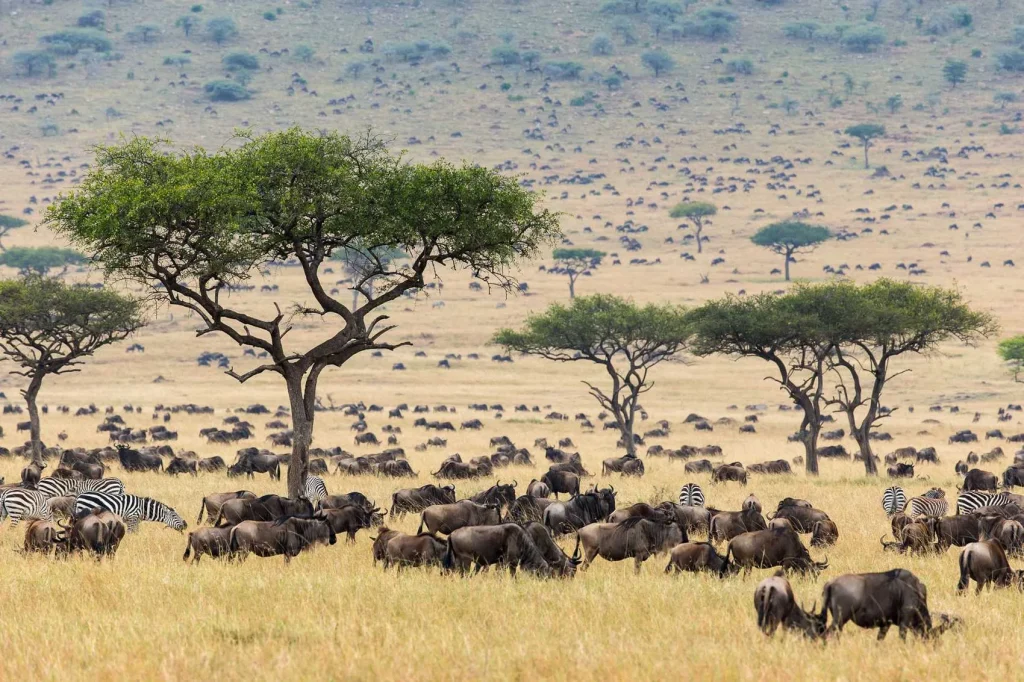
Masai Mara Photography Safari
A Masai Mara photography safari places you in one of Africa's most productive wildlife landscapes, where open savannahs, abundant predators, large herbivore herds and dramatic seasonal changes create extraordinary opportunities for wildlife and landscape photography.
For many photographers, the attraction of the Masai Mara is not simply the number of animals that can be seen. It is the combination of wildlife density, relatively open terrain, experienced safari guides and the possibility of spending extended periods observing animal behavior. A lioness walking through golden grass at sunrise, a cheetah scanning the plains from a termite mound, an elephant family beneath a storm-filled sky or thousands of wildebeest gathering near the Mara River can all become defining photographic moments.
But successful safari photography involves much more than arriving with a long lens. The quality of your photographs can be strongly influenced by:
- the season you travel;
- where you stay;
- your choice of safari vehicle;
- the number of people sharing that vehicle;
- the experience of your guide;
- your daily game-drive schedule;
- the direction of the light;
- your patience around wildlife;
- the equipment you carry;
- your understanding of animal behavior.
For serious photographers, designing the safari specifically around photography can make an enormous difference. This detailed guide explains how to plan a photography safari in the Masai Mara, including the best times to visit, wildlife subjects, Great Migration photography, recommended camera equipment, vehicle considerations, conservancies, photographic techniques and practical safari planning. Individual species, river crossings and mountain views can never be guaranteed.
Why Choose the Masai Mara for Wildlife Photography?
The Masai Mara is one of Kenya's most celebrated wildlife destinations. The ecosystem is characterized by extensive grasslands interrupted by river systems, seasonal streams, rocky outcrops, isolated trees and patches of woodland. These relatively open landscapes are particularly suitable for wildlife photography. Animals can often be observed across long distances, while the surrounding environment provides opportunities to incorporate habitat into photographs instead of producing only tightly framed animal portraits.
The Mara is particularly famous for its predators. Photographers may encounter:
- lions;
- cheetahs;
- leopards;
- spotted hyenas;
- black-backed jackals;
- servals and other smaller predators.
Large herbivores include:
- elephants;
- buffalo;
- giraffes;
- zebras;
- wildebeest;
- topi;
- impalas;
- elands;
- gazelles;
- hippos.
The reserve and surrounding ecosystem also support an impressive variety of birds. For photographers, this means that even when one particular species is difficult to locate, there is usually another photographic subject nearby.
What Makes a Photography Safari Different?
A conventional safari and a dedicated photography safari can visit exactly the same wildlife areas, but the way the day is structured may be very different. On a standard game drive, the objective is often to see as many important species as possible. Once a lion has been photographed, the vehicle may move on to search for cheetahs, elephants or leopards.
A photographer may prefer the opposite approach. If the light is excellent and the animal is displaying interesting behavior, remaining at the same sighting for an hour—or considerably longer—may produce better photographs than rapidly moving between different animals. A photography-focused safari therefore emphasizes time, light, position, behavior and patience.
Instead of asking "What animal should we find next?" the photographer may ask "What is this animal likely to do next, and where should the vehicle be positioned if it happens?" That difference in approach is fundamental.
Best Wildlife to Photograph in the Masai Mara
Lions
The Masai Mara is internationally renowned for lion photography. Several prides occupy territories throughout the greater Mara ecosystem, creating opportunities to photograph a wide variety of behaviors. Possible photographic situations include:
- lions resting in grass;
- cubs playing;
- mothers interacting with cubs;
- territorial males;
- lions walking at sunrise;
- pride interactions;
- scent marking;
- courtship;
- hunting behavior;
- feeding;
- confrontations with hyenas;
- lions climbing termite mounds;
- silhouettes at sunset.
Early morning can be especially productive. Cooler temperatures often mean lions remain active for longer, while low-angle sunlight can create beautiful warm illumination. Instead of concentrating only on close portraits, consider photographing lions within the broader Mara landscape. A relatively small lion surrounded by golden grass beneath an enormous African sky can sometimes produce a more powerful image than another tightly cropped portrait.
Cheetahs
Few destinations are as closely associated with cheetah photography as the greater Mara ecosystem. The open grasslands provide excellent habitat for these highly specialized predators. Photographers may encounter cheetahs:
- resting;
- scanning for prey;
- walking across open plains;
- scent marking;
- climbing termite mounds;
- caring for cubs;
- stalking gazelles;
- hunting.
Cheetahs often use elevated positions to survey the landscape. When a cheetah climbs a termite mound, photographers can sometimes obtain clean backgrounds and excellent eye-level portraits. Hunting photography requires significantly more preparation. A cheetah can accelerate extremely quickly, meaning autofocus settings, shutter speed and composition should ideally be prepared before the chase begins.
Leopards
Leopards are among the Mara's most sought-after photographic subjects. They are usually more difficult to find than lions and can disappear rapidly into dense vegetation. Photographic opportunities may include:
- leopards resting in trees;
- walking through grass;
- climbing;
- feeding;
- mothers with cubs;
- territorial behavior;
- leopards in riverine woodland.
When photographing a leopard in a tree, avoid automatically filling the entire frame with the animal. Branches, the shape of the tree and surrounding landscape can provide important context. A wider composition can communicate the leopard's environment and create a more distinctive photograph.
Photographing Elephants
Elephants provide some of the best opportunities for storytelling wildlife photography. Instead of focusing only on individual animals, watch family interactions. Interesting subjects include:
- calves walking beneath adults;
- mothers protecting young;
- elephants feeding;
- herds crossing open plains;
- dust bathing;
- drinking;
- greeting behavior;
- trunks touching;
- elephants beneath dramatic clouds.
The scale of the Mara landscape can make wide-angle elephant photography particularly effective. A distant herd beneath a large storm sky can communicate a sense of wilderness that a tight portrait cannot.
Photographing Giraffes
Giraffes are excellent subjects for both portrait and landscape photography, and their height creates distinctive silhouettes. Photographic opportunities include:
- giraffes at sunrise;
- silhouettes at sunset;
- mothers and calves;
- giraffes feeding on acacia trees;
- groups crossing ridgelines;
- giraffes beneath dramatic skies.
Vertical compositions work naturally for giraffes, but horizontal environmental photographs can also be striking.
Wildebeest Photography
During periods when large numbers of migratory wildebeest are present in the greater Mara ecosystem, photographers can work with enormous herds. Instead of photographing only individual wildebeest, look for patterns. Hundreds or thousands of animals stretching toward the horizon can create powerful images that communicate the scale of the migration. Dust, backlighting and repetition can all become important creative elements.
Zebra Photography
Zebras are sometimes overlooked because they can be relatively common. For photographers, however, their black-and-white patterns offer enormous creative potential. Look for:
- close-up patterns;
- overlapping animals;
- mothers and foals;
- dust;
- silhouettes;
- symmetry;
- reflections;
- herd movement.
Black-and-white conversion can sometimes work particularly well with zebra images.
Hyena Photography
Spotted hyenas provide opportunities for behavioral photography. Possible subjects include:
- cubs around dens;
- clan interactions;
- feeding;
- confrontations with lions;
- early-morning patrols;
- social behavior.
Hyena dens can be particularly rewarding when cubs are present. Patience is essential: rather than leaving after obtaining one portrait, observe interactions between individuals.
Masai Mara Bird Photography
Although many visitors focus primarily on mammals, the Mara offers excellent bird photography. Possible subjects include:
- secretary birds;
- lilac-breasted rollers;
- southern ground hornbills;
- vultures;
- eagles;
- storks;
- bustards;
- lapwings;
- kingfishers;
- bee-eaters;
- ostriches;
- herons;
- egrets.
Bird photographers should consider carrying a longer lens because many subjects are significantly smaller than large mammals. Fast shutter speeds are particularly useful for birds in flight.
Great Migration Photography in the Masai Mara
The Great Wildebeest Migration is one of the world's most famous wildlife spectacles and an important reason photographers travel to the Masai Mara. Large numbers of wildebeest and zebra move through the broader Serengeti-Mara ecosystem according to seasonal rainfall and grazing conditions. When substantial herds are in the Mara, photographers may encounter:
- huge concentrations of wildebeest;
- zebra herds;
- predator activity;
- dust-filled movement;
- river crossings;
- dramatic landscapes filled with animals.
However, photographers should approach migration planning realistically. Wild animals do not follow a fixed tourism schedule, and the exact location and timing of herds can vary from year to year.
Photographing Mara River Crossings
Mara River crossings are among the most dramatic wildlife events photographers hope to capture. Large groups of wildebeest may gather near crossing points before entering the river, and the action can be chaotic. Photographers may encounter:
- animals descending steep riverbanks;
- wildebeest entering the water;
- enormous splashes;
- crowded crossings;
- crocodile interactions;
- animals climbing the opposite bank;
- dust and movement before or after crossings.
Successful river-crossing photography requires patience. A herd may approach the river and then retreat, animals can wait for hours before crossing, and they may also cross at a completely different location. There is no guaranteed crossing schedule.
Camera Settings for River Crossings
Because movement can be extremely fast, photographers should prepare settings before the crossing begins. Consider:
- fast shutter speed;
- continuous autofocus;
- burst shooting;
- sufficient depth of field;
- auto ISO where appropriate;
- high-capacity memory cards.
Exact settings depend on your camera, lens, light and desired creative effect. A very fast shutter speed can freeze splashing water, while a slower shutter speed may intentionally blur movement and create a more artistic impression.
Best Time for a Masai Mara Photography Safari
There is no single "best" month for every photographer. The ideal season depends on what you want to photograph.
July to October: Migration and Dry-Season Photography
This period is commonly associated with large migratory herds entering or occupying parts of the greater Mara ecosystem, although timing varies. Potential photographic advantages include:
- large wildebeest concentrations;
- zebra herds;
- predator-prey interactions;
- generally thinner vegetation;
- dry grass colors;
- dust;
- dramatic river-crossing possibilities.
The major disadvantage is popularity. Peak migration periods attract many visitors, and well-known sightings and river crossings can become crowded. Photographers seeking lower vehicle density may benefit from combining the national reserve with a conservancy.
November to December: Green Landscapes and Short Rains
Short rains can transform the Mara. Grass becomes greener, skies can become dramatic and dust is reduced. This period can be excellent for photographers interested in:
- saturated landscapes;
- storm clouds;
- dramatic skies;
- wildlife against green backgrounds;
- lower visitor numbers compared with peak migration months.
Rain should not automatically be regarded as a disadvantage. Dark clouds illuminated by late-afternoon sunlight can create some of the most dramatic photographic conditions of the year.
January to March: Predators and Clear Photography Conditions
The early months of the year can offer excellent general wildlife photography. Potential advantages include:
- good predator viewing;
- pleasant landscapes;
- relatively manageable visitor numbers;
- good opportunities for resident wildlife.
The exact conditions vary according to rainfall.
April and May: Green Season Photography
The traditional long-rain period is often overlooked. For photographers willing to accept unpredictable weather, it can be extremely rewarding. Advantages may include:
- lush landscapes;
- dramatic clouds;
- fewer safari vehicles;
- softer light during overcast periods;
- excellent environmental photography.
Potential disadvantages include:
- muddy roads;
- heavy rainfall;
- difficult driving conditions;
- some camps operating seasonally;
- reduced access to certain tracks.
A professional safari operator should confirm current camp and road conditions when planning travel during this period.
Sunrise Photography in the Masai Mara
Sunrise is one of the most important periods of the photographic day. The first hour after sunrise can provide:
- warm directional light;
- long shadows;
- cooler temperatures;
- active predators;
- atmospheric mist in certain areas;
- attractive backlighting.
Photographers should ideally leave camp early enough to be in a productive wildlife area as daylight begins. A late breakfast can usually wait. The best light cannot.
Golden-Hour Photography
The "golden hour" refers broadly to periods shortly after sunrise and before sunset when sunlight is low and warm. This light can create:
- golden grass;
- warm animal portraits;
- rim lighting;
- long shadows;
- dimensional landscapes.
However, photographers should not become obsessed with golden light. Overcast skies can produce soft, even illumination that is excellent for animal portraits, and storms can create dramatic backgrounds. Midday can also work well for high-key images, black-and-white photography and certain wildlife behaviors. Every lighting condition offers opportunities.
Backlighting
Backlighting can transform ordinary scenes. When an animal is positioned between the photographer and low sunlight, the edges of its fur may glow, dust can become illuminated and breath may become visible during cool mornings. Excellent backlighting subjects include:
- lions;
- cheetahs;
- wildebeest;
- zebras;
- elephants in dust.
Exposure becomes more challenging, so photographers should understand exposure compensation or manual exposure.
Silhouette Photography
The open Mara horizon creates excellent opportunities for silhouettes. Potential subjects include:
- giraffes;
- elephants;
- lions on ridges;
- wildebeest;
- acacia trees.
For a clean silhouette, try to position the subject against an uncluttered section of bright sky. The shape of the animal becomes more important than visible detail.
Photographing Dust
Dust is not always the photographer's enemy. In dry conditions, dust can create extraordinary atmosphere, and backlit dust around elephants, wildebeest or buffalo can transform a conventional scene into something much more dramatic. Avoid changing lenses unnecessarily in dusty conditions because airborne particles can enter the camera body.
Photographing Rain and Storms
Many photographers hope for perfect sunshine. Some of the Mara's most memorable images, however, are created during imperfect weather. Dark storm clouds can create dramatic backgrounds, and rain can produce:
- reflections;
- wet animal coats;
- saturated colors;
- interesting behavior;
- dramatic skies.
Protect camera equipment appropriately and continue watching for photographic opportunities.
Masai Mara Photography Safari Camera Gear
The ideal equipment depends on your photographic style. You do not need the most expensive professional camera system to produce excellent photographs, and understanding your equipment is more important than owning every available lens.
Camera Bodies
Consider carrying two camera bodies if possible. A two-body setup provides several advantages:
- different focal lengths immediately available;
- less need to change lenses;
- backup equipment if one body fails;
- reduced risk of dust entering the camera.
For example, Camera 1 can carry a long telephoto lens while Camera 2 carries a medium telephoto or standard zoom. This combination handles most safari situations efficiently.
Best Lenses for Masai Mara Photography
100–400mm or Similar Telephoto Zoom
A telephoto zoom is one of the most versatile safari lenses. It can handle:
- lions;
- cheetahs;
- leopards;
- elephants;
- giraffes;
- general wildlife;
- some bird photography.
The ability to zoom is extremely useful when animals approach the vehicle unexpectedly.
200–600mm or Similar Super-Telephoto Zoom
A longer zoom is useful for:
- birds;
- distant predators;
- small mammals;
- animal portraits;
- shy wildlife.
The disadvantage is increased size and weight.
70–200mm
A 70–200mm lens is extremely useful when wildlife is relatively close. It is particularly effective for:
- elephants;
- giraffes;
- lions near the vehicle;
- environmental portraits.
24–70mm or Standard Zoom
Do not overlook wider lenses. They can be valuable for:
- landscapes;
- wildlife within habitat;
- camps;
- safari vehicles;
- people;
- dramatic skies.
A photography safari should document the entire journey rather than producing only tight animal portraits.
Prime Super-Telephoto Lenses
Serious wildlife photographers may travel with lenses such as:
- 300mm;
- 400mm;
- 500mm;
- 600mm.
These lenses can provide excellent image quality and wide maximum apertures. However, they are expensive, heavy and less flexible than zoom lenses. Vehicle configuration becomes particularly important when traveling with large professional equipment.
Should You Bring a Tripod?
A full-size tripod is often unnecessary inside a safari vehicle. It can be awkward to position and difficult to use when animals move quickly. More practical support options can include:
- beanbags;
- vehicle-mounted supports;
- monopods where appropriate.
Ask your safari operator what photographic supports are available before packing.
Beanbags for Safari Photography
A beanbag can be one of the simplest and most effective camera supports on safari. It can be placed on:
- vehicle windows;
- roof openings;
- rails;
- suitable vehicle surfaces.
Beanbags provide stability while remaining easy to reposition, and some photography-oriented safari vehicles may already provide them.
Memory Cards and Storage
Safari photography can generate enormous numbers of files. This is especially true when photographing:
- cheetah hunts;
- river crossings;
- birds in flight;
- predator interactions.
Carry more memory capacity than you expect to need. A practical backup system might be memory cards → laptop → external SSD. Where possible, maintain at least two copies of important photographs, and do not erase original cards until backups have been verified.
Batteries and Charging
Bring:
- multiple camera batteries;
- chargers;
- appropriate plug adapters;
- power bank where suitable.
Many safari camps provide charging facilities, but power may be available only during particular hours. Ask about electricity arrangements before travel, especially at smaller tented camps.
Dust Protection
Dust is unavoidable during dry-season safaris. Useful precautions include:
- keeping camera bags closed;
- minimizing lens changes;
- using two camera bodies;
- carrying a blower;
- carrying microfiber cloths;
- cleaning equipment carefully at camp.
Never aggressively wipe dusty lens surfaces without first removing loose particles.
Rain Protection
Even during relatively dry periods, rain can occur. Carry simple camera rain covers: a lightweight waterproof cover occupies little luggage space and can protect expensive equipment during sudden storms.
Private Vehicle vs Shared Vehicle for Photography
This is one of the most important decisions serious photographers can make.
Shared Safari Vehicle
A shared vehicle reduces costs. However, passengers may have different priorities. One person may want to photograph birds, another may want to leave immediately to search for lions, and another may want to return to camp for breakfast. For casual photographers, this may be completely acceptable. For serious photography, it can be limiting.
Private Photography Vehicle
A private vehicle gives you control over:
- departure times;
- return times;
- positioning;
- wildlife priorities;
- length of sightings;
- equipment space.
You can spend an hour photographing a lion if conditions are excellent without inconveniencing other guests. For serious wildlife photographers, the private vehicle supplement can be one of the most worthwhile investments in the entire safari.
How Many Photographers per Vehicle?
Fewer photographers generally means more flexibility. For serious photography, one photographer per seat row can be an excellent arrangement, because it allows easier access to both sides of the vehicle and more room for equipment. Two photographers sharing a well-designed private safari vehicle can work extremely well. Larger groups can still photograph successfully, but positioning becomes more difficult.
Choosing the Right Safari Guide
An experienced photographic guide can make a substantial difference. The guide should understand both wildlife behavior and photography. A good photography-oriented guide thinks about:
- light direction;
- background;
- vehicle angle;
- likely animal movement;
- subject distance;
- avoiding unnecessary obstructions;
- patience.
For example, positioning a vehicle directly beside an animal is not always best. Sometimes moving farther away creates a cleaner background, and sometimes waiting for an animal to walk into better light produces the photograph. The best guides learn to anticipate rather than simply react.
Masai Mara National Reserve vs Conservancies for Photography
Both can be excellent, although they offer somewhat different experiences.
Masai Mara National Reserve
Advantages include:
- extensive wildlife habitat;
- famous Mara River areas;
- migration viewing;
- classic Mara landscapes;
- excellent resident wildlife.
During peak periods, popular sightings can attract numerous safari vehicles.
Mara Conservancies
The surrounding conservancies can offer:
- lower vehicle densities;
- excellent predator populations;
- controlled tourism numbers;
- more exclusive wildlife encounters;
- additional activities depending on conservancy rules.
Photographers can benefit enormously from lower vehicle densities. A quieter sighting often makes it easier for guides to position vehicles without disturbing wildlife or competing with numerous other vehicles.
Combining the Reserve and Conservancies
For photographers, one of the strongest itinerary designs can be to combine both environments. For example:
- 3 nights – Masai Mara National Reserve
- 3 nights – Mara conservancy
This provides access to different habitats, wildlife territories and photographic conditions. Longer trips can include multiple areas of the greater Mara ecosystem.
How Many Days for a Masai Mara Photography Safari?
A conventional visitor might spend two or three nights in the Mara. Photographers should consider staying longer.
3 Days
Suitable for travelers combining the Mara with other Kenyan destinations. Photography time is limited.
4–5 Days
A strong minimum for photographers. Multiple morning and evening drives provide greater flexibility.
6–7 Days
Excellent for serious wildlife photography. You can remain patient around promising sightings instead of feeling pressured to see everything immediately.
8+ Days
Ideal for dedicated photographers, filmmakers and wildlife enthusiasts. Long stays allow you to become familiar with individual animals and potentially follow developing stories.
Why Patience Produces Better Wildlife Photographs
One of the biggest mistakes in safari photography is constantly searching for the next animal. An apparently sleeping lion may eventually:
- stand;
- yawn;
- interact with another lion;
- walk;
- hunt;
- drink;
- climb;
- roar.
A cheetah watching distant gazelles may suddenly begin stalking, elephants may move toward water and a leopard resting in a tree may descend. Patience allows behavior to unfold naturally, and photographs showing behavior are often more compelling than simple identification portraits.
Photographing Animal Behavior
Before pressing the shutter continuously, observe. Ask:
- Where is the animal looking?
- What are other animals doing?
- Is prey nearby?
- Is the animal becoming alert?
- Is another individual approaching?
- Is the light improving?
- Is the background becoming cleaner?
Understanding behavior improves your ability to anticipate important moments.
Composition Tips for Masai Mara Photography
Leave Space in the Direction of Movement
If an animal is walking or looking toward one side of the frame, leaving space in that direction often creates a more natural composition.
Photograph Low When Possible
A lower photographic angle can create a stronger sense of intimacy. Vehicle design and terrain determine what is possible.
Watch the Background
A great animal with a distracting background can produce an ordinary photograph. Look for:
- clean grass;
- distant hills;
- open sky;
- dark vegetation;
- uncluttered backgrounds.
Include the Environment
Not every image needs to be a close-up. Environmental wildlife photography communicates where the animal lives.
Shoot Both Horizontal and Vertical Frames
Different compositions can serve different purposes, including:
- websites;
- magazines;
- prints;
- social media;
- editorial layouts.
Camera Settings for Safari Photography
There is no universal setting for every situation. However, wildlife photographers should be comfortable controlling:
- shutter speed;
- aperture;
- ISO;
- autofocus;
- exposure compensation;
- continuous shooting.
Shutter Speed
For moving animals, faster shutter speeds reduce motion blur. Fast action such as running cheetahs, birds in flight and wildebeest crossings requires substantially faster shutter speeds than sleeping lions.
Aperture
Wide apertures can help isolate subjects from backgrounds, while smaller apertures provide greater depth of field when multiple animals need to remain sharp.
ISO
Modern cameras can produce usable results at relatively high ISO settings. Do not allow fear of high ISO to cause motion blur: a sharp image with some digital noise is usually preferable to a perfectly clean but blurred photograph.
Autofocus
Continuous autofocus modes are generally useful for moving wildlife. Photographers should learn their camera's subject-detection and tracking capabilities before traveling. Do not wait until a cheetah begins running to learn where the autofocus settings are located.
Practice Before Your Safari
One of the most valuable preparations costs nothing: practice with your camera before traveling. Photograph:
- birds;
- dogs;
- moving vehicles;
- sports;
- animals at local parks.
Learn how to change settings without looking at every button. Safari action can develop quickly, and technical familiarity allows you to concentrate on composition and behavior.
Photography Etiquette in the Masai Mara
Responsible wildlife photography should always prioritize animal welfare. Never pressure a guide to:
- drive dangerously;
- crowd wildlife;
- block an animal's path;
- chase an animal;
- interfere with a hunt;
- disturb mothers with young;
- ignore reserve or conservancy regulations.
A photograph is never more important than the welfare of the animal.
Avoiding Wildlife Crowding
Famous sightings can attract numerous vehicles. Responsible guides should maintain appropriate distances and avoid trapping animals between vehicles. Photographers can help by accepting that not every sighting needs to be approached as closely as possible. Long lenses exist for a reason, and sometimes staying farther away produces better images while reducing pressure on wildlife.
Drone Photography in the Masai Mara
Travelers should never assume they can simply arrive with a drone and fly it over wildlife. Drone operation in protected areas is highly regulated and may require specific authorization or may be prohibited under applicable rules. Unauthorized drone use can:
- disturb wildlife;
- disrupt other visitors;
- create safety concerns;
- result in penalties or confiscation.
Professional filmmakers or photographers considering aerial work should investigate all required permissions well in advance. Do not travel assuming recreational drone flying will automatically be permitted.
Smartphone Photography in the Masai Mara
You do not need professional equipment to enjoy safari photography. Modern smartphones can produce excellent:
- landscapes;
- camp photographs;
- videos;
- sunsets;
- close wildlife images when animals approach vehicles.
Their main limitation is distant wildlife, and you should not rely heavily on extreme digital zoom because image quality can deteriorate. A smartphone can also complement a dedicated camera by providing quick video clips and wide-angle scenes.
Photographing People and Maasai Communities
Cultural photography should always be respectful. Never assume that someone wants to be photographed; ask permission. When visiting a Maasai community, follow the guidance of your host or guide regarding photography. Good travel photography should preserve dignity rather than treating people as anonymous photographic subjects.
Photography Safari Packing List
A dedicated photographer might consider:
- one or two camera bodies;
- telephoto zoom;
- medium telephoto zoom;
- standard or wide-angle lens;
- memory cards;
- spare batteries;
- chargers;
- external SSD;
- laptop;
- beanbag;
- cleaning kit;
- blower;
- microfiber cloth;
- rain covers;
- camera backpack;
- plug adapter;
- binoculars;
- neutral-colored safari clothing;
- lightweight jacket.
Avoid overpacking. Every additional piece of equipment must be transported through airports, safari vehicles and camps, so bring equipment you genuinely expect to use.
Flying with Camera Equipment
Keep valuable camera equipment in your hand luggage whenever airline rules allow. Do not voluntarily place expensive cameras and lenses in checked baggage unless unavoidable.
Travelers using small scheduled safari aircraft should pay particular attention to baggage restrictions. Safari flights may impose significantly lower luggage limits than international airlines and may require soft-sided bags. Photographers carrying heavy equipment should discuss baggage requirements before confirming flights, as additional luggage arrangements may sometimes be required.
Typical Day on a Masai Mara Photography Safari
A photography-focused day might begin before sunrise.
5:30 AM – Wake Up
Coffee or tea before departure.
6:00 AM – Morning Drive
Leave camp early enough to reach productive wildlife areas around sunrise. Focus on predators and warm early light.
9:00–10:00 AM – Continue Photography
Rather than automatically returning for breakfast, photographers may remain out while wildlife activity continues. A picnic breakfast can increase field time where permitted and arranged.
Late Morning – Return to Camp
Download photographs, charge batteries and rest.
Lunch and Midday Break
Back up photographs and prepare equipment.
3:30–4:00 PM – Afternoon Drive
Return to the field as temperatures begin falling.
Sunset
Photograph wildlife in low-angle light or silhouettes.
Evening
Return to camp for dinner. When staying in an appropriate conservancy and where permitted, the evening may continue with a night game drive.
Full-Day Photography Drives
Some photographers prefer full-day excursions. This can be particularly useful during migration season when reaching distant areas or waiting near potential river-crossing points. Advantages include:
- maximum field time;
- flexibility;
- ability to follow wildlife;
- no need to return for fixed meal schedules.
However, full-day drives can be tiring. A combination of full-day and split morning/evening drives often works well.
Photography Safari Accommodation
The best camp is not necessarily the most luxurious. For photographers, location can be more important. Consider:
- distance from productive wildlife areas;
- access to reserve or conservancy;
- early departure flexibility;
- private vehicle availability;
- charging facilities;
- photography equipment storage;
- ability to arrange picnic meals;
- quality of guides.
A beautiful lodge located far from the wildlife area may cost photographers valuable early-morning light.
Budget Masai Mara Photography Safari
Photography safaris do not have to be luxury trips. Costs can be reduced through:
- simpler accommodation;
- road transfers instead of flights;
- traveling outside peak season;
- sharing vehicles with compatible photographers;
- longer stays at one camp instead of moving frequently.
However, serious photographers should think carefully before cutting the budget allocated to vehicle quality and guiding, because these directly affect photographic opportunities.
Luxury Photography Safaris
Luxury photography safaris may include:
- exclusive camps;
- private vehicles;
- highly experienced guides;
- spacious accommodation;
- charter flights;
- flexible meals;
- private dining;
- specialist photographic vehicles.
The main photographic advantage of luxury travel is not necessarily the room itself. It is often the increased flexibility.
Solo Photography Safari
The Masai Mara can be an excellent destination for solo photographers. A private vehicle provides complete flexibility but increases costs. Another option is joining a specialist photographic departure where participants share similar objectives. Solo travelers should clearly communicate their photography priorities when booking.
Photography Safari for Couples
When one partner is a serious photographer and the other is not, itinerary design becomes important. A private vehicle can help enormously: the photographer can remain patient at sightings while the other traveler still has comfortable space and flexibility. Combining photography with the following can create a balanced trip:
- sundowners;
- camp relaxation;
- cultural experiences;
- scenic meals.
Masai Mara Photography Safari for Beginners
Beginners should not feel intimidated. The Mara is an excellent place to improve wildlife photography skills because subjects are often plentiful. Before traveling, learn:
- basic exposure;
- autofocus modes;
- shutter speed;
- aperture;
- ISO;
- exposure compensation.
Then focus on wildlife rather than constantly navigating camera menus.
Professional Photography Safaris
Professional photographers may require specialized arrangements. These can include:
- private photographic vehicle;
- extended field hours;
- dedicated guide;
- additional luggage allowance;
- multiple charging points;
- workspace at camp;
- reliable backup systems;
- specialist permits for commercial work where required.
Commercial photography and filming can be subject to different rules from ordinary tourist photography. Any required permissions should be investigated before arrival.
Sample 5-Day Masai Mara Photography Safari
Day 1: Nairobi to Masai Mara
Travel from Nairobi by road or scheduled flight. Meet your guide and begin your first afternoon photography drive. Focus on understanding the area, locating resident predators and identifying promising locations for the following morning. Photography focus: afternoon wildlife and sunset.
Day 2: Sunrise Predator Photography
Depart before sunrise and search for lions, cheetahs and hyenas while temperatures remain cool. Spend time with promising subjects rather than rushing between sightings. Return to camp during late morning, then after lunch and equipment backup, take another afternoon drive. Photography focus: predators, golden light and behavioral photography.
Day 3: Full-Day Photography
Take a picnic breakfast and potentially lunch. During migration periods, explore areas where large herds are concentrated and, if conditions are suitable, search for river-crossing activity. Outside migration periods, concentrate on resident wildlife. Photography focus: storytelling, environmental wildlife and behavior.
Day 4: Conservancy Photography
If the itinerary combines the national reserve and a conservancy, transfer to the conservancy and photograph wildlife during the afternoon. Stay through sunset and, where permitted and arranged, continue with a night drive. Photography focus: low-density wildlife encounters, sunset and nocturnal subjects.
Day 5: Final Sunrise and Departure
Take one final early-morning photography drive. Return for breakfast before transferring to the airstrip or beginning the drive back to Nairobi.
Sample 7-Day Masai Mara Photography Safari
For serious photographers, seven days provides considerably more flexibility. A possible structure is:
- Days 1–3: Masai Mara National Reserve
- Days 4–6: Mara conservancy
- Day 7: Final morning drive and departure
This arrangement allows photographers to explore multiple territories and increases the likelihood of encountering different individual predators.
Masai Mara Photography Safari Costs
The price of a photography safari varies significantly according to:
- travel season;
- accommodation level;
- number of nights;
- private or shared vehicle;
- road versus air transfers;
- conservancy fees;
- reserve fees;
- number of travelers;
- specialist guide requirements.
A private photography vehicle increases the cost but can dramatically improve flexibility. When comparing quotations, do not look only at the total price. Ask what the package actually includes.
Questions to Ask Before Booking
Before confirming your Masai Mara photography safari, ask:
- Will I have a private safari vehicle?
- How many photographers will share each vehicle?
- Does the guide have experience with photographers?
- Can we leave before sunrise?
- Can we stay out during productive wildlife activity?
- Can picnic breakfasts and lunches be arranged?
- Are beanbags available?
- Can vehicle seats or roof arrangements accommodate large lenses?
- What charging facilities are available?
- What are the safari-flight luggage restrictions?
- Are conservancy fees included?
- Are reserve fees included?
- Can the itinerary combine the reserve and conservancies?
- Are night drives available in the chosen conservancy?
- Are there special requirements for professional filming?
These questions can be more important than simply comparing lodge star ratings.
Masai Mara Photography Safari FAQs
Is the Masai Mara good for photography?
Yes. The combination of open landscapes, abundant wildlife, major predator populations and experienced safari guiding makes the Masai Mara one of Africa's leading wildlife photography destinations.
What lens should I take?
A versatile telephoto zoom in approximately the 100–400mm range is extremely useful. Longer lenses are beneficial for birds and distant subjects, while a medium or wide zoom is valuable for landscapes and nearby animals.
Do I need two cameras?
No, but two camera bodies can be extremely convenient because they allow different focal lengths to remain ready and reduce lens changes in dusty conditions.
Is a private vehicle necessary?
It is not mandatory, but it is highly recommended for serious photographers who want control over positioning, departure times and how long they remain at sightings.
How many days should photographers spend in the Mara?
Four to five days is a strong starting point. Six or seven days provides considerably more flexibility, while dedicated wildlife photographers may stay even longer.
When is the best time for photography?
The Mara can be photographed throughout the year. July–October is popular for migration-related photography, while greener seasons can provide dramatic landscapes, fewer vehicles and excellent resident wildlife.
Can I photograph the Great Migration?
Yes, when migratory herds are present in the greater Mara ecosystem. However, their exact movements vary according to natural conditions.
Are Mara River crossings guaranteed?
No. Crossings are entirely controlled by wildlife behavior and cannot be scheduled or guaranteed.
Can I use a drone?
Do not assume drone use is permitted. Protected-area drone operations are regulated and may require specific authorization or be prohibited. Check applicable requirements well before traveling.
Can beginners join a photography safari?
Absolutely. A good guide can help position the vehicle effectively, while beginners can improve quickly by practicing basic camera controls before the safari.
Are smartphones useful?
Yes. Smartphones are excellent for landscapes, video, camp photography and wildlife that approaches close to the vehicle, although dedicated cameras with telephoto lenses remain superior for distant subjects.
Can professional photographers bring large lenses?
Yes, but large camera systems require careful planning, particularly when using small safari aircraft with restricted baggage allowances.
Is a Masai Mara Photography Safari Worth It?
For anyone passionate about wildlife photography, the Masai Mara offers much more than a checklist of famous African animals. It offers stories. A lioness may spend an hour watching a herd before making a move. A cheetah may climb a termite mound and remain silhouetted against the sky. Elephants may walk through dust illuminated by the final sunlight of the day. Storm clouds may transform an ordinary grassland into an extraordinary landscape. Thousands of wildebeest may suddenly begin moving toward a river.
The challenge is being in the right place, with the right light, enough time and a guide who understands what you are trying to achieve. That is precisely why a properly designed Masai Mara photography safari can be very different from an ordinary safari.
Plan Your Masai Mara Photography Safari
Safari Trips to Kenya can tailor a Masai Mara photography safari around your experience level, preferred wildlife subjects, travel dates and budget. Your safari can be designed to include:
- private photographic safari vehicles;
- experienced wildlife guides;
- sunrise departures;
- extended game drives;
- picnic breakfasts and lunches;
- Great Migration areas when seasonally appropriate;
- Masai Mara National Reserve;
- private Mara conservancies;
- predator-focused game viewing;
- bird photography;
- night game drives where permitted;
- accommodation from comfortable mid-range camps to high-end luxury properties;
- scheduled or private flights from Nairobi;
- combinations with Amboseli, Samburu, Lake Nakuru, Ol Pejeta or other Kenyan safari destinations.
For serious photographers, we recommend discussing photographic priorities before accommodation and transport are finalized. The strongest itinerary is not simply the one containing the most famous lodges. It is the itinerary that puts you in productive wildlife habitat, with an appropriate vehicle and guide, during the best photographic hours of the day.
Related Masai Mara Guides
Continue planning your Masai Mara experience with our guides to:
- Masai Mara Night Game Drives
- Masai Mara Bird Watching
- Masai Mara Lion Safari
- Masai Mara Leopard Safari
- Masai Mara Cheetah Safari
- Great Wildebeest Migration
- Best Time to Visit Masai Mara
- Masai Mara Conservancies
- Masai Mara Accommodation
- Masai Mara Safari Packages
Next mapped page: #362