
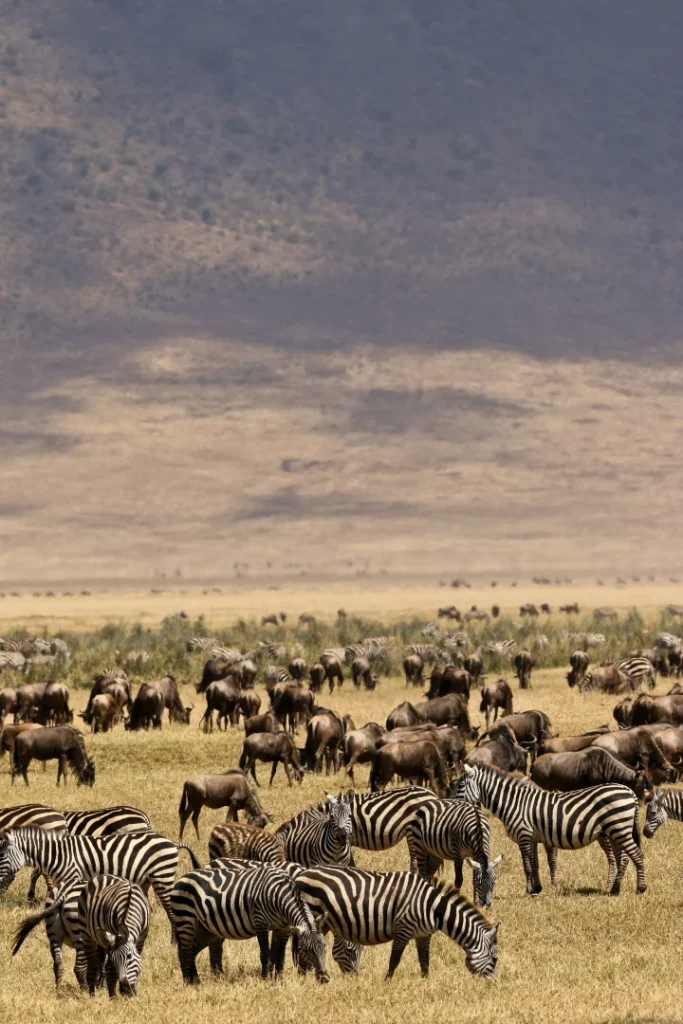
Masai Mara Wildlife
The Masai Mara wildlife experience is one of the strongest reasons to visit southwestern Kenya. The reserve and surrounding conservancies support an extraordinary range of mammals, birds, reptiles and smaller animals across open grasslands, riverine forests, seasonal streams and woodland habitats.
The wider Masai Mara ecosystem forms the northern extension of Tanzania’s Serengeti ecosystem and supports both resident wildlife and seasonal migratory herds. Lions, cheetahs, elephants, buffaloes, giraffes, zebras, wildebeest, hippos, hyenas and many antelope species can be seen throughout the year, while the Great Migration periodically brings vast numbers of wildebeest and zebra into the Kenyan section of the ecosystem.
Although the Masai Mara is internationally famous for the Big Five and the Great Migration, its wildlife experience is much broader. Visitors can observe predator-prey interactions, large herbivore herds, scavengers, birds of prey, river wildlife and numerous smaller species that form part of the ecosystem. Individual species, river crossings and mountain views can never be guaranteed.
Why Is the Masai Mara So Rich in Wildlife?
The Masai Mara supports exceptional wildlife because several favourable ecological conditions occur within the same landscape. These include:
- Extensive grasslands
- Reliable water sources
- River systems
- Seasonal rainfall
- Productive grazing areas
- Riverine forests
- Open predator hunting grounds
- Wildlife corridors
- Connections with the Serengeti ecosystem
The Mara River and its tributaries provide permanent or seasonal water, while different grassland types support large populations of grazing herbivores. The abundance of prey supports substantial populations of predators and scavengers.
Wildlife Habitats in the Masai Mara
Different animals favour different habitats. Understanding these habitats helps explain why game drives move between different parts of the reserve.
Open Grasslands
The classic Mara plains support:
- Wildebeest
- Zebras
- Thomson’s gazelles
- Grant’s gazelles
- Topis
- Elands
- Cheetahs
- Lions
The open terrain also provides excellent visibility for wildlife viewing.
Riverine Forest
Vegetation along rivers and drainage lines provides habitat for:
- Leopards
- Monkeys
- Baboons
- Birds
- Elephants
- Bushbuck
Large trees provide shade and cover.
River Systems
The Mara River and other waterways support:
- Hippos
- Nile crocodiles
- Waterbirds
- Animals coming to drink
River areas become particularly important during parts of the Great Migration.
Woodland and Bush
More wooded areas can support:
- Giraffes
- Elephants
- Leopards
- Browsing antelopes
- Birds
Each habitat contributes to the diversity of the ecosystem.
Big Five Wildlife in Masai Mara
The Masai Mara supports all five members of the traditional Big Five:
- Lion
- Leopard
- Elephant
- African buffalo
- Black rhinoceros
The chances of seeing individual species vary. Lions, elephants and buffaloes are generally encountered more regularly, while leopards require more searching and black rhinos are comparatively rare and much harder to locate. Visitors should therefore never regard a Big Five sighting as guaranteed.
Lions in Masai Mara
The lion is one of the signature animals of the Masai Mara. The ecosystem supports several prides occupying different territories. Lion sightings may include:
- Females resting with cubs
- Large territorial males
- Prides feeding
- Lions hunting
- Juveniles playing
- Territorial interactions
Lions spend substantial periods resting, particularly during the hottest part of the day. Early mornings and late afternoons can provide opportunities to observe more active behaviour.
Lion Prides
Lions are social cats. A pride normally consists of related females, their cubs and one or more adult males associated with the territory. Pride size varies considerably, and large prides can sometimes be seen resting together on open grasslands.
Male coalitions may defend territories containing one or several prides. Territorial competition can be intense and occasionally results in violent confrontations.
Leopards in Masai Mara
Leopards are present throughout suitable habitat but are more elusive than lions. They tend to favour:
- Riverine forest
- Drainage lines
- Wooded areas
- Large trees
- Dense vegetation
A leopard may spend much of the day resting in a tree or concealed within vegetation. Experienced guides often search for:
- Fresh tracks
- Alarm calls
- Impala behaviour
- Baboons calling
- Known leopard territories
Finding a leopard can require considerable patience.
Cheetahs in Masai Mara
The Masai Mara is an excellent destination for cheetahs. Cheetahs favour open grasslands because they depend on speed when hunting. They often prey on:
- Thomson’s gazelles
- Young impalas
- Young wildebeest
- Hares
Cheetahs may use termite mounds, small rises and fallen trees as lookout points. Their open-country behaviour makes the Mara particularly suitable for observing and photographing them.
Elephants in Masai Mara
African elephants occur across the ecosystem. Visitors may encounter:
- Family herds
- Females with calves
- Solitary adult bulls
- Bachelor groups
Elephants move between grassland, woodland and water sources according to food and seasonal conditions. Family groups are generally led by experienced females, and calves remain closely protected within the herd.
African Buffaloes
African buffaloes are common in the Mara. They can occur in large herds, particularly in areas with productive grazing and reliable water, while older males may leave larger herds and form smaller bachelor groups. Buffaloes are powerful animals and should always be treated with caution. They are one of the traditional Big Five.
Black Rhinos
The black rhinoceros is one of the more difficult large mammals to find in the Mara. The species occurs at relatively low density compared with animals such as buffaloes or elephants, so a rhino sighting should be considered a significant wildlife encounter.
Black rhinos are browsers and feed on shrubs and woody vegetation. Their continued survival depends heavily on conservation and anti-poaching efforts.
Wildebeest in Masai Mara
The blue wildebeest is closely associated with the Masai Mara because of the Great Migration. However, wildebeest are not present only during migration periods, and resident populations also occur within the ecosystem. During periods of migratory activity, enormous herds can spread across the plains. Their movements influence:
- Predator activity
- Grassland grazing
- Scavenger populations
- River crossing activity
Zebras
Plains zebras are among the most frequently seen herbivores in the Mara. They commonly occur alongside wildebeest, and during migration periods the two species often travel together because their different feeding habits allow them to make use of the same grasslands. Zebras are also important prey for lions and other large predators.
Giraffes
The Masai Mara supports Masai giraffes, one of Kenya’s most distinctive large mammals. Giraffes feed primarily on leaves and shoots from trees and shrubs, and they can often be seen moving slowly across open plains between patches of woodland. Adult giraffes are formidable animals, although calves can be vulnerable to lions and other predators.
Hippos
Large populations of hippopotamuses inhabit sections of the Mara River and other permanent waterways. During the day they often remain in water to avoid overheating, and at night they leave rivers and pools to graze. Visitors may see:
- Large pods
- Territorial males
- Females with calves
- Hippos entering or leaving water
Hippos are extremely powerful and potentially dangerous animals. They should always be observed from a safe distance.
Nile Crocodiles
The Mara River supports large Nile crocodiles. They are particularly famous because of their role during wildebeest river crossings, and crocodiles may wait near crossing points as migratory animals enter the water. However, crocodiles are present even outside the migration season and can often be seen resting along riverbanks or partially submerged in water.
Spotted Hyenas
Spotted hyenas are abundant and important predators within the Mara ecosystem. They are often incorrectly described only as scavengers. In reality, spotted hyenas are highly effective hunters and can kill much of their own food. They live in organised social groups known as clans. Visitors may observe:
- Hunting groups
- Cubs near dens
- Feeding interactions
- Conflicts with lions
- Hyenas following predators
Competition between lions and hyenas can be intense.
Jackals
Several jackal species occur within the region. Jackals often feed on:
- Small mammals
- Insects
- Carrion
- Eggs
- Young animals
They may also appear around larger predator kills, waiting for opportunities to feed.
Servals
The serval is a slender, long-legged cat associated with grassland and wetland areas. Servals primarily hunt:
- Rodents
- Birds
- Frogs
- Small reptiles
Their spotted coats provide excellent camouflage in tall grass. Servals can be difficult to see because they are relatively secretive.
Caracals
Caracals occur in parts of the broader Mara ecosystem but are much less commonly encountered. These medium-sized cats are characterised by distinctive black ear tufts and feed on small mammals and birds. Seeing one is generally considered an unusual safari sighting.
African Wild Cats
African wild cats resemble domestic cats but are naturally occurring wild felines. They are mainly nocturnal or crepuscular and can be difficult to locate during standard daytime game drives.
Bat-Eared Foxes
Bat-eared foxes occur in open grassland habitat. Their large ears are used partly to detect insects underground, and they feed heavily on:
- Termites
- Beetles
- Other insects
They may occur in pairs or small family groups.
Mongooses
Several mongoose species can occur in the greater ecosystem. Mongooses are active, opportunistic animals feeding on:
- Insects
- Small reptiles
- Eggs
- Small mammals
Some species live in social groups.
Baboons
Olive baboons are frequently encountered in wooded areas, near rivers and around rocky terrain. They live in social troops and have varied diets. Baboons feed on:
- Fruits
- Leaves
- Seeds
- Insects
- Small animals
They are intelligent and highly adaptable.
Vervet Monkeys
Vervet monkeys occur in woodland and riverine areas and spend time both on the ground and in trees. Their diet includes:
- Fruit
- Leaves
- Seeds
- Flowers
- Insects
Visitors should never feed monkeys around lodges because this can create problematic behaviour.
Warthogs
Warthogs are common throughout the Mara. They are often seen grazing on their knees, allowing them to reach short grass, and when alarmed they normally run with their tails held upright. They often use abandoned burrows for shelter.
Topis
Topis are among the most characteristic antelopes of the Mara plains. They frequently stand on termite mounds and small rises to scan for predators. Their dark markings and reddish-brown coats make them easy to recognise.
Elands
The eland is one of the world's largest antelope species. Despite its size, an eland is capable of impressive jumps. Elands are browsers and grazers and may form small groups or larger temporary aggregations.
Impalas
Impalas are widely distributed through suitable woodland-edge and grassland habitat. They are important prey for:
- Leopards
- Cheetahs
- Lions
- Hyenas
- Wild dogs where present
Adult males become particularly territorial during breeding periods.
Thomson’s Gazelles
Thomson's gazelles are common on open plains. Their smaller size makes them important prey for cheetahs, and they are exceptionally fast and agile.
Grant’s Gazelles
Grant’s gazelles resemble Thomson’s gazelles but are larger. They can survive for long periods without regularly drinking because they obtain moisture from vegetation.
Waterbuck
Waterbuck generally stay relatively close to water sources and areas with suitable vegetation. They are large antelopes with shaggy coats.
Bushbuck
Bushbuck favour denser vegetation and riverine habitats. Unlike many plains antelopes, they are generally solitary and secretive.
Reedbuck
Reedbuck occur in grasslands associated with water and thicker vegetation. They can easily disappear into tall grass when threatened.
Oribi
Oribi are small antelopes associated with open grasslands. They often occur alone or in pairs.
Dik-Diks
Dik-diks are among the smallest antelopes found in East Africa. They generally occupy bushier habitats and live in pairs.
Great Migration Wildlife
During migration periods, the wildlife composition of parts of the Mara changes dramatically. Large numbers of the following move into the ecosystem:
- Wildebeest
- Zebras
- Gazelles
This abundance attracts predators and scavengers. Visitors may observe:
- Lion hunts
- Cheetah hunts
- Hyenas pursuing prey
- Vultures gathering at carcasses
- Crocodiles near river crossings
The migration is therefore not simply about wildebeest. It influences the entire food web.
Predator-Prey Relationships
The Masai Mara provides exceptional opportunities to observe predator-prey relationships. Common predator and prey associations include:
| Predator | Common Prey |
|---|---|
| Lion | Wildebeest, zebra, buffalo, antelope |
| Leopard | Impala, young antelope, small mammals |
| Cheetah | Gazelles, young impala |
| Hyena | Wildebeest, zebra, antelope |
| Jackal | Small mammals, young animals |
| Crocodile | Animals crossing rivers |
These relationships are dynamic, and predators do not succeed during every hunt.
Scavengers of the Masai Mara
Scavengers play a vital ecological role by consuming carcasses. Important scavengers include:
- Hyenas
- Jackals
- Vultures
- Marabou storks
These animals help recycle nutrients and remove dead animals from the landscape.
Vultures
Several vulture species can occur in the Mara. They locate carcasses using exceptional eyesight and by observing the movements of other scavengers. Vultures play a crucial role in ecosystem health, and declines in vulture populations across Africa make their conservation particularly important.
Birds of Prey
The Mara supports numerous raptors. Possible species include:
- Eagles
- Hawks
- Falcons
- Kestrels
- Vultures
Birds of prey benefit from the abundance of rodents, reptiles and other small animals.
Secretary Birds
The secretary bird is one of the Mara's most distinctive birds. It spends much of its time walking through grassland searching for prey. Its diet can include:
- Snakes
- Lizards
- Insects
- Small mammals
The species is a favourite among wildlife photographers.
Ostriches
Ostriches can be seen on open plains. These enormous flightless birds are capable of running at high speeds, and males and females can be distinguished partly by differences in plumage.
Ground Hornbills
Southern ground hornbills may be encountered walking across open grasslands. They hunt:
- Insects
- Reptiles
- Small vertebrates
They are among the largest hornbills.
Bustards
Several bustard species occur in open grassland habitat. The Kori bustard is particularly notable because it is among the world's heaviest flying birds.
Waterbirds
Rivers, pools and seasonal wetlands support numerous water-associated birds. These can include:
- Herons
- Egrets
- Storks
- Kingfishers
- Geese
Bird diversity adds considerable value to game drives even for travellers primarily interested in mammals.
Reptiles
In addition to Nile crocodiles, the Mara ecosystem supports various reptiles. These can include:
- Snakes
- Lizards
- Tortoises
Most reptiles are not frequently encountered during standard game drives, but they form an important part of the ecosystem.
Smaller Wildlife
Some of the most interesting safari encounters involve animals that are easy to overlook. These may include:
- Rodents
- Hares
- Mongooses
- Insects
- Tortoises
- Lizards
Guided walks in appropriate conservancies can help travellers appreciate these smaller parts of the ecosystem.
Nocturnal Wildlife
Some Mara animals are more active at night. Possible nocturnal wildlife includes:
- Genets
- Civets
- Hyenas
- Jackals
- Porcupines
- Small cats
Night drives are generally offered in selected conservancies rather than within the main national reserve.
Wildlife During the Dry Season
Drier periods can make animals easier to locate because vegetation becomes shorter and wildlife may concentrate near available water. Advantages can include:
- Better visibility
- Concentrated wildlife
- Easier predator spotting
However, dry conditions can also create dusty landscapes.
Wildlife During the Green Season
Rain transforms the Mara. Green-season advantages include:
- Lush landscapes
- Dramatic skies
- Fewer visitors
- Excellent photography
- Bird activity
- Young animals
Wildlife remains present even when migratory herds are elsewhere.
Wildlife in January and February
These months can offer good resident wildlife viewing. Predators remain active and open plains may provide excellent visibility.
Wildlife in March
March can be transitional as weather patterns begin changing. General resident wildlife remains strong.
Wildlife in April and May
The long-rain period can create greener conditions. Although some roads may become difficult after heavy rain, the ecosystem can be particularly attractive for landscape photography.
Wildlife in June
June often provides excellent general game viewing as conditions begin becoming drier.
Wildlife From July to October
This period is particularly famous because migratory herds may be present. Visitors can potentially see:
- Vast wildebeest herds
- Zebras
- Predator activity
- River-crossing behaviour
Exact migration timing varies each year.
Wildlife in November
Short rains can refresh the grasslands, and resident wildlife remains abundant.
Wildlife in December
December can provide excellent wildlife viewing combined with attractive green scenery.
Best Areas for Wildlife Viewing
There is no single area that is always best. Wildlife changes location according to:
- Rainfall
- Food
- Water
- Predator territories
- Migration movements
Experienced guides adjust daily routes according to current conditions, and different sections of the greater ecosystem may be particularly productive at different times.
Wildlife in the Mara Triangle
The Mara Triangle supports diverse resident wildlife and important migration areas. Possible sightings include:
- Lions
- Elephants
- Buffaloes
- Wildebeest
- Zebras
- Hippos
- Crocodiles
Its proximity to the Mara River makes it important during parts of the migration.
Wildlife in Private Conservancies
Private conservancies support many of the same species found in the national reserve. Advantages may include:
- Lower vehicle density
- Controlled visitor numbers
- Night drives
- Walking safaris
- Off-road viewing under local rules
Some animals move freely between conservancies and the reserve.
Wildlife Photography
The Masai Mara is one of Africa's premier wildlife-photography destinations. Advantages include:
- Open landscapes
- Large mammals
- Big cats
- Predator behaviour
- Dramatic skies
- Herds
- River scenes
Photographers benefit greatly from private vehicles and longer stays.
Best Time of Day for Wildlife
Early morning and late afternoon are often particularly productive.
Morning
Advantages include:
- Cooler temperatures
- Active predators
- Soft photography light
Midday
Many animals rest, but important wildlife activity can still occur at any time.
Late Afternoon
Falling temperatures often encourage increased activity. No wildlife schedule is guaranteed.
How Guides Find Wildlife
Professional safari guides use several techniques. They may look for:
- Tracks
- Fresh dung
- Alarm calls
- Vulture activity
- Predator territories
- Animal behaviour
- Information from other guides
Experience and local knowledge are important, and a good guide can considerably improve the quality of a wildlife safari.
Wildlife Viewing Etiquette
Visitors should always behave responsibly around animals. Good practices include:
- Keep noise low
- Give animals space
- Follow guide instructions
- Do not feed wildlife
- Avoid blocking animals
- Do not encourage chasing
- Respect vehicle limits
- Never leave the vehicle without permission
Wildlife welfare should take priority over photographs.
Wildlife Conservation
The long-term survival of the Mara ecosystem depends on protecting:
- Habitat
- Migration corridors
- Water sources
- Wildlife populations
- Community lands
Tourism can contribute to conservation through:
- Park fees
- Conservancy fees
- Employment
- Community partnerships
- Conservation funding
Responsible tourism choices therefore matter.
Threats to Masai Mara Wildlife
Like many wildlife ecosystems, the Mara faces pressures. These can include:
- Habitat fragmentation
- Human-wildlife conflict
- Pressure on migration corridors
- Climate variability
- Illegal wildlife activities
- Poorly managed tourism
Conservation requires cooperation between government agencies, local communities, conservancies, researchers and tourism businesses.
Wildlife and Maasai Communities
Wildlife does not exist only inside formally protected boundaries. Animals regularly move through community and conservancy lands, so local communities play an essential role in conservation. Conservancy models can provide economic incentives for maintaining land for wildlife while creating tourism income.
How Many Days for a Wildlife Safari?
For travellers primarily interested in wildlife:
- 2 days: Very short introduction
- 3 days: Good short safari
- 4 days: Strong general wildlife experience
- 5 days: Excellent for wildlife enthusiasts
- 6+ days: Best for deeper observation and photography
Longer stays improve the chance of encountering unusual behaviour.
Masai Mara Wildlife Safari Combinations
The Mara can be combined with other Kenya destinations to broaden the wildlife experience.
Masai Mara and Amboseli
Adds elephants and Kilimanjaro landscapes.
Masai Mara and Lake Nakuru
Adds another Rift Valley wildlife environment.
Masai Mara and Lake Naivasha
Adds freshwater habitat and birdlife.
Masai Mara and Samburu
Adds northern Kenya species and arid landscapes.
Masai Mara and Tsavo
Adds a vast wilderness environment and different scenery.
Masai Mara and Serengeti
Expands the safari across the wider Serengeti–Mara ecosystem.
Is Masai Mara the Best Wildlife Destination in Kenya?
The Masai Mara is certainly one of Kenya’s strongest overall wildlife destinations because of:
- High predator density
- Excellent open-country viewing
- Large herbivore populations
- Great Migration activity
- Diverse habitats
However, other Kenyan destinations offer different strengths. Amboseli is outstanding for elephants, Samburu provides northern specialist species and Tsavo offers vast wilderness landscapes. For this reason, travellers with sufficient time can combine several parks.
Frequently Asked Questions About Masai Mara Wildlife
What animals are found in Masai Mara?
Masai Mara wildlife includes lions, leopards, cheetahs, elephants, buffaloes, black rhinos, giraffes, wildebeest, zebras, hippos, crocodiles, hyenas and numerous antelope species.
Can I see the Big Five in Masai Mara?
Yes. All Big Five species occur in the greater Mara ecosystem, although sightings of every species cannot be guaranteed.
Are lions common in Masai Mara?
The Mara has an important lion population and is one of Kenya's best destinations for lion viewing.
Can I see leopards?
Yes. Leopards occur in the ecosystem but are generally more elusive than lions.
Are cheetahs found in Masai Mara?
Yes. Open grasslands make the Mara excellent cheetah habitat.
Are rhinos found in Masai Mara?
Yes. Black rhinos occur in the Mara, although they are relatively difficult to locate.
Are elephants common?
Yes. Family herds and adult bulls can be encountered throughout suitable parts of the ecosystem.
Are hippos found in Masai Mara?
Yes. Hippos inhabit the Mara River and other suitable waterways.
Are there crocodiles?
Yes. Large Nile crocodiles live in the Mara River.
Are hyenas common?
Yes. Spotted hyenas are important predators and scavengers in the ecosystem.
Is there wildlife all year?
Yes. The Mara has substantial resident wildlife throughout the year.
Is all wildlife dependent on the Great Migration?
No. Many animals live permanently within the ecosystem.
When are wildebeest in Masai Mara?
Large migratory herds are generally associated with part of the July-to-October period, although timing varies annually.
Can I see a wildebeest river crossing?
Possibly during migration periods, but crossings are unpredictable and cannot be guaranteed.
What is the best time for wildlife viewing?
Wildlife viewing is good throughout the year. Drier periods often improve visibility, while greener months provide attractive landscapes and fewer visitors.
What is the best time of day for game drives?
Early morning and late afternoon are generally excellent because temperatures are cooler and many animals are more active.
Can I see nocturnal animals?
Yes. Night drives in selected private conservancies may provide opportunities to see nocturnal species.
Is Masai Mara good for birdwatching?
Yes. The ecosystem supports diverse grassland, woodland, river and raptor species.
Is Masai Mara good for wildlife photography?
Yes. Open terrain, big cats and large herbivore populations make it one of Africa's leading wildlife-photography destinations.
How long should I stay for wildlife viewing?
Three to four nights works well for many visitors, while five or more nights provides better opportunities for photographers and serious wildlife enthusiasts.