
Kenya is one of Africa’s most rewarding countries for birdwatching, with an extraordinary variety of habitats supporting more than 1,100 recorded bird species. From the freshwater lakes of the Great Rift Valley to the dry landscapes of Samburu, the tropical forests of Kakamega and the Indian Ocean coastline, birding safaris in Kenya introduce travellers to an impressive range of resident and migratory birds.
Unlike conventional wildlife safaris that concentrate primarily on large mammals, a dedicated Kenya birdwatching safari explores the country’s smaller wildlife, distinctive ecosystems and remarkable bird behaviour. Early morning excursions, carefully planned forest walks and patient observation around wetlands can reveal species that are easily overlooked during a standard game drive.
Kenya also offers an important advantage for travellers interested in both birds and mammals. Many leading birdwatching destinations are established safari areas where elephants, giraffes, antelopes, zebras and predators may also be encountered. A well-designed itinerary can therefore combine specialist birdwatching with traditional wildlife viewing without requiring separate holidays.
At Safari Trips to Kenya, we can help travellers plan private birding itineraries, bird photography trips and combined wildlife and birdwatching holidays according to their interests, preferred travel dates and available time.
Why Choose Kenya for a Birding Safari?
Kenya’s bird diversity reflects its geographical position and wide variation in climate, altitude and vegetation. Within a single country, birdwatchers can explore tropical forests, highland grasslands, freshwater wetlands, alkaline lakes, coastal mangroves, dry bushland and extensive savannah ecosystems.
These habitats support different bird communities. A forest birdwatcher searching for turacos and greenbuls will have a very different experience from someone photographing flamingos on an alkaline lake or observing secretarybirds hunting across open grassland.
Kenya also lies along important migratory routes. Birds travelling between Eurasia and Africa join resident species during parts of the year, making the northern winter particularly interesting for birdwatchers who want to encounter both local and migratory birds.
The country has a long tradition of ornithological research, conservation work and specialist guiding. Organisations such as Nature Kenya contribute to bird monitoring, habitat protection and public awareness. Their work is especially important in areas where threatened species depend on relatively small or fragmented habitats.
For beginners, Kenya provides opportunities to learn bird identification in landscapes where many species are conspicuous. Large storks, hornbills, rollers, bee-eaters and raptors are often easier to observe than secretive forest birds. Experienced birdwatchers, meanwhile, can concentrate on restricted-range species and difficult identification groups.
Best Birding Destinations in Kenya
Lake Naivasha: Freshwater Birds and Accessible Birdwatching
Lake Naivasha is one of the most convenient birdwatching destinations for travellers beginning their safari in Nairobi. The freshwater lake supports fish-eating birds, waterfowl, herons, cormorants and numerous species associated with surrounding woodland and grassland.
African fish eagles are among the lake’s best-known birds. Their distinctive calls are frequently heard around the shoreline, while pied kingfishers may be observed hovering before diving into the water.
Other birds to look for include African jacanas, great cormorants, pelicans, ibises, egrets and various kingfishers. The precise species encountered depend on water conditions, habitat and season.
A guided boat excursion provides a different perspective from a vehicle-based safari. Birds can be observed along the shoreline and around aquatic vegetation, although responsible boat operators maintain suitable distances from wildlife.
The nearby Crescent Island area and surrounding woodland can add terrestrial birdwatching opportunities. Travellers should arrange access and guiding according to the current operating arrangements.
Lake Naivasha works particularly well as an introduction to Rift Valley birdwatching, or as a stop between Nairobi and other safari destinations.
Lake Nakuru National Park: Flamingos, Pelicans and Woodland Birds
Lake Nakuru National Park is widely associated with flamingos, but its birdwatching appeal extends well beyond these famous waterbirds.
The park contains alkaline lake habitats, grasslands, woodland and rocky slopes. This variety creates opportunities to observe waterbirds, raptors, woodland species and open-country birds during the same visit.
Both greater and lesser flamingos may occur, although their numbers fluctuate with changing lake conditions and food availability. Travellers should not assume that the enormous flamingo concentrations shown in historical photographs will be present during every visit.
Pelicans, cormorants, herons and other waterbirds can be rewarding subjects for photographers. Away from the lake, birdwatchers may encounter rollers, hornbills, starlings, woodpeckers and birds of prey.
Lake Nakuru is also an established wildlife destination, with opportunities to observe rhinos, buffaloes, giraffes and other mammals.
A full-day visit generally offers a more relaxed birdwatching experience than a hurried stop, especially for photographers interested in changing light conditions.
Lake Baringo: A Specialist Birdwatching Destination
Lake Baringo is particularly attractive to dedicated birdwatchers because of the diversity of birds associated with its freshwater environment and surrounding dry-country habitats.
The region combines lake margins, rocky areas, acacia woodland and semi-arid vegetation. These contrasting environments allow birdwatchers to search for species that may be less easily encountered in Kenya’s better-known southern safari circuit.
Potential highlights include hornbills, barbets, bee-eaters, kingfishers, starlings, weavers and various nocturnal birds.
Specialist local guides are especially valuable around Lake Baringo. Their knowledge of bird calls, seasonal movements and suitable observation sites can make a substantial difference when searching for particular species.
Birdwatching can include lakeside excursions, woodland walks and carefully organised evening activities where permitted. Boat excursions depend on prevailing water and safety conditions.
Because Lake Baringo is farther from Nairobi than Naivasha, it is usually better incorporated into a multi-day birding itinerary rather than treated as a brief roadside stop.
Kakamega Forest: Kenya’s Tropical Forest Birding
Kakamega Forest offers a completely different birdwatching environment from the Rift Valley lakes and savannah parks.
Located in western Kenya, Kakamega contains tropical rainforest habitats with bird communities influenced by the forests of the Congo Basin.
Forest birdwatching requires patience and attentive listening. Many birds remain concealed in dense vegetation, and some are first detected by their calls rather than their appearance.
Depending on the exact site and prevailing conditions, birdwatchers may search for turacos, greenbuls, forest flycatchers, barbets and other woodland specialists.
Guided forest walks are particularly important because identification can be challenging, visibility may be limited and access arrangements vary between forest sections.
Kakamega is best suited to travellers who are genuinely interested in bird identification and willing to spend time exploring slowly. Two or more nights can be worthwhile for those targeting forest species.
Arabuko-Sokoke Forest: Coastal Forest Specialities
Arabuko-Sokoke Forest, near Kenya’s northern coast, is internationally important for its distinctive coastal forest habitats and threatened wildlife.
The forest is particularly relevant to birdwatchers interested in restricted-range species. Notable birds associated with the wider coastal forest ecosystem include the Sokoke scops owl, Clarke’s weaver and Sokoke pipit.
These species should never be treated as guaranteed sightings. Some are difficult to locate, and their detectability varies with habitat, season, weather and time of day.
A knowledgeable local bird guide is highly recommended for specialised forest birdwatching.
Arabuko-Sokoke can be combined with Watamu Beach, coastal wetlands and other attractions in the Malindi–Watamu region. This makes it possible to incorporate serious birdwatching into a longer Kenya Safari and Beach Holiday.
Amboseli National Park: Wetland and Savannah Birds
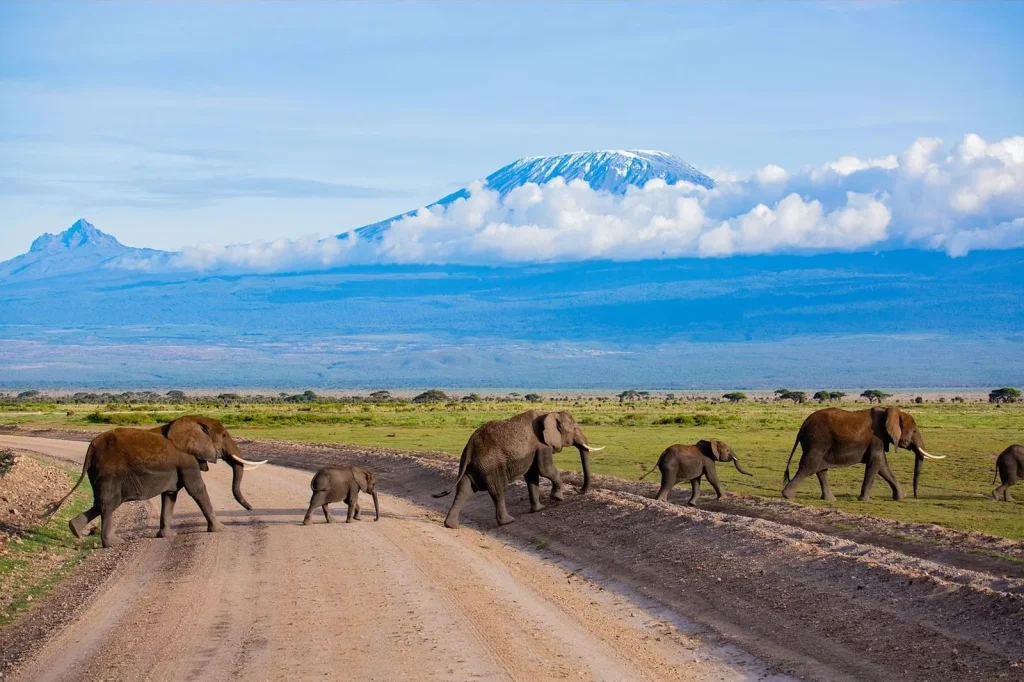
Amboseli National Park is famous for its elephants and views towards Mount Kilimanjaro, but it also supports an extensive variety of birdlife.
Permanent and seasonal wetlands attract waterbirds, while open grasslands and acacia habitats support raptors, bustards, starlings and numerous smaller species.
Birdwatchers may encounter African fish eagles, herons, storks, egrets, secretarybirds and colourful rollers.
The park’s open landscapes are especially suitable for bird photography, although heat shimmer and strong midday sunlight can affect image quality.
A Birding Safari in Amboseli can easily be combined with elephant viewing and a broader southern Kenya wildlife itinerary.
Samburu and Buffalo Springs: Dry-Country Birdwatching
Northern Kenya introduces travellers to a different group of birds adapted to drier environments.
The Samburu National Reserve and neighbouring conservation areas support dry-country species, riverine birds and raptors.
Birdwatchers may encounter vulturine guineafowl, Somali ostriches, hornbills, bee-eaters and several species associated with arid savannah.
The Ewaso Ng’iro River and its surrounding vegetation provide an important contrast to the drier landscapes.
Samburu is particularly worthwhile for visitors who have already explored southern Kenya and want to expand their bird lists.
Bird Species to Look for on a Kenya Safari
Raptors and Birds of Prey
Kenya offers excellent opportunities to observe eagles, vultures, hawks, falcons and other predatory birds.
The African Fish Eagle is especially associated with lakes and rivers, where it feeds primarily on fish. Its unmistakable call is one of the characteristic sounds of East African wetlands.
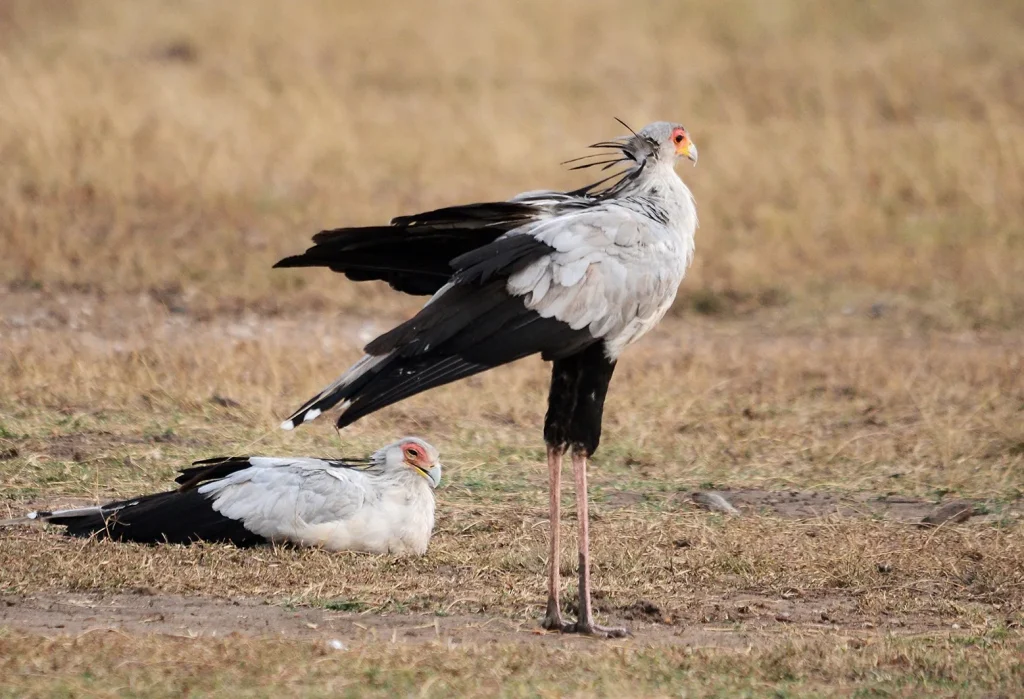
The Secretarybird is a distinctive terrestrial bird of prey that searches for prey while walking through open grassland.
Other notable species include the martial eagle, bateleur and various vultures. Their presence varies by habitat and local conditions.
Birdwatchers interested in raptors should allow time for scanning trees, rocky slopes and open plains rather than concentrating exclusively on obvious wildlife activity.
Waterbirds and Wetland Species
Kenya’s lakes and wetlands attract an impressive variety of aquatic birds.
Flamingos are among the most recognisable, particularly around alkaline Rift Valley lakes. However, their distribution changes with food availability and water chemistry.
Other waterbirds include pelicans, spoonbills, jacanas, ibises, storks, herons and numerous ducks and waders.
Wetland birdwatching is often productive because many species are relatively visible. It is also an excellent introduction to bird behaviour, including feeding, territorial displays and nesting activity.
Colourful Savannah Birds
Some of Kenya’s most memorable birds are relatively common species encountered during ordinary game drives.
The Lilac-breasted Roller is admired for its bright plumage and is frequently photographed perched on exposed branches.
Bee-eaters, sunbirds, starlings, kingfishers and hornbills add colour and variety to birdwatching excursions.
These species are particularly rewarding for beginners because they encourage visitors to notice details beyond the larger mammals.
Forest Birds and Restricted-Range Species
Forest birdwatching often involves more specialised identification techniques.
Some species are associated with particular forest types or limited geographical areas, making habitat selection essential.
Birdwatchers interested in Kenya’s restricted-range species may need to include destinations such as the Taita Hills, coastal forests, central highlands or Kakamega.
Such itineraries require careful planning, and success depends on realistic expectations rather than a promise of particular sightings.
Best Time for Birding Safaris in Kenya
Birdwatching in Kenya is possible throughout the year, but different seasons offer different advantages.
From approximately November to April, many migratory birds from Europe and Asia are present in suitable habitats. This period can be particularly interesting for birdwatchers seeking a combination of resident and migratory species.
Rainfall may stimulate breeding activity, improve vegetation conditions and increase insect availability. Birds may display brighter breeding plumage or become more vocal.
However, wet conditions can also create logistical challenges. Some tracks become muddy, forest trails may be slippery and heavy rain can interrupt observation sessions.
The generally drier periods, often including January to March and June to October in many safari regions, can provide easier road access and more predictable game-drive conditions.
Seasonal patterns vary significantly across Kenya. The coast, western forests, northern drylands and central highlands do not experience identical weather.
For specialist birdwatching, the ideal travel period should be chosen according to the target habitats and species rather than a single nationwide recommendation.
Private Birding Safaris Versus Group Birdwatching Tours
A Private Kenya Birding Safari offers the greatest flexibility for travellers with specific interests.
A private itinerary can accommodate early departures, extended stops, photography sessions and changes to the daily programme when an interesting bird is encountered.
This flexibility is especially important for experienced birdwatchers who may wish to spend considerable time identifying a difficult species.
Group birdwatching tours can offer advantages for travellers who enjoy sharing observations and learning from others. They may also reduce some transport and guiding costs.
However, group itineraries usually follow a more structured schedule. Participants may have different levels of experience and different priorities.
At Safari Trips to Kenya, private arrangements and suitable group options can be discussed according to the requested dates and itinerary.
Bird Photography Safaris in Kenya
Kenya is an excellent destination for Bird Photography Safaris, particularly around lakes, wetlands and open savannah habitats.
Photographers should consider more than the number of bird species in a destination. Light direction, background quality, access restrictions and the ability to position a vehicle safely can be equally important.
Morning and late-afternoon sessions usually offer softer light than the middle of the day.
A telephoto lens is useful for photographing birds without approaching too closely. Binoculars remain important even for photographers because they help locate and identify subjects before setting up a camera.
A private vehicle can be particularly valuable for photography, allowing longer observation periods where stopping is permitted.
Responsible bird photography should never involve disturbing nests, chasing birds, using excessive playback or encouraging animals to abandon feeding areas.
Sample Seven-Day Kenya Birdwatching Itinerary
The following is a proposed itinerary rather than a confirmed departure. It can be adjusted to suit travel dates, accommodation preferences and birdwatching priorities.
Day 1: Arrival in Nairobi
Arrive at Jomo Kenyatta International Airport and transfer to your Nairobi accommodation.
Depending on arrival time, a short introductory birdwatching excursion may be arranged in a suitable accessible area.
Your guide can discuss the itinerary, target habitats and practical arrangements for the coming days.
Overnight: Nairobi.
Day 2: Nairobi to Lake Naivasha
Travel from Nairobi towards the Great Rift Valley, with opportunities to appreciate changing landscapes along the route.
Arrive in the Lake Naivasha area and begin exploring its freshwater bird habitats.
An afternoon birdwatching session may include lakeside observation or a guided boat excursion, depending on arrangements and conditions.
Overnight: Lake Naivasha.
Day 3: Lake Naivasha Birdwatching
Spend the morning exploring selected birdwatching sites around Lake Naivasha.
Look for kingfishers, herons, cormorants, fish eagles and woodland birds.
The afternoon can be devoted to another habitat, allowing travellers to compare wetland and terrestrial species.
Overnight: Lake Naivasha.
Day 4: Lake Naivasha to Lake Nakuru
Travel towards Lake Nakuru National Park.
After entering the park, explore suitable lake viewpoints, woodland areas and open grasslands.
Birdwatching can be combined with opportunities to observe mammals such as rhinos, buffaloes and giraffes.
Overnight: Lake Nakuru area.
Day 5: Lake Nakuru to Lake Baringo
Depart for Lake Baringo, travelling north through the Rift Valley.
After arrival, explore accessible lakeside habitats with a knowledgeable guide.
The afternoon can focus on waterbirds and species associated with surrounding dry-country vegetation.
Overnight: Lake Baringo area.
Day 6: Full-Day Lake Baringo Birdwatching
Begin early when bird activity is often particularly rewarding.
Explore a selection of habitats according to local conditions, focusing on woodland birds, raptors and specialist dry-country species.
An optional evening birdwatching excursion may be arranged where appropriate and permitted.
Overnight: Lake Baringo area.
Day 7: Return to Nairobi
Enjoy a final morning observation session if time allows before travelling back towards Nairobi.
The return journey is substantial, so departure timing should account for traffic and any onward flight arrangements.
For travellers with additional time, the itinerary can be extended to Kakamega Forest, Samburu or Kenya’s coast.
Accommodation for Kenya Birdwatching Safaris
Accommodation should be selected according to its location and suitability for early morning activities.
Our Essential category focuses on practical, comfortable accommodation that supports the itinerary without unnecessary expense.
Comfort properties provide additional amenities and are suitable for travellers who want a balance between cost and convenience.
Premium accommodation generally offers more spacious facilities, enhanced service and carefully chosen locations.
Signature options are appropriate for travellers seeking distinctive, high-end properties and a more personalised experience.
For birdwatchers, a modest lodge close to a productive habitat may be more useful than a luxurious property requiring a lengthy daily transfer.
What Is Included in a Kenya Birding Safari?
Inclusions depend on the confirmed itinerary and quotation.
A typical private birding arrangement may include an experienced driver-guide, private safari transport, accommodation, specified meals and agreed park or reserve entry fees.
Specialist bird guides may be arranged for selected destinations, particularly forests and areas where local identification expertise is valuable.
Optional activities, domestic flights, personal expenses, international flights, travel insurance and specialist equipment should be clearly identified in the final quotation.
Travellers should confirm whether guiding is primarily focused on general wildlife or specialist ornithology before booking.
Practical Tips for Birdwatching in Kenya
Bring binoculars even if photography is your main interest. A lightweight field guide or reliable bird identification application can also be useful.
Neutral-coloured clothing is generally suitable for forest walks and safari excursions. Comfortable footwear is important, particularly where trails are uneven or muddy.
Carry sufficient drinking water, sun protection and suitable rain protection according to the destination and season.
Birdwatchers should also allow time for quiet observation. Moving slowly, listening carefully and returning to productive locations can be more effective than covering large distances.
For longer itineraries, consider recording observations in a notebook or bird listing application. This creates a useful record of the species encountered and the habitats visited.
Frequently Asked Questions About Kenya Birding Safaris
Is Kenya good for birdwatching?
Yes. Kenya’s diverse habitats and extensive bird list make it one of Africa’s leading birdwatching destinations. Both beginners and experienced birdwatchers can find rewarding opportunities.
How many days are recommended for a birding safari?
Three to five days can provide an introduction to selected habitats. Seven to fourteen days allows a broader combination of lakes, savannahs and forests.
Can birdwatching be combined with a wildlife safari?
Yes. Many national parks and reserves offer excellent birdwatching alongside opportunities to observe elephants, lions, giraffes and other mammals.
Are specialist bird guides available?
Specialist guiding can be arranged in suitable destinations, subject to availability. Travellers with target species should communicate their interests before the itinerary is finalised.
Are bird sightings guaranteed?
No. Birds are wild animals, and their presence and visibility depend on habitat, weather, season and natural behaviour.
Can beginners join a birding safari?
Absolutely. A guided birdwatching safari can be an excellent introduction to identification, bird behaviour and Kenya’s varied ecosystems.
Plan Your Kenya Birding Safari
A successful birdwatching holiday begins with choosing the right habitats and allowing sufficient time to explore them.
Safari Trips to Kenya can help design a Kenya Birding Safari around Rift Valley lakes, forest reserves, savannah parks and coastal birdwatching destinations.
Whether your priority is photographing colourful birds, observing migratory species or exploring Kenya’s specialist bird habitats, we can prepare a customised itinerary with suitable transport, accommodation and guiding arrangements.
Contact Safari Trips to Kenya with your preferred travel dates, number of travellers, birdwatching experience and destinations of interest to request a personalised proposal.