
14 DAYS / 13 NIGHTS
14 Days Family Kenya Safari
Enjoy a 14 Days Family Kenya Safari with elephants, rhinos, big cats, Rift Valley lakes, Masai Mara game drives and family-friendly lodges.
- Wildlife SafariPrivate Journey
- Private Safari4x4 Vehicle
- Expert GuideEnglish Speaking
- All MealsBreakfast, Lunch, Dinner
- 24/7 SupportWe're here to help
01 Overview
Safari Overview
- Duration14 days / 13 nights
- DestinationKenya
- Starts / endsNairobi
- Safari stylePrivate 4×4 safari
- AccommodationEssential · Comfort · Premium · Signature
- Best forWildlife viewing, photography
14 Days Family Kenya Safari
A 14 Days Family Kenya Safari gives parents and children enough time to experience Kenya's remarkable wildlife without turning the holiday into a race between national parks. Over two carefully paced weeks, your family can look for elephants where Mount Kilimanjaro is sometimes visible, search for unusual northern wildlife, learn about rhino conservation, explore the Great Rift Valley, enjoy a boat experience and finish with several days in the Masai Mara, a landscape known for lions, cheetahs, elephants and large herds. Wildlife sightings, mountain views and herd movements are never guaranteed.
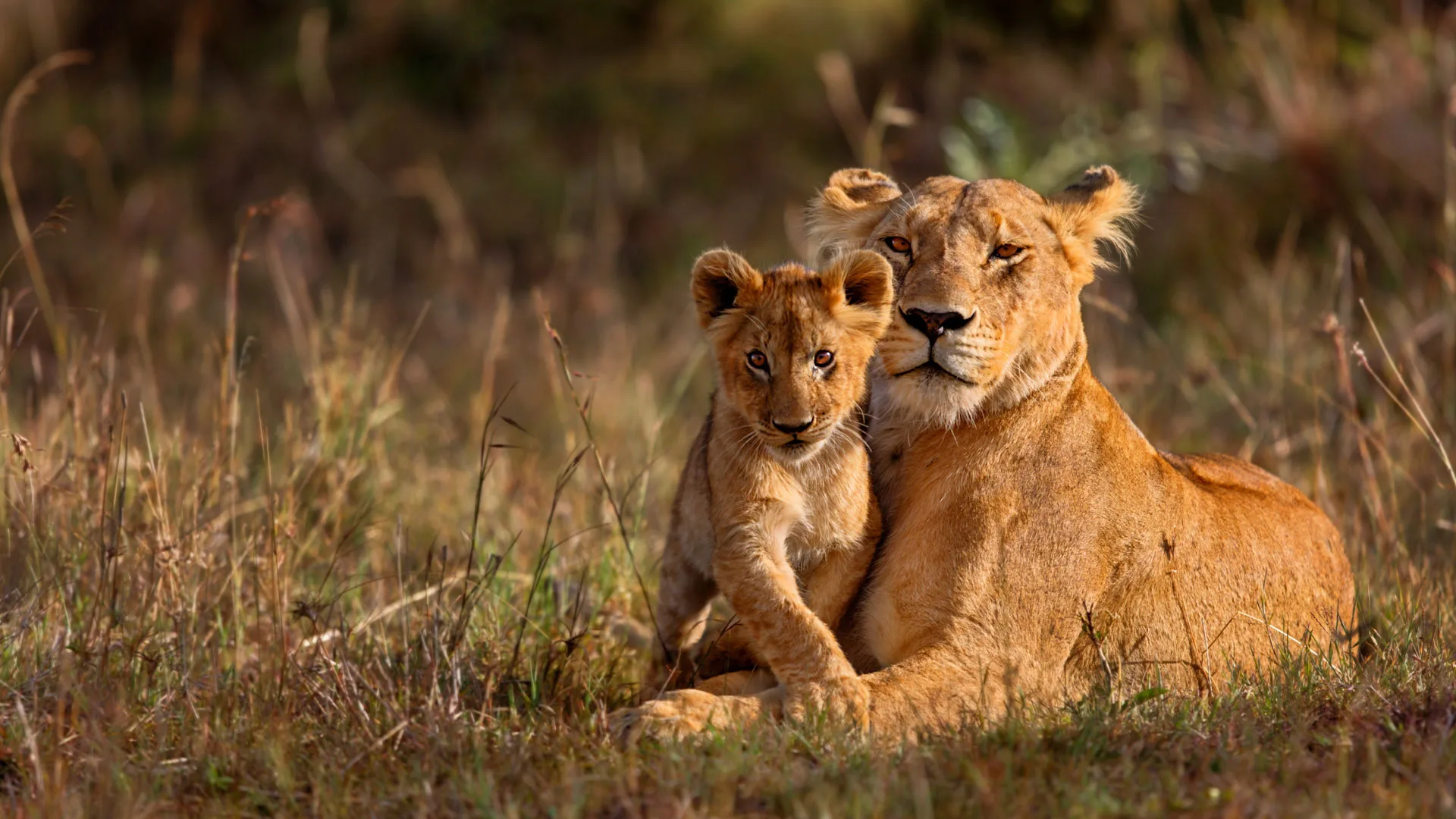
Kenya is particularly well suited to family safari travel. The country's wildlife is immediately engaging for children. An elephant crossing the road, a giraffe feeding from an acacia tree, a lion pride resting in the grass or hippos appearing beside a boat can transform subjects children have previously encountered only in books, documentaries or classrooms into real experiences.
For parents, however, a successful family safari requires more than abundant animals. Driving distances must be realistic, accommodation must suit families, children need breaks between activities, meal arrangements should be practical and game drives should be flexible. Guides need patience and the ability to explain wildlife at an age-appropriate level.
That is why this 14 Days Family Kenya Safari is designed differently from an itinerary intended solely for adults. The objective is not to maximize the number of parks visited at any cost. It is to create a varied, educational and enjoyable family journey in which wildlife remains the central attraction while children and adults have enough time to rest and enjoy the experience. A private safari vehicle is strongly recommended for families because it allows daily schedules to respond to the needs of your own group rather than those of unrelated travelers.
14 Days Family Kenya Safari at a Glance
A family-friendly itinerary may follow this route:
- Day 1: Arrival in Nairobi – Family Welcome
- Day 2: Nairobi to Amboseli National Park
- Day 3: Full-Day Amboseli Family Safari
- Day 4: Amboseli to Nairobi/Central Kenya
- Day 5: Central Kenya to Samburu
- Day 6: Full-Day Samburu Family Wildlife Experience
- Day 7: Samburu to Ol Pejeta/Laikipia
- Day 8: Rhino and Conservation Experience – Continue to Rift Valley
- Day 9: Lake Naivasha Family Boat Experience
- Day 10: Lake Naivasha to Masai Mara
- Day 11: Full-Day Masai Mara Family Safari
- Day 12: Second Full Day in the Masai Mara
- Day 13: Masai Mara to Nairobi
- Day 14: Nairobi and Departure
This route can be modified according to children's ages, family size, accommodation preferences, travel season and your international flight schedule.
Why Choose Kenya for a Family Safari?
Kenya has been welcoming safari travelers for generations and has one of Africa's most developed tourism infrastructures. Families benefit from a broad choice of accommodation, established road and air connections, professional guides and an extraordinary range of wildlife areas. More importantly, Kenya offers tremendous variety, so children are unlikely to feel that every day is simply another identical game drive. Amboseli is associated with elephants and with Kilimanjaro views only when the mountain is clear, Samburu introduces unusual animals such as Grevy's zebra and gerenuk, Ol Pejeta adds rhino conservation, Lake Naivasha introduces a boat experience, and the Masai Mara is often planned as the big-cat chapter. Each destination gives the family something different to anticipate, although wildlife sightings and mountain views are never guaranteed.
Why 14 Days Works Well for Families
It can be tempting to assume that a shorter safari is automatically better for children. That is not always true. A short itinerary covering many destinations can involve extremely long driving days and repeated packing and unpacking. A well-designed fourteen-day safari allows the opposite approach: you can spend multiple nights in major destinations, there is more time for swimming, resting and enjoying the lodge, game drives can be shortened when children become tired and transfer days can be broken strategically. Families also have enough time to recover from international travel before undertaking intensive wildlife activities. The result is a more relaxed holiday.
Private Family Safari Vehicle
For most families, private operation is one of the most valuable upgrades available. With your own safari vehicle and guide, you control the pace. If your children are fascinated by elephants, you can spend longer watching them, and if younger children become restless after two hours, you can return to the lodge. If everyone is tired after a long transfer, the next morning can begin slightly later, and if teenagers are enthusiastic photographers, the guide can spend more time positioning for wildlife photography. Private operation also makes practical family matters easier. There is no need to worry about disturbing unrelated travelers if a young child becomes excited, asks frequent questions or needs an unexpected comfort stop.
Itinerary
- Day 1:Arrival in Nairobi, welcome to Kenya
- Day 2:Nairobi to Amboseli, first Family Wildlife Adventure
- Day 3:Family Safari in Amboseli
- Day 4:Amboseli to Nairobi or Central Kenya
- Day 5:Central Kenya to Samburu, discover Northern Kenya
- Day 6:Samburu Family Safari
- Day 7:Samburu to Ol Pejeta / Laikipia
- Day 8:Family Conservation Experience and Great Rift Valley
- Day 9:Lake Naivasha, boat Safari and Relaxation
- Day 10:Lake Naivasha to Masai Mara, into Big, cat Country
- Day 11:Masai Mara Family Safari
- Day 12:Second Full Day in the Masai Mara
- Day 13:Masai Mara to Nairobi
- Day 14:Nairobi, departure
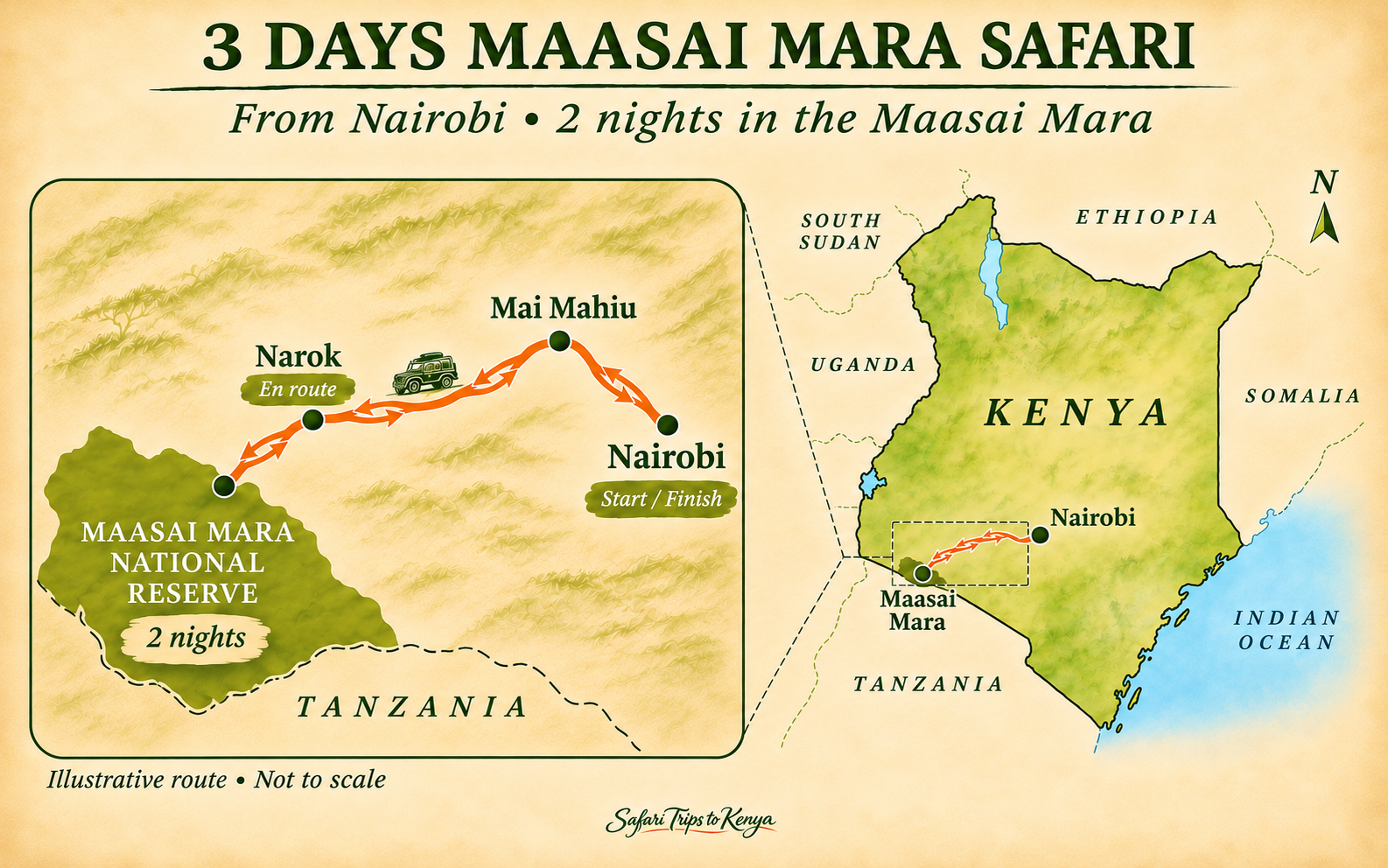
02 Itinerary
14 Days Family Kenya Safari: Detailed Itinerary

Day 1: Arrival in Nairobi – Welcome to Kenya - Main destination
- Masai Mara National Reserve
- Drive time
- Road transfer as outlined in the itinerary
- Meals
- Lunch, Dinner
Your family adventure begins at Jomo Kenyatta International Airport. After completing immigration and collecting your luggage, meet your Safari Trips to Kenya representative. Families traveling with children often carry more luggage than couples, so an appropriately sized transfer vehicle should be arranged according to your family composition. Transfer to your Nairobi hotel.
The first day is intentionally relaxed. International travel can be exhausting for children, especially when crossing several time zones. Rather than immediately beginning a long safari drive, settle into your hotel, eat, rest and allow everyone to recover. Families arriving early may choose a gentle Nairobi activity, but this should depend on children's energy levels, and there is no need to force sightseeing into the first day simply because time is available.
Your guide or representative can brief the adults about the safari ahead. Discuss:
- Driving times
- Meal arrangements
- Children's needs
- Game-drive schedules
- Safety procedures
- Accommodation
- Optional activities
- Wildlife etiquette
- Any dietary requirements
Children can also be introduced to the safari concept and encouraged to begin a wildlife checklist or safari journal.
- Destination: Nairobi
- Experience: Arrival and family safari orientation
- Accommodation: Family-friendly Nairobi hotel
- Meals: According to arrival time
Amboseli National Park
Where you stay
- Essential (Budget)
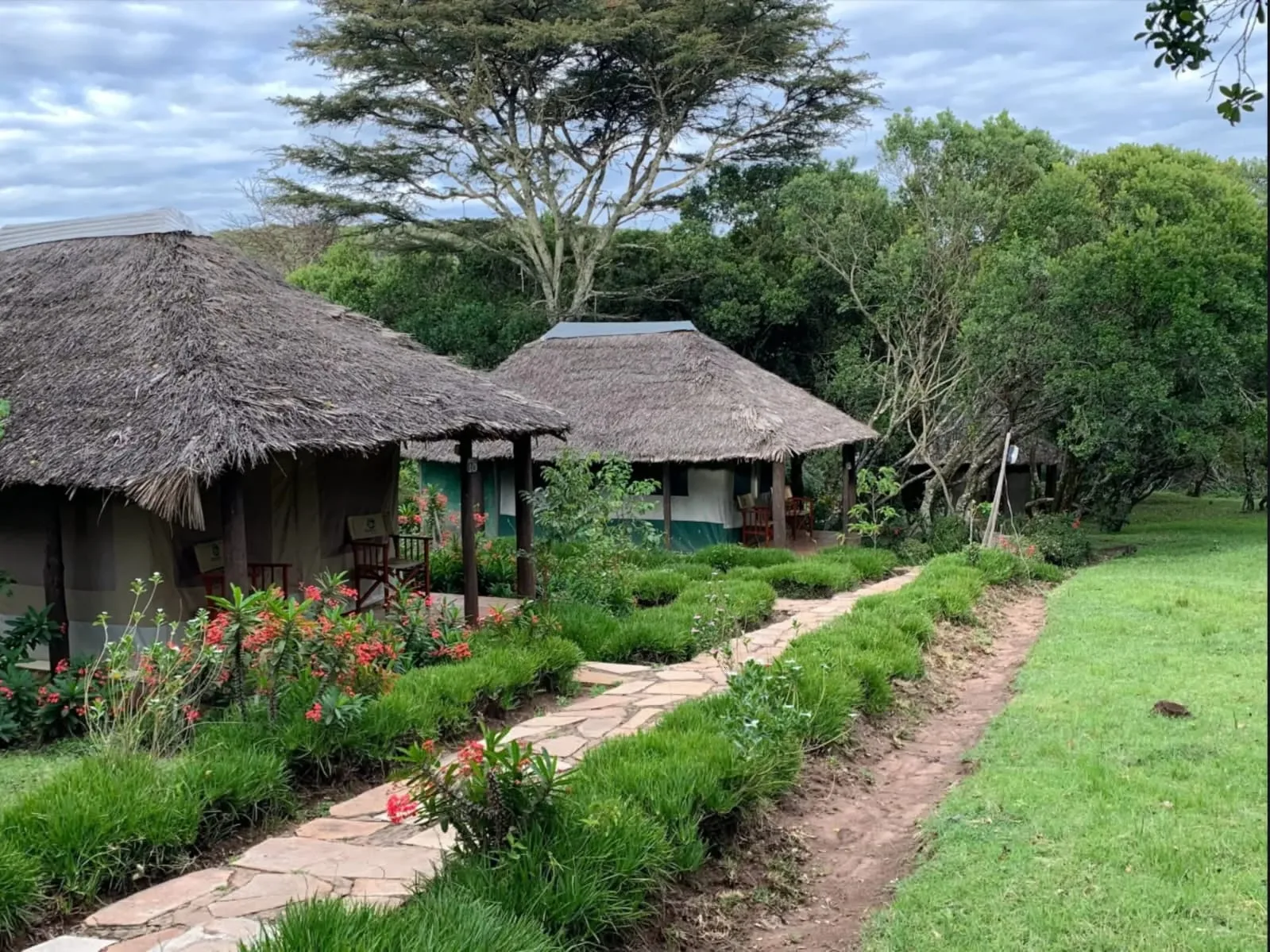
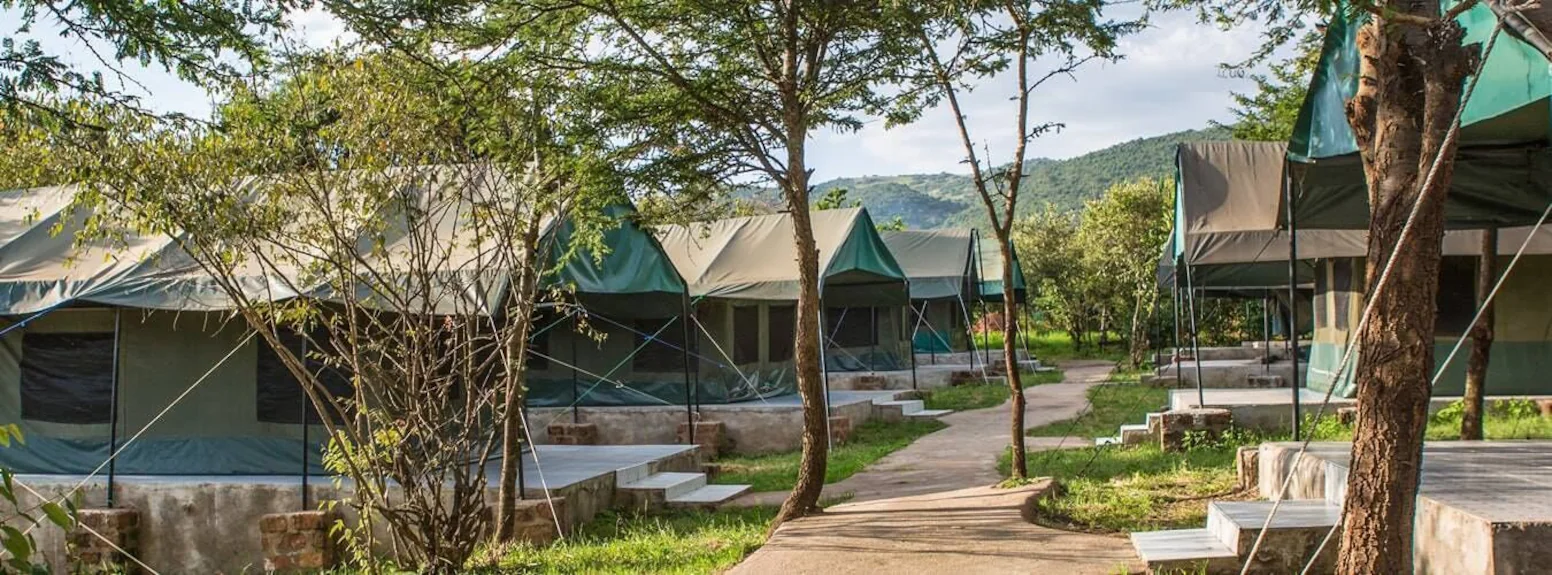
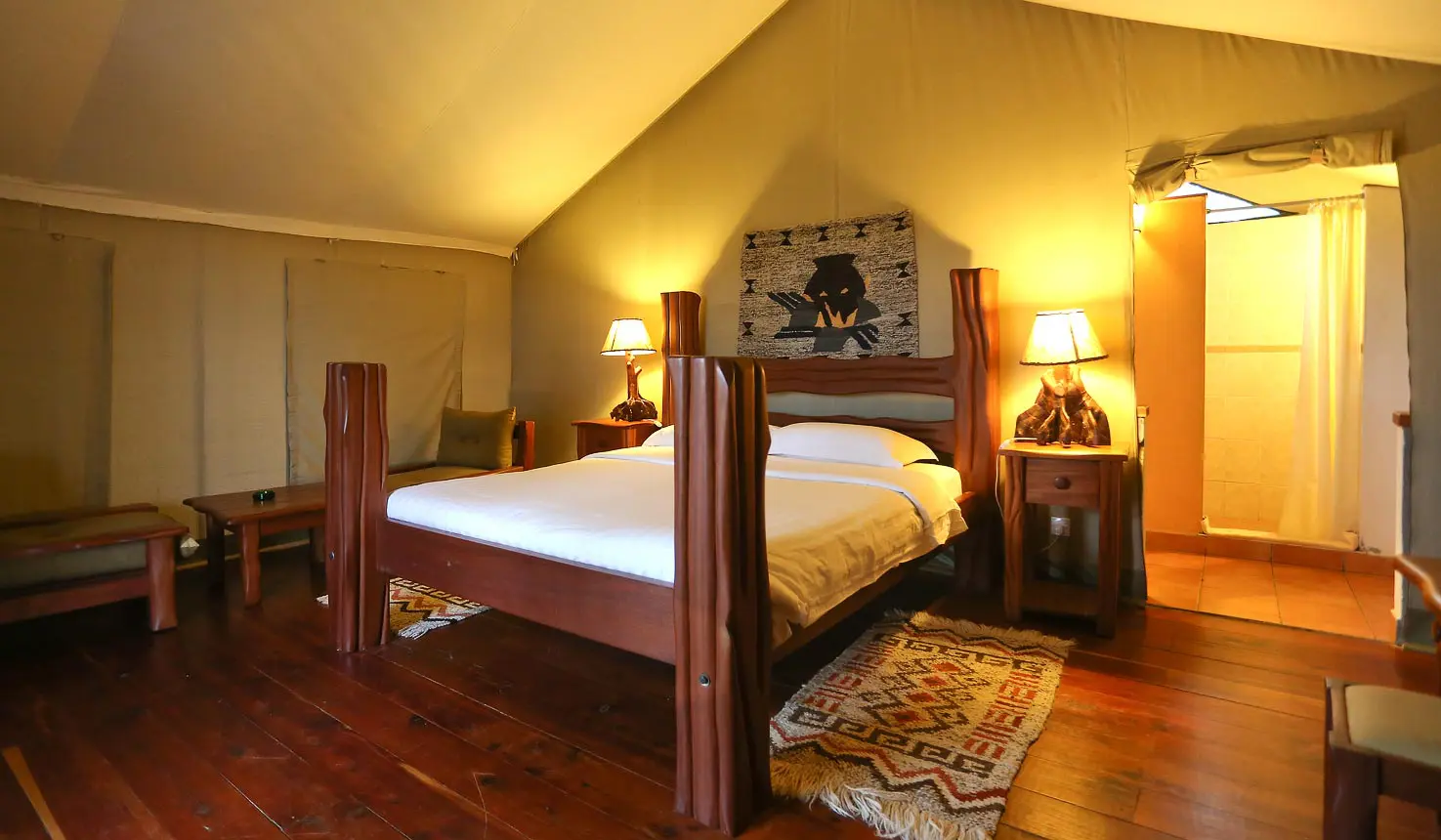
- Comfort (Mid-range)
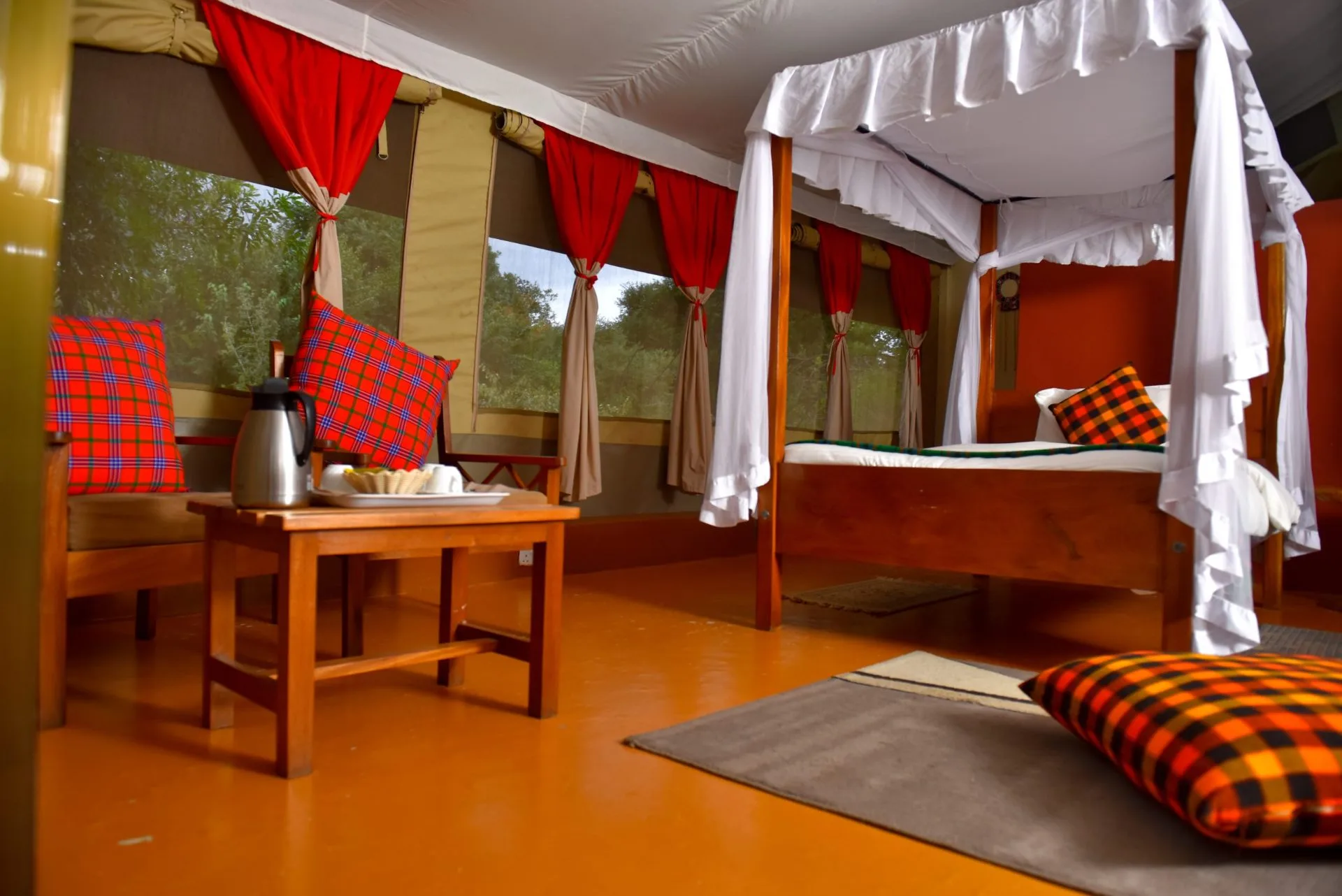
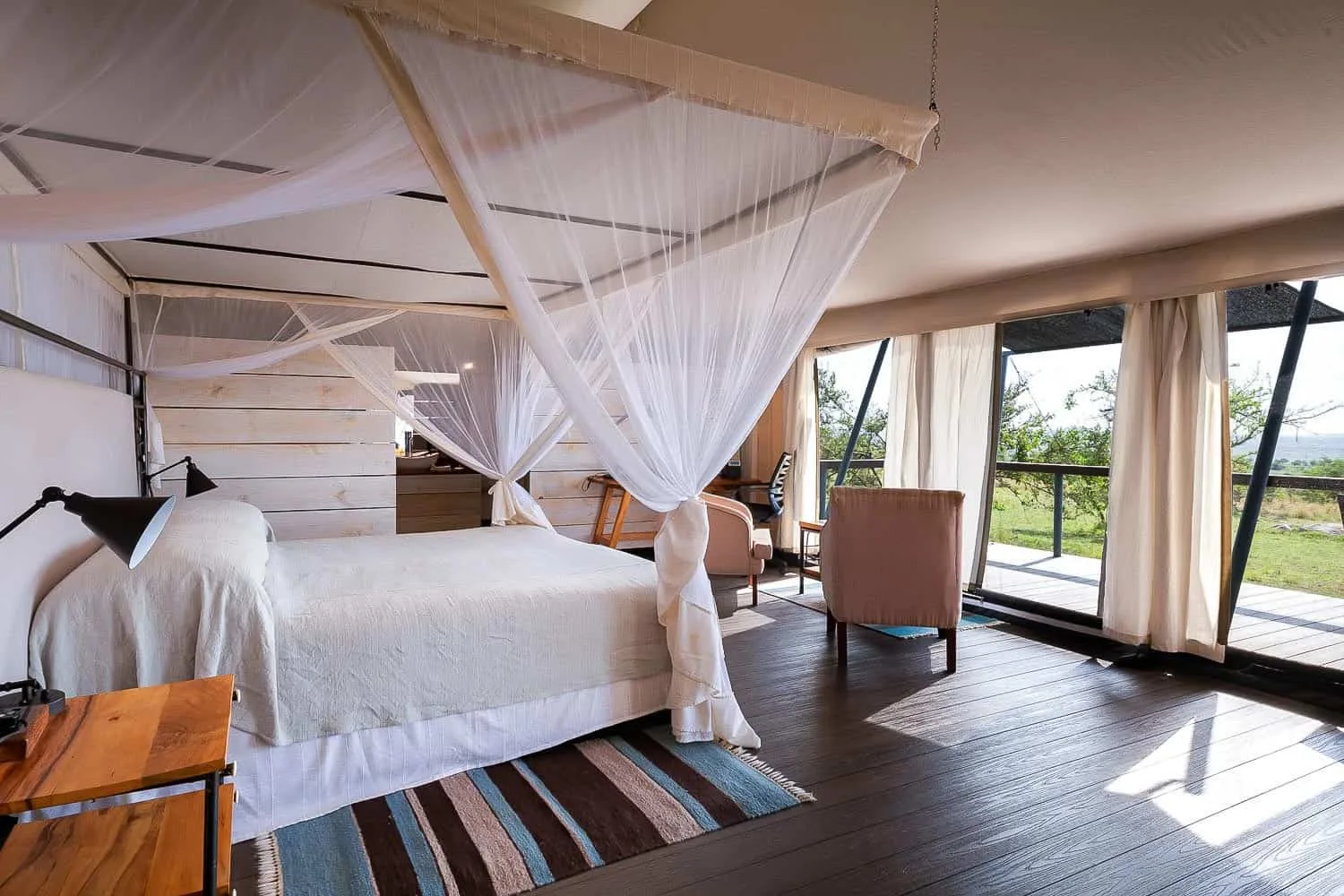
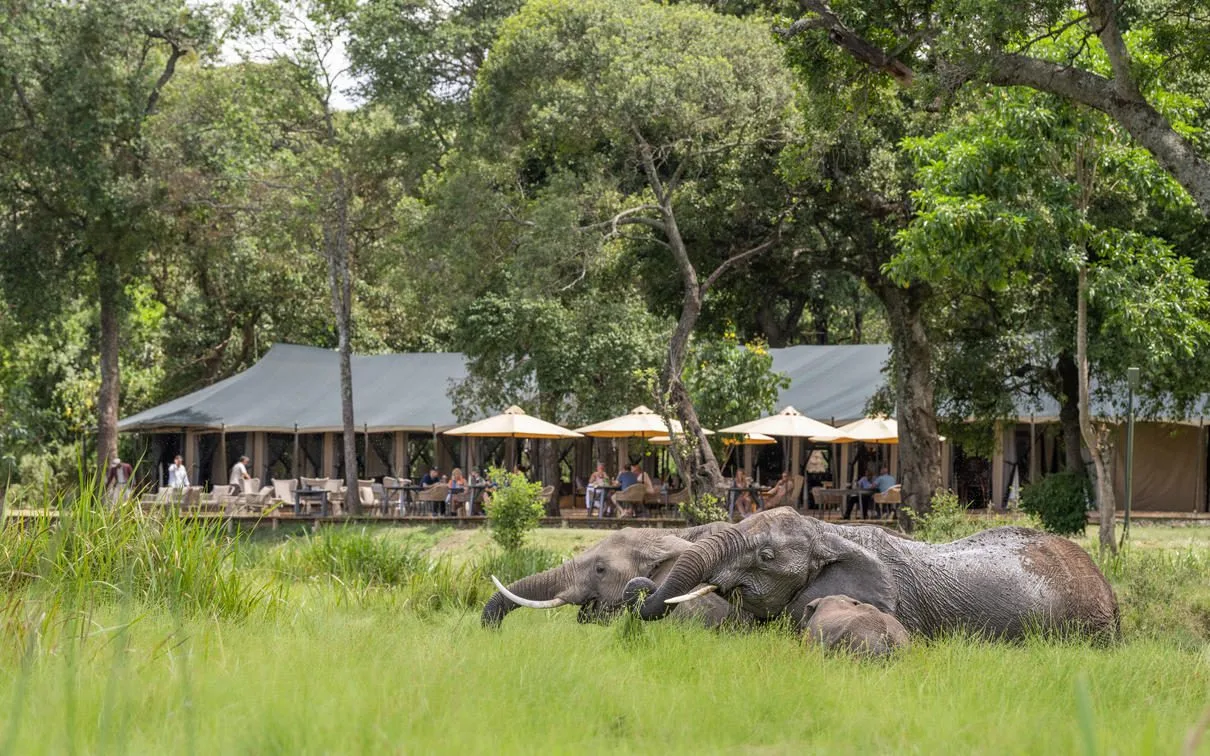
- Premium (Luxury)
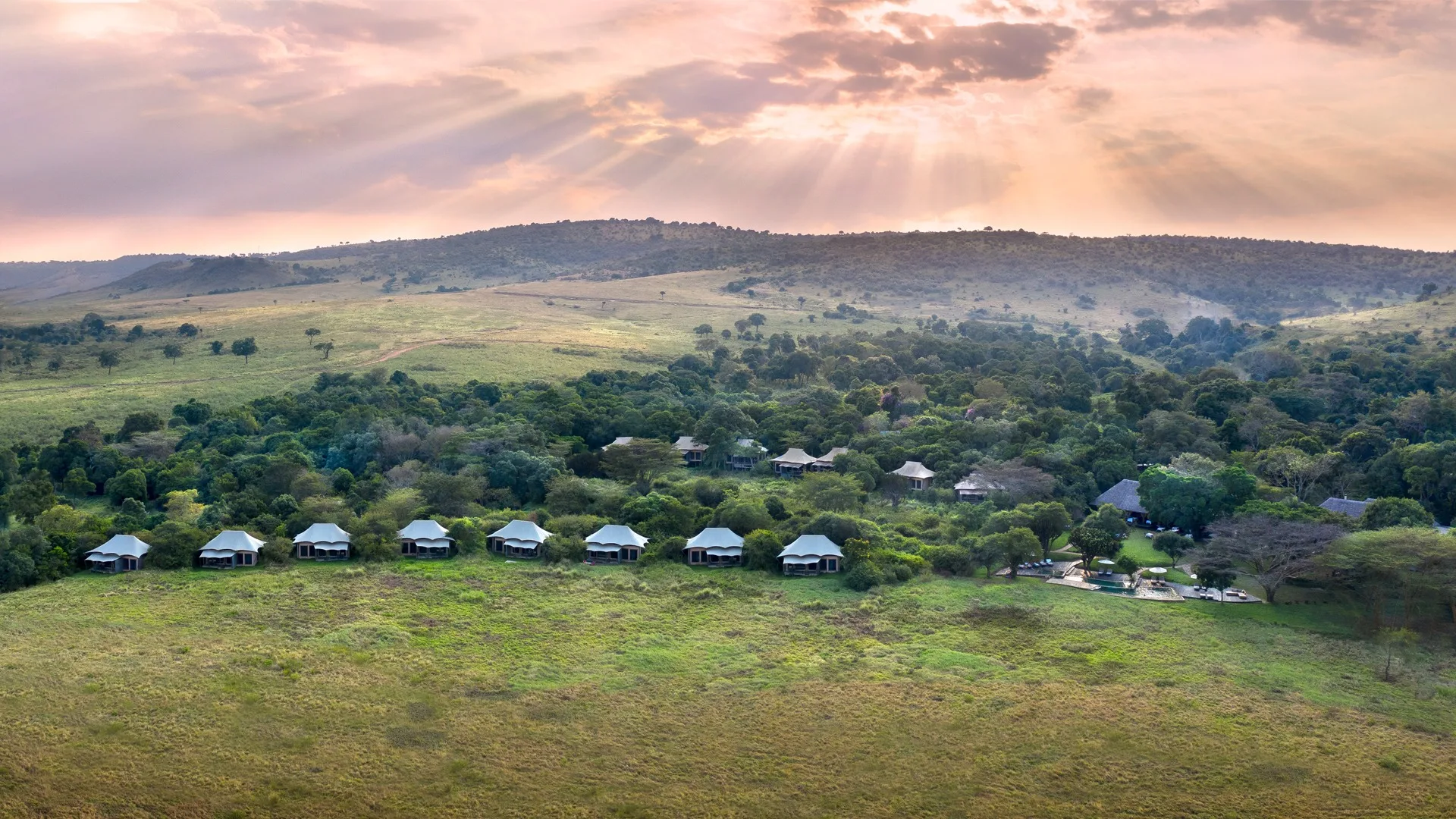
- Signature (High-end)
Day 2: Nairobi to Amboseli – First Family Wildlife Adventure - Main destination
- Masai Mara National Reserve
- Meals
- Breakfast, Lunch, Dinner
After breakfast, begin your journey to Amboseli National Park. The excitement often begins as soon as Nairobi disappears behind you. Children can observe changing landscapes, roadside towns, livestock and rural Kenya, and regular comfort stops can be arranged when necessary.
Arrive in the Amboseli region and check into your family-friendly lodge or tented camp. Where possible, accommodation should provide:
- Family rooms
- Interconnecting rooms
- Triple or quadruple configurations
- Swimming pool
- Child-friendly meals
- Safe communal areas
- Easy access to the park
After lunch and rest, begin your first game drive. For children, the first large wild animal often becomes one of the defining memories of the trip. Amboseli rarely disappoints, and elephants are the major stars. Large family groups move through the ecosystem, and the social similarities between elephants and humans can be fascinating for children: mothers protect calves, young elephants play, families remain closely connected and older animals help guide younger members. Your guide can explain these relationships in simple, engaging language.
Other animals may include zebras, wildebeest, giraffes, buffaloes, gazelles, warthogs, hippos and perhaps predators. On clear days, Mount Kilimanjaro rises beyond the plains. Return to your lodge before dinner, where children can discuss their favorite sighting of the day and update their wildlife lists.
Where you stay
Day 3: Full-Day Family Safari in Amboseli - Main destination
- Masai Mara National Reserve
- Meals
- Breakfast, Lunch, Dinner
Wake for breakfast and begin another wildlife adventure. Families with older children may choose an early start, while those traveling with younger children can begin at a more comfortable hour. The benefit of a private safari is flexibility.
Explore Amboseli's plains and wetlands. One of the most interesting lessons for children is understanding why wildlife gathers in particular places. Amboseli may appear dry, yet underground water originating from the Kilimanjaro ecosystem supports important wetlands. These marshes attract elephants, hippos, buffaloes and birds, and children can begin learning how water determines wildlife distribution.
Visit Observation Hill where appropriate. The elevated viewpoint helps the entire family understand the shape of the ecosystem. Rather than seeing only individual animals, children can look across wetlands and plains and understand how habitats connect.
During the hotter middle part of the day, return to the lodge. This is important for families, as children can swim, rest, read or enjoy lunch without spending eight uninterrupted hours in the vehicle. Later, head out for another game drive to search for animals missed earlier, and return to the lodge as sunset approaches.
Family Safari Learning: Turning Game Drives Into Adventures
Long wildlife drives can be fascinating for adults but challenging for younger children. A creative guide can turn them into interactive experiences. Children can search for:
- The Big Five
- Animal tracks
- Different giraffe species
- Birds of prey
- Baby animals
- Animal families
- Predator signs
- Different antelope species
- Interesting insects
- Animal sounds
Parents can provide children with notebooks and encourage them to record each day's sightings. Older children may enjoy photography, and even a simple camera can transform a game drive into a wildlife assignment.
Where you stay
Day 4: Amboseli to Nairobi or Central Kenya - Main destination
- Masai Mara National Reserve
- Meals
- Breakfast, Lunch, Dinner
After breakfast, leave Amboseli and begin traveling north. This is primarily a transfer day. Rather than treating transfer days as wasted time, families can use them to observe everyday Kenya. You pass towns, agricultural landscapes and changing environments that are rarely visible in wildlife documentaries, and regular comfort stops are important.
Depending on routing, spend the night in Nairobi or continue into central Kenya. The afternoon should generally remain relaxed: children can use the hotel pool where available, play games, read or simply rest, and adults also benefit from a quieter evening after several early safari mornings.
Samburu National Reserve
Where you stay
Day 5: Central Kenya to Samburu – Discover Northern Kenya - Main destination
- Masai Mara National Reserve
- Meals
- Breakfast, Lunch, Dinner
Continue north after breakfast. As the family travels toward Samburu National Reserve, the environment changes dramatically. The greener central highlands gradually become warmer and drier, mountains and rugged hills frame the landscape and vegetation becomes increasingly adapted to arid conditions. This creates an excellent opportunity to teach children that Kenya is not one uniform savannah, because different environments support different animals.
Arrive at your family-friendly Samburu lodge or camp. After lunch and rest, begin an afternoon game drive. Children who have already become familiar with zebras and giraffes now have a new challenge, because Samburu contains different forms. Search for the famous northern wildlife specialties:
- Grevy's Zebra: Ask children to compare it with the plains zebras seen earlier. Grevy's zebras have narrower stripes and larger ears.
- Reticulated Giraffe: Its striking coat resembles a network of geometric shapes.
- Gerenuk: Particularly entertaining to watch because it can stand upright on its hind legs while feeding.
- Beisa Oryx: Its long horns and desert-adapted appearance make it easy to distinguish.
- Somali Ostrich: Another northern specialty that adds variety to the family's wildlife checklist.
Elephants are also common around the Ewaso Nyiro River. Return to camp for dinner.
Where you stay
Day 6: Full-Day Samburu Family Safari - Main destination
- Masai Mara National Reserve
- Meals
- Breakfast, Lunch, Dinner
Begin the morning with another wildlife drive and search river areas for elephants. Children may watch animals drinking, bathing or crossing shallow sections of water. The Ewaso Nyiro River provides a useful lesson in ecology, because without reliable water, much of the surrounding wildlife would struggle during dry periods.
Predators add excitement. Lions, leopards and cheetahs occur within the ecosystem, and your guide may explain how different predators hunt and how prey animals protect themselves. Rather than rushing between sightings, allow children time to observe behavior. A giraffe feeding can become interesting when the guide explains its tongue, height and feeding strategy, an elephant becomes more fascinating when children understand how the trunk functions, and a zebra herd can lead to discussions about stripes, predators and group protection.
Return to camp during the hottest part of the day to enjoy lunch and family relaxation, then head out again later.
Wildlife Safety for Children
Children should understand from the beginning that safari animals are wild. Even animals that appear calm can be dangerous, and families must follow guide and lodge instructions. Important rules include:
- Never leave the safari vehicle unless your guide says it is safe.
- Do not feed animals.
- Do not shout at wildlife.
- Keep arms and bodies inside the vehicle where required.
- Never approach wildlife around camp.
- Do not walk around unfenced camps alone.
- Follow staff instructions after dark.
- Keep doors or tent zips secured as instructed.
- Never assume monkeys or baboons are harmless.
- Store food according to lodge guidance.
Parents remain responsible for supervising children.
Ol Pejeta and Rhino Conservation
Where you stay
Day 7: Samburu to Ol Pejeta / Laikipia - Main destination
- Masai Mara National Reserve
- Meals
- Breakfast, Lunch, Dinner
After breakfast, travel south toward the Laikipia region. Your destination may include Ol Pejeta Conservancy, one of Kenya's most important conservation areas. This section of the safari introduces children to a different aspect of wildlife tourism. Until now, much of the experience has focused on finding and observing animals, but at Ol Pejeta families can begin discussing why wildlife needs protection.
Rhinoceroses are particularly important, and both black and white rhinos can occur within the conservancy. Children can learn about:
- Habitat protection
- Anti-poaching
- Endangered species
- Wildlife monitoring
- Conservation funding
- Human-wildlife coexistence
Depending on arrival time, enjoy an afternoon wildlife drive in search of rhinos and other animals. Spend the night at a suitable lodge or camp.
Where you stay
Day 8: Family Conservation Experience and Great Rift Valley - Main destination
- Masai Mara National Reserve
- Meals
- Breakfast, Lunch, Dinner
Begin the morning with additional wildlife viewing or an appropriate conservation activity, depending on the selected accommodation and confirmed program. Conservation experiences should be chosen according to children's ages, and older children and teenagers may be particularly interested in learning how rangers monitor rhinos or how conservancies operate.
Afterward, continue toward the Great Rift Valley. The changing scenery becomes part of the day's experience, and you can explain to children that the Great Rift Valley is an enormous geological feature extending across a significant portion of eastern Africa.
Depending on the selected route, overnight near Lake Nakuru or Lake Naivasha. If Lake Nakuru is incorporated, the family may enjoy a wildlife drive with opportunities to search for rhinos, buffaloes, giraffes and birds, and the shorter distances within the park can be particularly suitable for families.
Lake Naivasha Family Experience
Where you stay
Day 9: Lake Naivasha – Boat Safari and Relaxation - Main destination
- Masai Mara National Reserve
- Meals
- Breakfast, Lunch, Dinner
Today introduces a completely different safari experience. Instead of spending the entire wildlife activity inside a vehicle, take an appropriate guided boat trip on Lake Naivasha, a change children often enjoy. From the boat, look for hippos in the water. The guide will maintain an appropriate distance because hippos are powerful wild animals and should never be approached irresponsibly.
Birdlife can be excellent. Watch for: African fish eagles, Kingfishers, Pelicans, Cormorants, Herons, Egrets, Geese, Ducks.
Older children interested in photography can practice photographing birds in flight, while younger children can count different species or search for particular colors.
After the boat experience, return to the lodge. The remainder of the day can be deliberately slower, so use the pool, relax in the garden or enjoy family time. This break is important before entering the wildlife-intensive Masai Mara.
Masai Mara National Reserve
Where you stay
Day 10: Lake Naivasha to Masai Mara – Into Big-Cat Country - Main destination
- Masai Mara National Reserve
- Meals
- Breakfast, Lunch, Dinner
After breakfast, begin the journey toward the Masai Mara National Reserve. The Mara is likely to be one of the destinations children have heard about before arriving in Kenya, as documentaries frequently feature its lions, cheetahs, wildebeest and dramatic predator-prey encounters.
Arrive at your selected family-friendly lodge or tented camp. The choice of accommodation is especially important. For younger families, useful facilities can include:
- Family suites
- Swimming pool
- Child-friendly menu
- Open space around communal areas
- Flexible meal times
- Family-focused guides
- Short transfer to wildlife areas
After lunch and rest, head out on the family's first Mara game drive. The quantity of wildlife can be extraordinary. Large herbivores may include: Wildebeest, Zebras, Topis, Impalas, Thomson's gazelles, Grant's gazelles, Giraffes, Elephants, Buffaloes.
Predators can include lions, cheetahs, leopards, spotted hyenas and jackals. Return to camp for dinner, by which point children may already have an impressive wildlife checklist.
Where you stay
Day 11: Full-Day Masai Mara Family Safari - Main destination
- Masai Mara National Reserve
- Meals
- Breakfast, Lunch, Dinner
Today is dedicated to exploring the Mara. Families with older children may choose a full-day drive with a picnic lunch, while families with younger children may prefer separate morning and afternoon game drives. Neither approach is inherently better, as the right choice depends on children's attention span and enthusiasm.
An early-morning drive provides opportunities to find predators while temperatures remain cool. Lions may still be active, hyenas may be returning from nighttime movements, cheetahs can begin scanning the plains and elephants and giraffes move through open landscapes. If returning to camp for lunch, spend several hours relaxing before the afternoon drive, as children may appreciate a swim or nap. Later, return to the reserve, where your guide can concentrate on species the family has not yet seen.
Helping Children Understand Predators
Predator sightings can be among the most exciting parts of a family safari, but parents should remember that natural behavior can sometimes be intense. Lions, cheetahs, leopards and hyenas must hunt to survive, and a successful hunt may involve scenes that younger children find upsetting. Parents can tell the guide in advance if they prefer not to watch kills at close range, while older children may view predator-prey relationships as an important ecological lesson.
There is no universally correct approach. The safari should respect each family's comfort level.
Where you stay
Day 12: Second Full Day in the Masai Mara - Main destination
- Masai Mara National Reserve
- Meals
- Breakfast, Lunch, Dinner
Having a second complete day in the Mara removes pressure. You do not need to find every animal yesterday, and today can focus on areas not previously explored. Perhaps the family has already seen lions but not cheetahs, perhaps elephants have become the children's favorite animals and they want more time watching them, or perhaps teenagers have become interested in photography and want to spend longer at selected sightings. A private guide can adapt accordingly.
Great Migration for Families
If your safari coincides with the period when large migration herds are present in the Masai Mara, children may witness one of the world's great natural spectacles. Hundreds or thousands of wildebeest and zebras can spread across the plains. However, parents should understand that the Great Migration is a natural process. There is no exact guaranteed river-crossing schedule, and animals move according to rainfall and grazing.
River crossings can also be dramatic and sometimes distressing. Crocodile attacks, drowning and injuries are natural parts of migration, so families with sensitive younger children should discuss this with the guide. The migration remains extraordinary even without witnessing a river crossing, and simply seeing huge herds moving across the plains can be unforgettable.
Optional Maasai Cultural Visit
A respectful cultural experience can be particularly educational for children. Depending on the itinerary, families may visit a Maasai community and learn about aspects of local life. Children can observe differences and similarities between their own lives and those of children growing up in rural Kenya.
The experience should avoid presenting Maasai culture as something frozen in the past. Maasai communities are contemporary communities adapting to education, technology, tourism, conservation and changing economic conditions while maintaining important cultural traditions. Families should ask permission before photographing people.
Optional Hot-Air Balloon Safari for Families
A Masai Mara balloon safari can be added for families whose children meet the operator's age, height and safety requirements. Ballooning normally begins before sunrise, and passengers rise above the plains as daylight develops. From the air, families can appreciate the scale of the Mara landscape.
Because balloon operators maintain their own safety rules, suitability must be checked for children individually. The activity also adds significant cost and is not necessary for enjoying the Masai Mara.
Where you stay
Day 13: Masai Mara to Nairobi - Main destination
- Masai Mara National Reserve
- Meals
- Breakfast, Lunch, Dinner
Enjoy breakfast and, depending on timing, perhaps a final wildlife drive. Children can use this last game drive to complete their wildlife checklist. Ask each family member to choose:
- Favorite animal
- Favorite park
- Best game drive
- Most surprising sighting
- Favorite lodge
- Most interesting fact learned
Begin the journey back to Nairobi. Families wanting to avoid the road transfer can enquire about a domestic flight from the Mara, although this increases the cost and involves baggage restrictions. Arrive in Nairobi and transfer to your hotel, then spend the final evening relaxing.
Where you stay
Day 14: Nairobi – Departure - Main destination
- Masai Mara National Reserve
- Drive time
- Return transfer as outlined in the itinerary
- Meals
- Breakfast, Lunch
Enjoy breakfast. Depending on your international flight time, you may have several hours available, so keep the final day flexible. Families can rest at the hotel, undertake an optional Nairobi activity or enjoy a relaxed meal before departure. At the appropriate time, transfer privately to Jomo Kenyatta International Airport.
Your 14 Days Family Kenya Safari concludes. The family returns home with far more than photographs. Children have seen ecosystems functioning in real time, learned about conservation, experienced a different country and spent two weeks sharing extraordinary moments with their parents and siblings.
Best Ages for a Kenya Family Safari
There is no universal minimum age for a conventional vehicle safari, but age affects how the itinerary should be designed.
- Families With Children Under 6: Very young children require particularly flexible schedules. Game drives should generally be shorter, and long transfer days may need additional stops. Some camps do not accept very young children, while others welcome them enthusiastically, and certain activities will have minimum-age restrictions.
- Children Aged 6–11: This can be an excellent safari age. Children are often fascinated by animals and can begin understanding ecological relationships, and interactive guiding is particularly effective.
- Teenagers: Teenagers can participate in more sophisticated wildlife discussions, photography and selected activities, and they may also tolerate longer game drives. A safari can be particularly rewarding for teenagers interested in biology, geography, photography, conservation or environmental science.
Choosing Family-Friendly Accommodation
Not every excellent safari lodge is an excellent family lodge. When selecting accommodation, consider:
- Family Rooms: Can parents and children sleep comfortably without requiring multiple distant rooms?
- Camp Layout: Is the property appropriate for younger children?
- Swimming Pool: A pool can be extremely valuable during long midday breaks.
- Meal Flexibility: Can children eat earlier if necessary?
- Children's Menus: Are simple meal options available?
- Activities: Does the lodge offer child-friendly nature programs?
- Location: How long does it take to reach the main wildlife-viewing areas?
- Age Policy: Does the camp accept children of your children's ages?
These practical questions can influence the family experience more than luxury ratings.
Family Rooms Versus Separate Rooms
Room configuration depends on children's ages and lodge design. Possible arrangements include:
- Family suites
- Interconnecting rooms
- Triple rooms
- Quad rooms
- Two adjacent rooms
- Private family cottages
- Exclusive-use villas
Parents of younger children should generally avoid arrangements that place children in distant standalone tents. Exact room configuration should be confirmed before booking.
Safari With Toddlers
Traveling with toddlers is possible but requires careful planning. Parents should consider:
- Car-seat requirements
- Nap schedules
- Meal times
- Heat
- Long road transfers
- Medical supplies
- Camp fencing
- Pool safety
- Wildlife safety
- Mosquito protection
A private safari is strongly recommended, and the route may also need to be simplified.
Kenya Safari With Teenagers
Teenagers often respond well to more active involvement. Encourage them to:
- Photograph wildlife
- Identify birds
- Record animal behavior
- Ask guides conservation questions
- Maintain a travel journal
- Learn basic Swahili phrases
- Understand migration ecology
- Compare different ecosystems
For teenagers, a safari can become an educational journey without feeling like formal schoolwork.
Education and Conservation
One of the greatest benefits of a family safari is the opportunity to make conservation tangible. Children can see that wildlife requires space, observe how water influences ecosystems, learn why predators matter and understand that endangered animals require protection. They can also begin seeing the connection between tourism and conservation, as park fees, conservancy fees and lodge employment can contribute to wildlife protection and local economies. These lessons are difficult to reproduce inside a classroom.
Where you stay
03 Rates
Safari rates 2027-2029
Indicative per person. Season, group size and lodge style change the total — your quotation confirms current rates.
- Essential (Budget)
Essential (Budget)
Budget camps and lodges suit travelers who prioritize wildlife while keeping costs lower.
Great value camps
- Comfort (Mid-range)
Comfort (Mid-range)
Mid-range tented camps and lodges balance comfort and price with private rooms or tents and en-suite facilities.
Quoted for your dates
- Premium (Luxury)
Premium (Luxury)
Luxury camps and lodges focus on location, service and more intimate wildlife experiences.
Premium camps and lodges
- Signature (High-end)
Signature (High-end)
Signature camps and lodges are the most exclusive stays — small, highly private properties with exceptional guiding and setting.
Exclusive signature stays
04 Activities
Safari activities
Game viewing is the core of this itinerary. Optional extras are quoted separately and depend on season, permits and availability. Individual species and river crossings are never guaranteed.
Included
Game drives
Scheduled wildlife drives in a 4x4 safari vehicle with a professional driver-guide.
View activity
Included
Wildlife photography
Time in the field for landscape and wildlife photography. Sightings are never guaranteed.
View activityOptional
Optional extras
Balloon flights, cultural visits and other extras can be added when available and are quoted separately.
Additional information
Plan This Safari
Wildlife You May See
Across fourteen days, possible sightings include the following. All wildlife is wild, so individual sightings cannot be guaranteed.
- African elephants
- Lions
- Leopards
- Cheetahs
- White rhinos
- Black rhinos
- African buffaloes
- Masai giraffes
- Reticulated giraffes
- Grevy's zebras
- Plains zebras
- Wildebeest
- Hippos
- Spotted hyenas
- Black-backed jackals
- Gerenuks
- Beisa oryx
- Topis
- Impalas
- Waterbucks
- Elands
- Warthogs
- Baboons
- Vervet monkeys
- Ostriches
- Hundreds of bird species
Can Families See the Big Five?
The itinerary offers excellent opportunities to search for all of the Big Five, although no species is guaranteed. Children can turn this into a safari challenge, and they should be encouraged to enjoy every animal rather than treating safari solely as a checklist.
- Elephant: Amboseli is particularly famous for elephants.
- Lion: The Masai Mara provides excellent lion-viewing opportunities.
- Buffalo: Buffaloes occur in several destinations.
- Rhino: Ol Pejeta and other central Kenya destinations strengthen rhino-viewing possibilities.
- Leopard: Leopards are naturally secretive and can be the most challenging member of the Big Five to find.
Best Time for a Kenya Family Safari
School holidays often influence family travel dates.
- December and January: The festive period is popular and wildlife viewing can be excellent. Book early because family rooms are limited.
- February and March: These months can offer warm weather and strong general wildlife viewing.
- April and May: Rainfall is more common. Landscapes are green and visitor numbers can be lower, although road conditions may become challenging.
- June: June can be an excellent time before the busiest migration-season months.
- July and August: These months coincide with school holidays in many countries and are among the most popular family safari periods. The Masai Mara may also host migration herds. Book family accommodation well in advance.
- September and October: Wildlife viewing remains excellent.
- November: Short rains can produce green landscapes and excellent birdlife.
How Much Does a 14 Days Family Kenya Safari Cost?
Family safari pricing depends on several variables. These include:
- Number of adults
- Number of children
- Children's ages
- Travel season
- Accommodation category
- Room configuration
- Park fees
- Vehicle requirements
- Road versus air transfers
- Optional activities
Children may receive reduced rates at certain properties or protected areas, but age categories vary. A family of four or five can also benefit from sharing the fixed cost of a private vehicle. For accurate pricing, provide children's exact ages at the time of travel.
Budget Family Safari
A family safari can be designed around budget accommodation. This may include simple lodges and tented camps outside park boundaries. The focus remains on wildlife, and budget family safaris can provide excellent value because several family members share the safari vehicle.
Mid-Range Family Safari
Mid-range accommodation is often the most practical choice for families. It provides comfortable rooms, private bathrooms, good meals and often swimming pools without reaching luxury pricing. A combination of family rooms and interconnecting units can work well.
Luxury Family Safari
Luxury families can choose larger suites, private villas, premium camps and domestic flights. Some high-end properties provide specialist children's programs. An exclusive-use safari house can be particularly attractive for multi-generational families.
Grandparents and Multi-Generational Families
Kenya works extremely well for multi-generational travel. Grandparents, parents and children can share wildlife experiences while maintaining different levels of activity. Private vehicles are especially important because they allow the family to adapt around different mobility and energy levels. Accommodation should be selected carefully for accessibility, as properties with excessive stairs or long walking distances may not suit every family member.
Family Safari Packing List
Families should pack practically without overloading luggage. Important items include:
- Lightweight clothing
- Warm jackets or fleeces
- Comfortable shoes
- Hats
- Sunglasses
- Sunscreen
- Insect repellent
- Personal medications
- Child-specific medicines
- Binoculars
- Cameras
- Charging equipment
- Reusable water bottles
- Small backpacks
- Books or quiet games
- Wildlife identification books
- Travel journals
- Snacks where appropriate
Bring familiar essentials for younger children rather than assuming every item can easily be purchased near remote safari areas.
Meals and Children
Most family-friendly safari lodges can accommodate children's preferences when informed in advance. Parents should communicate:
- Allergies
- Vegetarian requirements
- Food intolerances
- Preferred meal times
- Special dietary requirements
Some children may prefer simpler meals after several days of travel. This is normally easy to arrange with advance notice.
Malaria and Health Planning
Families should obtain personalized medical advice from an appropriate healthcare professional before traveling. Parents should discuss Kenya-specific travel health considerations, vaccinations, malaria prevention and any medical needs relevant to individual family members. Carry sufficient prescription medication for the entire trip. Do not rely on remote safari lodges to stock specialized medication, and note that comprehensive travel insurance is strongly recommended.
Family Safari and Screen Time
A safari can provide an unusual opportunity for families to disconnect from normal digital routines. Wi-Fi may be limited in remote camps. Rather than treating this as a disadvantage, families can use the experience to encourage:
- Wildlife observation
- Reading
- Journaling
- Photography
- Family conversations
- Card games
- Stargazing
Children frequently become far more engaged with wildlife than parents initially expect.
Responsible Family Travel
Children learn from adult behavior. Parents can model responsible tourism by:
- Respecting animals
- Listening to guides
- Avoiding litter
- Conserving water
- Respecting local cultures
- Asking permission before photographing people
- Avoiding wildlife harassment
- Supporting ethical conservation experiences
This turns the safari into a practical lesson in responsible travel.
Combining Safari and Kenya Beach Holiday
Families with additional time can finish the safari on Kenya's Indian Ocean coast. This creates an excellent contrast. After early mornings and game drives, children can enjoy several days of swimming and beach activities while parents relax. A safari-and-beach holiday can be especially attractive for families traveling during longer school holidays, and the beach extension should be planned according to the family's preferred resort style, children's ages and overall trip duration.
Suggested Internal Links
Use contextual links to the approved SafariTripsToKenya.com pages for the following. Only use URLs already defined in the approved SafariTripsToKenya.com sitemap, and never create an alternative URL merely because a different slug appears more SEO-friendly.
- Kenya Safari Packages
- Kenya Family Safaris
- Amboseli National Park
- Samburu National Reserve
- Ol Pejeta Conservancy
- Lake Nakuru National Park
- Lake Naivasha
- Masai Mara National Reserve
- Great Migration
- Kenya Safari With Kids
- Kenya Safari Cost
- Best Time to Visit Kenya
- Kenya Safari Accommodation
- Budget Kenya Safaris
- Luxury Kenya Safaris
- Kenya Wildlife
- Kenya Safari Packing List
- Kenya Travel Guide
Why Book a 14 Days Family Kenya Safari?
Children rarely remember every hotel room or every meal from a family holiday. They remember moments such as an elephant walking toward the safari vehicle, discovering that giraffes have extraordinarily long tongues, hearing lions roar, watching hippos from a boat, seeing a baby zebra stay close to its mother, learning why rhinos need protection, or scanning the grass with binoculars in the hope of finding a cheetah. None of those moments is guaranteed. Parents remember watching their children experience the wild for the first time, and that is what makes a family safari different from an ordinary holiday. Over fourteen days, Kenya becomes a vast outdoor classroom—but one where learning happens naturally through excitement, observation and shared experience, with enough time for several ecosystems without forcing every day into an exhausting schedule. There is time to watch for wildlife and time to swim, time for early game drives and time for slow breakfasts, time for children to ask questions and guides to answer them, and time for parents, children and grandparents to share experiences away from everyday routines. A carefully designed 14 Days Family Kenya Safari therefore becomes much more than a wildlife tour. It becomes a family journey through Kenya.
Plan Your 14 Days Family Kenya Safari
Every family is different. A safari for parents traveling with two teenagers should not be identical to a safari for a family with a five-year-old, and a multi-generational family requires different accommodation from a couple traveling with one child. Some families want intensive wildlife viewing, while others want pools, relaxed afternoons and shorter game drives. Some children are obsessed with big cats, and others love birds, elephants or photography.
The itinerary should reflect those differences. When requesting your family safari proposal, provide:
- Number of adults
- Number of children
- Exact ages of children
- Travel dates
- Preferred accommodation level
- Room requirements
- Approximate budget
- Children's wildlife interests
- Dietary requirements
- Mobility considerations
- Whether you prefer road or fly-in transfers
- Any activities you particularly want to include
Safari Trips to Kenya can then customize the journey around your family while retaining the wildlife diversity and comfortable pacing that make this fourteen-day itinerary so rewarding. Request a personalized 14 Days Family Kenya Safari itinerary and quotation for your family.
Recommended Structured Data
Implement appropriate schema including the following. Only include information that is genuinely represented on the visible page, and do not manufacture review ratings, prices or availability information for schema.
- `WebPage`
- `TouristTrip`
- `BreadcrumbList`
- `FAQPage`
SEO Content Notes
- Primary Search Intent: Families actively researching or preparing to book a two-week Kenya safari.
- Primary Conversion Goal: Customized family safari inquiry.
- Secondary Search Intent: Parents researching whether Kenya is suitable for children and how a longer family safari should be structured.
- Core Value Proposition: A private, flexible and educational two-week Kenya wildlife journey designed around both children and adults.
- Key Differentiators: Family-friendly pacing, private vehicle, multiple-night stays, age-appropriate wildlife experiences, accommodation selection, conservation learning and relaxation time.
- Cannibalization Control: Keep this page centered on the specific 14 Days Family Kenya Safari package. General subjects such as family safari safety, Kenya with toddlers, child safari rates, individual park guides and Kenya family accommodation should link to their own approved pages where mapped.
- Internal Linking Strategy: Link naturally from destinations, family-planning questions and specialist topics to their exact mapped SafariTripsToKenya.com pages.
- Conversion Strategy: Emphasize customization according to children's exact ages because this provides a strong reason for families to submit an inquiry rather than attempting to book a generic package.
- URL Protection: Preserve `/safari-packages/14-days-family-kenya-safari/` exactly as mapped. Do not rename, shorten, restructure or otherwise modify the URL.
Planning Questions
Frequently Asked Questions
Is Kenya safe for a family safari?
Established safari routes are widely used by families. Appropriate planning, professional guides and normal travel precautions remain important. Families should follow current travel advice and safari safety instructions.
What is the best age for children?
There is no single best age. Children from approximately school age often engage particularly well with wildlife, while teenagers can appreciate more detailed conservation and photography experiences. Younger children can travel successfully with a more flexible itinerary.
Do children get discounts?
Some lodges, parks and conservancies provide child rates. Exact age bands vary and should be confirmed when preparing the quotation.
Can we have a private safari vehicle?
Yes. Private operation is strongly recommended for families.
Can car seats be arranged?
Appropriate arrangements can be discussed according to children's ages and vehicle configuration. Families should raise this requirement when booking.
Are family rooms available?
Yes, but availability varies significantly by lodge. Family suites and interconnecting rooms can sell out earlier than standard rooms.
Can children join game drives?
Generally yes, although individual camps and specialist activities may have age restrictions.
Can children do a hot-air balloon safari?
Age, height and safety requirements vary by balloon operator. Eligibility must be checked before booking.
Is the Great Migration suitable for children?
Yes, but some natural predator-prey or river-crossing scenes can be intense. Parents can discuss their preferences with the guide.
How long are game drives?
They are flexible on a private safari. Morning or afternoon drives commonly last several hours, but they can be shortened for younger children.
Are there toilets during game drives?
Facilities are available at lodges and designated locations, but not everywhere in the wilderness. Your guide will help plan comfort stops appropriately.
Can we include rest days?
Yes. A family itinerary can incorporate slower afternoons or complete relaxation periods.
Can we add a beach holiday?
Yes. A Kenya coast extension is an excellent way to finish a family safari.
Can grandparents join?
Absolutely. The route can be adapted for a multi-generational family, with accommodation selected according to mobility requirements.
Can dietary requirements be accommodated?
Most established safari properties can cater for common dietary requirements when informed in advance.
05 Request Quote
Request Quote
Tell us your dates, group size, and preferred lodge style — we will send a tailored quote for this safari.
Want to extend your safari?
Add Amboseli, Diani Beach, Tanzania and Zanzibar, or gorilla trekking in Uganda or Rwanda — we tailor the journey to your dates.