
8 DAYS / 7 NIGHTS
8 Days Family Kenya Safari
Plan an 8 Days Family Kenya Safari with private game drives, family-friendly lodges, Masai Mara wildlife, Lake Nakuru rhinos, Amboseli elephants and flexible pacing.
- Wildlife Safari Private Journey
- Private Safari 4x4 Vehicle
- Expert Guide English Speaking
- All Meals Breakfast, Lunch, Dinner
- 24/7 Support We're here to help
01 Overview
Safari Overview
- Duration 8 days / 7 nights
- Destination Kenya
- Starts / ends Nairobi
- Safari style Private 4×4 safari
- Accommodation Essential · Comfort · Premium · Signature
- Best for Wildlife viewing, photography
8 Days Family Kenya Safari – A Private Wildlife Adventure for Parents and Children
An 8 Days Family Kenya Safari is designed for parents, children and multi-generational families who want to experience Kenya’s extraordinary wildlife at a pace that remains exciting without becoming exhausting. A good family safari should never be planned exactly like an adult-only safari. Children often need shorter game drives, predictable meal times, opportunities to swim, more frequent breaks and guides who are patient enough to turn every animal sighting into an engaging learning experience.
Parents may also value practical details that are easy to overlook when reading a standard safari itinerary:
- How long are the road transfers?
- Are family rooms available?
- Are there swimming pools?
- Can game drives be shortened?
- What happens if a child becomes tired?
- Are meals suitable for children?
- Can the family have a private vehicle?
- Will there be enough bathroom stops?
- Are lodges fenced?
- What age restrictions apply to activities?
The 8 Days Family Kenya Safari is built around these concerns. A well-balanced route can combine the Masai Mara National Reserve, Lake Nakuru National Park and Amboseli National Park. These destinations work particularly well for families because each offers a very different type of wildlife experience.
The Masai Mara introduces children to classic African savannahs known for lions, giraffes, elephants, zebras, wildebeest, cheetahs, buffaloes and antelopes. Lake Nakuru provides opportunities to see black and white rhinoceros, Rothschild’s giraffes, buffaloes, monkeys and a wide range of birds. Amboseli completes the journey with large elephant herds, wetlands, open plains and, when conditions allow, views of Mount Kilimanjaro.
Eight days is especially useful for families because it avoids compressing the journey too tightly. Rather than moving to a new lodge every morning, children have more time to settle into destinations and parents gain greater flexibility to include rest periods. Wildlife sightings, including Mount Kilimanjaro views, can never be guaranteed.
The safari can be customized for:
- Families with school-age children
- Families with teenagers
- Families with younger children
- Parents traveling with one child
- Larger families
- Multi-generational groups
- Grandparents traveling with grandchildren
- Family reunions
- Families combining safari and beach
- Families seeking budget, mid-range or luxury accommodation
8 Days Family Kenya Safari at a Glance
- Day 1: Nairobi to Masai Mara – Family Safari Begins
- Day 2: Full-Day Masai Mara Family Safari
- Day 3: Flexible Masai Mara Wildlife Day – Big Cats, Pool Time & Optional Cultural Experience
- Day 4: Masai Mara to Lake Nakuru – Rhino & Giraffe Safari
- Day 5: Lake Nakuru to Amboseli – Scenic Transfer to Elephant Country
- Day 6: Full-Day Amboseli Family Safari
- Day 7: Flexible Amboseli Family Day – Elephants, Kilimanjaro & Relaxation
- Day 8: Amboseli to Nairobi – Departure
This itinerary can be adjusted according to the exact ages and energy levels of the children. Families with very young children may prefer additional domestic flights or shorter road sectors. Families with teenagers may enjoy longer full-day game drives and more active experiences.
Why Kenya Is Excellent for a Family Safari
Kenya is one of Africa’s strongest destinations for families because much of the wildlife can be observed comfortably from a safari vehicle. Children do not need to hike for hours to see large mammals. They can watch the following animals from the relative comfort of a customized safari vehicle:
- Lions
- Elephants
- Giraffes
- Rhinos
- Buffaloes
- Zebras
- Cheetahs
- Wildebeest
- Hippos
- Warthogs
- Hyenas
- Baboons
- Monkeys
- Gazelles
Kenya also offers a wide range of accommodation categories. Families can choose:
- Budget family rooms
- Permanent tented camps
- Mid-range family lodges
- Luxury family suites
- Interconnecting rooms
- Villas
- Private safari houses
This means the itinerary can be matched to the family’s budget rather than forcing everyone into one type of accommodation.
The Importance of a Private Family Safari Vehicle
A private safari vehicle is strongly recommended for families. This single decision can significantly improve the experience. With a private vehicle, your family controls the pace. If a child needs a bathroom stop, you stop. If the children are fascinated by elephants, you can remain longer. If everyone becomes tired after three hours, you can return to the lodge. If the family wants to spend an entire morning looking for lions, the guide can focus on that, although sightings can never be guaranteed. There is no need to compromise with unrelated travelers. Benefits include:
- Flexible departure times
- Flexible return times
- More bathroom stops
- Space for family bags
- Better photography
- Easier snack breaks
- More direct interaction with the guide
- Ability to shorten game drives
- More control over wildlife priorities
- No unrelated passengers
For families, this flexibility is often more valuable than upgrading to a significantly more expensive hotel.
Itinerary
- Day 1: Nairobi to Masai Mara, begin Your Family Wildlife Adventure
- Day 2: Masai Mara Family Safari – Lions, Cheetahs, Elephants & Plains Game
- Day 3: Flexible Masai Mara Family Day, wildlife, Great Migration & Relaxation
- Day 4: Masai Mara to Lake Nakuru, rhino & Giraffe Safari
- Day 5: Lake Nakuru to Amboseli, scenic Family Transfer to Elephant Country
- Day 6: Amboseli Family Safari – Elephants, Wetlands & Mount Kilimanjaro
- Day 7: Flexible Amboseli Family Day, wildlife, Relaxation & Conservation Learning
- Day 8: Morning game drive – return to Nairobi
02 Itinerary
8 Days Family Kenya Safari: Detailed Itinerary
-
Day 1: Nairobi to Masai Mara – Begin Your Family Wildlife Adventure - Main destination
- Masai Mara National Reserve
- Drive time
- Road transfer as outlined in the itinerary
- Meals
- Lunch, Dinner
Your 8 Days Family Kenya Safari begins in Nairobi. Your private safari driver-guide will meet your family at:
- Nairobi hotel
- Private residence
- Jomo Kenyatta International Airport where practical
- Another agreed pickup location
After introductions and luggage loading, the guide will explain the route and basic safari safety. For children, the first morning can also include a simple introduction to the animals they may see. You might give younger travelers a wildlife checklist containing animals such as: Lion, Elephant, Giraffe, Zebra, Warthog, Buffalo, Cheetah, Rhino, Hippo.
They can mark species as the safari progresses, and this simple activity helps children remain engaged.
Driving from Nairobi to Masai Mara with Children
The road journey is part of the safari, but parents should expect a substantial transfer. A private vehicle allows your guide to make sensible stops. Possible breaks include:
- Bathroom stops
- Snacks
- Stretching
- Scenic viewpoints
- Lunch or refreshments
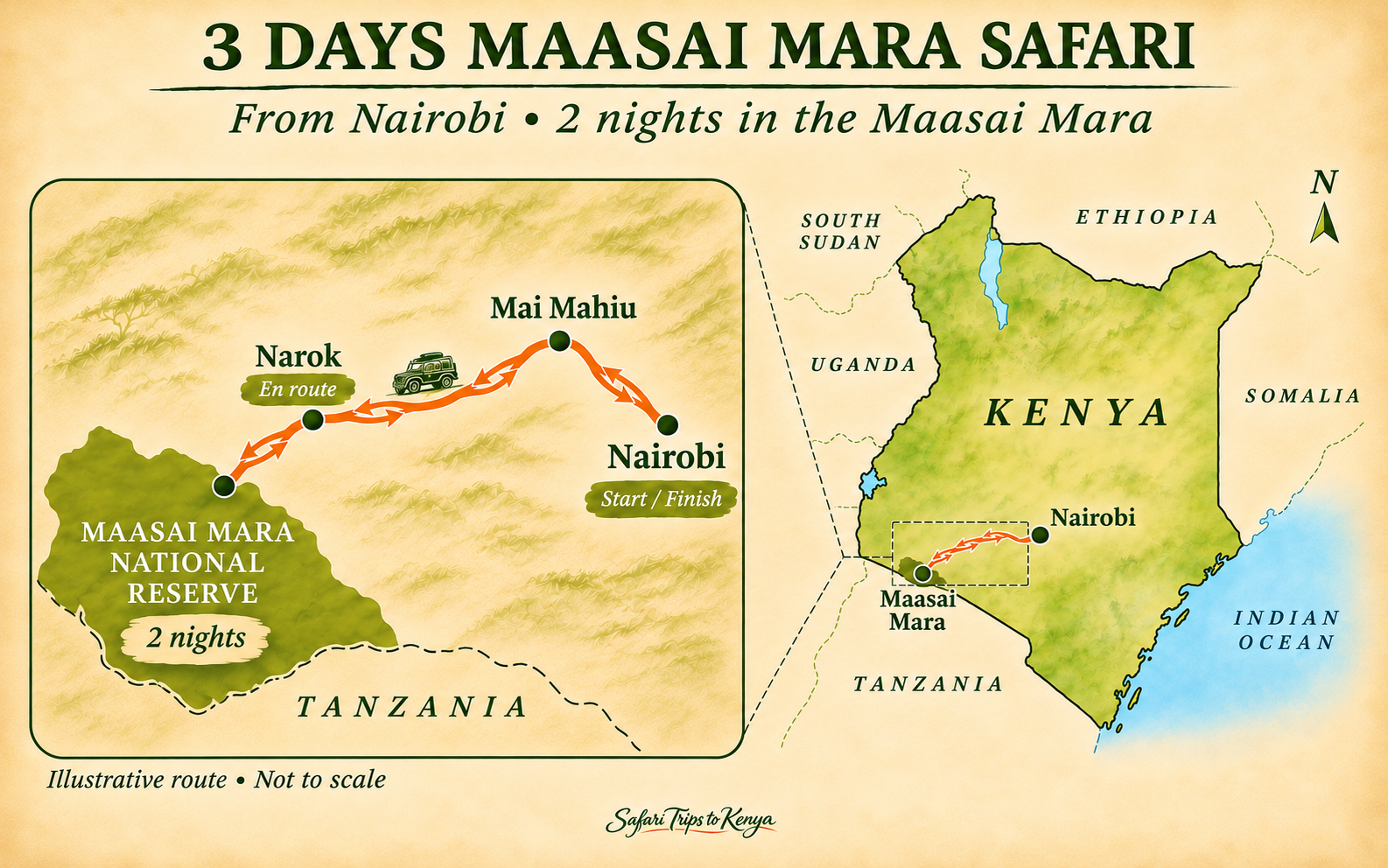
Travel toward the Great Rift Valley. Depending on the route and schedule, stop at an elevated viewpoint where the family can look across the valley, and the guide can explain the geography in a simple and engaging way. Continue toward Narok, then travel deeper toward the Mara ecosystem. Before reaching the main wildlife area, children may begin seeing:
- Cattle
- Goats
- Maasai homesteads
- Open grasslands
- Acacia trees
Arrive at your family-friendly lodge or tented camp around lunchtime or in the afternoon and check into your room.
Choosing Family Accommodation in Masai Mara
The best family accommodation is not necessarily the most expensive. Important considerations include:
- Family room availability
- Interconnecting rooms
- Fenced or unfenced property
- Distance from reserve access
- Swimming pool
- Child-friendly meals
- Room proximity to common areas
- Reliable hot water
- Electricity
- Safety procedures
Parents should provide the exact ages of all children during booking.
First Family Game Drive
After lunch and rest, begin your first Masai Mara wildlife drive. For younger children, the first drive should usually be relatively short, as there is no need to remain out until everyone becomes exhausted. Possible sightings include: Giraffes, Zebras, Wildebeest, Elephants, Buffaloes, Impalas, Gazelles, Warthogs, Baboons, Lions, Hyenas.
Children often become immediately engaged when they realize wildlife can appear anywhere, although individual sightings cannot be guaranteed.
Your First Lion Sighting
Seeing a wild lion can be one of the biggest moments of the trip. Your guide can explain:
- Why lions live in prides
- Why males have manes
- How lionesses cooperate
- What cubs eat
- Why lions sleep so much
- How territories work
For children, these explanations can turn the vehicle into a moving outdoor classroom.
Giraffes
Giraffes are often among children’s favorite animals, and Masai giraffes have irregular dark markings. The guide may explain:
- Why giraffes have long necks
- How they feed
- Why they spread their legs to drink
- How calves are protected
Zebras
Children can learn that zebra stripes are unique to each individual, much like fingerprints. They may also see zebras mixed with wildebeest.
Elephants
Elephants can provide some of the most engaging family encounters. Children may observe:
- Calves
- Mothers
- Large bulls
- Elephants feeding
- Dust bathing
- Herd communication
Return to the lodge before dinner. If the property has a swimming pool, the family may have time for a short swim.
Destination: Masai Mara National Reserve
Main activities: Nairobi–Masai Mara transfer and family game drive
Family highlights: First wildlife sightings, lions, giraffes, zebras and elephants
Meals: Lunch and dinner depending on arrival time
Accommodation: Family-friendly budget, mid-range or luxury lodge/tented camp
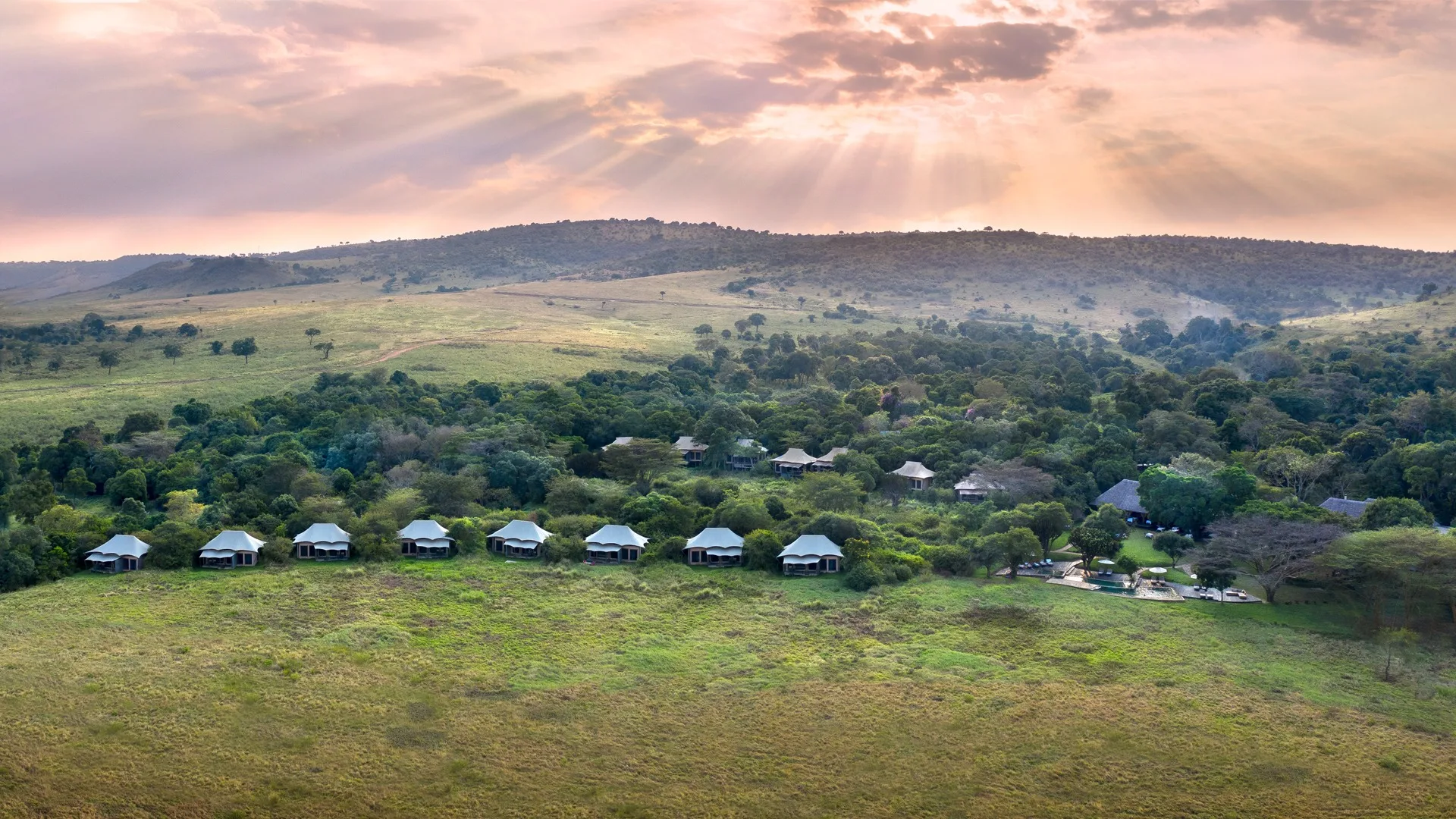
Where you stay
-
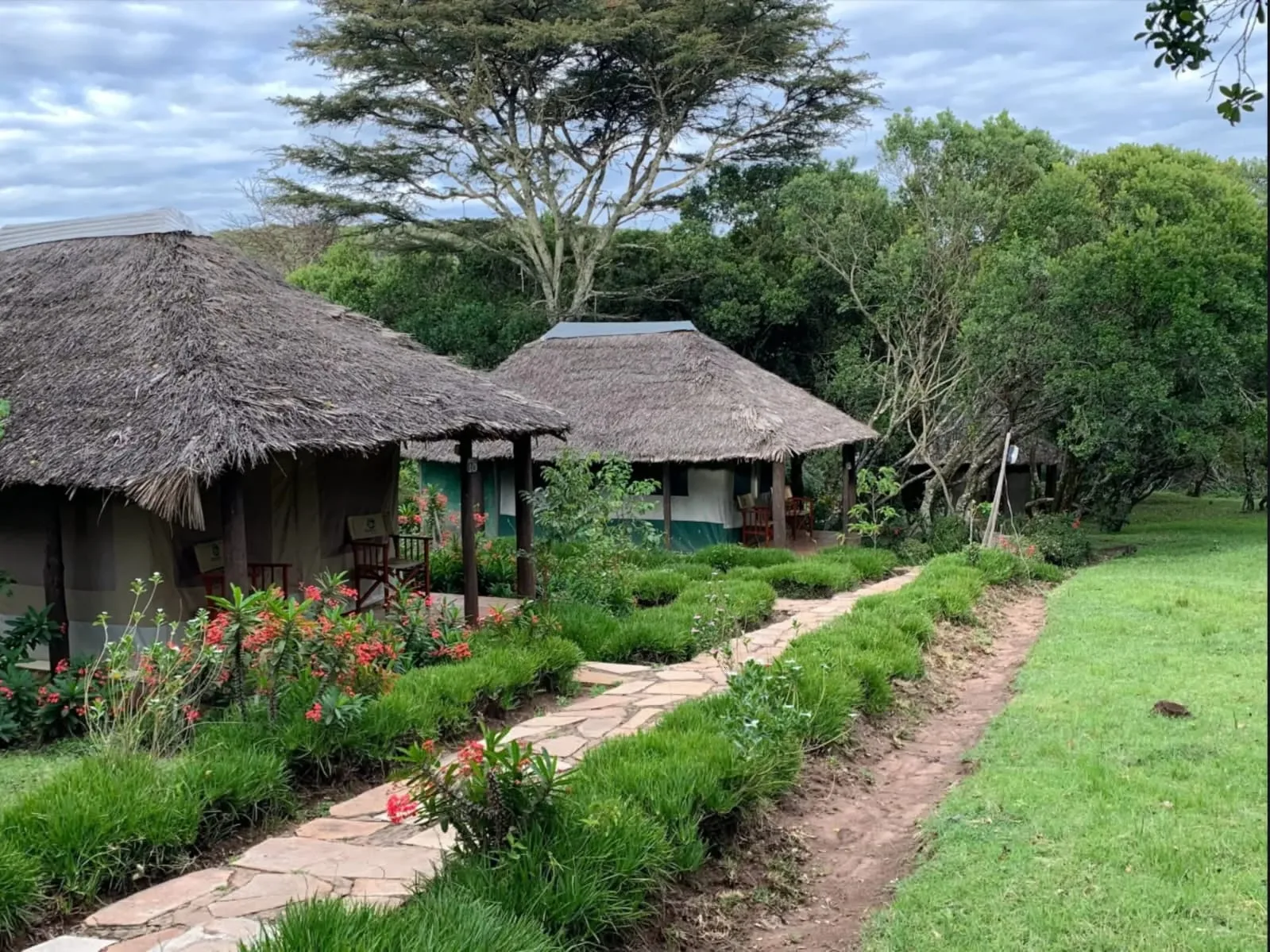
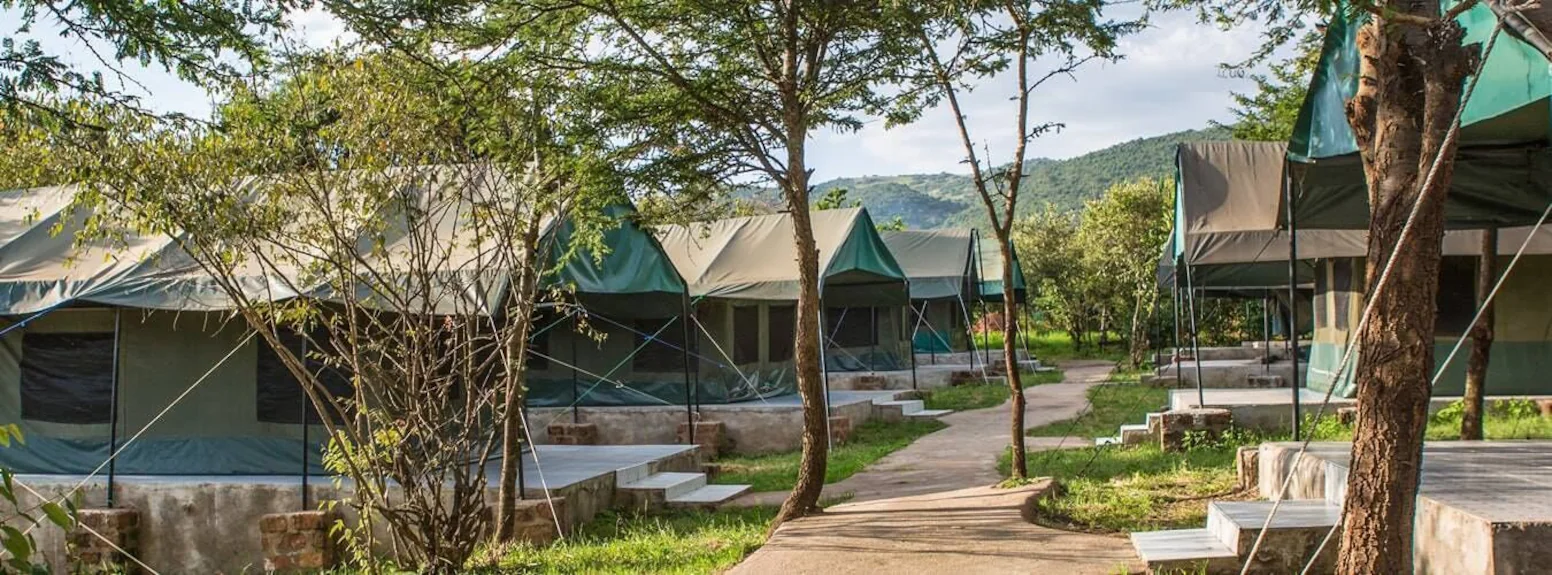
Essential (Budget)
-
Comfort (Mid-range)
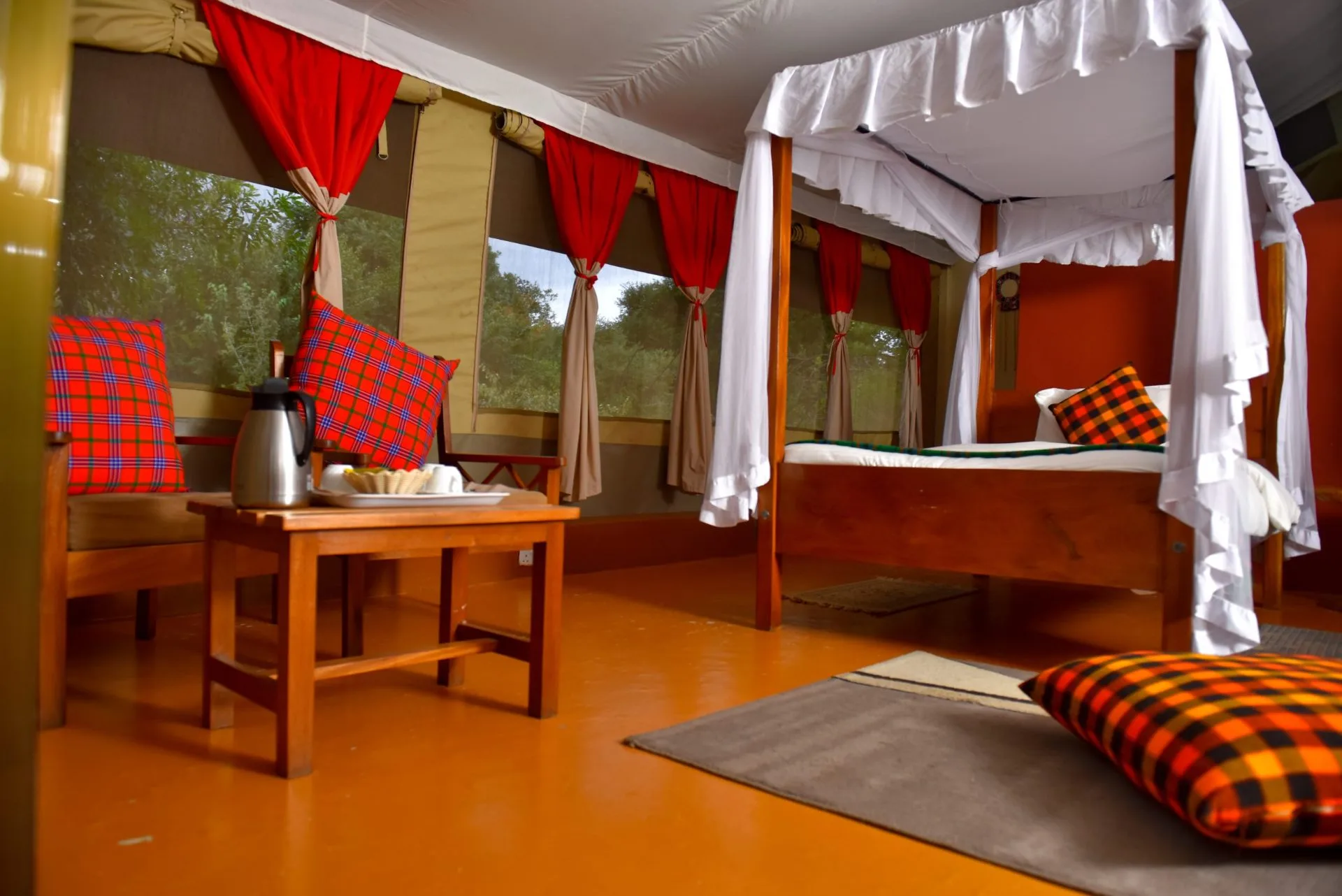
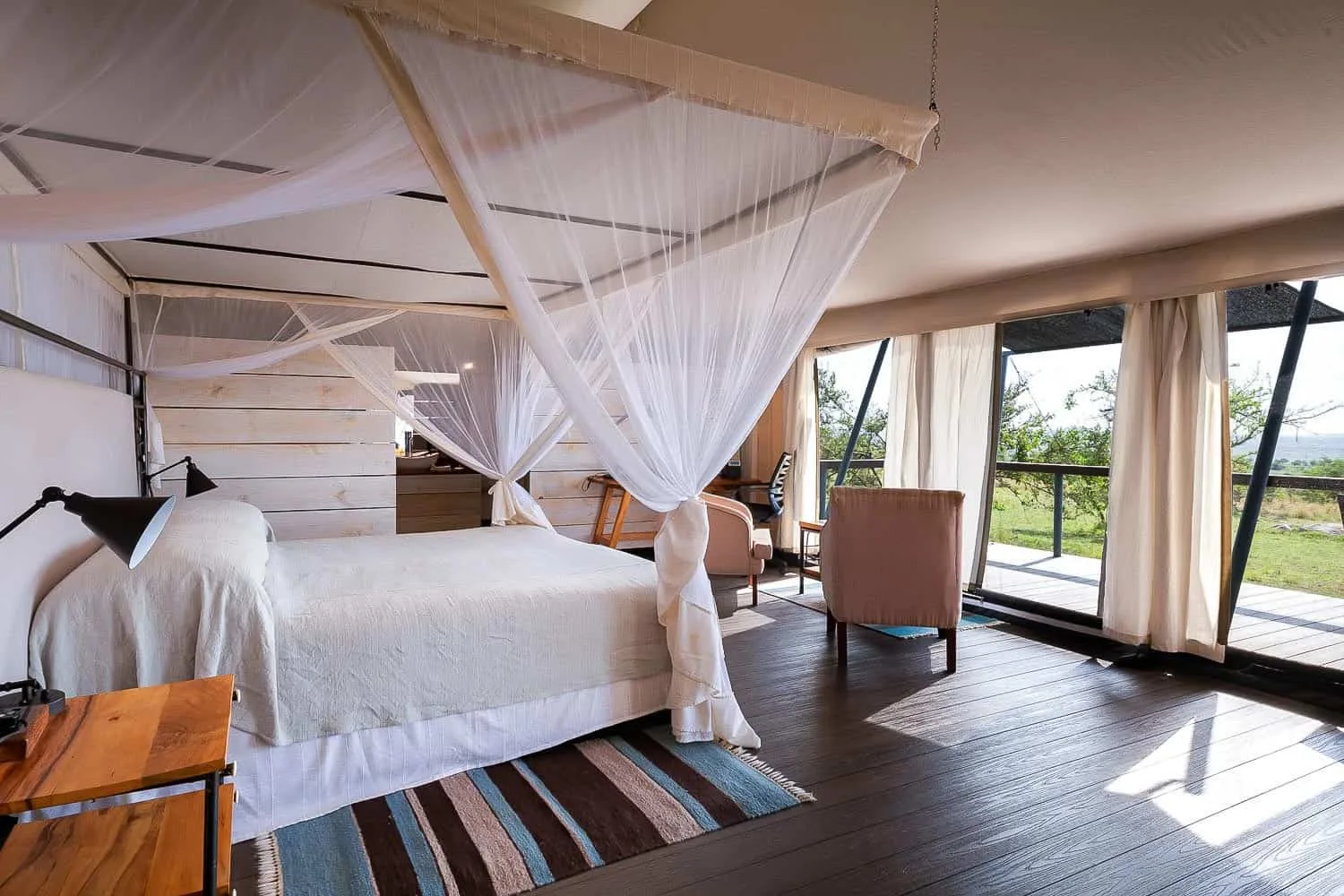
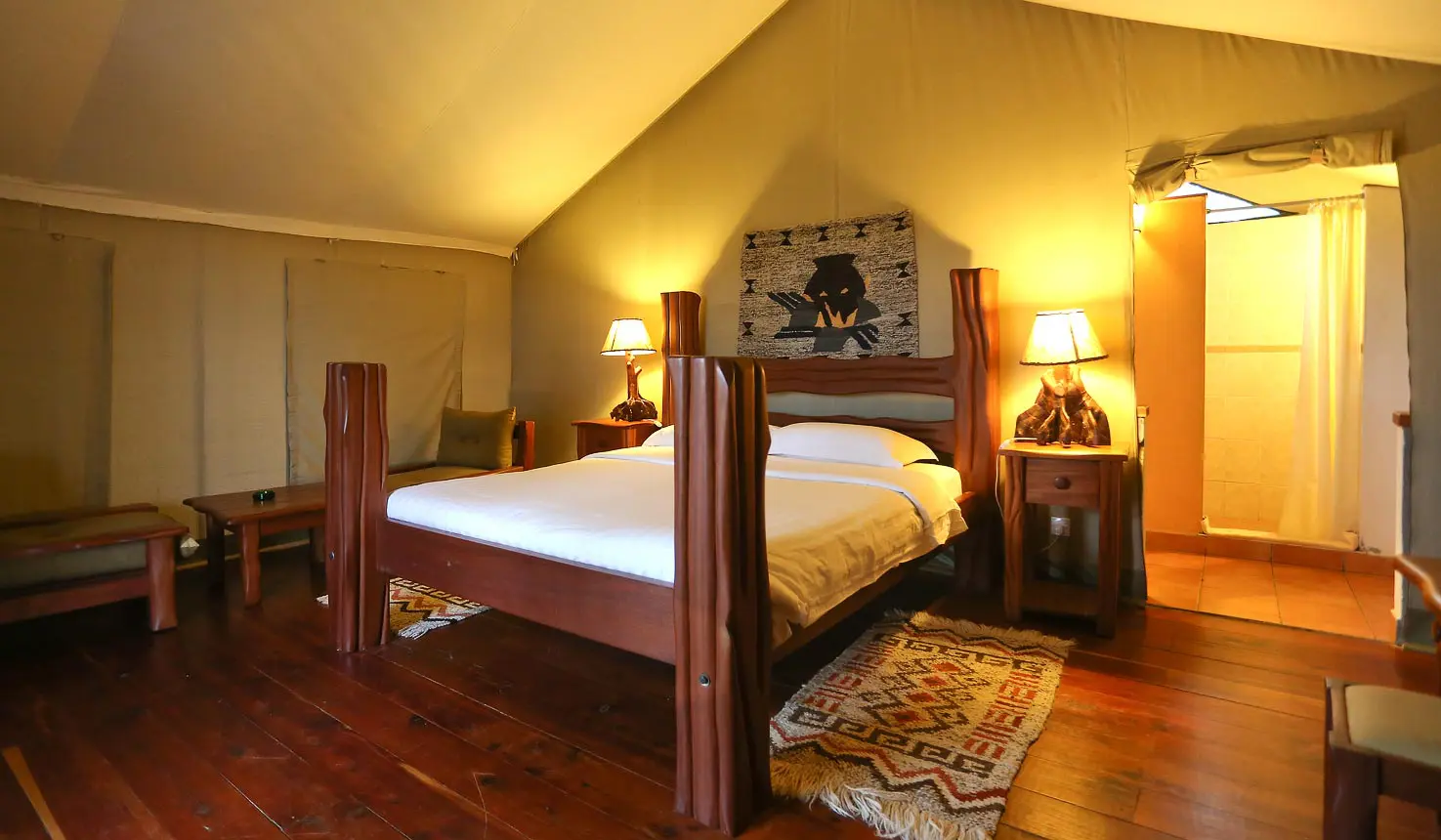
-
Premium (Luxury)
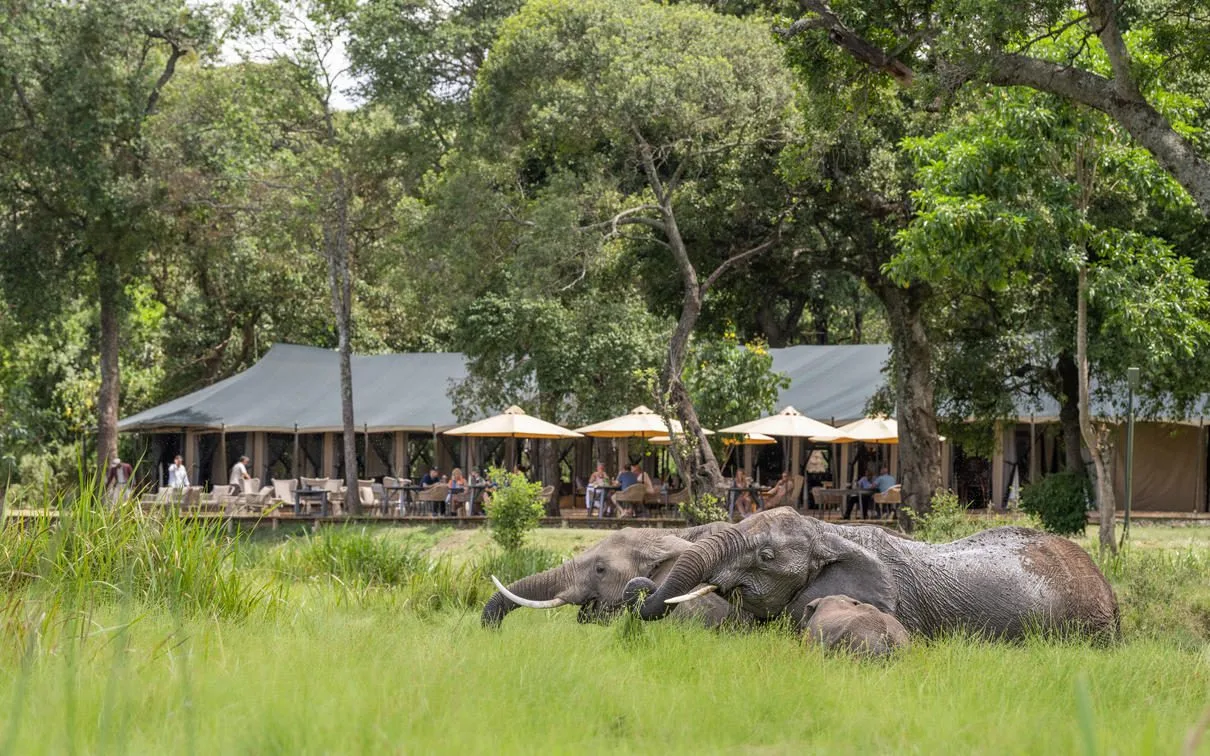
-
Signature (High-end)
-
Day 2: Full-Day Masai Mara Family Safari – Lions, Cheetahs, Elephants & Plains Game - Main destination
- Masai Mara National Reserve
- Meals
- Breakfast, Lunch, Dinner
Wake for your first complete day in the Masai Mara. The schedule should be tailored to the children, and families generally have two good options.
Option 1: Morning and Afternoon Game Drives
This option works especially well for younger children. Take a morning drive when wildlife is active, then return to the lodge around midday for:
- Lunch
- Swimming
- Naps
- Rest
- Reading
- Games
Head out again in the late afternoon. This schedule reduces fatigue.
Option 2: Full-Day Game Drive
Families with older children and teenagers may enjoy a full-day wildlife drive with a packed lunch. This allows exploration of more distant parts of the Mara. A private vehicle makes the full-day safari much more manageable because the guide can stop whenever necessary.
Lions of the Masai Mara
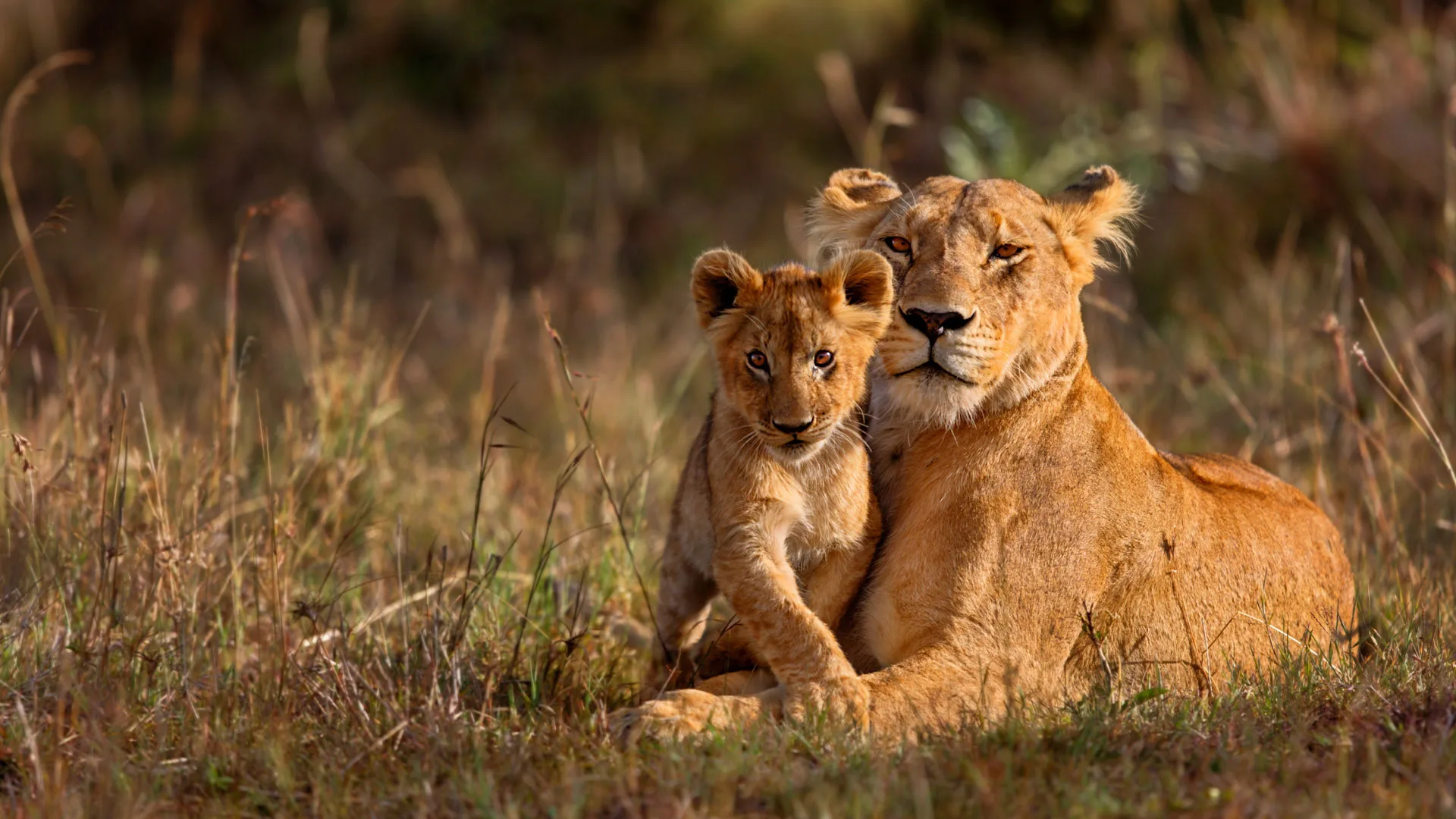
The Masai Mara is one of Kenya’s best lion destinations. You may encounter:
- Adult males
- Females
- Cubs
- Lions resting
- Lions walking
- Pride interactions
- Feeding
- Hunting preparation
Sightings cannot be guaranteed. Children can learn about the difference between:
- A pride
- A coalition
- Cubs
- Sub-adults
- Territorial males
Cheetahs
Cheetahs are another family favorite, and the guide can explain the difference between cheetahs and leopards. Children can learn to identify a cheetah by:
- Slender body
- Small rounded head
- Black facial tear marks
- Long legs
- Open-plains habitat
Cheetahs may be found:
- Resting
- Walking
- Watching gazelles
- Using termite mounds as lookouts
Leopards
Leopards are much more secretive, and finding one may require patience. They often use:
- Trees
- Riverine woodland
- Dense vegetation
- Drainage lines
Children can learn that leopards are powerful climbers and often use trees for safety and resting.
Elephants
A long elephant sighting is especially good for families because elephants constantly interact. Children may watch:
- Calves playing
- Adults feeding
- Elephants touching each other
- Dust bathing
- Protective mothers
- Herd movement
Buffaloes
Large buffalo herds may be encountered across the grasslands. Children can learn why buffaloes are considered one of Africa’s traditional Big Five.
Plains Wildlife
The Mara supports huge numbers of herbivores, and children can be encouraged to identify different species themselves. Possible sightings include: Wildebeest, Plains zebra, Topi, Hartebeest, Eland, Impala, Waterbuck, Grant’s gazelle, Thomson’s gazelle, Warthog.
Spotted Hyenas
Hyenas are often misunderstood. Your guide can explain that they are skilled hunters with complex family groups. Possible sightings include:
- Hyenas walking
- Feeding
- Resting
- Playing
- Interacting with lions
Picnic Lunch with Children
If doing a full-day drive, the family can enjoy a packed lunch at an approved picnic site. Children should remain close to adults and follow the guide’s instructions. A picnic in the middle of a safari landscape often becomes one of the most memorable family meals.
Evening at the Lodge
Return in the afternoon or evening, and allow children time to relax before dinner.
Destination: Masai Mara National Reserve
Main activity: Flexible full-day family safari
Safari highlights: Lions, cheetahs, elephants, buffaloes and plains wildlife
Meals: Breakfast, lunch and dinner
Accommodation: Same family-friendly Mara lodge or camp
Where you stay
-
Day 3: Flexible Masai Mara Family Day – Wildlife, Great Migration & Relaxation - Main destination
- Masai Mara National Reserve
- Meals
- Breakfast, Lunch, Dinner
The second full Mara day is deliberately flexible. By Day 3, parents usually understand how well the children tolerate game drives, so the family can choose the most suitable pace.
Option 1: Another Full Wildlife Day
Older children and teenagers may want to continue exploring deeply. Search for: Leopards, Lions, Cheetahs, Elephants, Hyenas, Giraffes, Wildebeest.
Option 2: Short Morning Drive and Long Lodge Break
For younger children, take a shorter early drive, then return for:
- Late breakfast
- Pool time
- Rest
- Lunch
- Games
Then enjoy another short afternoon drive. This is often the best family balance.
Great Wildebeest Migration with Children
If your safari takes place during the broader migration period, the family may encounter large concentrations of wildebeest and zebras. The Masai Mara is traditionally associated with significant migration activity during approximately July through October. However, actual movements depend on rainfall and herd locations are never guaranteed. Children may be amazed by: Thousands of wildebeest, Zebras moving with the herds, Dust clouds, Lions watching prey, Hyenas following herds.
Should Families Wait for River Crossings?
This depends heavily on the children’s ages. Mara River crossings can involve long periods of waiting, as wildebeest may gather near the river and then do nothing for hours, and younger children can become bored or uncomfortable. Crossings are never guaranteed, and they can also involve:
- Drowning
- Crocodile attacks
- Injured animals
- Predator activity
Parents with sensitive children may prefer not to focus heavily on dramatic crossings. A good family guide can prioritize the overall migration experience without forcing children to remain for graphic wildlife scenes.
Optional Maasai Cultural Experience
A responsible Maasai cultural visit can be educational for children. They may learn about:
- Cattle
- Goats
- Traditional housing
- Clothing
- Language
- Family life
- Schooling
- Community structure
- Conservation
Parents should choose visits that are respectful and beneficial to local participants.
Create a Family Safari Journal
Children can record:
- Animals seen
- Favorite sighting
- Interesting facts
- Drawings
- New words
- Questions for the guide
Older children can also take photographs and create a digital travel diary.
Pool Time
If your accommodation has a swimming pool, Day 3 is ideal for allowing children significant free time. Safari should feel like a holiday rather than a wildlife examination.
Destination: Masai Mara ecosystem
Main activities: Flexible wildlife viewing, relaxation and optional cultural experience
Safari highlights: Big cats, migration possibilities and child-friendly pacing
Meals: Breakfast, lunch and dinner
Accommodation: Same family-friendly Mara lodge or camp
Where you stay
-
Day 4: Masai Mara to Lake Nakuru – Rhino & Giraffe Safari - Main destination
- Masai Mara National Reserve
- Meals
- Breakfast, Lunch, Dinner
After breakfast, check out and begin traveling toward Lake Nakuru National Park. Today changes both the landscape and the wildlife focus, as the open grasslands of the Mara gradually give way to the greener environments of the Great Rift Valley. Regular comfort stops can be arranged for children. Parents may want to carry:
- Snacks
- Water
- Books
- Offline games
- Tablets
- Headphones
- Travel pillows
Arrive in the Lake Nakuru region during the afternoon, enter the park and begin your game drive.
Why Children Often Love Lake Nakuru
Lake Nakuru is more compact than the Masai Mara, so wildlife viewing can feel more concentrated. The park also adds animals that children may not have seen previously. The biggest highlight is the rhinoceros, although sightings cannot be guaranteed.
White Rhinoceros
White rhinos are mainly grazers, and children can identify them by their broad mouths. They often feed in open grassland. Possible sightings include:
- Adults
- Mothers with calves
- Small groups
Black Rhinoceros
Black rhinos are browsers. Their upper lip is more pointed and adapted to feeding on shrubs, and they often use thicker vegetation and may be harder to find.
Explaining Rhino Conservation to Children
A safari provides an excellent opportunity to introduce conservation without making the subject frightening. Children can learn:
- Why rhinos need protection
- Why wildlife reserves matter
- How rangers help animals
- Why people should never buy wildlife products
- How responsible tourism can contribute to conservation
Rothschild’s Giraffes
Lake Nakuru is also associated with Rothschild’s giraffes. Children who saw Masai giraffes in the Mara can compare the coat patterns, which can become a simple wildlife identification challenge.
Flamingos and Birds
Lake Nakuru is historically famous for flamingos, although numbers vary according to ecological conditions. Children may also see: Pelicans, Storks, Herons, Egrets, Fish eagles, Kingfishers.
Colorful birds can keep children interested between large-animal sightings.
Baboons and Monkeys
Primates often attract children’s attention because their behavior can seem familiar. Possible sightings include:
- Olive baboons
- Vervet monkeys
Children should never feed monkeys, as food encourages dangerous behavior and can harm wildlife.
Buffaloes, Lions and Other Wildlife
Possible additional sightings include: Buffaloes, Zebras, Waterbucks, Warthogs, Lions, Leopards, Hippos.
Proceed to your family-friendly lodge for dinner.
Destination: Lake Nakuru National Park
Main activities: Masai Mara–Lake Nakuru transfer and afternoon wildlife safari
Family highlights: Rhinos, giraffes, flamingos, monkeys and Rift Valley scenery
Meals: Breakfast, lunch and dinner
Accommodation: Family-friendly lodge in or near Lake Nakuru
Where you stay
-
Day 5: Lake Nakuru to Amboseli – Scenic Family Transfer to Elephant Country - Main destination
- Masai Mara National Reserve
- Meals
- Breakfast, Lunch, Dinner
After breakfast, check out and begin the journey toward Amboseli National Park. This is one of the longer road sectors, and a private family vehicle makes the journey easier because stops can be arranged as required. Depending on the route, you travel through or around Nairobi before continuing southeast. Parents should prepare children for a substantial travel day. The guide can break the drive with:
- Bathroom stops
- Refreshments
- Lunch
- Stretching
As the family approaches southern Kenya, the landscape becomes increasingly dry. When conditions are clear, the enormous shape of Mount Kilimanjaro may appear on the horizon, although views cannot be guaranteed. Children are often surprised to learn that the mountain is actually across the border in Tanzania.
Arrive at your lodge or camp during the afternoon. If the family still has energy, take a short introductory game drive. Otherwise, enjoy the lodge and begin wildlife viewing the next morning.
First Amboseli Elephants
If you enter the park, elephants may appear quickly, as Amboseli is one of Kenya’s most famous elephant destinations. Children may see:
- Mothers
- Calves
- Large bulls
- Elephants walking
- Feeding
- Drinking
- Dust bathing
Return to accommodation for dinner.
Destination: Amboseli National Park
Main activities: Lake Nakuru–Amboseli transfer and optional afternoon game drive
Family highlights: First elephants and possible Kilimanjaro views
Meals: Breakfast, lunch and dinner
Accommodation: Family-friendly lodge or tented camp in or around Amboseli
Where you stay
-
Day 6: Full-Day Amboseli Family Safari – Elephants, Wetlands & Mount Kilimanjaro - Main destination
- Masai Mara National Reserve
- Meals
- Breakfast, Lunch, Dinner
Wake early for your first full Amboseli day. The family can choose between split drives and a full-day safari. For younger children, separate morning and afternoon drives are generally more comfortable.
Mount Kilimanjaro for Children
When visible, Kilimanjaro dominates the skyline. Your guide can explain:
- It is Africa’s highest mountain
- It is located in Tanzania
- It is visible from Kenya
- It is volcanic
- Its upper slopes can appear snow-capped
- Weather affects visibility
This is an excellent geography lesson in a real landscape, although a clear view can never be guaranteed.
Elephant Families
Amboseli offers some of the best opportunities for children to understand elephant family life. A herd is often led by an experienced female called the matriarch. Children may observe:
- Calves staying close to mothers
- Young elephants playing
- Adults protecting calves
- Elephants touching trunks
- Family groups feeding
- Elephants moving toward water
The guide can explain how elephant families resemble extended family networks.
Amboseli Wetlands
The wetlands provide a dramatic contrast with the dry plains. Possible wildlife includes: Elephants, Buffaloes, Hippos, Zebras, Wildebeest, Waterbirds.
Children may enjoy trying to count how many different species they can see at the same time.
Observation Hill
Observation Hill is particularly useful for families because it allows a break from sitting in the vehicle. At the designated location, visitors can climb to an elevated viewpoint, and children can stretch their legs while looking over:
- Wetlands
- Plains
- Seasonal lake areas
- Wildlife
- Distant hills
Parents should supervise younger children closely.
Lions and Hyenas
Amboseli supports predators. Possible sightings include: Lions, Spotted hyenas, Jackals, Occasional cheetahs.
Parents can tell the guide if younger children prefer to avoid graphic feeding or hunting scenes.
Birdwatching for Children
Amboseli’s wetlands support many colorful birds, and bird spotting can become a family competition. Possible sightings include: Pelicans, Herons, Egrets, Storks, Kingfishers, Secretary birds, Bustards, Eagles.
Midday Break
Return to the lodge if desired and enjoy:
- Lunch
- Swimming
- Rest
- Games
- Reading
Head back out later in the afternoon.
Destination: Amboseli National Park
Main activity: Flexible family game viewing
Family highlights: Elephants, Kilimanjaro, wetlands and Observation Hill
Meals: Breakfast, lunch and dinner
Accommodation: Same family-friendly Amboseli lodge or camp
Where you stay
-
Day 7: Flexible Amboseli Family Day – Wildlife, Relaxation & Conservation Learning - Main destination
- Masai Mara National Reserve
- Meals
- Breakfast, Lunch, Dinner
The final full safari day should not be over-scheduled. By now the children may have clear favorite animals and experiences. Ask them what they want to look for. The answer might be: Elephants, Lions, Giraffes, Baby animals, Birds, Zebras.
This allows children to feel involved in the safari rather than simply being passengers.
Option 1: Early Wildlife Drive
Leave early for another chance to see Kilimanjaro and search for elephants and predators while temperatures remain cooler, although neither views nor sightings can be guaranteed. Return for a late breakfast.
Option 2: Relaxed Family Morning
If everyone is tired, sleep later and enjoy:
- Breakfast
- Swimming
- Relaxation
- Lodge views
Then take a longer afternoon drive. Missing one sunrise does not ruin a family safari, and a well-rested child generally enjoys wildlife more than an exhausted one.
Learn More About Elephants
Amboseli is an ideal place to discuss:
- Elephant families
- Communication
- Habitat
- Water
- Migration
- Conservation
- Human-wildlife coexistence
Older children may be especially interested in how elephants shape ecosystems.
Photography for Children
Give children opportunities to photograph wildlife themselves. A smartphone or simple camera is enough. Encourage them to photograph:
- Favorite animal
- Family members on safari
- Landscapes
- Birds
- Sunset
- Kilimanjaro
Children often become more observant when they have their own photographic project.
Optional Maasai Cultural Experience
A responsible cultural experience may be arranged in the Amboseli region. Children can learn about:
- Cattle and goats
- Traditional homesteads
- Clothing
- Family roles
- School
- Language
- Conservation
- Contemporary Maasai life
The experience should be presented respectfully, and local people should not be treated as an attraction.
Final Family Safari Drive
Head out in the afternoon for the last substantial game drive. Look again for: Elephants, Buffaloes, Lions, Giraffes, Zebras, Wildebeest, Hyenas, Birds.
Enjoy the final evening light, then return to the lodge for dinner.
Destination: Amboseli National Park
Main activities: Flexible game drives, relaxation and optional cultural experience
Family highlights: Elephant behavior, Kilimanjaro, photography and final wildlife encounters
Meals: Breakfast, lunch and dinner
Accommodation: Same family-friendly Amboseli lodge or camp
Where you stay
-
Day 8: Amboseli to Nairobi – Final Morning & Departure - Main destination
- Masai Mara National Reserve
- Drive time
- Return transfer as outlined in the itinerary
- Meals
- Breakfast, Lunch
Wake for your final morning. Depending on the family’s energy and departure schedule, take a short game drive or enjoy a relaxed breakfast. Check out and begin the journey to Nairobi, with comfort stops arranged as needed. On arrival, transfer to:
- Jomo Kenyatta International Airport
- Nairobi hotel
- Wilson Airport
- Another agreed location
Families connecting with an international flight should allow a generous margin for road and city traffic. If the flight leaves early, adding a Nairobi overnight can reduce stress. Your arrival marks the end of the 8 Days Family Kenya Safari.
Destination: Nairobi
Main activity: Amboseli–Nairobi transfer
Meals: Breakfast and lunch depending on arrangements
Accommodation: Not included after safari unless requested
Best Safari Destinations for Families on This Itinerary
Masai Mara – Best for Big Cats
The abundance of visible wildlife helps maintain attention. Children can see: Lions, Cheetahs, Leopards, Elephants, Giraffes, Zebras, Wildebeest, Buffaloes.
Lake Nakuru – Best for Rhinos
The park’s relatively compact size can be useful for family game drives. Children can experience: Black rhinos, White rhinos, Rothschild’s giraffes, Flamingos, Baboons, Buffaloes, Birdlife.
Amboseli – Best for Elephants
Children often remember Amboseli’s elephants long after the safari ends. Amboseli is particularly memorable for:
- Elephant herds
- Kilimanjaro
- Wetlands
- Observation Hill
- Giraffes
- Buffaloes
- Lions
Best Age for a Kenya Family Safari
There is no universal perfect age, so the itinerary should be adapted to the child.
Traveling with Children Under Five
Very young children can travel, but planning must be especially careful. Parents should consider:
- Long driving time
- Heat
- Meal schedules
- Naps
- Medical care
- Malaria advice
- Lodge restrictions
- Game-drive tolerance
Shorter drives and family lodges become particularly important.
Children Ages 6–11
This is often an excellent safari age, and children often still find every sighting exciting. Children are generally old enough to:
- Recognize animals
- Ask questions
- Use binoculars
- Keep wildlife lists
- Enjoy several-hour game drives
Teenagers on Safari
Teenagers can usually manage longer drives, and allowing them to participate in choosing activities can improve engagement. They may enjoy:
- Photography
- Conservation discussions
- Great Migration
- Predator behavior
- Cultural experiences
- More advanced wildlife interpretation
Multi-Generational Family Safaris
Grandparents, parents and children can travel together. The main challenge is balancing different energy and mobility levels, and a private vehicle allows separate preferences to be managed more easily. Accommodation can be selected for:
- Minimal stairs
- Easy vehicle access
- Family suites
- Interconnecting rooms
- Short walking distances
Family Safari Accommodation
Accommodation can make or break a family safari, so parents should consider several factors beyond price.
Family Rooms
Exact configuration varies significantly. Possible layouts include:
- One large family room
- Two-bedroom suite
- Interconnecting rooms
- Family tent
- Villa
Swimming Pools
Pools can be extremely valuable because children can release energy between game drives. Parents should supervise children at all times, as wildlife lodges may not have conventional lifeguard systems.
Fenced vs Unfenced Camps
Some safari camps are unfenced, so wild animals may move through camp and guests may need an escort after dark. Families with younger children should understand the property’s safety procedures before booking. Children should never wander alone.
Child-Friendly Meals
Many lodges can provide simpler food, and parents should communicate dietary needs in advance. Possible choices include:
- Pasta
- Rice
- Potatoes
- Chicken
- Vegetables
- Fruit
- Sandwiches
Food Allergies
Provide detailed information before travel. Useful information includes:
- Exact allergen
- Severity
- Cross-contamination concerns
- Emergency medication
Carry essential medication with you rather than placing it only in checked luggage.
Snacks During Game Drives
Useful family snacks may include:
- Crackers
- Biscuits
- Energy bars
- Fruit where practical
- Nuts where appropriate
Do not feed wildlife. All rubbish should remain in the vehicle until it can be disposed of properly.
Toilets During Safari
Bathroom access is one of the most common family concerns. Facilities may be available at:
- Lodges
- Camps
- Park gates
- Visitor centers
- Picnic areas
They are not available everywhere, so parents should encourage children to use facilities before leaving the lodge.
Child Car Seats
Families requiring child seats should request them in advance. Availability and compatibility vary between safari vehicles, and the exact arrangement should be confirmed before travel rather than assumed.
Safari Safety for Children
Children should understand several simple rules:
- Listen to the guide.
- Stay inside the vehicle unless told it is safe to exit.
- Never feed animals.
- Never chase wildlife.
- Do not shout near animals.
- Do not wander around camps alone.
- Remain with adults after dark.
- Follow lodge escort rules.
Parents should reinforce these instructions throughout the safari.
Wildlife Around Lodges
Children may see animals around accommodation. Possible visitors can include: Monkeys, Baboons, Antelopes, Warthogs, Elephants, Other wildlife depending on location.
Wildlife should never be approached or fed.
Family Health Preparation
Before international travel, parents should obtain appropriate professional medical advice. Topics to discuss may include:
- Routine vaccinations
- Destination-specific advice
- Malaria prevention
- Children’s medications
- Allergies
- Motion sickness
- Travel insurance
Health recommendations change, so families should verify current official advice before departure.
Motion Sickness on Safari
Some children may experience motion sickness on:
- Curving roads
- Rough tracks
- Long transfers
Parents can prepare with medical advice and practical measures such as:
- Light meals
- Fresh air
- Front-facing seats where appropriate
- Rest stops
- Hydration
Sun Protection for Children
Kenya’s equatorial sun can be strong, so reapply sunscreen regularly. Pack:
- Hats
- Sunglasses
- High-SPF sunscreen
- Lightweight long sleeves
- Water
Insect Protection
Parents should use age-appropriate products and follow medical advice. Useful measures may include:
- Repellent
- Long sleeves
- Long trousers in evenings
- Mosquito nets where provided
Can Children See the Big Five?
This route provides opportunities for the traditional African Big Five, although no wildlife sighting is guaranteed:
- Lion
- Leopard
- Elephant
- Rhinoceros
- African buffalo
- Lion: Masai Mara provides strong opportunities.
- Leopard: Leopards occur but are elusive.
- Elephant: Amboseli is particularly strong.
- Rhinoceros: Lake Nakuru provides excellent opportunities.
- Buffalo: Buffaloes occur in all three safari areas.
Great Migration Family Safari
Families traveling during migration season may experience huge wildebeest and zebra herds, although herd locations can never be guaranteed. For older children, this can be one of the most exciting parts of the journey. Parents should remember that predator-prey interactions can be graphic, so tell your guide if you would prefer to avoid remaining at distressing scenes.
Family Hot-Air Balloon Safari
A balloon safari may appeal to older children and teenagers, and a flight cannot be guaranteed. However, age, height or safety restrictions may apply, so families should confirm the operator’s current rules before booking. Ballooning is usually charged separately.
Family Cultural Experiences
Cultural experiences can add educational depth when organized responsibly. Children may learn about:
- Language
- Livestock
- School life
- Housing
- Family structure
- Traditional knowledge
- Conservation
Parents should encourage respectful questions.
Wildlife Games for Children
Simple activities can make long drives easier. Try:
- Animal checklist: Mark every species seen.
- Bird color challenge: Look for birds of different colors.
- Safari alphabet: Find an animal or object for each letter.
- Photography challenge: Each child photographs five favorite animals.
- Ask the guide: Each child prepares three questions every day.
These activities can keep children engaged without distracting from the wilderness.
Family Wildlife Journals
A safari journal can include:
- Date
- Park
- Weather
- Animals seen
- Favorite moment
- New fact
- Drawing
- Photo notes
The journal becomes a lasting souvenir.
Family Photography Tips
Children do not need expensive equipment, as a smartphone or simple camera can be enough. Encourage them to:
- Keep the device steady
- Avoid shouting to make animals look up
- Wait for natural behavior
- Include landscape in some photos
- Take family photographs too
Where you stay
03 Rates
Safari rates 2027-2029
Indicative per person. Season, group size and lodge style change the total — your quotation confirms current rates.
-
Essential (Budget)
Essential (Budget)
Budget camps and lodges suit travelers who prioritize wildlife while keeping costs lower.
Great value camps
-
Comfort (Mid-range)
Comfort (Mid-range)
Mid-range tented camps and lodges balance comfort and price with private rooms or tents and en-suite facilities.
Quoted for your dates
-
Premium (Luxury)
Premium (Luxury)
Luxury camps and lodges focus on location, service and more intimate wildlife experiences.
Premium camps and lodges
-
Signature (High-end)
Signature (High-end)
Signature camps and lodges are the most exclusive stays — small, highly private properties with exceptional guiding and setting.
Exclusive signature stays
04 Activities
Safari activities
Game viewing is the core of this itinerary. Optional extras are quoted separately and depend on season, permits and availability. Individual species and river crossings are never guaranteed.
-
Included
Game drives
Scheduled wildlife drives in a 4x4 safari vehicle with a professional driver-guide.
View activity -

Included
Wildlife photography
Time in the field for landscape and wildlife photography. Sightings are never guaranteed.
View activity -
Optional
Optional extras
Balloon flights, cultural visits and other extras can be added when available and are quoted separately.
Additional information
Plan This Safari
Best Time for an 8 Days Family Kenya Safari
Kenya is a year-round wildlife destination. The best time depends partly on school holidays.
January to February
Often good for:
- General wildlife
- Relatively dry conditions
- Family travel outside northern summer holidays
March to May
The green season offers the following, although rain can make some roads more challenging:
- Lush landscapes
- Fewer vehicles
- Excellent birding
June
A very good transitional month. Wildlife viewing improves as conditions dry.
July to August
These months are popular because of:
- School holidays
- Dry-season wildlife
- Possible migration activity
However, you should expect the following:
- Visitor numbers are higher
- Prices may be higher
- Family rooms can fill quickly
September to October
Excellent for wildlife and possible migration activity. These months can suit families with flexible school schedules.
November
Short rains refresh the landscape. Visitor numbers may be lower.
December
Popular for Christmas holidays. Festive periods can sell out early.
Budget 8 Days Family Kenya Safari
Families can often achieve good per-person value on a budget version because vehicle costs are shared among several family members. A budget version can use:
- Permanent tented camps
- Family rooms
- Road transport
- Practical accommodation
- Private vehicle shared by the family
Mid-Range Family Safari
Mid-range is one of the most popular family categories. Properties may offer:
- Family rooms
- Ensuite bathrooms
- Swimming pools
- Restaurants
- Comfortable beds
- Electricity
- Good park access
Luxury Family Safari
Luxury family travel may include:
- Family suites
- Villas
- Private vehicle
- Fly-in transfers
- Premium lodges
- Children’s activities at selected camps
- Private dining
- Swimming pools
Not every luxury property accepts young children, so age policies must be checked.
Fly-In Family Safari
Selected flights can replace long road transfers. Benefits include:
- Less driving
- Reduced fatigue
- More time at lodges
- More wildlife time
Families must also consider:
- Small aircraft
- Baggage restrictions
- Fixed schedules
- Child fares
Road Family Safari
A private road safari has advantages too, although the best choice depends on the children and budget. Families benefit from:
- Flexible breaks
- More luggage flexibility
- One guide throughout
- Ability to stop whenever necessary
8 Days Family Kenya Safari Cost
The total cost depends on:
- Number of adults
- Number of children
- Children’s ages
- Accommodation
- Family-room configuration
- Travel season
- Safari vehicle
- Park fees
- Domestic flights
- Optional activities
Children may qualify for reduced rates on certain services depending on age and the applicable policy. A detailed quotation should use the exact ages at the time of travel.
Typical Family Safari Inclusions
Depending on the final package, inclusions may include the following. Always refer to the final quotation.
- Private safari vehicle
- Professional driver-guide
- Seven nights’ accommodation
- Family rooms as specified
- Meals listed
- Park and reserve fees listed
- Game drives
- Drinking water in the safari vehicle
- Nairobi pickup
- Nairobi drop-off
- Applicable taxes
- Safari planning support
Typical Exclusions
Possible exclusions include:
- International flights
- Entry authorization costs
- Travel insurance
- Vaccinations
- Personal medical expenses
- Tips
- Alcoholic drinks
- Premium beverages
- Laundry
- Souvenirs
- Balloon safari
- Optional cultural visits
- Domestic flights unless specified
- Extra accommodation
Family Packing List
Pack practical clothing and family essentials.
Clothing
- Lightweight shirts
- Long trousers
- Long-sleeved tops
- Warm fleece
- Light jacket
- Comfortable shoes
- Sandals
- Hats
Wildlife Equipment
- Binoculars
- Camera
- Small children’s binoculars
- Wildlife book or checklist
Health & Comfort
- Sunscreen
- Insect repellent
- Personal medication
- Motion sickness supplies if needed
- Small first-aid kit
- Hand sanitizer
Entertainment
- Books
- Coloring materials
- Offline games
- Tablet
- Headphones
- Safari journal
Travel Items
- Power bank
- Chargers
- Reusable water bottles
- Travel documents
- Copies of passports and insurance information
Can the 8 Days Family Kenya Safari Be Customized?
Yes. The 8 Days Family Kenya Safari is fully customizable. Possible changes include shorter drives, more pool time, Lake Naivasha, reduced long road transfers, domestic flights, more Masai Mara nights, Diani Beach, fenced lodges only, family villas, upgraded nights, educational experiences, cultural visits and a private conservancy. The exact ages of the children should guide the final itinerary.
Add Lake Naivasha for Families
Lake Naivasha can provide a useful break from conventional game drives, and it works best with an additional night. Possible experiences include:
- Boat trip
- Birdwatching
- Hippo viewing
- Relaxation
Add Diani Beach
A family safari-and-beach holiday is one of Kenya’s strongest combinations. A common extension is 8 Days Family Kenya Safari + 4 or 5 Nights Diani Beach. Parents can enjoy a slower pace after the safari, while children can enjoy:
- Beach
- Swimming pool
- Ocean
- Family resort
- Optional marine activities
Add Zanzibar
Families can also continue to Zanzibar, and flight connections should be planned around the final itinerary. Possible experiences include:
- Beach resort
- Swimming
- Snorkeling
- Stone Town
- Spice experiences
Add Tanzania
A longer family journey can include the destinations below. However, younger children may enjoy spending more time in fewer destinations rather than adding another country.
- Serengeti
- Ngorongoro
- Tarangire
- Lake Manyara
Who Should Choose This Safari?
The 8 Days Family Kenya Safari is particularly suitable for:
- Parents with school-age children
- Families with teenagers
- Multi-generational groups
- Grandparents with grandchildren
- First-time African safari families
- Wildlife-loving children
- Families wanting Big Five opportunities
- Families needing a private vehicle
- Families wanting safari and beach
- Parents seeking an educational holiday
- Families wanting flexible pacing
Why Eight Days Works So Well for Families
A family safari should not feel rushed. If every day involves checking out, driving for hours and checking into another lodge, children can quickly become tired. Eight days provides more breathing space. Three nights in the Masai Mara gives children time to become familiar with safari. They learn how to spot animals, they learn the guide’s style, and they begin recognizing species themselves.
Lake Nakuru then changes the experience with opportunities to look for rhinos, giraffes and birds. Amboseli gives the safari another new identity through elephants and the setting of Mount Kilimanjaro. The result is a journey that continues changing without becoming chaotic.
There is time to swim, time to sleep and time to ask questions. There is time to remain with an elephant family when one is encountered, and time to stop looking for animals and simply enjoy being together. That balance is what makes a family safari successful.
Why the Guide Matters So Much on a Family Safari
Children often remember the guide almost as clearly as the animals. A good family guide does much more than drive. The guide can:
- Turn animal tracking into a game
- Explain wildlife simply
- Answer endless questions
- Adapt the schedule
- Recognize when children need a break
- Help with photography
- Make conservation interesting
- Keep the family safe
- Create excitement without exaggeration
The right guide can help transform a safari into one of the most educational and enjoyable family holidays you have ever taken.
Book Your 8 Days Family Kenya Safari
The 8 Days Family Kenya Safari combines wildlife, adventure, learning and valuable family time in one carefully paced journey through three of Kenya’s most rewarding safari regions. Begin in the Masai Mara, where children can search the plains for lions, cheetahs, elephants, giraffes, zebras, wildebeest and buffaloes. Spend several days learning how predators hunt, how elephant families communicate, why giraffes are built the way they are and how grazing animals survive in one of Africa’s great ecosystems.
Continue into the Great Rift Valley and explore Lake Nakuru, where black and white rhinoceros are part of one of Africa’s most important conservation stories. Look for Rothschild’s giraffes, monkeys, buffaloes, flamingos and other birdlife. Then travel to Amboseli, where enormous elephant families may move between wetlands and open plains, with Mount Kilimanjaro behind the park when the sky is clear.
Allow children to climb Observation Hill, photograph wildlife, use binoculars, keep safari journals and ask the guide questions. Between wildlife experiences, relax at carefully selected family-friendly lodges with appropriate rooms, meals and facilities.
The itinerary can be completely adapted to your family. Choose budget, mid-range or luxury accommodation. Use a private road vehicle or replace long transfers with flights. Select lodges with swimming pools, family rooms or fenced grounds. Add cultural activities, another safari night or several relaxing days at Diani Beach.
For families seeking lions, rhinos, elephants, giraffes, big landscapes, conservation learning and an adventure that both adults and children can genuinely enjoy, the 8 Days Family Kenya Safari offers an excellent introduction to Kenya. Individual species, river crossings and mountain views can never be guaranteed.
Planning Questions
Frequently Asked Questions
Is Kenya good for a family safari?
Yes. Kenya has outstanding wildlife, established safari infrastructure and a wide choice of family accommodation.
Is eight days too long for children?
Not usually when the itinerary is well paced. Eight days can actually be easier than a shorter rushed safari because there is more time for breaks.
What age is best for a Kenya safari?
School-age children and teenagers generally find safari particularly rewarding, but younger children can also travel with careful planning.
Can toddlers go on safari?
Yes in some cases, but lodge restrictions, health considerations and long drives require additional planning.
Should families have a private vehicle?
It is strongly recommended because it provides flexibility.
Can game drives be shorter?
Yes. Private safaris can be adapted to the family’s energy levels.
Are there swimming pools?
Many family-friendly safari lodges have pools.
Are family rooms available?
Yes. Family rooms, suites and interconnecting rooms are available at selected properties.
Can children see lions?
Yes. Masai Mara provides excellent opportunities.
Can children see elephants?
Yes. Amboseli is particularly famous for elephants.
Can children see rhinos?
Yes. Lake Nakuru provides strong rhino opportunities.
Can children see the Big Five?
The itinerary provides opportunities for all five, but wildlife cannot be guaranteed.
Can we see the Great Migration?
Potentially, if the travel dates coincide with migration activity.
Are river crossings suitable for young children?
They can involve long waits and graphic wildlife scenes, so parents should decide according to the child.
Can children join a hot-air balloon safari?
Restrictions vary by operator. Exact age and height rules should be confirmed before booking.
Are there toilets during game drives?
Facilities exist at selected lodges, gates and picnic areas but not everywhere.
Can children get special meals?
Many lodges can prepare simpler meals with advance notice.
Can food allergies be accommodated?
Often yes, provided detailed information is supplied before arrival.
Are camps fenced?
Some are fenced and others are not. Families should check before booking.
Can we choose only fenced accommodation?
Yes, where suitable properties are available.
Is travel insurance necessary?
Comprehensive family travel insurance is strongly recommended.
Can we fly between parks?
Yes. Selected domestic flights can be added.
Can we add a beach holiday?
Yes. Diani Beach is an excellent family extension.
05 Request Quote
Request Quote
Tell us your dates, group size, and preferred lodge style — we will send a tailored quote for this safari.
Want to extend your safari?
Add Amboseli, Diani Beach, Tanzania and Zanzibar, or gorilla trekking in Uganda or Rwanda — we tailor the journey to your dates.