
3 DAYS / 2 NIGHTS
3 Days Masai Mara Fly-in Safari
Plan a 3 Days Masai Mara Fly-in Safari with expert guides, game drives and carefully chosen camps. Request a quote.
- Wildlife SafariPrivate Journey
- Private Safari4x4 Vehicle
- Expert GuideEnglish Speaking
- All MealsBreakfast, Lunch, Dinner
- 24/7 SupportWe're here to help
01 Overview
Safari Overview
- Duration3 days / 2 nights
- DestinationMasai Mara
- Starts / endsNairobi
- Safari stylePrivate safari
- AccommodationEssential · Comfort · Premium · Signature
- Best forWildlife viewing, photography
3 Days Masai Mara Fly-in Safari – Luxury 3-Day Flying Safari from Nairobi
A 3 Days Masai Mara Fly-in Safari is one of the most efficient ways to experience Kenya’s legendary Masai Mara when you want to maximize wildlife-viewing time and minimize the long road journey between Nairobi and the reserve. Instead of spending much of the first and final days traveling overland, you fly from Nairobi to an airstrip in the greater Masai Mara ecosystem, where a safari vehicle from your lodge or camp meets you and transfers you directly into the wilderness.
The result is a compact but exceptionally rewarding safari. Within only three days and two nights, you can enjoy multiple wildlife drives across one of Africa’s most celebrated safari landscapes, search for lions, leopards and cheetahs, watch elephants and giraffes moving across the plains, and encounter large herds of zebras and antelopes. When seasonal conditions are favorable, you may also experience the wider spectacle of the Great Wildebeest Migration, although herd movements are never guaranteed.
A fly-in safari is particularly valuable because the Masai Mara is several hours from Nairobi by road. Flying substantially reduces transit time and allows the safari to feel less rushed. Depending on the selected flight and camp, you may leave Nairobi in the morning and be watching wildlife in the Mara before or around lunchtime. This makes the 3 Days Masai Mara Fly-in Safari ideal for travelers with limited time, honeymooners, luxury safari guests, older travelers who prefer to avoid long road transfers, families, photographers, business travelers adding a safari to a Nairobi trip and visitors combining Kenya with other regional destinations.
The itinerary can be arranged using carefully selected mid-range, luxury or high-end lodges and tented camps, including properties within the Masai Mara National Reserve or surrounding private conservancies. Your exact game-drive style, transfer arrangements and additional activities depend on the accommodation selected.
Why Choose a 3 Days Masai Mara Fly-in Safari?
The primary advantage of a fly-in safari is time. A conventional road safari from Nairobi to the Masai Mara requires several hours of driving each way. Although the road journey offers views of the Great Rift Valley and rural Kenya, travelers with only three days available may prefer to invest as much of that time as possible inside the safari ecosystem. Flying allows you to do exactly that. A typical fly-in arrangement can provide:
- Less time on the road.
- Faster access to wildlife areas.
- More relaxed first and final days.
- Additional game-drive opportunities.
- Comfortable transfers.
- Easier combination with other fly-in safari camps.
- Better suitability for luxury itineraries.
- Greater comfort for older travelers.
- Easier travel with children who dislike long road journeys.
For many travelers, the biggest benefit is psychological as much as logistical. Instead of spending the first day watching the hours pass on the road, you transition quickly from Nairobi to the African wilderness. You may leave the city after breakfast, board a light aircraft at Wilson Airport and soon look down on the changing landscapes of southern Kenya before landing on a remote airstrip surrounded by grassland. Within a short time of landing, you can be inside a safari vehicle watching wildlife.
What Is a Masai Mara Fly-in Safari?
A Masai Mara fly-in safari uses domestic light-aircraft flights to connect Nairobi with airstrips located throughout the greater Masai Mara ecosystem. The Mara does not rely on one large commercial airport. Instead, there are multiple smaller airstrips serving different sectors of the national reserve and surrounding conservancies. Your correct airstrip is selected according to your accommodation.
After landing, a representative or safari guide from the camp normally meets you. The transfer from the airstrip to the lodge is often conducted in an open or enclosed safari 4x4 and can immediately become a wildlife drive. This means the transition from aviation to safari is almost seamless.
Why Wilson Airport Is Commonly Used
Domestic safari flights typically operate from Wilson Airport rather than Jomo Kenyatta International Airport. Wilson is Nairobi’s principal hub for many domestic safari routes. Travelers arriving internationally through Jomo Kenyatta International Airport therefore usually require a road transfer between the two airports if connecting directly to a safari flight. Because Nairobi traffic can be unpredictable, adequate connection time must always be allowed. For this reason, travelers arriving on late international flights often spend one night in Nairobi before beginning the fly-in safari the following morning.
Fly-in Safari vs Road Safari
Both approaches are valid, but they serve different priorities.
Choose a Fly-in Safari If You Want:
- Maximum wildlife time.
- Less road travel.
- Higher comfort.
- A premium safari experience.
- Easier multi-camp combinations.
- A short but intensive safari.
- Convenient lodge-based game drives.
Choose a Road Safari If You Want:
- Lower overall transport cost.
- A private vehicle throughout the entire journey.
- Great Rift Valley road scenery.
- More flexibility with luggage.
- Easier roadside stops.
- A slower overland experience.
Neither option is inherently superior. The best choice depends on time, budget and travel style.
Itinerary
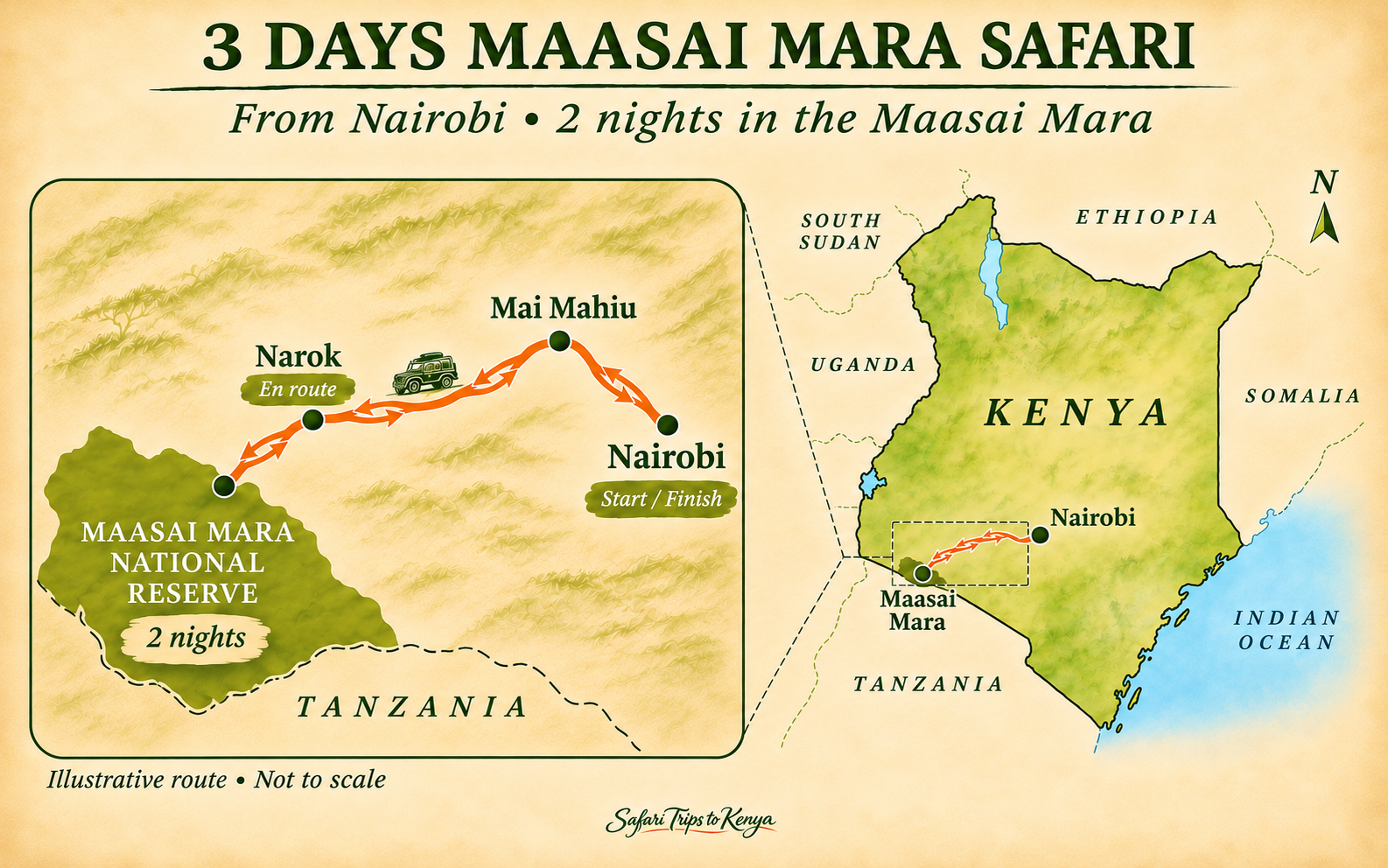
- Day 1:Nairobi, fly to Masai Mara, airstrip Transfer, afternoon Game Drive
- Day 2:Masai Mara Wildlife Safari
- Day 3:Morning Game Drive, fly Masai Mara to Nairobi
02 Itinerary
3 Days Masai Mara Fly-in Safari: Detailed Itinerary
Day 1: Nairobi – Fly to Masai Mara – Airstrip Transfer – Afternoon Game Drive - Main destination
- Masai Mara National Reserve
- Drive time
- Road transfer as outlined in the itinerary
- Meals
- Lunch, Dinner
Your 3 Days Masai Mara Fly-in Safari begins in Nairobi. Depending on your accommodation and flight schedule, you are collected from your Nairobi hotel and transferred to Wilson Airport. Travelers arriving from an international flight may require a separate transfer from Jomo Kenyatta International Airport to Wilson Airport. Because Nairobi traffic can vary significantly, transfer timing should always include a generous buffer.
On arrival at Wilson Airport, complete airline check-in formalities. Domestic safari airlines operate smaller aircraft than most international travelers are accustomed to, and luggage rules are therefore more restrictive. Soft-sided luggage is generally strongly recommended or required, and baggage weight limits apply according to the airline. Exact allowances must be confirmed for your flight.
Boarding Your Safari Flight
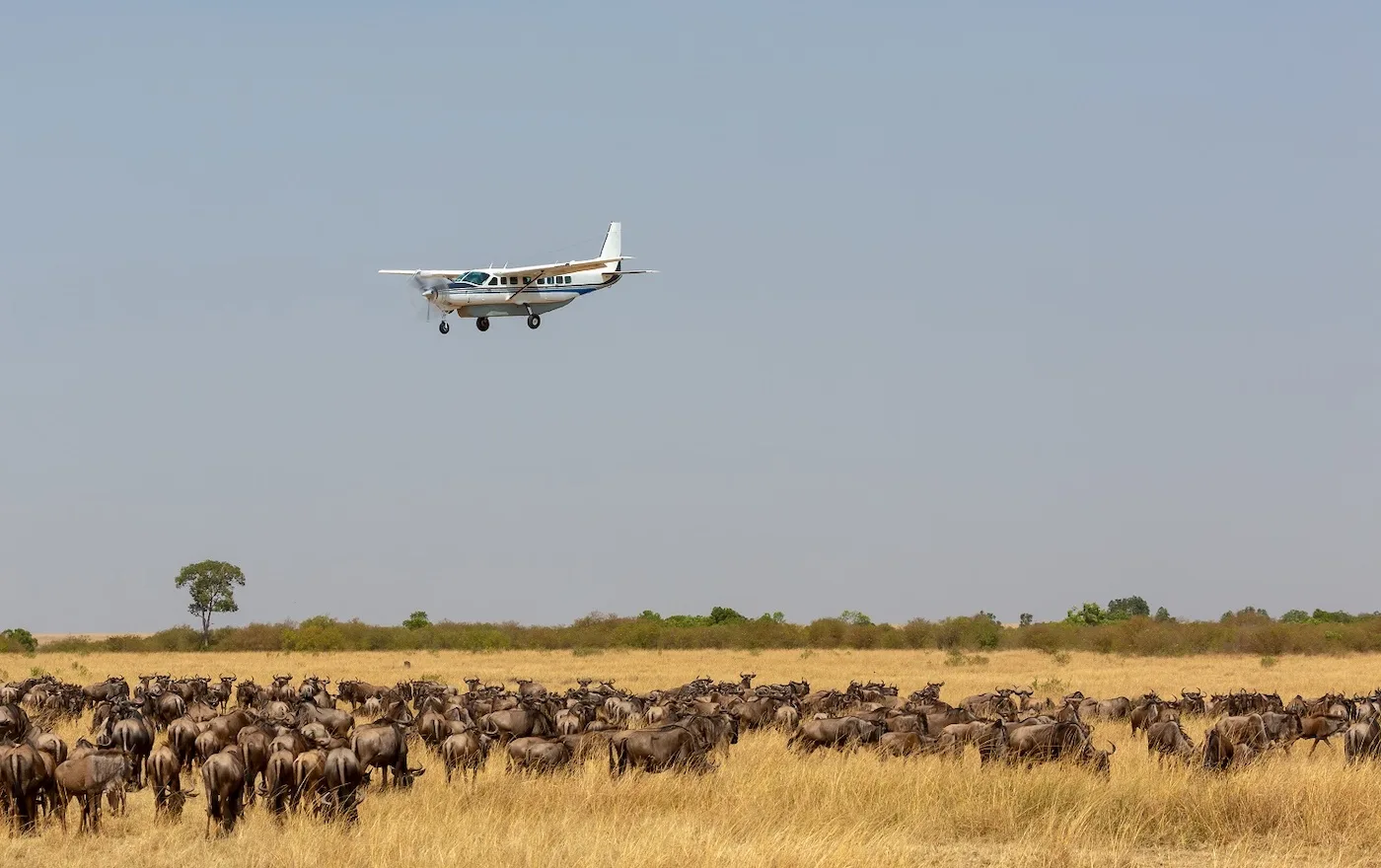
After check-in and boarding formalities, take off from Nairobi and fly toward the Masai Mara. The aircraft is generally a small turboprop or similar safari aircraft designed to serve remote airstrips. The flight itself is part of the experience: as Nairobi disappears behind you, the landscape becomes increasingly rural. Depending on visibility, route and seating position, aerial views may reveal:
- Farms.
- Rift Valley landscapes.
- Rivers.
- Hills.
- Open plains.
- Maasai pastoral areas.
- Wildlife country approaching the Mara.
Photography from the aircraft may be possible, although window reflections and flight conditions can affect image quality.
Landing in the Masai Mara
The transition into safari country becomes particularly memorable as the aircraft descends toward the Mara. Instead of a large airport terminal, you land on a remote airstrip surrounded by wilderness, and depending on location, wildlife may even be visible near the airstrip. Your camp guide or representative meets you on arrival. After luggage is loaded into the safari vehicle, begin the drive toward your lodge or tented camp. This transfer often doubles as your first wildlife experience.
Your First Masai Mara Wildlife Sightings
Almost immediately after leaving the airstrip, you may begin encountering wildlife. Possible early sightings include: Zebras, Wildebeests, Giraffes, Elephants, Gazelles, Topis, Warthogs, Buffaloes, Hyenas.
If you are lucky, your first predator sighting may occur before you even reach camp. The exact wildlife depends entirely on where animals are moving that day, and no sighting can be guaranteed.
Arrival at Your Masai Mara Camp
Reach your selected safari lodge or tented camp and complete check-in. Depending on flight time, you may arrive in time for:
- Breakfast.
- Brunch.
- Lunch.
- Light refreshments.
The camp team introduces you to the property and explains the daily safari schedule. You may also receive information about:
- Meal times.
- Game-drive departure times.
- Safety procedures.
- Lodge facilities.
- Optional activities.
- Nighttime escort arrangements.
After lunch, relax briefly before the afternoon safari.
Afternoon Game Drive
Later in the afternoon, meet your guide and set out for your first full Masai Mara game drive. The Mara is one of Africa’s most celebrated wildlife ecosystems because of the sheer diversity and visibility of animals. The landscape may include:
- Open grassland.
- Rolling plains.
- Acacia trees.
- Riverine woodland.
- Seasonal streams.
- Rocky areas.
- Marshes.
Your guide selects routes based on current wildlife activity rather than following a rigid circuit.
Searching for Lions
Lions are among the animals most strongly associated with the Masai Mara, and prides may occupy territories across the reserve and conservancies. During the afternoon, lions may be:
- Sleeping beneath shrubs.
- Resting in grass.
- Feeding.
- Grooming.
- Caring for cubs.
- Watching prey.
- Beginning to move as temperatures cool.
Lions spend a large part of the day conserving energy, so patience is important. A resting pride can suddenly become active as evening approaches.
Cheetahs
The Mara’s open plains provide excellent cheetah habitat. A cheetah may be seen:
- Sitting on a termite mound.
- Resting in grass.
- Walking through open plains.
- Watching gazelles.
- Traveling with cubs.
- Preparing to hunt.
Cheetahs depend heavily on clear visibility, so elevated positions help them scan surrounding terrain. Witnessing a hunt is possible but unpredictable, and a responsible guide never interferes with hunting behavior simply to improve a guest’s view.
Leopards
Leopards are more elusive than lions and cheetahs. They favor cover provided by:
- Riverine woodland.
- Dense bushes.
- Drainage lines.
- Trees.
Your guide searches carefully for subtle clues, which may include:
- Alarm calls.
- Impalas staring at vegetation.
- Baboons becoming agitated.
- A tail hanging from a branch.
- A carcass stored in a tree.
Seeing a leopard is often one of the greatest highlights of a Masai Mara safari, but it can never be guaranteed.
Elephants
Elephant families move widely through the Mara ecosystem. Depending on your location, you may see them:
- Feeding.
- Crossing open plains.
- Walking through woodland.
- Drinking.
- Dust bathing.
- Protecting calves.
Spend time observing herd behavior. Young calves often remain close to their mothers, while older juveniles may play or test social boundaries.
Buffaloes
African buffaloes are common in suitable parts of the ecosystem. They may occur in:
- Large herds.
- Smaller groups.
- Associations of older bulls.
Buffaloes are one of Africa’s Big Five and are important prey for large lion prides. Observing a large herd crossing the grassland can be impressive.
Giraffes
Masai giraffes are among the most graceful animals in the Mara. They may browse acacia trees or walk slowly across open landscapes, and late afternoon light can produce beautiful giraffe portraits and silhouettes. A wider environmental composition showing several giraffes against the savannah can often be more powerful than a close portrait.
Zebras and Wildebeests
Zebras and wildebeests are central to the Mara ecosystem. Outside migration season, resident animals remain present, and during periods when migratory herds enter the Mara, their numbers can become extraordinary. Large gatherings provide:
- Constant predator-prey interactions.
- Dramatic landscape scenes.
- Excellent photography.
- Intense feeding competition.
Sunset Safari
As the afternoon advances, temperatures begin to fall, predators become increasingly active and herbivores move toward evening feeding areas. The light becomes golden, making this one of the best photography periods of the day. Possible subjects include: Lions, Giraffe silhouettes, Elephants, Acacia trees, Plains filled with antelope, Dramatic skies.
Return to your lodge or camp according to reserve or conservancy regulations. Enjoy dinner and your first night in the Masai Mara.
Accommodation: Mid-range, luxury or high-end safari lodge/tented camp
Meals: Lunch and Dinner depending on flight and camp arrangement
Main Activities: Nairobi transfer, safari flight, airstrip transfer and afternoon game drive
Where you stay
- Essential (Budget)
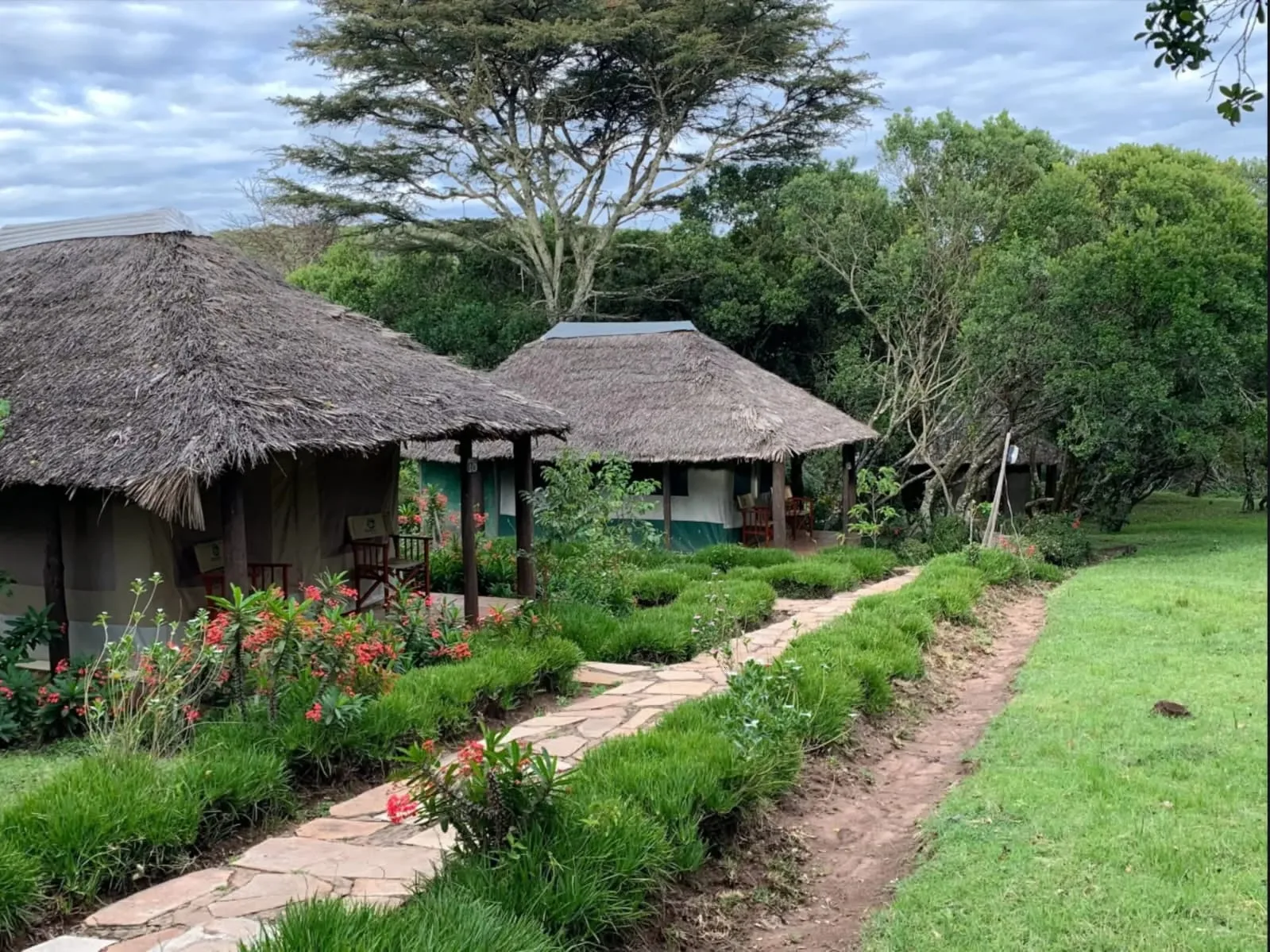
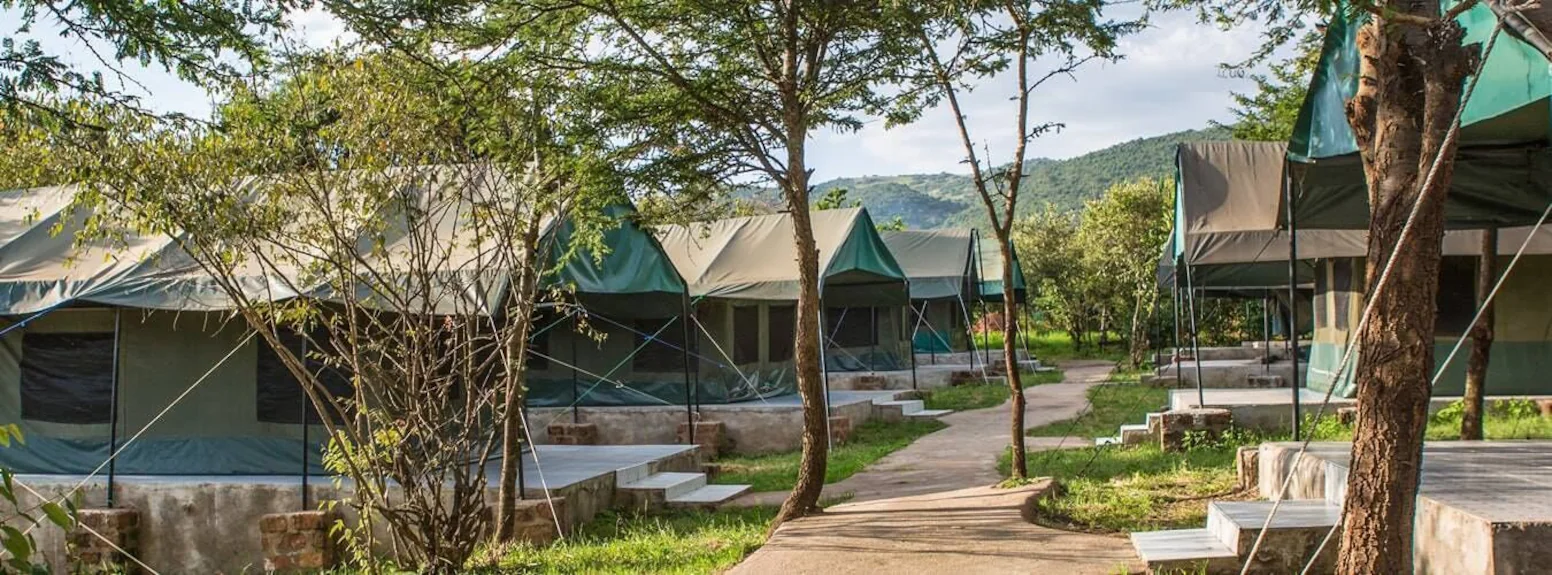
- Comfort (Mid-range)
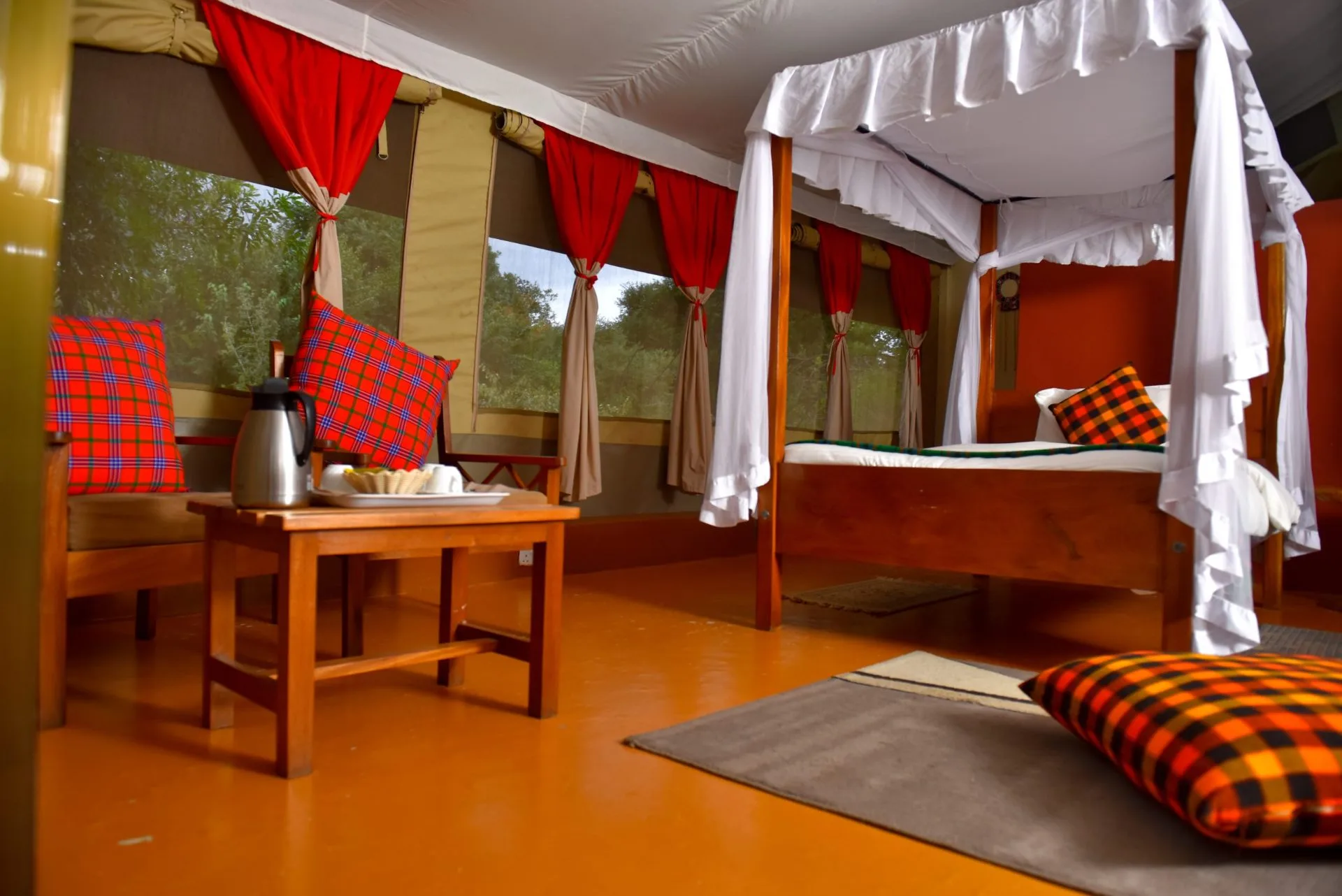
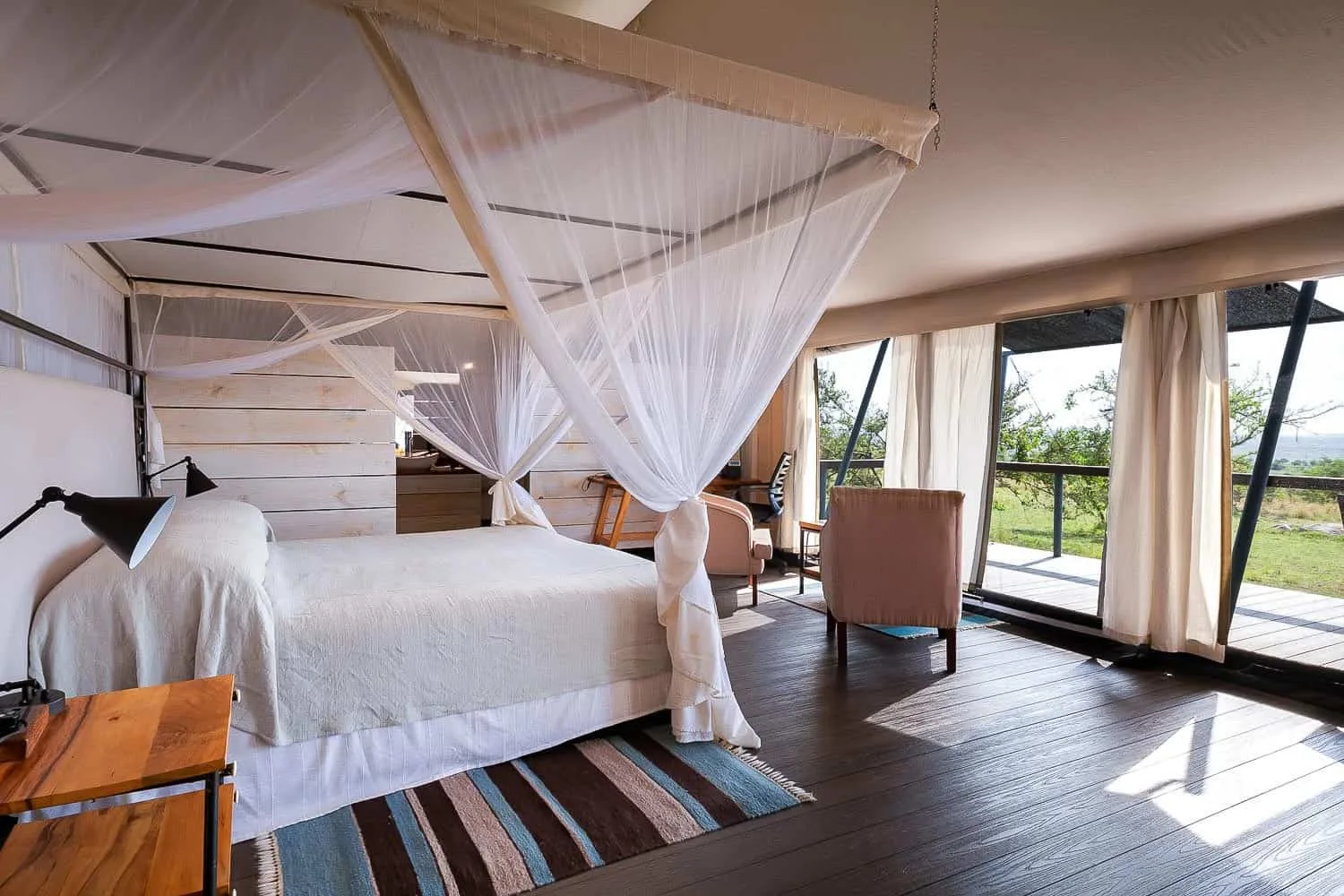
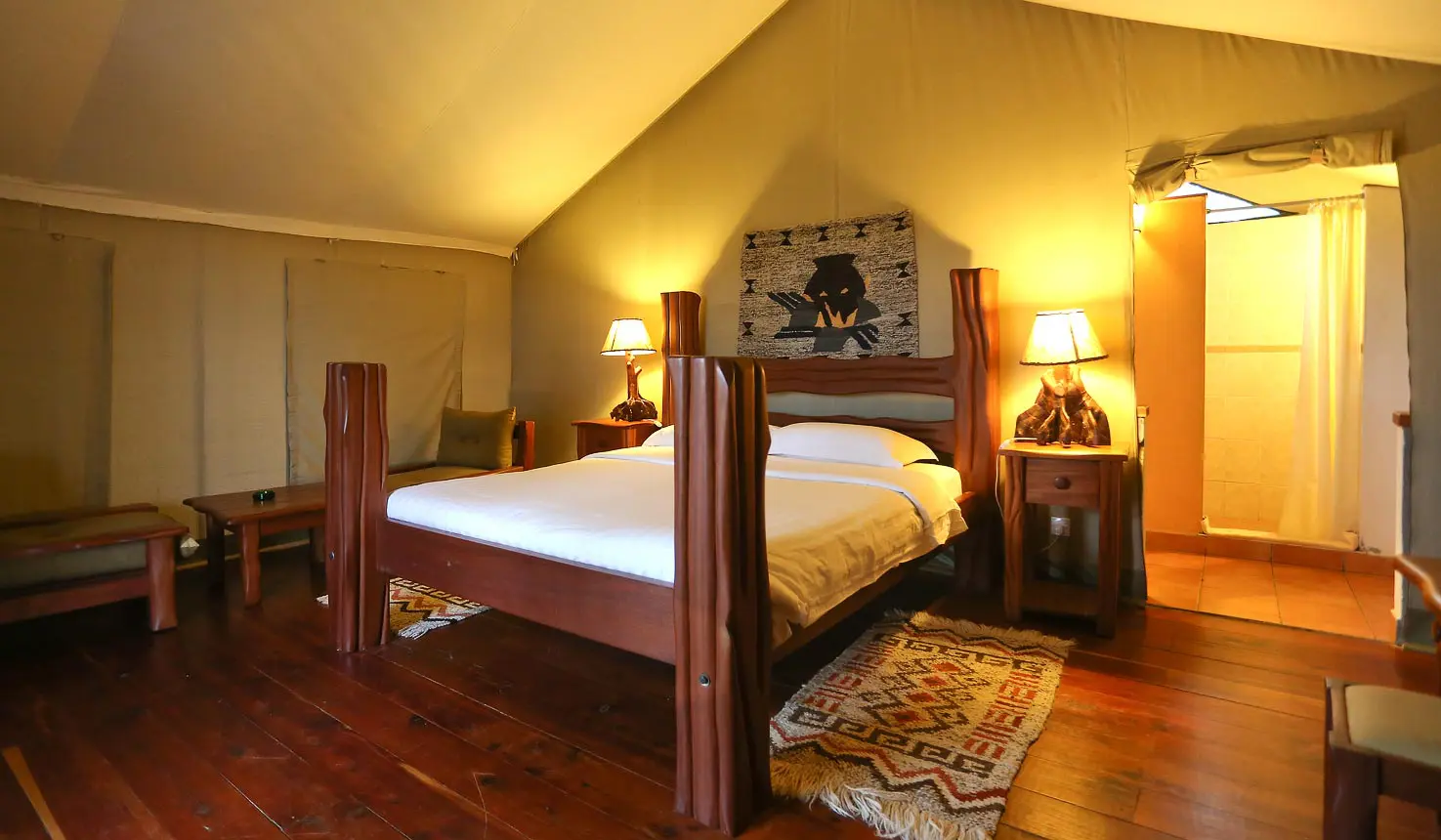
- Premium (Luxury)
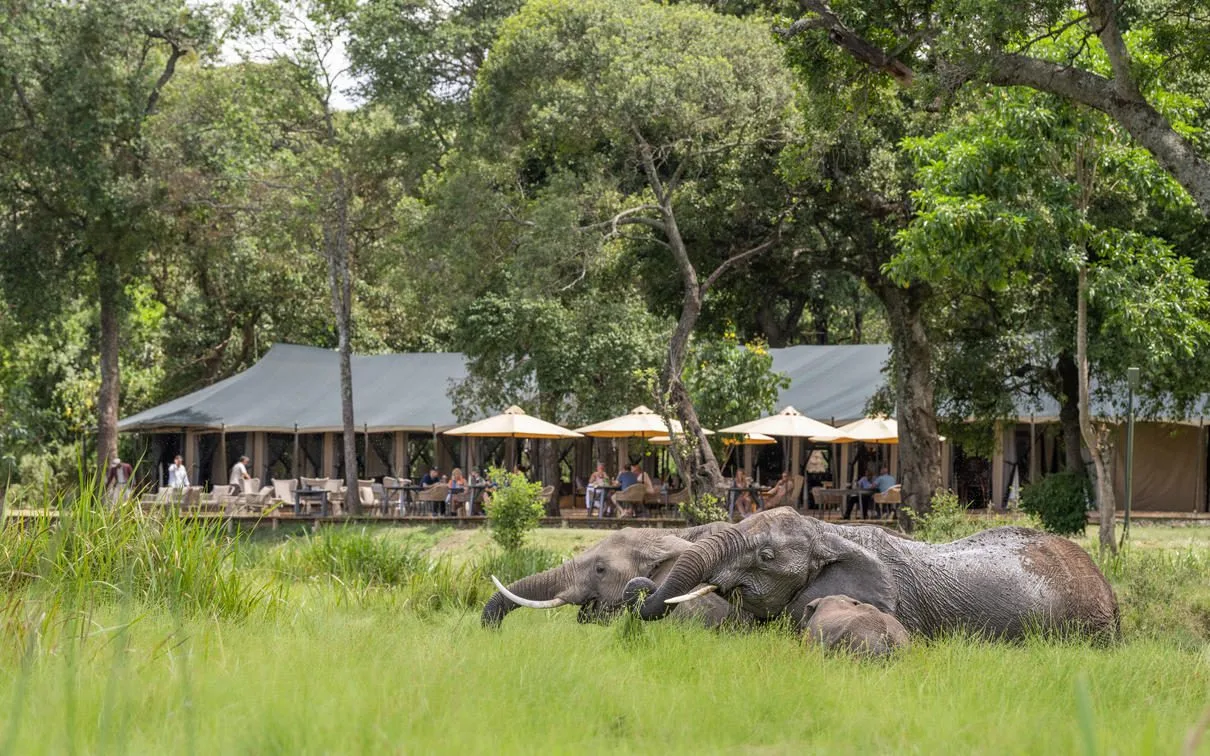
- Signature (High-end)
Day 2: Full-Day Masai Mara Wildlife Safari - Main destination
- Masai Mara National Reserve
- Meals
- Breakfast, Lunch, Dinner
Day 2 is the principal wildlife-viewing day of your 3 Days Masai Mara Fly-in Safari. Because you are already inside the Mara ecosystem, there is no need for a long road transfer, and the entire day can focus on wildlife. Depending on your camp and chosen arrangement, the day may follow one of these patterns:
- Early morning game drive, breakfast, midday relaxation and an afternoon game drive.
- Full-day game drive with picnic lunch.
- At selected conservancy camps, a combination of game drives and approved additional safari activities.
Early Morning Game Drive
Wake before sunrise. After tea, coffee or a light snack, depart camp for an early game drive. The morning can be one of the most productive periods for predators. You may encounter lions still active after the night, hyenas returning toward resting or denning areas, cheetahs beginning to search for prey, and leopards that remain active before retreating into shade. None of these sightings is guaranteed.
Sunrise Over the Masai Mara
Sunrise creates a completely different mood from the previous evening. The sky gradually brightens above the grasslands, mist may hang over low areas during cooler conditions, birds begin calling and herbivores feed actively. Photographers should prepare cameras before leaving camp because some of the strongest landscape opportunities may occur within the first hour.
Lion Pride Behavior
If your guide locates a lion pride, spend time observing. Possible behavior includes:
- Adults grooming.
- Cubs playing.
- Females returning to the pride.
- Males calling.
- Lions feeding.
- Young animals practicing stalking.
- Adults sleeping after nocturnal activity.
Understanding behavior gives the sighting greater meaning. A guide may explain:
- Pride structure.
- Territorial behavior.
- Hunting roles.
- Cub development.
- Male coalition dynamics.
Cheetah Hunting Country
The open Mara landscape provides ideal country for cheetah observation, and the morning can be particularly productive because temperatures are cooler. A cheetah may climb a low mound or termite structure to scan for prey, and your guide gives the animal space. If a hunt begins, the vehicle should never interfere with the chase or block prey movement. The integrity of natural behavior is more important than obtaining a photograph.
Leopard Search Along Rivers
Depending on your camp location, your guide may concentrate on:
- Riverine woodland.
- Drainage lines.
- Trees.
- Dense vegetation.
Leopards often use these environments for shade and concealment. Because they are solitary, sightings may involve only one animal. Mothers with cubs are particularly memorable but require careful, respectful viewing.
Hyenas
Spotted hyenas play a major ecological role in the Mara. They are both hunters and scavengers, and contrary to popular stereotypes, they are capable and intelligent predators. You may observe:
- Individuals walking across plains.
- Clan interactions.
- Hyenas feeding.
- Competition with lions.
- Adults near den areas.
- Young animals playing.
Their social organization is complex and highly structured.
The Great Wildebeest Migration
If your travel falls within the period when major migratory herds are present in the Mara, Day 2 may focus partly on migration activity. The Great Migration involves huge numbers of: Wildebeests, Zebras, Gazelles.
These animals move continuously through the larger Serengeti–Mara ecosystem in response to rainfall and grazing. It is important to understand that the migration does not follow a fixed calendar. Rainfall patterns can alter:
- Herd arrival.
- Distribution.
- River-crossing activity.
- Length of stay in particular sectors.
No responsible operator should guarantee that the herds will be in a specific location on a specific date.
Mara River Crossings
If your camp is suitably located and migration activity is occurring near the Mara River, your guide may spend time searching for herds approaching potential crossing areas. River crossings are among Africa’s most dramatic wildlife events, but they are also highly unpredictable and are never guaranteed. Wildebeests may:
- Gather near the river for hours.
- Retreat without crossing.
- Cross unexpectedly.
- Use a different crossing point.
- Cross and later return.
This means patience is essential. A three-day fly-in safari provides more wildlife time than a comparable road itinerary, but travelers whose primary goal is witnessing a river crossing should ideally consider staying additional nights.
Resident Wildlife Outside Migration Season
The Masai Mara remains exceptional even when the main migration herds are elsewhere. Resident wildlife includes: Lions, Leopards, Cheetahs, Elephants, Buffaloes, Giraffes, Zebras, Topis, Gazelles, Impalas, Hyenas, Hippos, Numerous birds.
You do not need to visit during migration season to enjoy a world-class safari.
Mara River Wildlife
The Mara River and associated waterways provide habitat for:
- Hippos.
- Nile crocodiles.
- Waterbirds.
- Riverine predators.
- Primates.
- Other wildlife.
Hippos generally remain in water during the day and leave to graze at night, while crocodiles may rest along banks or remain almost completely submerged. Your guide uses designated viewing areas and maintains safe distances.
Hippos
Hippos may appear slow and relaxed while resting in water, but in reality they are extremely powerful animals, so your guide ensures that viewing remains safe. Photographers can capture:
- Hippos yawning.
- Groups resting together.
- Individuals surfacing.
- Territorial interactions.
Crocodiles
Nile crocodiles are among the largest reptiles encountered on safari, and they are particularly associated with rivers. During migration season, they become part of the broader ecological drama surrounding river crossings. Outside that period, they remain important residents of the river system.
Birdwatching in the Masai Mara
The Mara also offers excellent birdlife. Possible species include: Secretary birds, Kori bustards, Ground hornbills, Crowned cranes, Vultures, Eagles, Bateleurs, Rollers, Bee-eaters, Storks, Herons, Ostriches, Weavers, Larks, Lapwings.
Bird enthusiasts should let us know when booking, which allows the guide to slow the pace and devote more attention to identification.
Breakfast in the Bush or Return to Camp
Depending on your selected accommodation and activity schedule, the morning drive may be followed by:
- Breakfast back at camp.
- Bush breakfast where officially offered.
- Extended wildlife viewing followed by brunch.
Premium camps may incorporate specially arranged bush meals. These experiences vary by property and should be confirmed individually.
Midday Relaxation
If using separate morning and afternoon game drives, the midday period gives you time to enjoy the camp. Possible activities include:
- Swimming.
- Reading.
- Photography around the lodge.
- Relaxing on a private deck.
- Watching wildlife from camp.
- Reviewing photographs.
- Charging equipment.
- Enjoying lunch.
- Resting before the evening safari.
This relaxed rhythm is one of the benefits of a fly-in luxury safari. The lodge experience becomes an important part of the journey rather than simply somewhere to sleep.
Full-Day Game Drive Option
Alternatively, you can remain in the field for a full-day game drive. A full-day safari can be particularly useful when:
- Migration herds are far from camp.
- You are searching for river crossings.
- A major predator sighting is occurring in a distant area.
- You want to explore the national reserve extensively.
- Photography is your main priority.
A picnic lunch is normally carried, and your guide stops at an approved location.
Afternoon Game Drive
The afternoon safari begins as temperatures decrease and wildlife becomes increasingly active. Your guide may focus on areas not explored in the morning. If you already had successful lion sightings, the afternoon may emphasize:
- Leopards.
- Cheetahs.
- Elephants.
- River wildlife.
- Photography.
- Birding.
- Migration activity.
A private vehicle or small lodge vehicle provides an intimate viewing experience.
Elephant Family Behavior
Spend time quietly watching elephant families. You may see:
- Calves nursing.
- Juveniles playing.
- Adults feeding.
- Herds crossing rivers.
- Dust bathing.
- Social touching.
Elephants are highly communicative and socially complex, and long observations can be more rewarding than moving immediately to another species.
Buffalo Herds
Large buffalo herds can be spectacular. Look carefully and you may see:
- Oxpeckers feeding on their backs.
- Calves hidden among adults.
- Older bulls.
- Herd members watching predators.
Buffaloes may also defend themselves aggressively against lions.
Giraffe Photography
Giraffes become particularly photogenic during late afternoon. A low sun can create:
- Strong silhouettes.
- Warm coat colors.
- Long shadows.
- Dramatic acacia backgrounds.
The Mara’s open plains are ideal for wider compositions.
Optional Hot-Air Balloon Safari
One of the most famous optional experiences available in the Masai Mara is a hot-air balloon safari. This normally begins before dawn: you are collected from camp and transferred to the launch site, and after a safety briefing, the balloon is prepared. Takeoff normally occurs around sunrise, subject to weather, and flights are not guaranteed.
What the Balloon Flight Offers
From the air, the scale of the Mara becomes far more apparent. You may look down on:
- Wildebeest herds.
- Giraffes.
- Elephants.
- Rivers.
- Acacia trees.
- Open plains.
- Wildlife tracks.
- Seasonal migration concentrations.
The balloon drifts according to wind direction rather than following a fixed route, and actual flight duration varies. Many operators include a post-flight breakfast or similar experience. The activity is normally at additional cost.
Is a Balloon Safari Worth Adding?
For travelers who value scenery and unique experiences, it can be one of the highlights of a Kenya safari. It is particularly attractive for:
- Honeymooners.
- Photographers.
- First-time visitors.
- Celebration trips.
- Luxury safari travelers.
However, a balloon safari replaces part of the early morning ground game drive, so wildlife-focused travelers should consider the trade-off.
Optional Maasai Cultural Visit
A cultural visit may be available depending on your camp and location. A responsible experience can introduce aspects of Maasai culture including:
- Pastoral livelihoods.
- Cattle keeping.
- Traditional homesteads.
- Beadwork.
- Community structures.
- Clothing.
- Songs and dances.
- Conservation relationships.
The visit should be respectful and ideally provide direct community benefit. It is usually optional and may involve an additional fee.
Private Conservancy Experience
Many luxury fly-in camps are located within private conservancies surrounding the national reserve. Conservancies can offer a somewhat different safari experience. Potential advantages include:
- Lower vehicle numbers.
- Fewer vehicles around sightings.
- Night game drives where permitted.
- Guided walking safaris where authorized.
- Community-based conservation.
- Exclusive accommodation.
- Strong predator viewing.
Specific activities depend on the conservancy and camp.
Masai Mara National Reserve vs Conservancy
The national reserve and conservancies complement one another.
Masai Mara National Reserve
The national reserve is particularly important for:
- Extensive wildlife areas.
- Mara River.
- Migration routes.
- Famous plains.
- Large predator populations.
Conservancies
Conservancies are often attractive for:
- Lower vehicle density.
- Night drives.
- Guided walks.
- More exclusive atmosphere.
- Community-conservation model.
Some camps allow access to both areas, while others operate primarily within their conservancy. Always check the exact arrangement before selecting accommodation.
Evening and Second Overnight
As the sun sets, return toward camp. Depending on your conservancy and regulations, the safari experience may continue somewhat differently from national reserve operations. Back at camp, enjoy dinner and your final evening in the Mara. Some luxury properties offer:
- Campfire drinks.
- Outdoor dining.
- Private dining.
- Stargazing.
- Stories with guides.
- Wildlife viewing from camp.
The sounds of lions and hyenas at night are part of the experience.
Accommodation: Same or equivalent Masai Mara camp
Meals: Breakfast, Lunch and Dinner
Main Activities: Extensive wildlife game viewing and optional safari activities
Where you stay
Day 3: Morning Game Drive – Fly Masai Mara to Nairobi - Main destination
- Masai Mara National Reserve
- Drive time
- Return transfer as outlined in the itinerary
- Meals
- Breakfast, Lunch
Wake for your final morning in the Masai Mara. Depending on your flight schedule, you may have time for an early game drive before breakfast. This is one of the major advantages of flying: instead of leaving extremely early for a long road transfer, you can potentially continue enjoying wildlife before traveling to the airstrip.
Final Morning Game Drive
Use the final drive to focus on wildlife you have not yet seen or simply revisit favorite areas. Possible priorities include: Lions, Leopards, Cheetahs, Elephants, Buffaloes, Giraffes, Hyenas, Migration herds, Birds.
The morning is also ideal for photography, as the low light can produce beautiful images before the sun becomes stronger. Sightings are never guaranteed.
One Last Predator Search
If a leopard remained elusive, your guide may search riverine habitat. If cheetahs were not seen, open plains can receive more attention, and if lions were abundant, you may simply spend more time observing a pride. A private or small-group safari allows the final morning to reflect your priorities.
Breakfast and Check-Out
Return to camp for breakfast unless your schedule requires an earlier meal. Check out and prepare for the airstrip transfer, remembering that luggage must again comply with domestic airline requirements. The transfer from camp to the airstrip can provide one final game-viewing opportunity, so keep cameras accessible.
Fly from Masai Mara to Nairobi
Board your scheduled flight and depart the Mara. The aerial journey gives you one final perspective of the ecosystem. As the aircraft climbs, you may see:
- Wildlife tracks.
- Plains.
- Rivers.
- Herds.
- Camps.
- Maasai landscapes.
Continue to Nairobi, normally landing at Wilson Airport.
Arrival in Nairobi
On arrival, your onward arrangements depend on your wider itinerary. You may:
- Transfer to a Nairobi hotel.
- Transfer to Jomo Kenyatta International Airport.
- Connect to another domestic safari flight.
- Continue to the Kenya coast.
- Spend additional time in Nairobi.
The safari ends after the agreed transfer or flight arrangement.
Meals: Breakfast and other meals according to flight and camp schedule
Main Activities: Morning game drive, airstrip transfer and flight to Nairobi
Flying to the Masai Mara – What Travelers Should Know
A fly-in safari operates differently from a conventional road safari, and understanding the logistics in advance makes the experience smoother. Important considerations include:
- Smaller aircraft.
- Restricted baggage weight.
- Soft-sided bags.
- Multiple airstrip stops on some services.
- Weather-dependent operations.
- Airstrip transfers.
- Lodge-based game drives.
- Strict flight reporting times.
Safari Flight Baggage
Baggage limits on safari flights are usually much lower than international airline allowances, and large hard-shell suitcases may not fit easily into aircraft baggage compartments. Travelers should generally use:
- Soft duffel bags.
- Compact safari luggage.
- Lightweight personal bags.
If you are traveling with large international luggage, storage may sometimes be arranged in Nairobi while you take only the necessary items into the Mara. Exact arrangements must be confirmed before travel.
Where you stay
03 Rates
Safari rates 2027-2029
Indicative per person. Season, group size and lodge style change the total — your quotation confirms current rates.
- Essential (Budget)
Essential (Budget)
Budget camps and lodges suit travelers who prioritize wildlife while keeping costs lower.
Great value camps
- Comfort (Mid-range)
Comfort (Mid-range)
Mid-range tented camps and lodges balance comfort and price with private rooms or tents and en-suite facilities.
Quoted for your dates
- Premium (Luxury)
Premium (Luxury)
Luxury camps and lodges focus on location, service and more intimate wildlife experiences.
Premium camps and lodges
- Signature (High-end)
Signature (High-end)
Signature camps and lodges are the most exclusive stays — small, highly private properties with exceptional guiding and setting.
Exclusive signature stays
04 Activities
Safari activities
Game viewing is the core of this itinerary. Optional extras are quoted separately and depend on season, permits and availability. Individual species and river crossings are never guaranteed.
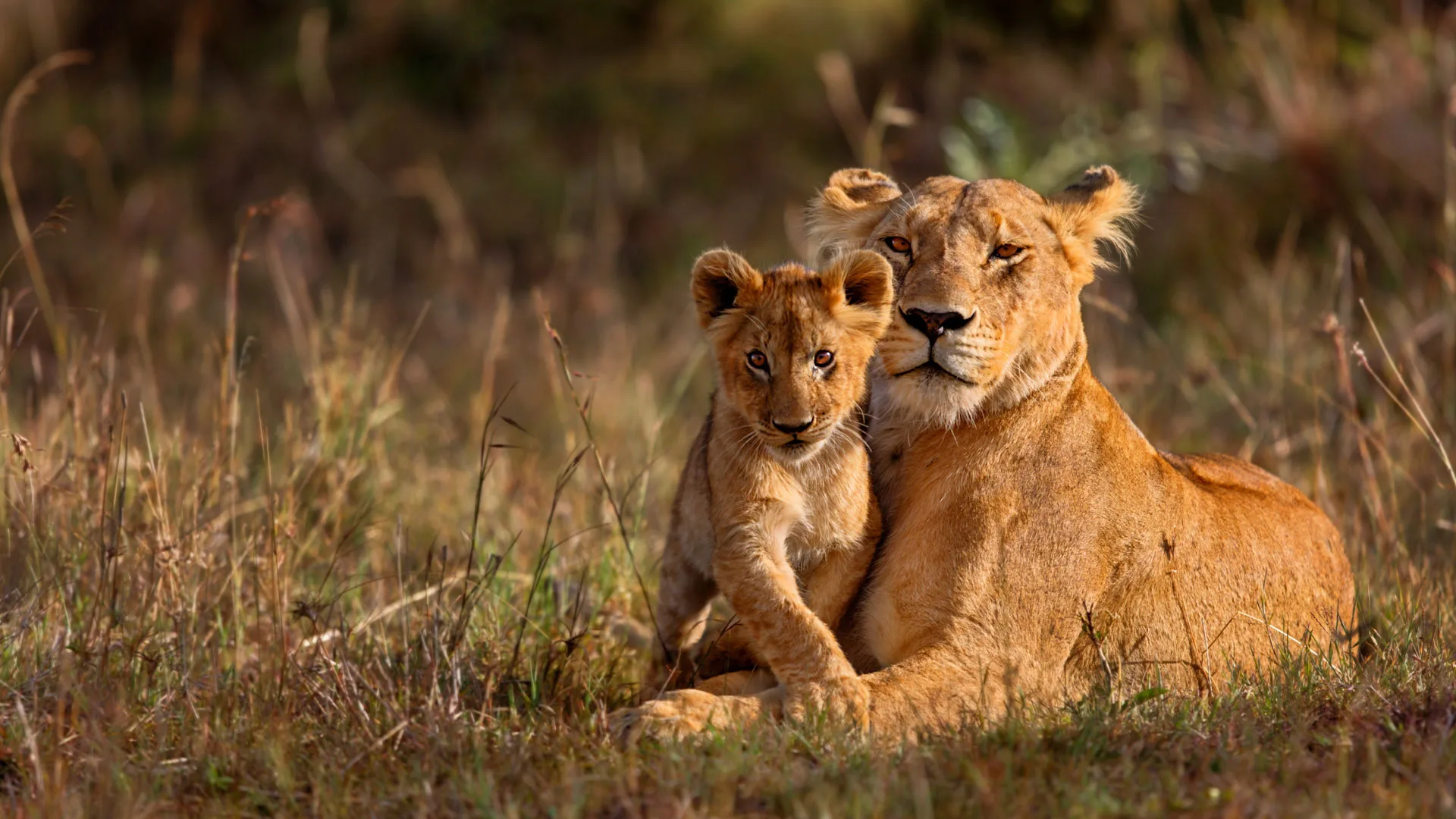
Included
Multiple game drives
Included in a typical day on this safari. Exact timing follows the confirmed itinerary.
View activity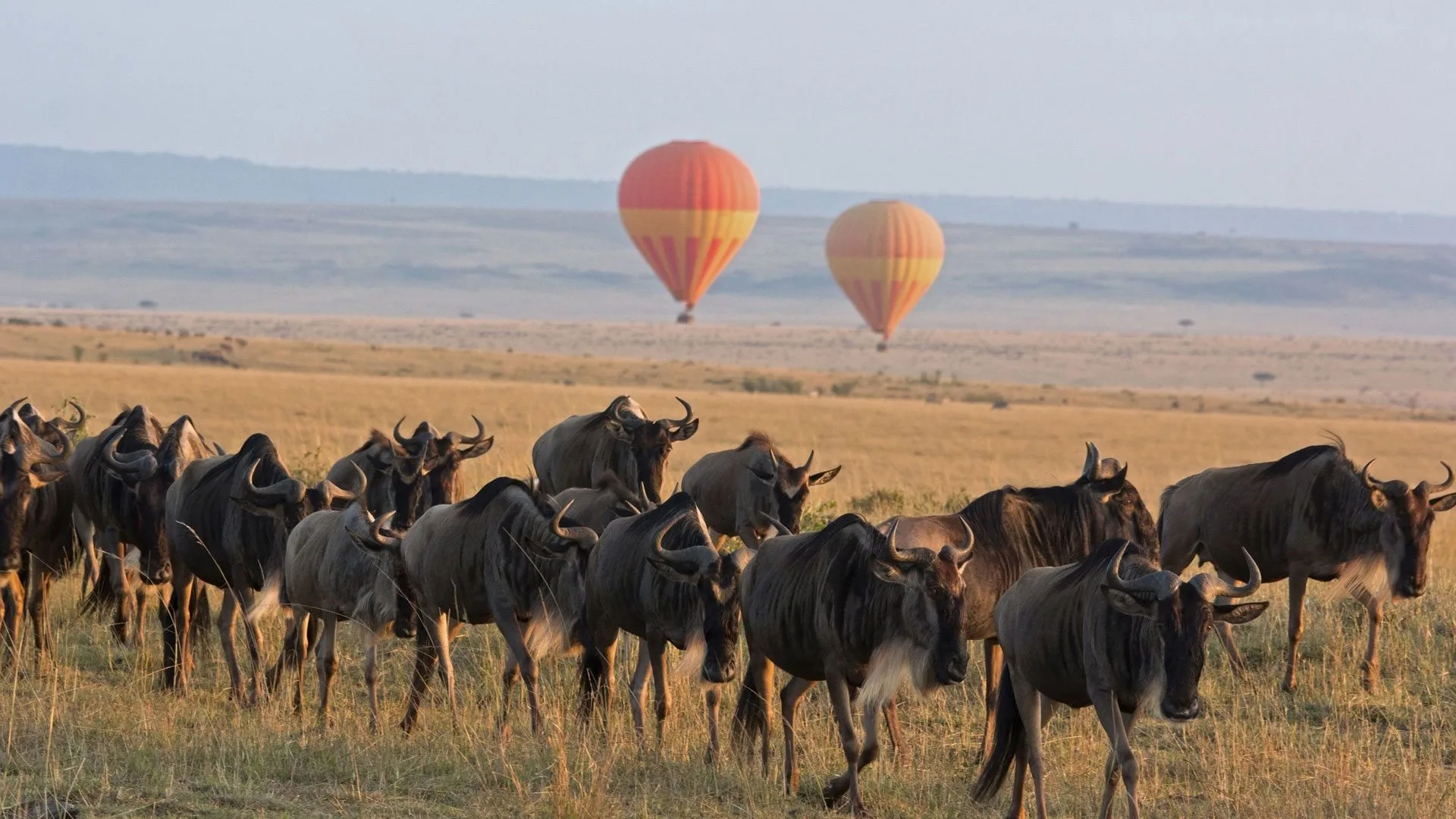
Optional
Hot-air balloon flight.
Available at extra cost when conditions, permits and your dates allow. Not guaranteed.
View activity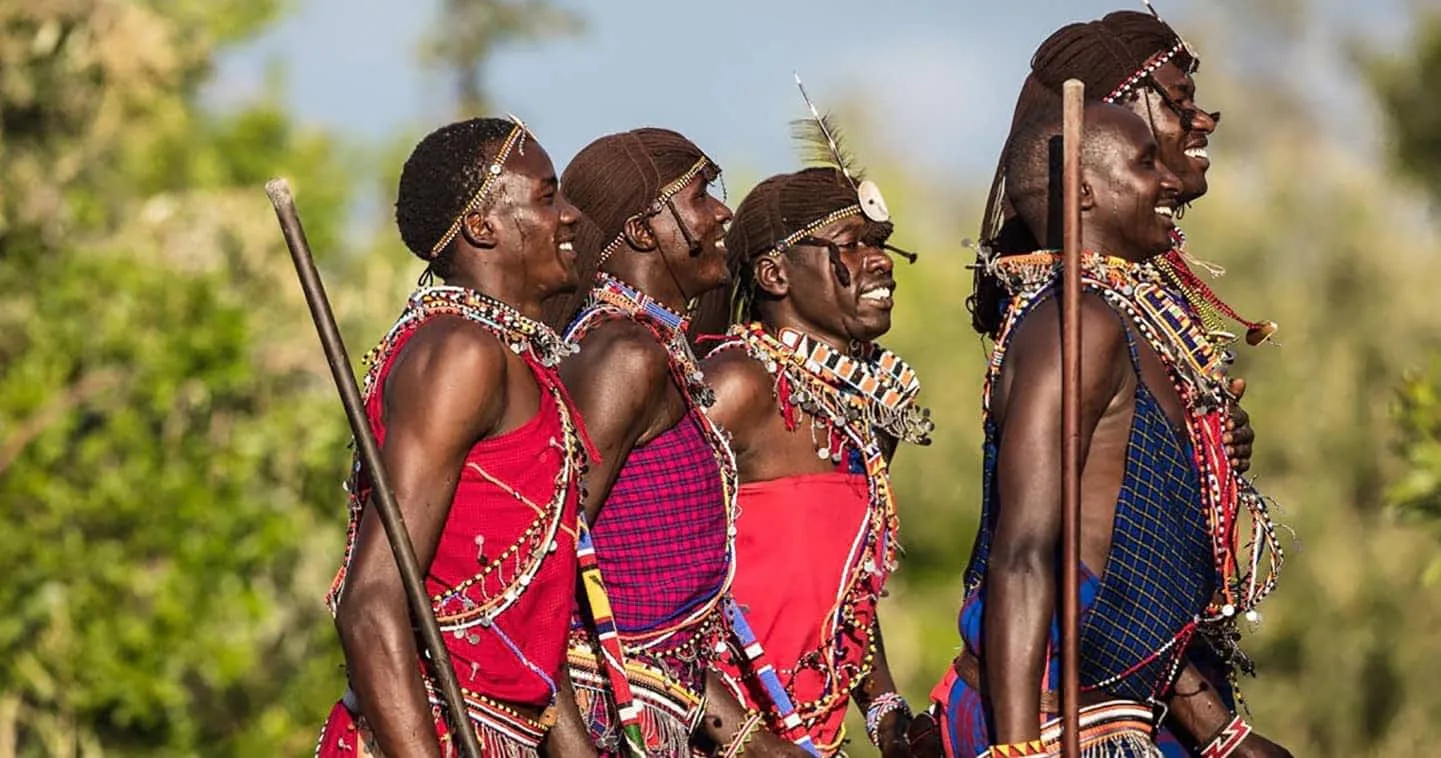
Optional
Cultural visit.
Available at extra cost when conditions, permits and your dates allow. Not guaranteed.
View activity
Additional information
Plan This Safari
Why Soft Bags Are Preferred
Safari aircraft have limited and irregularly shaped luggage compartments. Soft bags can be compressed and arranged more efficiently, and hard-shell luggage is often unsuitable. Travelers continuing on other regional safari flights should plan their entire packing strategy around the strictest airline allowance in their itinerary.
Flight Schedule Considerations
Domestic safari flights operate according to scheduled departure windows, so passengers must arrive at the airport or airstrip sufficiently early. The aircraft may sometimes stop at several airstrips to pick up or drop off other guests. This is normal safari aviation practice, and the journey can therefore vary slightly in duration.
Weather and Safari Flights
Light aircraft operations depend on safe weather conditions. Heavy rain, poor visibility, strong winds or other aviation factors may occasionally affect schedules. Delays are uncommon but possible, so travelers should avoid booking extremely tight international flight connections immediately after returning from the Mara. A reasonable buffer is strongly recommended.
Masai Mara Airstrips
The correct airstrip depends on your selected accommodation. The greater Masai Mara ecosystem contains several airstrips serving different camps and sectors. You should never choose an airstrip independently without checking the lodge location, because booking the wrong airstrip can result in a long and unnecessary transfer. Your safari planner coordinates:
- Airline.
- Airstrip.
- Camp.
- Ground transfer.
Lodge-Based Game Drives
Many fly-in safaris use vehicles operated by the selected camp. This can be advantageous because resident guides have extensive knowledge of the immediate ecosystem. However, vehicle arrangements vary. Your package may include:
- Shared game drives with other lodge guests.
- Private game drives.
- Exclusive-use vehicle at additional cost.
Travelers who strongly prefer private wildlife viewing should confirm the vehicle arrangement before booking.
Shared vs Private Game Drives
Shared Game Drives
Shared drives have these advantages:
- Lower cost.
- Social safari experience.
- Standard lodge arrangement.
The potential limitation is that you must consider other guests’ interests and schedules.
Private Game Drives
Private drives have these advantages:
- Flexible pacing.
- Photography freedom.
- Greater privacy.
- Better family arrangements.
- Ability to concentrate on specific wildlife.
Private vehicles are especially recommended for serious photographers and honeymooners.
Wildlife on the 3 Days Masai Mara Fly-in Safari
Possible wildlife includes the following. These are possibilities, not guaranteed sightings.
Predators
- Lions.
- Leopards.
- Cheetahs.
- Spotted hyenas.
- Jackals.
- Servals and smaller carnivores.
Large Herbivores
- African elephants.
- African buffaloes.
- Masai giraffes.
- Wildebeests.
- Plains zebras.
- Elands.
- Topis.
Antelopes and Gazelles
- Thomson’s gazelles.
- Grant’s gazelles.
- Impalas.
- Waterbucks.
- Bushbucks.
- Dik-diks.
River Wildlife
- Hippos.
- Nile crocodiles.
Other Mammals
- Warthogs.
- Baboons.
- Vervet monkeys.
- Mongooses.
- Smaller mammals.
Can You See the Big Five on This Safari?
The Masai Mara offers good possibilities for several members of the Big Five. Common possibilities include: Lion, Elephant, Buffalo.
Leopards are present but elusive. Black rhinos occur within the wider ecosystem but are much less frequently seen. Therefore, seeing all five within a three-day stay cannot be guaranteed. Travelers whose primary objective is completing the Big Five may consider extending the itinerary to Ol Pejeta or Lake Nakuru for stronger rhino opportunities.
Best Time for a 3 Days Masai Mara Fly-in Safari
The Mara can be visited throughout the year. The right period depends on your priorities.
July to October
This broader period is famous for migration activity. Potential advantages include: Large wildebeest herds, Zebra concentrations, River-crossing possibilities, Strong predator activity.
It is also one of the busiest and most expensive periods. Flights and premium camps should be booked well in advance.
January to March
These months can offer the following, and the Mara remains outstanding even without migration herds:
- Excellent resident wildlife.
- Good predator viewing.
- Relatively dry conditions.
- Strong photography.
April and May
These months are typically associated with heavier rainfall. Potential advantages include:
- Green landscapes.
- Dramatic skies.
- Lower visitor numbers.
- Attractive seasonal lodge pricing.
- Excellent birding.
Some camps may operate seasonally or adjust schedules, so availability should be confirmed.
November and Early December
Shorter rains can refresh the ecosystem. Advantages may include:
- Green scenery.
- Resident wildlife.
- Bird activity.
- Fewer vehicles than peak migration season.
Rainfall is variable and rarely follows a perfect calendar.
Great Migration Fly-in Safari
A fly-in itinerary is particularly attractive during migration season because it saves valuable travel time. You can spend more of your three-day trip near:
- Major herd concentrations.
- Predator zones.
- Mara River areas.
However, migration travelers should understand that a three-day safari still provides only a limited observation window. If witnessing river crossings is a major life goal, consider extending to four or five nights. A crossing is never guaranteed.
Masai Mara Fly-in Safari for Couples
Flying is especially attractive for couples seeking a comfortable short escape. Advantages include:
- Reduced road fatigue.
- More time together at camp.
- Scenic flight.
- Premium accommodation.
- Private game-drive options.
- Romantic lodge atmosphere.
Couples can add the following, subject to availability, weather and camp policy:
- Balloon safari.
- Bush meals.
- Sundowners where permitted.
- Private dining.
- Beach extension.
3 Days Masai Mara Fly-in Honeymoon Safari
The fly-in format is particularly suited to honeymooners. A high-end honeymoon package can include:
- Luxury tented camp.
- Scenic flight.
- Private airstrip transfer.
- Private vehicle.
- Balloon safari.
- Bush breakfast.
- Romantic dining.
- Premium suite.
- Kenya coast extension.
The combination of efficient travel and luxury wilderness accommodation keeps a short honeymoon safari relaxed. A balloon safari, where requested, depends on availability and weather and is not guaranteed.
Fly-in Safari for Families
Families can also benefit significantly from flying. Advantages include:
- Avoiding a long road transfer.
- More time at the lodge.
- Easier schedule for younger travelers.
- Swimming pools at selected camps.
- Family suites.
- Private vehicle options.
Parents should provide children’s exact ages because:
- Flight fares may vary.
- Camp policies differ.
- Balloon safari age limits may apply.
- Walking activity restrictions may apply.
- Family-room configurations vary.
Fly-in Safari for Older Travelers
The reduced travel time can be especially valuable for older guests or travelers who find prolonged road journeys uncomfortable. A fly-in safari minimizes:
- Road vibration.
- Long seated travel.
- Extended driving days.
Premium camps may also provide enhanced comfort. Travelers with mobility requirements should inform us in advance because small safari aircraft and remote airstrips can involve steps and uneven ground.
Fly-in Safari for Photographers
A fly-in safari works extremely well for photographers if the correct vehicle arrangement is chosen. We strongly recommend considering a private safari vehicle. Benefits include:
- More space for equipment.
- Better control of vehicle position.
- Longer time at sightings.
- Ability to prioritize morning and evening light.
- No conflict with other guests’ interests.
Camera Equipment on Safari Flights
Photographers need to plan carefully because flight baggage limits can affect equipment. Camera gear should usually be prioritized within your allowed baggage, and airline rules for cabin luggage and total baggage weight should be checked before travel. Useful items may include:
- Camera bodies.
- Telephoto lens.
- Medium zoom.
- Wide-angle lens.
- Batteries.
- Chargers.
- Memory cards.
- Bean bag where practical.
- Laptop or storage device if necessary.
Accommodation for the 3 Days Masai Mara Fly-in Safari
Accommodation is central to a fly-in safari because the lodge often provides:
- Airstrip transfers.
- Game drives.
- Meals.
- Guiding.
- Optional activities.
The correct camp selection therefore determines much of your overall experience.
Mid-Range Fly-in Accommodation
A mid-range fly-in safari can provide:
- Comfortable en-suite tent.
- Good meals.
- Professional guiding.
- Convenient airstrip transfer.
- Game drives.
- Lounge.
- Bar.
- Strong wilderness atmosphere.
This category works well for travelers who want the efficiency of flying without necessarily choosing the most expensive camp.
Luxury Fly-in Accommodation
Luxury properties can offer:
- Spacious safari tents.
- Private decks.
- Excellent locations.
- High-quality cuisine.
- Personalized service.
- Small guest numbers.
- Swimming pools.
- Premium game drives.
- Bush meals.
- Conservancy access.
- Stylish common areas.
The lodge experience becomes an essential part of the safari.
High-End Conservancy Camps
For the most exclusive experience, a high-end conservancy camp may provide:
- Very low guest density.
- Excellent resident guiding.
- Private or semi-private vehicles.
- Night game drives where permitted.
- Guided walks.
- Premium suites.
- Fine dining.
- Strong community-conservation programs.
This category is especially popular with honeymooners and experienced safari travelers.
3 Days Masai Mara Fly-in Safari Cost
The cost depends on several major variables. An accurate quotation requires specific dates and traveler details.
- Domestic Flights. Air tickets add a significant cost compared with road transport.
- Accommodation Category. High-end camps can cost substantially more than mid-range properties.
- Travel Season. Migration months and festive periods can have much higher rates.
- Game-Drive Arrangement. Private vehicles generally cost more than shared lodge game drives.
- Park or Conservancy Fees. Wildlife-area fees are a significant part of safari pricing.
- Optional Activities. Balloon safaris, cultural visits and specialist experiences add cost. Balloon flights depend on availability and weather and are not guaranteed.
- Single Supplements. Solo travelers may pay higher room rates.
- Child Rates. Children may receive reduced rates depending on age, lodge and airline policy.
What Is Typically Included?
Your final quotation is definitive, but a typical package may include:
- Nairobi hotel-to-Wilson transfer where stated.
- Return domestic safari flights.
- Masai Mara airstrip transfers.
- Two nights’ accommodation.
- Meals according to camp plan.
- Game drives.
- Professional safari guide.
- Park or conservancy fees where specifically stated.
- Drinking water during safari activities.
- Applicable lodge services listed in the package.
What Is Usually Excluded?
Unless specifically included, the following are usually excluded:
- International flights.
- Nairobi accommodation.
- International airport transfers not stated.
- Balloon safari.
- Cultural visits.
- Premium beverages.
- Alcoholic drinks where not included by camp.
- Tips and gratuities.
- Travel insurance.
- Kenya travel authorization or visa-related charges where applicable.
- Laundry where not included.
- Personal purchases.
- Excess baggage.
- Optional private vehicle surcharge.
- Activities outside the confirmed package.
3 Days Masai Mara Fly-in Safari vs Road Safari
The difference is primarily about time, comfort and cost.
Fly-in Safari
A fly-in safari is best for:
- Short stays.
- Luxury travelers.
- Honeymooners.
- Families.
- Older guests.
- Travelers combining multiple remote camps.
Its main advantages are that it is faster, gives more wildlife time and means less road fatigue. Its main disadvantages are higher cost and stricter baggage restrictions.
Road Safari
A road safari is best for:
- Budget-conscious travelers.
- Travelers who enjoy overland journeys.
- Larger luggage.
- Guests wanting a private vehicle throughout.
Its main advantage is lower transport cost, and its main disadvantage is longer travel time.
3 Days vs 4 Days Masai Mara Fly-in Safari
Three days provides an excellent introduction. Four days provides substantially more flexibility.
Choose 3 days if:
- Your itinerary is time-limited.
- You are combining several destinations.
- You want a short luxury safari.
- You mainly want classic wildlife viewing.
Choose 4 days or more if:
- Migration is your priority.
- You want river crossings.
- Photography is a major focus.
- You prefer a slower pace.
- You want several optional activities.
Listing river crossings as a reason to stay longer does not mean a crossing will occur. Crossings remain unpredictable.
Masai Mara Fly-in Safari and Amboseli
A longer Kenya itinerary can connect the Masai Mara with Amboseli. Depending on current domestic flight networks, connections may require routing through Nairobi or other arrangements. The combination provides:
- Masai Mara: predators, savannah and migration.
- Amboseli: elephants, wetlands and Kilimanjaro views when conditions allow.
This is one of Kenya’s strongest safari combinations. Kilimanjaro views depend on the weather and are not guaranteed.
Masai Mara Fly-in Safari and Samburu
Combining the Mara with Samburu offers extraordinary ecological contrast. The Mara provides:
- Lions.
- Cheetahs.
- Open plains.
- Migration.
Samburu provides: Grevy’s zebra, Reticulated giraffe, Gerenuk, Beisa oryx, Dry northern landscapes.
Flying can make this combination considerably more efficient than long overland transfers. The species associated with each reserve are possibilities, not guaranteed sightings.
Masai Mara Fly-in Safari and Ol Pejeta
Ol Pejeta can add the following to the Mara’s exceptional predator experience:
- Rhinos.
- Conservation.
- Big Five opportunities.
- Chimpanzee sanctuary.
This creates a highly varied wildlife itinerary. Rhino sightings cannot be guaranteed.
Masai Mara Fly-in Safari and Kenya Coast
A particularly popular combination is a Masai Mara Fly-in Safari with Diani Beach, or another Kenya coast extension. The safari provides:
- Big Cats.
- Elephants.
- Wildlife.
- Luxury camp atmosphere.
The beach provides:
- Indian Ocean relaxation.
- Swimming.
- White sand.
- Resort facilities.
- Water activities.
This is especially attractive for honeymooners.
Why Fly-in Safaris Work Well for Safari-and-Beach Holidays
Flying makes it easier to connect wilderness and coast without using several days for road transfers. Depending on flight schedules and route, you may connect via Nairobi or use suitable regional services. The correct routing should be designed around current airline schedules.
Who Should Book This Safari?
The 3 Days Masai Mara Fly-in Safari is particularly suitable for:
- Travelers with limited time.
- Honeymooners.
- Luxury safari travelers.
- Couples.
- Families.
- Older travelers.
- Wildlife photographers.
- Business travelers.
- Solo luxury travelers.
- Repeat safari guests.
- Travelers combining several safari camps.
- Safari-and-beach travelers.
- Visitors who dislike long overland transfers.
Why Three Days Works Better When You Fly
On a conventional three-day road safari, significant parts of Days 1 and 3 are used for transportation. On a fly-in safari, these transfer periods are dramatically reduced. This can allow:
- More wildlife viewing on Day 1.
- A complete Day 2.
- Another meaningful wildlife experience on Day 3.
In practical terms, the safari feels substantially longer than a road itinerary with the same number of nights. That extra wildlife time is the central value of the fly-in format.
Why a Fly-in Safari Can Be More Relaxing
A safari can be physically tiring. Early starts, long game drives and road transfers all demand energy. Flying removes one of the major sources of fatigue. Instead of spending hours driving between Nairobi and the Mara, you can:
- Reach camp faster.
- Rest at the lodge.
- Take a longer game drive.
- Enjoy the property.
- Spend more time photographing wildlife.
For honeymooners and premium travelers, this slower overall rhythm is often worth the additional cost.
Why the Camp Choice Matters
On a fly-in safari, accommodation determines much more than where you sleep. The camp often controls:
- Airstrip transfer.
- Game-drive vehicle.
- Guide.
- Safari schedule.
- Meals.
- Optional activities.
- Access to conservancy or reserve.
Choosing the correct camp is therefore one of the most important decisions in planning the safari. We can help match the property to your priorities, whether those are:
- Great Migration.
- Predators.
- Low vehicle density.
- Luxury.
- Family travel.
- Honeymoon.
- Photography.
- Conservancy activities.
Book Your 3 Days Masai Mara Fly-in Safari
Experience Kenya’s most famous wildlife ecosystem without spending long hours on the road. A 3 Days Masai Mara Fly-in Safari allows you to leave Nairobi and reach the Mara quickly, giving you more time where it matters most: watching wildlife. Fly across Kenya’s changing landscapes, land on a remote bush airstrip, meet your safari guide and begin game viewing almost immediately. Search open plains for cheetahs and look for lion prides resting in golden grass. Scan riverine trees for leopards, and look for elephant families moving through the landscape and giraffes beneath acacia trees. Hyenas may be heard after dark.
When the season and natural herd movements align, you may witness the enormous concentrations of wildebeests and zebras that define the Great Migration, although this can never be guaranteed. After two nights in the wilderness, enjoy one final morning safari before flying comfortably back to Nairobi.
Choose Your Masai Mara Fly-in Safari Style
We can customize the itinerary as a:
- Mid-Range Masai Mara Fly-in Safari
- Luxury Masai Mara Fly-in Safari
- High-End Masai Mara Fly-in Safari
- Private Masai Mara Fly-in Safari
- Masai Mara Fly-in Honeymoon Safari
- Family Masai Mara Fly-in Safari
- Photography Masai Mara Fly-in Safari
- Great Migration Fly-in Safari
- Masai Mara Conservancy Fly-in Safari
- Masai Mara Fly-in Safari and Beach Holiday
Extend Your 3 Days Masai Mara Fly-in Safari
Additional nights can be added in the Mara or the safari can continue to:
- Amboseli National Park – for elephants, with Kilimanjaro views when conditions allow.
- Samburu National Reserve – for northern specialist wildlife.
- Ol Pejeta Conservancy – for rhinos and conservation.
- Lake Nakuru National Park – for additional rhino and Rift Valley wildlife opportunities.
- Kenya Coast – for a beach holiday after safari.
- Other East African Destinations – according to the exact approved itinerary and current regional flight connections.
Request a 3 Days Masai Mara Fly-in Safari Quote
To prepare the most accurate quotation, send us:
- Preferred travel dates.
- Number of adults.
- Number and ages of children.
- Preferred accommodation category.
- Whether you want shared or private game drives.
- Nairobi hotel or international flight details.
- Whether you want a balloon safari.
- Whether migration viewing is your priority.
- Whether you are continuing to another safari destination or the coast.
We can then prepare a customized 3 Days Masai Mara Fly-in Safari based on your preferred safari style, accommodation level and overall Kenya itinerary.
Planning Questions
Frequently Asked Questions
Is a 3 Days Masai Mara Fly-in Safari worth it?
Yes, particularly when time is limited. Flying allows you to spend substantially more of your trip inside the Mara rather than on the road.
How long is the flight from Nairobi to Masai Mara?
Flight duration varies according to airstrip and whether the aircraft makes additional stops. Safari flights are significantly faster than the equivalent road journey.
Which Nairobi airport do safari flights use?
Many scheduled Masai Mara safari flights operate from Wilson Airport.
Does the flight leave from Jomo Kenyatta International Airport?
Most conventional safari services operate from Wilson Airport, so an airport transfer may be necessary.
Which airstrip do we use?
The correct airstrip depends on your selected camp. We coordinate this when confirming the safari.
Are flights direct?
Some services may stop at other airstrips to drop off or collect passengers.
What type of aircraft is used?
Safari routes generally use small light aircraft suitable for remote airstrips.
Are the flights safe?
Safari airlines operate under aviation regulations and use aircraft suited to bush airstrip operations. As with all aviation, schedules remain subject to weather and operational considerations.
Is luggage restricted?
Yes. Safari flight baggage allowances are significantly lower than many international flight allowances.
Can we take hard suitcases?
Soft-sided luggage is generally preferred and may be required.
What happens to our large luggage?
Depending on your wider itinerary, storage may sometimes be arranged in Nairobi. This should be confirmed in advance.
Are game drives private?
They may be shared or private depending on your package. If privacy is important, request a private vehicle.
Can we see lions?
The Masai Mara provides excellent lion-viewing opportunities, although lion sightings cannot be guaranteed.
Can we see leopards?
Leopards are present, but they remain elusive and cannot be guaranteed.
Can we see cheetahs?
The Mara is one of Kenya’s excellent cheetah habitats, although cheetah sightings cannot be guaranteed.
Can we see the Big Five?
You have opportunities for lion, leopard, elephant and buffalo. Rhinos are much less commonly encountered, so seeing all five cannot be guaranteed.
Can we see the Great Migration?
Possibly, if the herds are present during your travel dates. Herd movements are not guaranteed.
Are river crossings guaranteed?
No. Crossings are entirely natural and unpredictable.
Can we add a balloon safari?
A balloon safari can be added only subject to availability, weather and additional cost. The flight is not guaranteed.
Can children fly to the Mara?
Yes, although airline and camp child policies apply.
Is this safari suitable for honeymooners?
Yes. Fly-in safaris are especially popular for honeymoons because they combine efficiency, comfort and high-quality camps.
Is the safari suitable for older guests?
Yes. It can reduce the discomfort associated with long road journeys.
Is there Wi-Fi at the lodge?
Many camps provide Wi-Fi, often in selected areas. Reliability varies because the Mara is remote.
Is electricity available?
Most established camps provide electricity or charging, frequently through solar systems or generators.
Can dietary requirements be accommodated?
Most established camps can cater for common dietary requirements when notified in advance.
Can we fly onward instead of returning to Nairobi?
Possibly, depending on the destination and current flight schedules.
What happens if weather disrupts the flight?
Airlines adjust operations according to aviation safety requirements. Travel plans should include reasonable flexibility, especially before important international connections.
05 Request Quote
Request Quote
Tell us your dates, group size, and preferred lodge style — we will send a tailored quote for this safari.
Want to extend your safari?
Add Amboseli, Diani Beach, Tanzania and Zanzibar, or gorilla trekking in Uganda or Rwanda — we tailor the journey to your dates.