
3 DAYS / 2 NIGHTS
3 Days Ol Pejeta Safari
Plan a 3 Days Ol Pejeta Safari with expert guides, game drives and carefully chosen camps. Request a quote.
- Wildlife Safari Private Journey
- Private Safari 4x4 Vehicle
- Expert Guide English Speaking
- All Meals Breakfast, Lunch, Dinner
- 24/7 Support We're here to help
01 Overview
Safari Overview
- Duration 3 days / 2 nights
- Destination Kenya
- Starts / ends Nairobi
- Safari style Private 4×4 safari
- Accommodation Essential · Comfort · Premium · Signature
- Best for Wildlife viewing, photography
3 Days Ol Pejeta Safari – Rhino, Big Five and Conservation Safari from Nairobi
A 3 Days Ol Pejeta Safari is one of the best short Kenya wildlife experiences for travelers who want to combine excellent game viewing with some of the country’s most important wildlife conservation stories. Located in Laikipia County near the foothills of Mount Kenya, Ol Pejeta Conservancy is internationally renowned for rhino conservation, diverse wildlife, carefully managed habitat and the opportunity to experience a very different safari environment from Kenya’s better-known national parks.
The conservancy is particularly famous for its rhinos. Ol Pejeta supports significant populations of both black rhinos and southern white rhinos, making it one of Kenya’s premier destinations for travelers whose priority is seeing rhinoceros in the wild, although individual sightings are never guaranteed. It is also home to the last two surviving northern white rhinos, which live under intensive conservation management within a protected area of the conservancy.
Beyond rhinos, Ol Pejeta supports a broad range of classic African wildlife. Depending on wildlife movements and luck, visitors may encounter elephants, lions, leopards, African buffaloes, giraffes, zebras, elands, waterbucks, impalas, gazelles, warthogs, spotted hyenas, jackals and many other mammals.
Ol Pejeta is also notable for the Sweetwaters Chimpanzee Sanctuary, which provides refuge for rescued chimpanzees that cannot be returned to the wild. Chimpanzees are not naturally found in Kenya, so the sanctuary experience is different from tracking wild chimpanzees in Uganda, Rwanda or Tanzania. It is fundamentally a rescue and conservation experience rather than a traditional wilderness chimpanzee trek.
A 3-day Ol Pejeta safari from Nairobi provides an excellent balance between travel time and wildlife viewing. Day 1 normally includes the scenic transfer from Nairobi through central Kenya and an afternoon game drive. Day 2 gives you a full day to explore different sectors of the conservancy, search for predators and rhinos and visit conservation attractions. Day 3 provides another morning wildlife opportunity before returning to Nairobi or continuing toward Samburu, Mount Kenya, Lake Nakuru or another destination. This itinerary can be arranged as a budget, mid-range, luxury, family, honeymoon, photography or private conservation safari depending on your preferred travel style.
Why Choose a 3 Days Ol Pejeta Safari?
The 3 Days Ol Pejeta Safari stands out because it combines traditional African wildlife viewing with a strong conservation focus. Many travelers choose safari destinations primarily for dramatic landscapes or famous predator sightings. Ol Pejeta adds another layer: the opportunity to understand how wildlife is actively protected, monitored and managed within a modern conservation landscape. The conservancy is particularly attractive if your priorities include:
- Seeing rhinos.
- Learning about rhino conservation.
- Searching for the Big Five.
- Wildlife photography.
- Visiting a major private conservancy.
- Experiencing Laikipia’s open landscapes.
- Learning about rescued chimpanzees.
- Taking a short safari from Nairobi.
- Combining wildlife with Mount Kenya scenery.
- Family safari travel.
- Conservation-focused tourism.
- Continuing toward Samburu.
- Combining several contrasting Kenya ecosystems.
Three days works especially well because it provides enough time to explore the conservancy at different times of day rather than simply rushing through as an overnight stop.
What Makes Ol Pejeta Different?
Ol Pejeta is not a conventional national park. It is a conservancy operating within a landscape where wildlife conservation, tourism, livestock management and community-related initiatives are integrated. This creates a safari environment with a strong practical conservation dimension. Travelers may see traditional large mammals during a game drive, but the experience can also include learning about:
- Rhino protection.
- Wildlife monitoring.
- Habitat management.
- Anti-poaching initiatives.
- Endangered species conservation.
- Community engagement.
- Chimpanzee rescue and welfare.
- Sustainable use of conservation landscapes.
For travelers who want more context behind the animals they photograph, this makes Ol Pejeta particularly rewarding.
Itinerary
- Day 1: Nairobi, central Kenya, ol Pejeta, afternoon Game Drive
- Day 2: Ol Pejeta Wildlife and Conservation Safari
- Day 3: Morning game drive – return to Nairobi
02 Itinerary
3 Days Ol Pejeta Safari: Detailed Itinerary
-
Day 1: Nairobi – Central Kenya – Ol Pejeta Conservancy – Afternoon Game Drive - Main destination
- Ol Pejeta Conservancy
- Drive time
- Road transfer as outlined in the itinerary
- Meals
- Lunch, Dinner
Your 3 Days Ol Pejeta Safari begins in Nairobi. Your professional safari driver-guide meets you at your Nairobi hotel, residence, Jomo Kenyatta International Airport or another agreed pickup point. An early departure is recommended so that you can travel comfortably through central Kenya and still enjoy an afternoon game drive after reaching the conservancy.
After leaving Nairobi, drive north toward the Mount Kenya region. The route takes you through increasingly rural landscapes. Depending on the chosen road and prevailing traffic conditions, you may pass:
- Agricultural areas.
- Small towns.
- Highland farmland.
- Roadside markets.
- Tea, coffee or other cultivated landscapes depending on routing.
- Views toward central Kenya’s hills and mountain country.
The road journey itself provides a useful introduction to the contrast between Nairobi’s urban landscape and the productive highlands farther north.
Scenic Journey Toward Mount Kenya
As you continue north, the environment gradually changes. Central Kenya contains some of the country’s most productive agricultural areas, and farms, small settlements and roadside businesses create a very different atmosphere from the remote safari landscapes you will encounter later.
On clear days, you may begin seeing sections of the Mount Kenya massif. Mount Kenya is the highest mountain entirely within Kenya and one of the most important geographical landmarks in East Africa. Cloud can obscure the peaks for much of the day, so views should always be considered a bonus rather than a guarantee. The mountain nevertheless influences the climate, hydrology and scenery of the broader region.
Equator Area and Central Kenya Stops
Depending on your chosen route and safari schedule, a short stop may be arranged at a suitable point in central Kenya. Possible purposes include:
- Refreshments.
- Washroom facilities.
- Scenic photography.
- Stretching after the drive.
Some routes also pass near recognized equatorial crossing points. If incorporated, such a stop should remain brief so that the safari continues toward Ol Pejeta in good time for lunch and afternoon wildlife viewing.
Arrival at Ol Pejeta Conservancy
Reach the Ol Pejeta area around midday or early afternoon depending on Nairobi traffic, stops and your accommodation location. Complete check-in formalities and enjoy lunch. Your accommodation may be located:
- Inside or directly associated with the conservancy.
- In the broader Nanyuki/Laikipia area.
- At another approved property selected according to your budget and safari plan.
After lunch, take a short rest before beginning your first wildlife drive. Keep cameras and binoculars ready because game viewing may begin almost immediately after entering the conservancy.
Afternoon Ol Pejeta Game Drive
Later in the afternoon, set out in your safari vehicle to explore Ol Pejeta Conservancy. The conservancy contains a mixture of open grassland, bush, riverine habitat, woodland and managed conservation areas, and this habitat diversity supports a large variety of wildlife. Your guide begins interpreting the landscape and looking for animal movements. Possible sightings, none of which can be guaranteed, may include: White rhinos, Black rhinos, Elephants, African buffaloes, Lions, Giraffes, Zebras, Elands, Waterbucks, Impalas, Grant’s gazelles, Warthogs, Spotted hyenas, Jackals, Numerous birds.
For many guests, the first rhino encounter becomes the defining moment of Day 1.
White Rhino Encounters
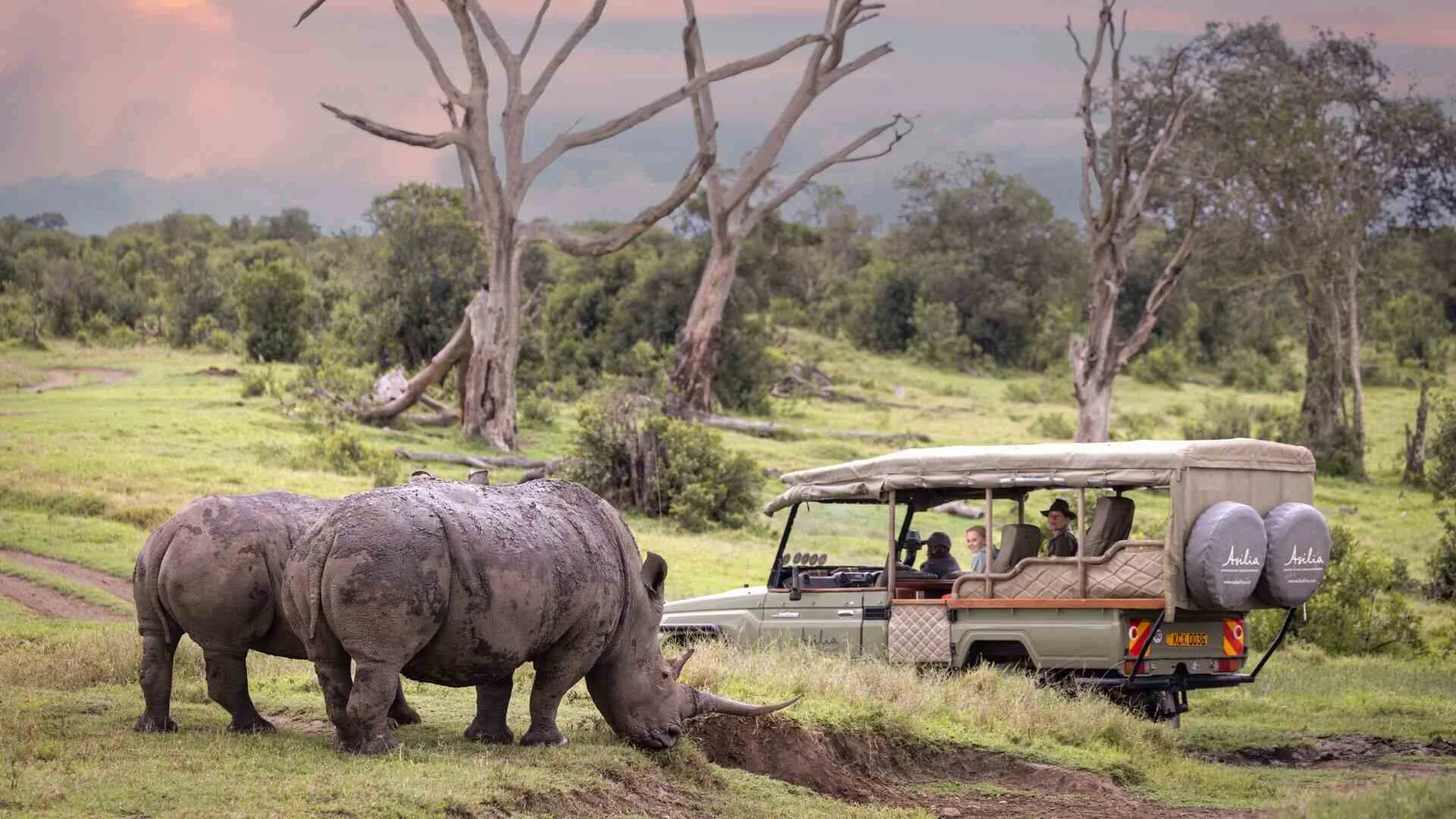
Ol Pejeta offers good opportunities to see southern white rhinos. White rhinos are enormous grazers adapted to feeding on short grasses, and their broad mouths distinguish them from black rhinos. During the afternoon game drive, you may encounter them:
- Grazing in open grassland.
- Resting.
- Walking between feeding areas.
- Near water.
- With calves.
- Alone or in small associations.
White rhinos may sometimes allow excellent photographic opportunities because they often use relatively open terrain. However, your guide still maintains a respectful distance and avoids interfering with their movement.
Black Rhino Search
Ol Pejeta is also an important stronghold for black rhinos. Black rhinos generally prefer more browse-rich environments than white rhinos, and their pointed upper lip helps them feed on leaves, shoots and woody vegetation. They can be more difficult to spot because bush provides concealment. Your guide searches suitable habitat while watching for:
- Fresh tracks.
- Browsed vegetation.
- Rhino dung.
- Known movement areas.
- Recent sighting information.
- Animals emerging into open sections.
A black rhino sighting is especially rewarding because these animals remain critically important from a conservation perspective.
Understanding White Rhino vs Black Rhino
The names can be misleading because both species appear grey. The easiest differences to understand involve feeding ecology and mouth shape.
White Rhino
White rhinos are usually characterized by:
- Broad square mouth.
- Grazing.
- Lower head carriage while feeding.
- Larger body.
- Preference for open grassland.
Black Rhino
Black rhinos are usually characterized by:
- Pointed upper lip.
- Browsing.
- More frequent feeding from shrubs.
- Somewhat smaller body.
- Greater use of bushy habitats.
Individual appearance varies, so guides often use behavior and habitat as additional identification clues.
Why Rhino Conservation Matters
Rhinos have been among Africa’s most heavily targeted animals because of illegal demand for rhino horn. Conservation therefore requires sustained investment in:
- Security.
- Monitoring.
- Veterinary care.
- Habitat.
- Research.
- Population management.
- Community support.
- Regional conservation partnerships.
Seeing rhinos in Ol Pejeta should therefore be understood not simply as a wildlife sighting but as the visible result of decades of conservation work.
Northern White Rhino Conservation
Ol Pejeta is globally associated with the remaining northern white rhinos, and the surviving individuals are protected under exceptional conservation arrangements. Because their situation is highly sensitive and management protocols may change, any visitor access, interpretation or conservation-related encounter must follow the conservancy’s current rules and available programs.
The broader story nevertheless demonstrates the urgency of wildlife conservation. It raises important questions about:
- Extinction.
- Genetic diversity.
- Reproductive science.
- Habitat protection.
- International conservation responsibility.
For many travelers, learning about this story becomes one of the most thought-provoking aspects of the safari.
Elephants in Ol Pejeta
Elephants are also commonly associated with the conservancy. Family groups may move between feeding areas and water, while large bulls may be encountered alone. You may observe elephants:
- Browsing.
- Feeding on grass.
- Drinking.
- Dust bathing.
- Moving between habitats.
- Protecting calves.
- Interacting socially.
Because Ol Pejeta is smaller than enormous wilderness areas such as Tsavo, elephants may sometimes be encountered within relatively manageable game-drive distances.
African Buffaloes
Buffaloes are another important component of Ol Pejeta’s wildlife. They may occur in:
- Large herds.
- Smaller groups.
- Solitary older bulls.
Buffaloes graze across open areas and often remain relatively close to water. They form part of the famous Big Five and contribute to Ol Pejeta’s appeal for travelers hoping to see several major African mammals within one short safari.
Searching for Lions
Lions occur within the conservancy and may be encountered during game drives. Your guide searches for them using:
- Tracks.
- Recent sightings.
- Prey behavior.
- Vulture activity.
- Known lion territories.
- Alarm calls.
During warmer afternoon periods, lions may remain inactive in shade, and as temperatures decrease, they may begin moving. Possible sightings include:
- Lions resting.
- Pride members interacting.
- Males patrolling.
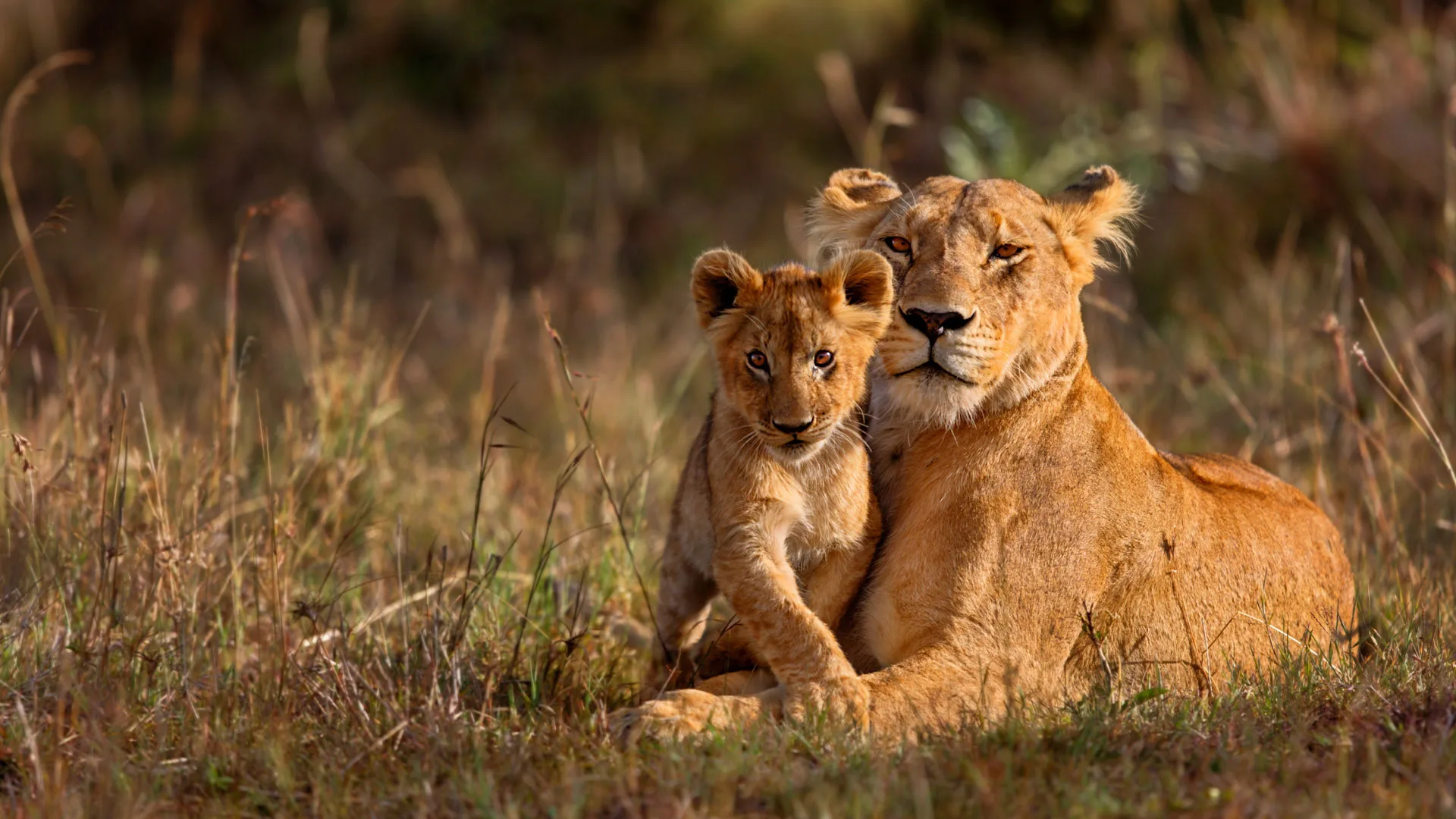
- Mothers with cubs.
- Lions watching herbivores.
- Feeding behavior.
Wildlife is never staged, so every predator encounter remains unpredictable.
Leopards
Leopards are also present but naturally much more elusive. They tend to use vegetation, drainage systems, woodland and other cover. Guides may scan trees and bush edges for:
- Spotted coat patterns.
- Hanging tails.
- Prey stored in trees.
- Movement through vegetation.
- Alarm calls.
A leopard encounter is usually one of the safari’s biggest bonuses, but it can never be guaranteed.
Cheetahs and Other Predators
Depending on current wildlife distribution and habitat use, cheetahs may also occur in suitable open areas, and spotted hyenas and jackals can be encountered as well. Predator communities are important because they help regulate herbivore populations and maintain ecological balance. Even if you do not witness hunting, observing predators resting, interacting or patrolling provides important insight into the ecosystem.
Giraffes
Giraffes are commonly encountered within suitable habitats. They may be seen:
- Browsing acacias.
- Moving across open plains.
- Feeding in small groups.
- Standing against Mount Kenya views when weather permits.
Their height provides excellent opportunities for environmental photography. Rather than taking only close portraits, photographers can include the surrounding landscape to show the character of Laikipia.
Zebras and Other Herbivores
Plains zebras may occur alongside: Elands, Waterbucks, Impalas, Grant’s gazelles, Warthogs, Other grazing and browsing species.
Each animal occupies a different ecological niche: some prefer open grass, others stay close to shrubs and others remain near water. Observing these differences makes a game drive more meaningful than simply counting species.
Afternoon Light in Laikipia
Late afternoon can be particularly beautiful. The grassland takes on warm tones, Mount Kenya may appear through cloud and wildlife begins moving more actively as temperatures cool. Possible photographic subjects include: Rhinos in golden grass, Giraffes, Elephant silhouettes, Buffaloes, Lions, Scenic acacia landscapes.
Return to your lodge or camp according to conservancy regulations. Enjoy dinner and your first overnight stay.
Accommodation: Budget, mid-range, luxury or high-end lodge/camp
Meals: Lunch and Dinner according to confirmed package
Main Activities: Nairobi transfer and afternoon Ol Pejeta game drive
Approximate Road Time: Commonly around 4–5+ hours depending on Nairobi traffic, stops and accommodation location
Where you stay
-
Essential (Budget)

- Comfort (Mid-range)
- Premium (Luxury)
- Signature (High-end)
-
Day 2: Full-Day Ol Pejeta Wildlife and Conservation Safari - Main destination
- Ol Pejeta Conservancy
- Meals
- Breakfast, Lunch, Dinner
Day 2 is the centerpiece of your 3 Days Ol Pejeta Safari. With no long transfer required, you can concentrate on wildlife, conservation and photography. The day can normally be structured around:
- Early morning game drive.
- Rhino search.
- Big Five viewing.
- Sweetwaters Chimpanzee Sanctuary.
- Conservation interpretation.
- Lunch.
- Afternoon game drive.
- Sunset wildlife viewing.
Depending on your interests, the safari can be adjusted to emphasize particular species or activities.
Early Morning Game Drive
Wake before or around sunrise. The first hours of daylight are excellent for wildlife viewing: temperatures are cooler and predators may still be active after the night. Rhinos may graze before the day becomes warmer, elephants and buffaloes begin moving between feeding and water areas, and birds become active across the conservancy. Photography conditions are also excellent because morning light is soft.
Sunrise in Ol Pejeta
On a clear morning, the surrounding landscape can be spectacular. Mount Kenya may appear in the distance, though it is often hidden by cloud and never guaranteed. Grasslands catch the first light and acacia trees create strong silhouettes. If wildlife moves through the foreground, the scene can produce exceptional photographs. Possible early morning images include: Rhino with mountain backdrop, Giraffe silhouettes, Elephants, Zebras, Buffalo herds, Predators moving across tracks.
Cloud patterns vary rapidly, so photographers should be ready to take advantage of short periods of clear light.
Morning Lion Search
Predators are often a major focus of the early drive. Lions may be:
- Walking.
- Returning from nocturnal activity.
- Feeding.
- Calling.
- Resting after a hunt.
- Interacting within a pride.
Your guide uses knowledge of current territories and recent sightings. Finding lions often involves careful observation rather than simply driving quickly through the conservancy, and a cluster of staring gazelles or nervous zebras may indicate something hidden nearby. Lion sightings cannot be guaranteed.
Spotted Hyenas
Spotted hyenas are highly successful predators and scavengers. They may be encountered:
- Alone.
- In small groups.
- Near carcasses.
- Walking back toward resting areas.
- Interacting with lions.
Hyenas are often misunderstood. They have complex social systems and are capable hunters, and watching them for several minutes can reveal behavior missed when safari vehicles simply drive past.
Morning Rhino Search
The full day provides additional opportunities to observe rhinos. If you saw only white rhinos on Day 1, your guide may concentrate on areas more suitable for black rhinos. If both species were encountered, you may focus instead on:
- Mothers with calves.
- Different individuals.
- Behavior.
- Photography.
- Conservation interpretation.
Patience is particularly important when searching for black rhino in bushier habitat.
Rhino Calves
Seeing a rhino calf is particularly memorable. Young rhinos remain closely associated with their mothers, and a calf may:
- Walk beside the female.
- Rest nearby.
- Copy feeding behavior.
- Approach the mother when nervous.
Visitors should never encourage guides to move closer simply because a calf is present. Animals with young deserve extra space.
Conservancy Game Viewing
Ol Pejeta’s relatively compact geography makes it possible to move between different wildlife habitats efficiently, and during the morning you may encounter several species within a relatively short period. However, safari should not become a race between sightings. Allow time to observe:
- Feeding.
- Social behavior.
- Movement.
- Predator-prey interactions.
- Birds.
- Habitat.
The quality of an encounter is often more important than the number of species seen.
Sweetwaters Chimpanzee Sanctuary
One of Ol Pejeta’s distinctive attractions is the Sweetwaters Chimpanzee Sanctuary. The sanctuary provides refuge to chimpanzees rescued from difficult situations. Chimpanzees are not naturally native to Kenya, so the sanctuary should not be confused with wild chimpanzee trekking experiences in countries such as Uganda or Rwanda. The focus here is:
- Rescue.
- Welfare.
- Conservation education.
- Long-term care.
A visit can provide valuable insight into the threats faced by chimpanzees elsewhere in Africa.
What to Expect at the Chimpanzee Sanctuary
Depending on current operating procedures and visitor access, you may observe chimpanzees from designated areas and learn about individual animals. Interpretation may cover:
- Where rescued chimpanzees originated.
- Why they could not be returned to the wild.
- Their social behavior.
- Feeding.
- Long-term care.
- Threats to chimpanzee populations.
- Illegal wildlife trade.
- Habitat loss.
The experience can be particularly educational for families.
Is Chimpanzee Tracking Available in Ol Pejeta?
No. Visitors should understand the difference clearly: Ol Pejeta offers a chimpanzee sanctuary experience, not wild chimpanzee trekking. For actual wild chimpanzee tracking, travelers usually need to visit natural chimpanzee habitats elsewhere in East Africa. The sanctuary visit is nevertheless extremely valuable because it highlights primate rescue and conservation.
Birdwatching in Ol Pejeta
Ol Pejeta supports a wide range of birds due to its varied habitats. Possible sightings may include: Eagles, Vultures, Secretary birds, Bustards, Hornbills, Rollers, Bee-eaters, Storks, Herons, Weavers, Starlings, Raptors, Grassland species, Woodland species.
Bird enthusiasts should inform us in advance, as a bird-focused game drive is naturally slower and involves frequent stops.
Raptors
Large birds of prey are particularly impressive. You may see: Eagles perched on trees, Vultures circling, Raptors scanning grassland, Birds feeding around carcasses.
Vulture activity can sometimes help guides locate predator kills, which demonstrates how birds can provide useful clues during mammal-focused game drives.
Lunch on Day 2
Depending on your itinerary, lunch can be taken at your lodge or another approved location. Returning to the lodge provides time to:
- Rest.
- Swim where facilities are available.
- Review photographs.
- Recharge batteries.
- Enjoy views.
- Prepare for the afternoon drive.
A picnic arrangement may also be possible depending on your selected safari plan and current rules.
Afternoon Game Drive
The second half of the day gives you another long opportunity to explore the conservancy. Your guide can now concentrate on species or experiences that remain priorities. For example:
- If black rhino has not yet been seen: return to suitable browsing habitat.
- If lions remain elusive: explore known predator areas.
- If photography is the priority: focus on rhinos, elephants and giraffes in good evening light.
- If birding is important: slow down through woodland and wetland areas.
- If conservation is your main interest: devote additional time to interpretation rather than rushing between species.
A private safari allows this kind of flexibility.
Elephant Behavior
If elephants are encountered in the afternoon, spend time watching their social interactions. You may observe:
- Trunk touching.
- Calves playing.
- Adults feeding.
- Dust bathing.
- Herd coordination.
- Protective behavior.
Elephants live within complex family structures, and longer observation frequently reveals subtleties that a brief sighting cannot.
Buffalo Behavior
Buffaloes may graze across open plains, and large groups can create impressive photographic scenes. Look for:
- Calves staying near adults.
- Oxpeckers feeding on buffaloes.
- Bulls resting apart.
- Herds moving toward water.
Buffaloes also interact strongly with predators. Lions must exercise caution when hunting them because adult buffaloes can defend themselves aggressively.
Giraffes in Evening Light
Giraffes become particularly striking in the low afternoon light. Possible images include:
- Giraffe with Mount Kenya.
- Giraffes walking through grassland.
- Acacia browsing.
- Silhouettes.
- Groups moving across open plains.
The open Laikipia landscape provides excellent opportunities for environmental wildlife photography.
Sunset Game Drive
As the sun drops, predators may become more active: lions may rise from shade, hyenas begin moving and herbivores remain alert. The lighting softens and can create beautiful photographs of rhinos and elephants. Eventually return to your lodge for dinner and your second overnight stay.
Accommodation: Same or equivalent lodge/camp
Meals: Breakfast, Lunch and Dinner
Main Activities: Full-day wildlife viewing and conservation experiences
Safari Style: Morning and afternoon game drives with conservation visits
Optional Experiences in Ol Pejeta
The exact optional experiences available can change according to conservancy operations, conservation priorities and visitor regulations. Potential additional activities may include selected conservation experiences or guided activities where officially available. Because conservation access can change, these should always be confirmed for your travel date rather than presented as guaranteed. Possible interests to ask about include:
- Specialist rhino conservation interpretation.
- Additional guided wildlife experiences.
- Night wildlife activities where officially permitted.
- Behind-the-scenes conservation learning.
- Guided walking experiences in approved areas.
Additional costs and age restrictions may apply.
Where you stay
-
Day 3: Morning Ol Pejeta Game Drive – Return to Nairobi - Main destination
- Ol Pejeta Conservancy
- Drive time
- Return transfer as outlined in the itinerary
- Meals
- Breakfast, Lunch
Wake for your final morning in the conservancy. If you did not obtain a clear Mount Kenya view on previous days, the early morning may provide another opportunity, although views are never guaranteed. Begin your final game drive or enjoy wildlife viewing while gradually moving toward the conservancy exit, depending on your accommodation and departure plan.
Final Predator Search
If lions or leopards were elusive, early morning provides one more opportunity. Your guide can revisit:
- Known lion territories.
- Woodland.
- Riverine sections.
- Open grassland.
Fresh tracks left during the night can provide valuable clues. Predator viewing always requires luck and patience.
Final Rhino Experience
Many guests choose to dedicate part of the final morning to rhinos again. A second or third rhino sighting may reveal completely different behavior. You might see:
- A rhino walking.
- Grazing.
- Resting.
- A mother and calf.
- A black rhino browsing.
Because rhino conservation is central to Ol Pejeta’s identity, spending extra time with them provides an appropriate final experience before departure.
Morning Birds and Smaller Wildlife
Do not overlook smaller animals during the final drive. Possible sightings may include: Warthogs, Jackals, Small antelopes, Mongooses, Baboons, Birds, Reptiles.
Safari becomes richer when visitors appreciate the complete ecosystem rather than only the largest mammals.
Breakfast and Check-Out
Return to your lodge for breakfast where required. Check out and begin the drive back toward Nairobi, or continue north or west according to your wider Kenya itinerary. Possible onward destinations include:
- Samburu.
- Mount Kenya region.
- Lake Nakuru.
- Nairobi.
Arrival in Nairobi is usually expected later in the afternoon depending on traffic and stops. Your guide transfers you to your hotel, residence, airport or another agreed location. This marks the end of your 3 Days Ol Pejeta Safari.
Meals: Breakfast and lunch depending on confirmed package
Main Activities: Morning game drive and onward transfer
Approximate Road Time to Nairobi: Commonly around 4–5+ hours depending on traffic, stops and route
About Ol Pejeta Conservancy
Ol Pejeta Conservancy lies in Laikipia County in central Kenya and has become one of the country’s most important conservation and safari destinations. The landscape includes:
- Open grassland.
- Bushland.
- Woodland.
- Riverine habitat.
- Managed conservation areas.
- Views toward Mount Kenya.
This combination supports diverse wildlife and provides excellent conditions for conservation-focused tourism.
Ol Pejeta and the Big Five
Ol Pejeta is frequently associated with Big Five safari opportunities. Possible sightings include: Lion, Leopard, Elephant, Buffalo, Rhinoceros.
Rhino viewing is particularly strong. However, even within a protected conservancy, wildlife remains wild. Seeing all five species within three days is possible but cannot be guaranteed, and leopards are especially unpredictable because of their secretive behavior.
Where you stay
03 Rates
Safari rates 2027-2029
Indicative per person. Season, group size and lodge style change the total — your quotation confirms current rates.
-
Essential (Budget)
Essential (Budget)
Budget camps and lodges suit travelers who prioritize wildlife while keeping costs lower.
Great value camps
-
Comfort (Mid-range)
Comfort (Mid-range)
Mid-range tented camps and lodges balance comfort and price with private rooms or tents and en-suite facilities.
Quoted for your dates
-
Premium (Luxury)
Premium (Luxury)
Luxury camps and lodges focus on location, service and more intimate wildlife experiences.
Premium camps and lodges
-
Signature (High-end)
Signature (High-end)
Signature camps and lodges are the most exclusive stays — small, highly private properties with exceptional guiding and setting.
Exclusive signature stays
04 Activities
Safari activities
Game viewing is the core of this itinerary. Optional extras are quoted separately and depend on season, permits and availability. Individual species and river crossings are never guaranteed.

Additional information
Plan This Safari
Why Ol Pejeta Is Excellent for Rhinos
Ol Pejeta is one of the destinations most strongly associated with rhino conservation in Kenya. Reasons include:
- Significant rhino populations.
- Dedicated security.
- Long-term monitoring.
- Conservation management.
- Strong international conservation profile.
- Both black and white rhino opportunities.
This makes it ideal for travelers who have seen lions and elephants elsewhere but want a stronger chance of seeing rhinos, although no sighting can be guaranteed.
Black Rhinos in Ol Pejeta
Black rhinos are browsers. They prefer vegetation that allows them to feed on leaves and shoots, and because this habitat can be relatively dense, they may remain hidden. A patient search is therefore essential. Black rhinos can also be more reactive than white rhinos, so guides maintain appropriate viewing distances.
White Rhinos in Ol Pejeta
White rhinos spend more time grazing, and open grasslands can provide excellent viewing. Their enormous size is particularly impressive when seen from a safari vehicle. Watching one calmly feeding can become one of the most memorable wildlife experiences in Kenya.
Ol Pejeta and Northern White Rhino Conservation
The northern white rhino conservation story has made Ol Pejeta internationally important. Visitors should approach this subject with respect. The remaining animals are part of an intensive conservation effort rather than a standard tourist attraction. The significance of their presence lies in what they represent:
- The consequences of wildlife exploitation.
- The difficulty of recovering species after extreme decline.
- The importance of early conservation action.
- The role of science in conservation.
- The limits of modern conservation technology.
This context makes the visit both fascinating and sobering.
Sweetwaters Chimpanzee Sanctuary
The sanctuary adds a completely different conservation theme. While rhino conservation focuses on species survival in Kenya, the chimpanzee sanctuary focuses on rescued primates requiring long-term care. Travelers can therefore experience two very different conservation stories within the same short safari.
Wildlife You May See on a 3 Days Ol Pejeta Safari
Possible wildlife includes the following. These are possibilities, not guaranteed sightings.
Big Five Species
- Lion.
- Leopard.
- African elephant.
- African buffalo.
- Rhinoceros.
Rhinos
- Black rhino.
- Southern white rhino.
- Northern white rhino conservation animals under managed conditions.
Herbivores
- Plains zebras.
- Giraffes.
- Elands.
- Waterbucks.
- Impalas.
- Grant’s gazelles.
- Warthogs.
Predators
- Lions.
- Leopards.
- Spotted hyenas.
- Jackals.
- Other smaller carnivores.
Primates
- Chimpanzees at the sanctuary.
- Other locally occurring primates depending on habitat.
Is Ol Pejeta Good for Lions?
Lions occur within the conservancy, and the open grasslands can offer rewarding viewing opportunities. However, exact sightings depend on natural movement and cannot be guaranteed. Early morning and late afternoon often provide good chances because lions may be more active when temperatures are cooler.
Is Ol Pejeta Good for Leopards?
Leopards occur in the ecosystem but are considerably more difficult to locate than rhinos or buffaloes. A sighting should be treated as a valuable bonus. Longer stays provide more opportunities, but even then nothing can be guaranteed.
Is Ol Pejeta Good for Elephants?
Elephants move through the conservancy and broader Laikipia landscape, and family groups and bulls can be encountered. The combination of elephants and Mount Kenya scenery can provide excellent photography when the weather allows.
Is Ol Pejeta Good for Birdwatching?
Yes. The conservancy’s mixture of open grassland, bush and woodland supports diverse birdlife. Bird-focused travelers should request slower game drives and a guide comfortable with bird identification.
Best Time for a 3 Days Ol Pejeta Safari
Ol Pejeta can be visited throughout the year. Different periods provide different scenery and wildlife conditions.
Dry Season Safari
Dryer periods can provide:
- Good wildlife visibility.
- Concentration around water.
- Easier road conditions.
- Clearer open landscapes.
- Strong photography.
Vegetation may become less dense, making animals easier to spot.
Green Season Safari
Rain transforms the conservancy. Advantages may include:
- Green grasslands.
- Dramatic skies.
- Bird activity.
- Fresh vegetation.
- Attractive landscape photography.
- Fewer visitors during some periods.
Rain can make some tracks muddy, but proper safari vehicles help maintain access where conditions remain safe.
Mount Kenya Views from Ol Pejeta
Mount Kenya can form a dramatic backdrop to the conservancy. However, visibility is weather dependent, and cloud commonly obscures the higher peaks. Early morning may provide some of the best opportunities, but a clear view is a bonus rather than something that should be guaranteed.
Ol Pejeta for Wildlife Photography
The conservancy is excellent for photographers because of its combination of:
- Rhinos.
- Predators.
- Elephants.
- Giraffes.
- Open landscapes.
- Mount Kenya scenery.
- Conservation stories.
A private vehicle allows photographers to control the pace more effectively.
Recommended Photography Equipment
Useful equipment can include the following. Morning and evening light generally provide the best conditions.
- Telephoto lens.
- Medium zoom lens.
- Wide-angle lens for landscapes.
- Spare batteries.
- Multiple memory cards.
- Bean bag.
- Lens-cleaning equipment.
- Camera rain protection.
- Dust protection.
- Backup storage.
Accommodation on the 3 Days Ol Pejeta Safari
Accommodation can be selected according to your preferred level of comfort.
Budget Ol Pejeta Accommodation
Budget arrangements may use accommodation in the broader Nanyuki or Laikipia area. Typical features may include:
- Simple rooms.
- En-suite bathroom.
- Restaurant.
- Basic common areas.
- Practical access to the conservancy.
Budget properties help reduce overall safari cost while retaining the main wildlife experience.
Mid-Range Ol Pejeta Accommodation
Mid-range accommodation may offer:
- Comfortable rooms or tents.
- Private bathroom.
- Restaurant.
- Bar.
- Lounge.
- Swimming pool at selected properties.
- Good access to wildlife areas.
- Attractive surroundings.
This is often the best-value option for couples and families.
Luxury Ol Pejeta Accommodation
Luxury properties can provide:
- Premium tents or suites.
- Private decks.
- High-quality dining.
- Personalized service.
- Excellent locations.
- Small guest numbers.
- Wildlife viewing around camp.
- Enhanced safari atmosphere.
Luxury Ol Pejeta works especially well for honeymooners and high-end Kenya itineraries.
Staying Inside vs Outside Ol Pejeta
Accommodation location affects daily logistics.
Staying Inside or Immediately Beside the Conservancy
Advantages may include:
- Faster access to game drives.
- Strong wildlife atmosphere.
- Reduced transfer time.
- Easier early morning starts.
Staying in the Wider Nanyuki Area
Advantages may include:
- Wider accommodation range.
- More budget flexibility.
- Access to additional town services.
- Convenient combinations with other Mount Kenya activities.
The correct choice depends on budget and safari style.
Private 3 Days Ol Pejeta Safari
This safari can be arranged as a fully private itinerary. A private vehicle provides:
- Flexible departure times.
- More photography space.
- Freedom to focus on rhinos.
- Family-friendly pacing.
- Greater interaction with your guide.
- Easier conservation-focused discussions.
- More time at individual sightings.
For a three-day safari, this flexibility maximizes the value of your available time.
3 Days Ol Pejeta Safari for Couples
Ol Pejeta works extremely well for couples. It combines:
- Wildlife.
- Conservation.
- Attractive scenery.
- Comfortable accommodation.
- Manageable road access.
Couples can extend the itinerary to Samburu or spend time around Mount Kenya.
3 Days Ol Pejeta Honeymoon Safari
A luxury version can be arranged for honeymooners. Possible additions include:
- Premium lodge.
- Private vehicle.
- Scenic dining where available.
- Longer safari extensions.
- Samburu combination.
- Masai Mara extension.
- Kenya coast extension.
Ol Pejeta adds an educational and conservation dimension to a romantic safari.
3 Days Ol Pejeta Family Safari
Ol Pejeta is particularly good for families. Children can learn about:
- Rhinos.
- Chimpanzee rescue.
- Conservation.
- Food chains.
- Wildlife behavior.
- Habitat protection.
The relatively manageable driving distances also make it attractive compared with longer road journeys. A private vehicle allows parents to shorten or extend game drives according to children’s energy levels.
Ol Pejeta for Solo Travelers
Solo travelers can book a private safari. This provides maximum flexibility but normally costs more per person because vehicle and guide costs are not shared. Where appropriate, a group departure may be considered if available.
3 Days Ol Pejeta Safari Cost
The cost depends on several factors. For accurate pricing, provide your travel dates and group details.
- Accommodation. Budget accommodation costs less than luxury properties.
- Group Size. Private transport costs are divided among the travelers.
- Travel Season. Accommodation rates change across the year.
- Conservancy Fees. Applicable conservation and entry fees form an important component of the package.
- Optional Experiences. Specialist conservation activities may carry additional costs.
- Starting and Final Destination. Returning to Nairobi may cost differently from continuing to Samburu or Lake Nakuru.
Budget 3 Days Ol Pejeta Safari
A budget package prioritizes wildlife and conservation while reducing accommodation costs. Typical inclusions remain:
- Safari vehicle.
- Professional guide.
- Conservancy access according to quotation.
- Game drives.
- Accommodation.
- Meals.
- Drinking water.
Mid-Range 3 Days Ol Pejeta Safari
Mid-range offers an excellent balance between comfort and price. It is ideal for:
- Couples.
- Families.
- Friends.
- Small groups.
- First-time visitors.
This category usually provides comfortable rooms, good meals and convenient safari access.
Luxury 3 Days Ol Pejeta Safari
A luxury package combines conservation with premium hospitality. Depending on property, benefits may include:
- High-end accommodation.
- Fine dining.
- Excellent locations.
- Personalized service.
- Premium rooms or tents.
- Attractive views.
- Small guest numbers.
3 Days Ol Pejeta vs 3 Days Lake Nakuru Safari
Both destinations are strong choices for rhino-focused travelers.
Choose Ol Pejeta for:
- Conservation-focused safari.
- Strong rhino viewing.
- Northern white rhino conservation story.
- Chimpanzee sanctuary.
- Big Five possibilities.
- Mount Kenya region scenery.
Choose Lake Nakuru for:
- Rhinos.
- Rift Valley lake scenery.
- Flamingo possibilities.
- Exceptional waterbirds.
- Rothschild’s giraffes.
Travelers with enough time can visit both.
3 Days Ol Pejeta vs 3 Days Samburu Safari
The two destinations complement one another extremely well.
Ol Pejeta Highlights
- Rhinos.
- Conservation.
- Big Five possibilities.
- Chimpanzee sanctuary.
- Mount Kenya views.
Samburu Highlights
- Grevy’s zebra.
- Reticulated giraffe.
- Gerenuk.
- Beisa oryx.
- Somali ostrich.
- Elephants.
- Ewaso Nyiro River.
A combined Ol Pejeta and Samburu itinerary provides one of the strongest wildlife circuits in northern Kenya.
Ol Pejeta vs Masai Mara
Choose Ol Pejeta if your priorities include:
- Rhinos.
- Conservation.
- Manageable travel from Nairobi.
- Laikipia scenery.
- Educational safari experiences.
Choose the Masai Mara for:
- Exceptional lion viewing.
- Cheetahs.
- Leopards.
- Great Migration possibilities.
- Vast savannah.
A longer itinerary can include both.
Ol Pejeta and Samburu Safari
One of the best extensions is Nairobi → Ol Pejeta → Samburu → Nairobi. This route provides exceptional wildlife diversity. Ol Pejeta contributes:
- Rhinos.
- Big Five.
- Conservation.
Samburu contributes:
- Northern specialist species.
- Elephants.
- Predators.
- Arid landscapes.
The combination is excellent for both first-time and repeat safari travelers.
Ol Pejeta and Mount Kenya
The conservancy’s location makes it easy to incorporate additional experiences around Mount Kenya. Depending on your interests and available time, the region may offer:
- Scenic stays.
- Mountain views.
- Forest environments.
- Nature experiences.
Specific activities should be selected according to your wider itinerary, and mountain views depend on weather.
Ol Pejeta and Lake Nakuru
Combining Ol Pejeta with Lake Nakuru creates a strong conservation and Rift Valley itinerary. You gain:
- Multiple rhino-viewing opportunities.
- Lake scenery.
- Birdlife.
- Different habitats.
The trip can then continue toward the Masai Mara.
What Is Included in a 3 Days Ol Pejeta Safari?
Typical inclusions may include the following. Always use your final confirmed quotation as the definitive inclusion list.
- Nairobi pickup.
- Private 4x4 safari vehicle.
- Professional driver-guide.
- Two nights’ accommodation.
- Meals specified in the itinerary.
- Ol Pejeta conservancy fees where included in the quotation.
- Scheduled game drives.
- Sweetwaters Chimpanzee Sanctuary visit where included and operating.
- Drinking water in the safari vehicle.
- Return transfer to Nairobi or agreed destination.
- Applicable safari logistics stated in your final quotation.
What Is Usually Excluded?
Unless specifically included, the following are usually excluded:
- International flights.
- Domestic flights.
- Kenya travel authorization or visa-related charges where applicable.
- Travel insurance.
- Alcoholic and premium beverages.
- Tips and gratuities.
- Personal purchases.
- Laundry.
- Additional conservation activities.
- Activities not stated in the itinerary.
- Additional Nairobi accommodation.
- Medical expenses.
- Services outside the confirmed package.
What to Pack for Ol Pejeta
Recommended items include:
- Lightweight safari clothing.
- Long trousers.
- Long-sleeved shirt.
- Warm fleece or jacket.
- Comfortable footwear.
- Hat.
- Sunglasses.
- Sunscreen.
- Insect repellent.
- Camera.
- Binoculars.
- Spare batteries.
- Memory cards.
- Power bank.
- Personal medication.
- Small backpack.
- Reusable water bottle where suitable.
- Travel documents.
Why Warm Clothing Is Useful
Ol Pejeta lies at a relatively elevated location. Early mornings and evenings can feel cool, especially when driving with the safari vehicle roof open. Layered clothing is ideal. Start with a fleece or light jacket and remove it as the day warms.
Safety During an Ol Pejeta Safari
Ol Pejeta contains free-ranging wild animals. Follow your guide’s instructions at all times. Important rules include:
- Remain inside the safari vehicle except in authorized areas.
- Never approach rhinos on foot unless part of an officially guided activity.
- Keep appropriate distance from elephants.
- Never feed wildlife.
- Keep noise low.
- Do not block animal movement.
- Supervise children.
- Follow lodge escort procedures after dark.
- Do not attempt to touch sanctuary animals.
Responsible Rhino Viewing
Rhinos deserve particularly careful viewing. Responsible behavior includes:
- Maintaining distance.
- Giving mothers with calves extra space.
- Avoiding loud noise.
- Never surrounding an animal with multiple vehicles where avoidable.
- Never blocking its path.
- Following conservancy regulations.
- Respecting security instructions.
Photography should never take priority over rhino welfare.
Responsible Chimpanzee Sanctuary Visits
Visitors should remember that rescued chimpanzees are under long-term care. A sanctuary visit should be approached respectfully. Important principles include:
- Following staff instructions.
- Remaining within designated visitor areas.
- Never feeding animals.
- Avoiding unnecessary noise.
- Respecting photography restrictions.
- Listening to conservation interpretation.
The purpose is education and welfare, not entertainment.
Who Should Book This Safari?
The 3 Days Ol Pejeta Safari is particularly suitable for:
- Rhino enthusiasts.
- Conservation-minded travelers.
- Families.
- Couples.
- Wildlife photographers.
- First-time Kenya visitors.
- Repeat safari travelers.
- Solo travelers.
- Small private groups.
- Travelers continuing to Samburu.
- Visitors interested in Big Five safaris.
- Travelers wanting an educational wildlife experience.
- Visitors who prefer manageable road travel from Nairobi.
Why Three Days Works So Well at Ol Pejeta
A three-day stay allows you to experience the conservancy at several different times. Day 1 provides:
- Scenic transfer.
- First rhino search.
- Afternoon wildlife.
Day 2 provides:
- Early morning predators.
- Full wildlife exploration.
- Conservation experiences.
- Chimpanzee sanctuary.
- Evening photography.
Day 3 provides:
- Final rhino and predator opportunities.
- Morning landscapes.
- Return or onward journey.
This creates a substantially richer experience than a quick day trip.
Why Ol Pejeta Is More Than a Rhino Destination
Rhinos are undeniably central to the conservancy’s identity. However, Ol Pejeta is much more than a place to photograph rhinos. A three-day safari can also include:
- Lions.
- Leopards.
- Elephants.
- Buffaloes.
- Hyenas.
- Giraffes.
- Zebras.
- Antelopes.
- Birdlife.
- Chimpanzee conservation.
- Mount Kenya scenery.
- Broader conservation education.
The combination makes Ol Pejeta one of Kenya’s most complete short safari destinations.
Why Ol Pejeta Fits a Longer Kenya Safari
Ol Pejeta occupies an excellent geographical position for travelers moving through central and northern Kenya. It can add a distinct conservation component between other ecosystems. For example:
- Lake Nakuru adds Rift Valley lakes and birdlife.
- Ol Pejeta adds rhinos and conservation.
- Samburu adds northern specialist wildlife.
- Masai Mara adds predators and classic savannah.
Combining different regions makes the overall safari more varied and meaningful.
Book Your 3 Days Ol Pejeta Safari
Experience one of Kenya’s most important conservation landscapes on a 3 Days Ol Pejeta Safari from Nairobi. Search for black and white rhinos across open grasslands and bush. Watch elephants moving through the Laikipia landscape. Look for lions during early morning drives. Scan woodland for elusive leopards. Observe giraffes, buffaloes, zebras, antelopes and hyenas. Learn about the extraordinary effort involved in rhino conservation. Visit the Sweetwaters Chimpanzee Sanctuary where included and operating.
And, when weather permits, you may enjoy views toward magnificent Mount Kenya, although clear views are not guaranteed. We can customize this safari according to your:
- Travel dates.
- Number of travelers.
- Children's ages.
- Accommodation preference.
- Budget.
- Photography interests.
- Conservation interests.
- Nairobi flight schedule.
- Wider Kenya itinerary.
Choose Your 3 Days Ol Pejeta Safari Style
We can arrange the itinerary as a:
- Budget 3 Days Ol Pejeta Safari
- Mid-Range 3 Days Ol Pejeta Safari
- Luxury Ol Pejeta Safari
- Private Ol Pejeta Safari
- Family Ol Pejeta Safari
- Honeymoon Ol Pejeta Safari
- Photography Ol Pejeta Safari
- Rhino Conservation Safari
- Ol Pejeta and Samburu Safari Extension
Extend Your Ol Pejeta Safari
If you have more time, consider combining Ol Pejeta with:
- Samburu National Reserve – for Grevy’s zebras, reticulated giraffes, gerenuks, elephants and northern Kenya scenery.
- Mount Kenya Region – for highland landscapes and mountain views.
- Lake Nakuru National Park – for additional rhino opportunities and Great Rift Valley birdlife.
- Masai Mara National Reserve – for exceptional Big Cat viewing and migration possibilities.
- Nairobi – for city stays, international connections or additional travel arrangements.
Request a 3 Days Ol Pejeta Safari Quote
To prepare a personalized quotation, send us:
- Preferred travel dates.
- Number of adults.
- Number and ages of children.
- Preferred accommodation category.
- Nairobi pickup or arrival details.
- Whether rhinos are your main priority.
- Whether you want conservation-focused experiences.
- Whether you want to continue to Samburu.
- Other Kenya destinations you would like to combine with Ol Pejeta.
We can then prepare a customized 3 Days Ol Pejeta Safari based on your preferred travel style, interests and budget.
Planning Questions
Frequently Asked Questions
Is three days enough for Ol Pejeta?
Yes. Three days provides a very good short safari with an afternoon game drive, a full day of wildlife and conservation experiences and another morning game drive.
How long is the drive from Nairobi?
Driving commonly takes approximately four to five hours or longer depending on traffic, stops and your exact accommodation location.
Can we see rhinos?
Ol Pejeta is one of Kenya’s premier rhino conservation destinations, although individual sightings can never be guaranteed.
Can we see both black and white rhinos?
It is possible. Both species occur within the conservancy, although individual sightings can never be guaranteed.
Are the last northern white rhinos at Ol Pejeta?
Ol Pejeta is internationally associated with the surviving northern white rhinos and the conservation program surrounding them. Visitor access and interpretation depend on current conservation policies.
Can we touch the northern white rhinos?
You should never assume physical contact is available. Any conservation encounter is governed by current conservancy rules and must be officially arranged.
Can we see the Big Five?
All Big Five species are associated with Ol Pejeta, but seeing all five within three days cannot be guaranteed. Leopards are particularly elusive.
Are there lions?
Lions occur within the conservancy, although sightings cannot be guaranteed.
Are there leopards?
Leopards are present but difficult to locate, so sightings cannot be guaranteed.
Are there elephants?
Elephants occur throughout the conservancy and wider Laikipia landscape, although sightings cannot be guaranteed.
Is the chimpanzee sanctuary included?
It can be included in the itinerary subject to current opening arrangements and the details of your confirmed package.
Are chimpanzees wild in Ol Pejeta?
No. The chimpanzees are rescued animals living within a sanctuary. Chimpanzees are not naturally native to Kenya.
Can we do chimpanzee trekking?
No. The Ol Pejeta experience is a sanctuary visit rather than wild chimpanzee trekking.
Is Ol Pejeta good for children?
Yes. It is particularly educational for families because wildlife viewing can be combined with conservation learning.
Is the safari private?
It can be arranged as a completely private safari.
Is Ol Pejeta good for photography?
Yes. Rhinos, predators, elephants, giraffes and Mount Kenya scenery provide good opportunities, although sightings and mountain views depend on conditions and are not guaranteed.
Can we combine Ol Pejeta with Samburu?
Yes. This is one of the best northern Kenya safari combinations.
Can we combine it with Lake Nakuru?
Yes. A longer safari can connect Ol Pejeta with Lake Nakuru and then continue toward Masai Mara.
Can we stay inside the conservancy?
Accommodation may be available within or close to the conservancy depending on your selected property and travel dates.
Is Wi-Fi available?
Many established properties provide Wi-Fi, though reliability may vary in remote areas.
Is electricity available?
Most established safari properties provide electricity or charging facilities, sometimes through solar systems or generators.
Can dietary requirements be accommodated?
Most lodges can cater for common dietary needs if informed in advance.
05 Request Quote
Request Quote
Tell us your dates, group size, and preferred lodge style — we will send a tailored quote for this safari.
Want to extend your safari?
Add Amboseli, Diani Beach, Tanzania and Zanzibar, or gorilla trekking in Uganda or Rwanda — we tailor the journey to your dates.