

Seeing the Big Five in Kenya is one of the most sought-after experiences on an African safari. The term refers to five iconic African mammals: the lion, leopard, African elephant, African buffalo and rhinoceros. Kenya offers opportunities to encounter all five in the wild, although sightings depend on the destination, season, animal movements and time available for game drives.
A Kenya Big Five safari is not necessarily about visiting one park and ticking five animals off a list. In fact, some of the country’s best wildlife destinations are especially strong for particular species. The Masai Mara is outstanding for lions and other predators, Amboseli is internationally recognised for elephants, while Ol Pejeta, Lewa and Lake Nakuru are important rhino conservation destinations. Combining complementary parks often creates a richer safari than trying to find every species in one location, and introduces travellers to Kenya’s varied landscapes, from the Mara’s grasslands and Amboseli’s wetlands to the highland conservancies of Laikipia.
Understanding the animals themselves makes the experience more rewarding. Lions, leopards, elephants, buffalo and rhinos occupy different habitats, follow different daily routines and respond differently to rainfall and human activity. This guide explains the history of the Big Five, where to see each species in Kenya, the best safari seasons and how to design an itinerary that provides meaningful wildlife encounters without rushing between parks.
What Are the Big Five Animals in Kenya?
The Big Five animals in Kenya are the African lion, African leopard, African elephant, African buffalo and rhinoceros. The expression originated in the era of big-game hunting, when these animals were considered particularly dangerous and difficult to hunt on foot; today, the term is widely used in wildlife tourism and photography. The Big Five are not necessarily Africa’s five largest mammals—giraffes and hippos, for example, are substantial animals but are not part of the traditional group.
Modern safari tourism gives the term a different purpose. Visitors travel to observe these animals in their natural habitats, learn about their behaviour and contribute to conservation through responsible tourism. A successful safari should place wildlife welfare above close encounters or photographs. Observing an elephant family from an appropriate distance or watching a leopard resting undisturbed can be more meaningful than approaching an animal too closely.
1. African Lion: Kenya’s Iconic Savannah Predator
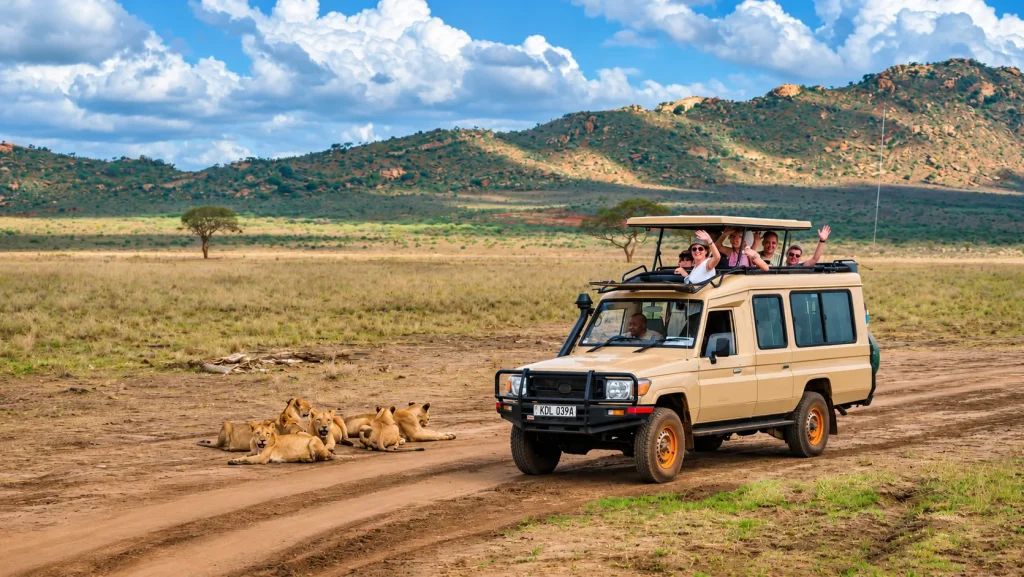
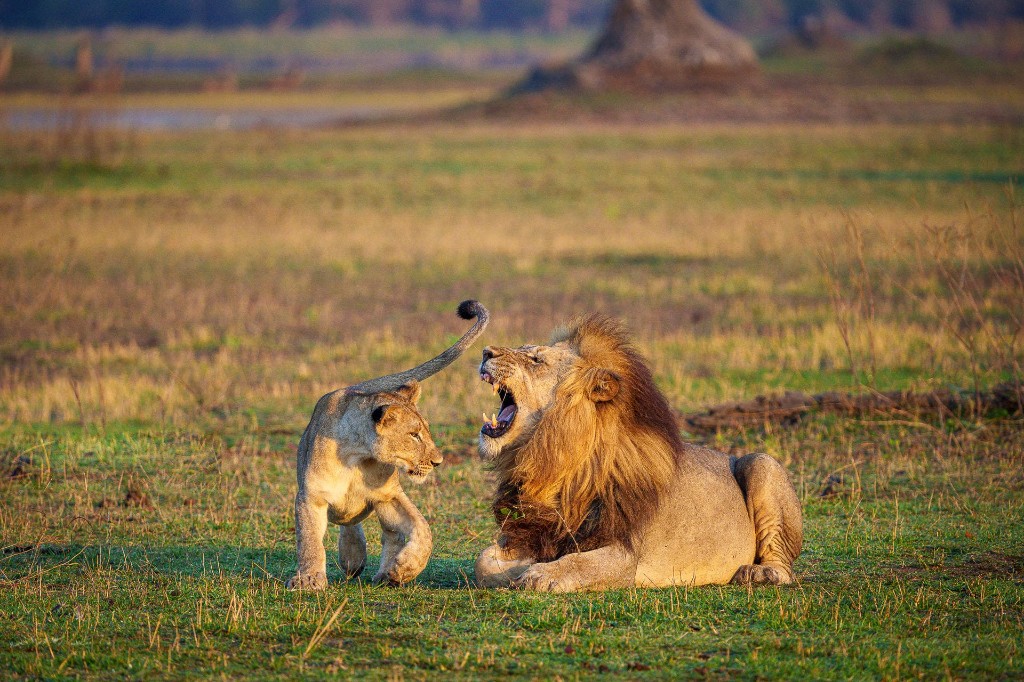
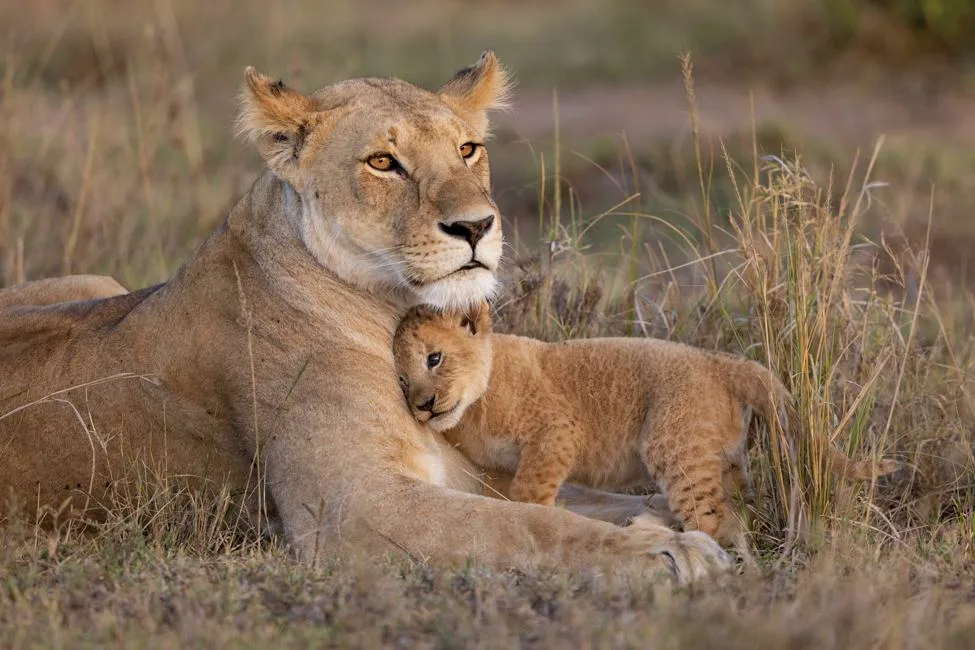
The African lion is among the most recognisable animals on a Kenya safari. Lions occupy savannah, grassland and woodland habitats, where they hunt a variety of prey and maintain complex social relationships. Unlike most other large cats, lions are social animals: a pride may include related females, cubs and adult males associated with the group, and pride composition changes over time as animals mature, disperse or establish new territories. Adult males are often recognised by their manes, although mane colour and size vary, while females are generally smaller and are frequently involved in hunting and raising cubs.
Where to See Lions in Kenya
The Masai Mara National Reserve is one of Kenya’s strongest destinations for lion viewing. Its extensive grasslands support large populations of grazing mammals, providing suitable prey. Samburu National Reserve also supports lions within its semi-arid landscape, particularly around habitats associated with the Ewaso Ng’iro River, and Amboseli National Park, Tsavo East and Tsavo West contain lions, although sightings vary with habitat and daily movements.
Best Time to See Lions
Lions can be observed throughout the year. Early morning and late afternoon are often productive because temperatures are cooler and animals may be more active, while during hot periods lions frequently rest in shade. Travellers interested in predator behaviour should allow several game drives rather than expecting hunting activity during a short excursion.
2. African Leopard: The Elusive Big Five Cat
The African leopard is often considered one of the most difficult Big Five animals to observe. Leopards are generally solitary, highly adaptable predators that inhabit woodland, grassland, rocky terrain and riverine vegetation, and their spotted coats provide effective camouflage, allowing them to remain concealed even when relatively close to a safari vehicle. They are powerful climbers and may rest in trees or carry prey into branches, although their behaviour varies between individuals and habitats.
Where to See Leopards in Kenya
The Masai Mara offers opportunities to observe leopards in suitable riverine and woodland habitats. Samburu National Reserve is another attractive destination, with rocky areas and riverine woodland providing suitable cover, and selected conservancies in Laikipia also support leopards. Leopards occur in Tsavo and other Kenyan wildlife landscapes, although dense vegetation can make sightings challenging.
Best Time to See Leopards
Leopards are present throughout the year. Cool mornings, late afternoons and periods of reduced disturbance may provide opportunities to observe movement, and a knowledgeable guide can search for signs such as tracks, alarm calls and prey activity. Nevertheless, leopard sightings remain unpredictable and should never be guaranteed.
3. African Elephant: The Largest Land Mammal
The African elephant is the largest living land mammal and one of Kenya’s most impressive safari animals. Elephants are highly intelligent and social, with family groups often led by experienced females, and their behaviour includes feeding, bathing, dust-bathing, communication and interactions between calves and adults. They require substantial food and water, so their movements are influenced by seasonal vegetation and access to dependable water sources.
Where to See Elephants in Kenya
Amboseli National Park is one of Kenya’s most famous elephant destinations. Its permanent wetlands support elephants throughout the year, and the surrounding plains create opportunities for photography with Mount Kilimanjaro in the background when conditions allow. Tsavo East National Park is known for elephants that often appear reddish after dust-bathing in the park’s iron-rich soil, Samburu National Reserve offers rewarding elephant encounters around the Ewaso Ng’iro River, and elephants also occur in the Masai Mara, Ol Pejeta Conservancy and other suitable habitats.
Best Time to See Elephants
Elephants can be observed throughout the year. Dry-season conditions may encourage animals to concentrate around permanent water sources, and in Amboseli, January, February and June through October are generally attractive periods for elephant viewing. However, elephants move naturally across the wider ecosystem, and sightings vary.
4. African Buffalo: Powerful Herd Animals
The African buffalo is one of the Big Five’s most formidable members. Buffalo are large, muscular herbivores that may occur in substantial herds, and adult males can be particularly imposing, with heavy horns and powerful bodies. They occupy grassland, woodland and wetland-associated habitats, depending on food and water availability, and may be observed grazing, resting or moving between feeding areas and water sources.
Where to See Buffalo in Kenya
Buffalo occur in several of Kenya’s major safari destinations. The Masai Mara supports buffalo in grassland and woodland habitats, Amboseli offers opportunities to observe buffalo near wetlands, and Lake Nakuru National Park, Tsavo and Ol Pejeta Conservancy also support buffalo.
Best Time to See Buffalo
Buffalo can be encountered throughout the year. During dry periods, herds may concentrate near dependable water sources. Travellers should always observe buffalo from a safe distance because these animals can react unpredictably when threatened.
5. Rhinoceros: Kenya’s Conservation Priority
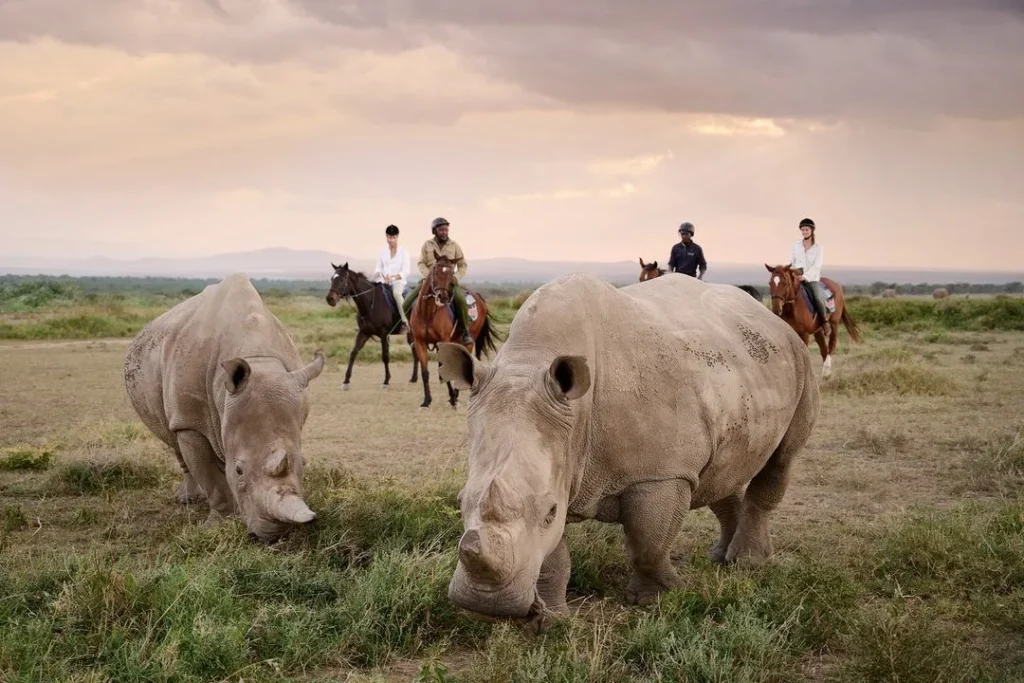
The rhinoceros is often the most challenging member of the Big Five to find in Kenya. The country supports both black and white rhinos, although their distribution is concentrated in protected areas with established conservation programmes. Black rhinos are generally browsers and often use woodland or thicker vegetation, while white rhinos are grazers and may be easier to observe in open grassland. Both face conservation challenges, including poaching and habitat pressures.
Where to See Rhinos in Kenya
Ol Pejeta Conservancy is one of Kenya’s most important rhino conservation destinations. It supports black and white rhinos and is internationally recognised for its conservation work. Lewa Wildlife Conservancy is another major rhino protection landscape, Lake Nakuru National Park provides opportunities to observe black and white rhinos within a relatively compact protected area, and Nairobi National Park is also an important rhino destination close to Kenya’s capital.
Best Time to See Rhinos
Rhinos inhabit these protected areas throughout the year. Relatively dry conditions may improve visibility in open habitats, but the most important factor is choosing a suitable conservation destination. Travellers should never assume that rhinos will be easy to locate in every Kenyan park.
Can You See All the Big Five in One Kenya Safari Park?
It is possible to encounter all five species within certain Kenyan wildlife landscapes, but no park guarantees sightings of every animal. The Masai Mara is outstanding for lions, leopards, elephants and buffalo, while rhinos are relatively uncommon in many areas. Ol Pejeta Conservancy supports all five species, but individual sightings remain unpredictable, and Lake Nakuru National Park is particularly valuable for rhinos, buffalo and other wildlife, while predator sightings depend on daily movements.
For travellers prioritising the complete Big Five experience, combining destinations is often the most practical approach. A route including the Masai Mara and Lake Nakuru provides opportunities to search for predators, elephants, buffalo and rhinos.
Best Places to See the Big Five in Kenya
Masai Mara National Reserve
The Masai Mara is one of the country’s strongest all-round wildlife destinations. Its open grasslands support lions, elephants, buffalo and other large mammals, leopards may be encountered in suitable habitats, and rhino sightings are possible but generally less predictable.
Ol Pejeta Conservancy
Ol Pejeta is particularly attractive for travellers interested in rhinos and conservation. It also supports elephants, buffalo, lions and leopards, and specialist conservation experiences may be available, subject to current arrangements.
Lake Nakuru National Park
Lake Nakuru is an important rhino conservation destination. Its relatively compact landscape makes it convenient for inclusion in a Rift Valley safari itinerary.
Amboseli National Park
Amboseli is outstanding for elephants and Mount Kilimanjaro scenery when conditions allow. Lions and buffalo also occur, but it is not a destination where travellers should expect to find all five species.
Lewa Wildlife Conservancy
Lewa is internationally recognised for rhino protection. Its carefully managed tourism and conservation programmes make it attractive for travellers seeking a specialist wildlife experience.
Best Time for a Kenya Big Five Safari
The best time for a Kenya Big Five safari is generally during January and February and from June through October. These periods often provide relatively dry conditions across several major safari regions, shorter vegetation may improve visibility, and animals may concentrate around dependable water sources. However, the best season varies by destination.
The Masai Mara is particularly popular from July through October because of migration activity. Amboseli offers rewarding elephant viewing during relatively dry periods. Rhino conservation destinations such as Ol Pejeta and Lewa can be visited throughout the year, and the wetter months may provide green landscapes, birdwatching and potentially fewer visitors.
Big Five Safaris During the Great Wildebeest Migration
The Great Wildebeest Migration is one of the Masai Mara’s most famous attractions. Large herds of wildebeest and zebra move through the Serengeti–Mara ecosystem in response to rainfall and grazing conditions, and the principal planning window for migration viewing in Kenya is generally July through October. The presence of substantial prey populations can create opportunities to observe predator activity.
However, river crossings and hunting events are unpredictable. Travellers should not confuse a migration safari with a guaranteed Big Five experience, and the Masai Mara’s rhinos remain relatively uncommon, making a complementary rhino destination useful.
How Many Days Do You Need to See the Big Five?
The ideal duration depends on travel dates, budget and preferred destinations. A well-designed itinerary should minimise unnecessary transfers and maximise time in wildlife habitats.
- A three-day safari can provide rewarding wildlife encounters, but it offers limited flexibility.
- Five days allow travellers to combine two complementary destinations.
- Seven to eight days provide a more comfortable pace and additional opportunities for game drives.
- Ten days or longer allow a broader exploration of Kenya’s wildlife regions.
Recommended Five-Day Kenya Big Five Safari
A five-day itinerary may combine Lake Nakuru National Park with the Masai Mara National Reserve. The journey can begin in Nairobi, continuing through the Great Rift Valley to Lake Nakuru, where visitors can search for rhinos, giraffes, buffalo and other wildlife. The itinerary then continues to the Masai Mara for game drives focused on lions, elephants, leopards and plains animals. This combination provides opportunities to encounter all five species, although sightings remain unpredictable.
Recommended Seven-Day Kenya Big Five Safari
A seven-day itinerary can combine Amboseli, Lake Nakuru and the Masai Mara. Amboseli provides opportunities for elephant viewing and Mount Kilimanjaro photography when conditions allow, Lake Nakuru adds a strong rhino conservation destination, and the Masai Mara offers extensive grasslands and opportunities to observe predators. Travellers should consider driving distances carefully: a private safari vehicle provides flexibility, while domestic flights may reduce selected transfers.
Recommended Ten-Day Kenya Big Five Safari
A ten-day itinerary allows a broader wildlife experience. Travellers may begin in Samburu National Reserve, where northern Kenya’s distinctive species are a major attraction, continue to Ol Pejeta Conservancy for rhino conservation experiences, and use Lake Nakuru for additional wildlife viewing before travelling to the Masai Mara. This itinerary combines contrasting landscapes and reduces reliance on one destination for every species.
Big Five Safari Photography Tips
Photographing the Big Five requires patience, suitable equipment and responsible behaviour.
- A telephoto lens is useful for capturing animals from a safe distance.
- A wider lens can show elephants, lions or buffalo within their surrounding landscape.
- Early morning and late afternoon light often produces attractive photographs.
- Photographers should avoid pressuring guides to approach animals too closely.
- Never block an animal’s route or interfere with hunting, feeding or social behaviour.
A meaningful wildlife photograph should not come at the expense of animal welfare.
Big Five Conservation in Kenya
Protecting the Big Five requires habitat conservation, scientific monitoring, anti-poaching work and cooperation with surrounding communities. Rhinos are particularly dependent on intensive protection programmes in several Kenyan landscapes, elephants face challenges associated with habitat fragmentation and conflict with people, and large carnivores may come into conflict with livestock owners when they move beyond protected areas.
Responsible tourism can support conservation through entrance fees, conservancy revenue and employment. However, tourism must be carefully managed to avoid excessive pressure on wildlife.
Private Versus Group Big Five Safaris
A private Kenya Big Five safari offers flexibility in destinations, accommodation and daily activities, and is particularly suitable for families, photographers and travellers with specific wildlife interests. A Kenya group safari can reduce transport costs by sharing a vehicle and guide, although scheduled departures generally follow fixed routes and dates. Travellers should confirm vehicle seating arrangements, maximum group size and accommodation categories before booking.
Big Five Safari Accommodation Categories
Safari Trips to Kenya uses four accommodation categories. The best accommodation choice depends on budget, preferred facilities and location. Travellers should remember that expensive accommodation does not guarantee wildlife sightings.
- Essential accommodation focuses on practical comfort and affordability.
- Comfort accommodation offers established facilities and a balance between value and convenience.
- Premium accommodation provides additional space, attractive locations and personalised services.
- Signature accommodation includes high-end lodges and exclusive safari properties.
Kenya Big Five Safari Prices
The cost of a Kenya Big Five safari package depends on travel season, accommodation, transport, guiding and park fees. July through September often attracts strong demand in popular safari destinations, private safari costs also depend on the number of travellers sharing the vehicle, and park entrance fees and conservation charges vary by destination and may change.
A complete quotation should explain accommodation, meals, game drives, transport and entrance fees. Optional activities, drinks, gratuities and personal expenses may be excluded.
Responsible Big Five Viewing
- Maintain appropriate distances from wildlife.
- Do not pressure guides to approach animals too closely.
- Remain inside the safari vehicle except where stopping is permitted.
- Never feed wild animals.
- Avoid obstructing elephant routes or surrounding predators with vehicles.
- Respect park regulations and the instructions of professional guides.
Responsible wildlife viewing helps protect the animals that make Kenya’s safari destinations special.
Frequently Asked Questions About the Big Five in Kenya
What Are the Big Five in Kenya?
The Big Five are the lion, leopard, African elephant, African buffalo and rhinoceros.
Where Is the Best Place to See the Big Five in Kenya?
The Masai Mara is excellent for several Big Five species, while Ol Pejeta and Lake Nakuru are particularly important for rhinos.
Can You See All Five Animals in One Day?
It is possible but uncommon and cannot be guaranteed.
Which Big Five Animal Is Hardest to See?
Leopards are often elusive, while rhinos can be difficult to locate outside dedicated conservation areas.
What Is the Best Month for a Big Five Safari?
January, February and June through October are generally excellent choices for many safari destinations.
How Many Days Are Recommended?
Five to eight days provide a useful balance between wildlife viewing and travel time.
Is the Masai Mara a Big Five Destination?
Yes. The reserve supports all five species, although rhino sightings are relatively uncommon.
Can Families Enjoy a Big Five Safari?
Yes. Families can enjoy wildlife viewing with suitable accommodation, vehicle arrangements and safety precautions.
Plan Your Kenya Big Five Safari With Safari Trips to Kenya
Seeing the Big Five in Kenya is a rewarding experience, but the best safaris offer more than a checklist of animals. A carefully planned itinerary combines suitable wildlife habitats, experienced guiding and enough time for patient observation.
Safari Trips to Kenya can arrange private Kenya Big Five safaris, scheduled group departures and customised wildlife itineraries combining the Masai Mara, Lake Nakuru, Ol Pejeta, Amboseli and other destinations. Share your travel dates, number of travellers, preferred accommodation category and wildlife interests to receive a tailored safari proposal.