

Budget Migration Camps
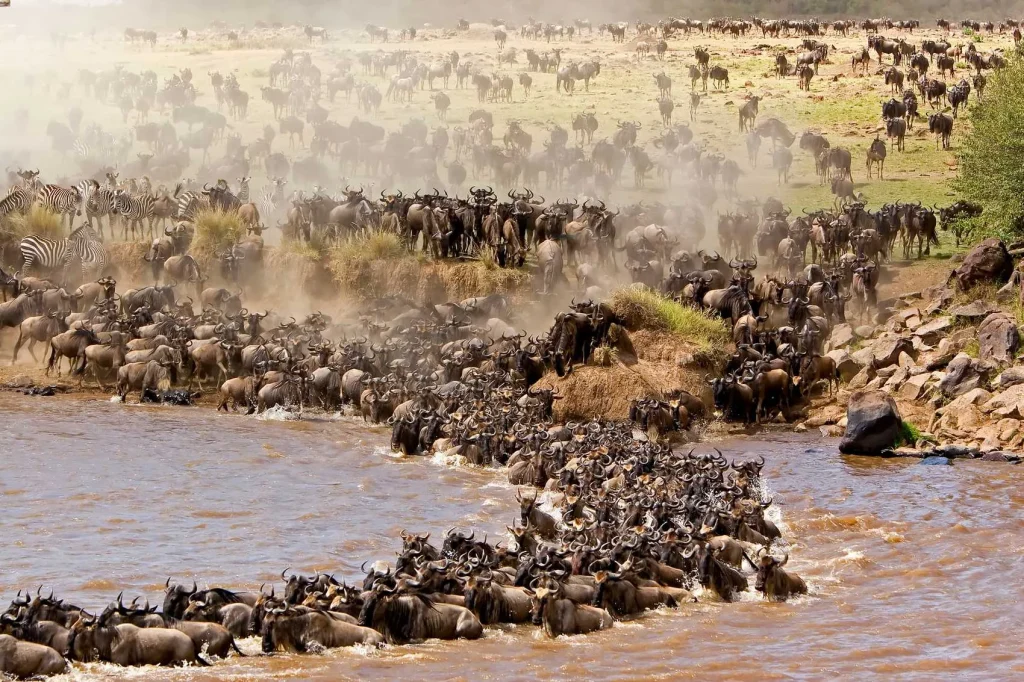
Watching thousands of wildebeest move across the Masai Mara is one of Africa’s most remarkable wildlife experiences. The sight of herds gathering along the Mara River, zebras grazing across open plains and predators following the migration attracts travellers from around the world. However, the Great Wildebeest Migration takes place during one of the busiest and most expensive periods of the Kenyan safari calendar. Accommodation rates rise, popular camps fill quickly and travellers searching for affordable options can find it difficult to distinguish genuine value from a misleadingly low advertised price.
The good news is that experiencing the migration does not necessarily require an expensive luxury camp. Budget migration camps offer travellers the opportunity to explore Kenya’s Masai Mara while spending less on accommodation. Options range from simple permanent tented camps outside the reserve to comfortable safari camps with private bathrooms, restaurant facilities and organised game drives. The important consideration is not simply the nightly room rate. It is where the camp is located, how much time you will spend reaching wildlife-viewing areas and what the total safari package includes.
A camp that appears inexpensive may become costly when additional transport, reserve fees and long daily transfers are considered. Conversely, a slightly more expensive camp in a convenient location may provide better overall value. This guide explains how to choose budget migration accommodation, where to stay, what facilities to expect and how to plan an affordable safari without sacrificing the wildlife experience.
What Are Budget Migration Camps?
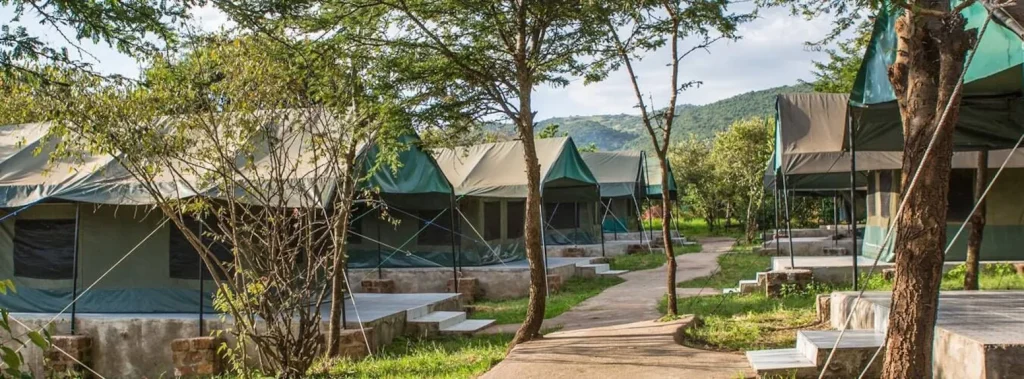
Budget migration camps are safari accommodation properties that offer relatively affordable lodging for travellers visiting the Masai Mara during the wildebeest migration season. Most provide permanent or semi-permanent tented accommodation, although facilities and standards vary considerably. A basic camp may offer a furnished tent with beds, mosquito nets, simple bathrooms and a shared dining area. A more comfortable budget property may include private en-suite bathrooms, hot showers, electricity and restaurant services.
The term budget is relative. During July, August and September, even modest accommodation can become substantially more expensive because demand is high. For this reason, travellers should compare accommodation according to the complete safari cost rather than a single advertised nightly rate.
Where Are Budget Migration Camps Located?
Location is one of the most important decisions when choosing accommodation for the Great Wildebeest Migration. The Masai Mara ecosystem includes the national reserve, surrounding community areas and neighbouring conservancies. These areas have different access rules, fee structures and wildlife-viewing opportunities.
Camps Near Sekenani Gate
The Sekenani area is one of the most frequently considered locations for affordable accommodation. It is accessible from the main road connecting Nairobi and Narok with the Masai Mara, and several budget-oriented tented camps and lodges operate in the wider Sekenani area. Staying here can be convenient for travellers arriving by road from Nairobi. However, the distance from a particular camp to productive migration-viewing areas can be substantial. Before booking, ask how long it takes to reach the reserve gate and whether the safari package includes the necessary reserve entrance fees.
Camps Around Talek
The Talek area is another popular base for Masai Mara safaris. Some camps are located near Talek Gate, while others are farther away along access roads. The area can provide convenient access to parts of the eastern and central Masai Mara, depending on the camp’s exact position. Accommodation ranges from simple tented properties to more comfortable safari lodges, and Talek can be a practical choice for travellers who want a balance between accommodation cost and access to wildlife-viewing areas.
Camps Near Ololaimutia
The Ololaimutia area is frequently associated with budget safari accommodation. Some camps offer simple rooms or tents with essential facilities, making them suitable for travellers who prioritise wildlife activities over luxury. However, the location of individual properties varies. A camp described as being “near the Masai Mara” may still involve a significant transfer to the reserve entrance, so travellers should confirm the actual location and daily game-drive arrangements before booking.
Camps Inside the Masai Mara National Reserve
Accommodation inside the reserve can offer convenient access to wildlife-viewing areas, but properties are generally more expensive than many options outside the gates. Budget choices inside the reserve are limited, particularly during the peak migration season. A camp’s location inside the reserve does not guarantee that migrating herds will be nearby, because the animals move according to rainfall, grazing conditions and other environmental factors.
Camps in Neighbouring Conservancies
Some conservancies offer accommodation and wildlife activities outside the main national reserve. However, conservancy fees, access arrangements and activity rules differ, and travellers should not assume that a conservancy stay automatically includes unlimited access to the Masai Mara National Reserve. For a budget-focused migration safari, the total cost of conservancy accommodation and reserve visits should be compared carefully.
Budget Camps Versus Luxury Migration Camps
The main difference between budget and luxury camps is usually the level of accommodation, service and exclusivity rather than the basic possibility of seeing wildlife. Both types of accommodation may provide access to excellent safari experiences when the location and game-drive arrangements are suitable. A budget camp may offer simple furnishings, limited electricity, set meal times and shared facilities, while a luxury camp may provide spacious suites, elaborate dining, personalised service and additional amenities.
However, an expensive camp cannot guarantee a river crossing, and a budget camp does not prevent travellers from seeing lions, elephants or migrating wildebeest. Wildlife viewing depends on the season, location, guiding, time spent in the reserve and natural animal movements.
What Facilities Should You Expect?
Facilities vary considerably between budget properties.
Sleeping Arrangements
Most permanent tented camps provide beds with mattresses and bedding. Some have twin or double configurations, while others offer triple or family arrangements. Confirm the exact room type before booking, especially when travelling with children or friends.
Bathrooms
Some budget camps have private bathrooms, while others use shared facilities. Hot water availability may depend on solar heating, generators or scheduled heating systems. If an en-suite bathroom is important, request written confirmation.
Electricity and Charging
Electricity may be available throughout the day or only during specified hours. Some properties rely on solar power or generators. Photographers should confirm charging arrangements because camera batteries and other devices may require regular recharging.
Meals
Many camps provide breakfast, lunch and dinner as part of a full-board package. Meals are often served in a communal dining area, and travellers with dietary restrictions should communicate them before arrival.
Wi-Fi and Mobile Coverage
Internet access can be limited or unreliable in some areas. Travellers should not assume that every camp offers continuous Wi-Fi, and mobile coverage also varies according to the location.
How Much Do Budget Migration Camps Cost?
The cost of budget migration camps varies according to the month, accommodation standard, room occupancy and booking conditions. Peak migration months generally attract higher rates than quieter periods, and the price may also depend on whether the accommodation is sold on a room-only, bed-and-breakfast, half-board or full-board basis. A nightly accommodation price should not be confused with the complete cost of a safari.
For example, a budget camp rate may exclude:
- Masai Mara entrance fees.
- Safari vehicle and professional guide.
- Transfers from Nairobi.
- Daily game drives.
- Picnic lunches.
- Conservancy charges.
- Optional activities.
A properly prepared safari quotation should identify all these costs before payment.
When Should You Book a Budget Migration Camp?
The migration season in Kenya is generally associated with July through October, although actual herd movements vary each year. August and September are particularly popular travel months, and budget accommodation with good access to the reserve can sell out well in advance. Travellers with fixed dates should therefore book early, particularly if they require specific room arrangements. Booking several months ahead can improve the range of available properties, although it does not guarantee a lower price. For travellers with flexible dates, comparing different weeks may reveal better accommodation availability.
Can You See the Wildebeest Migration from a Budget Camp?
Yes. Travellers staying at budget camps can experience the migration through properly organised game drives. However, it is important to understand that migration viewing is not determined by the camp’s price category. Wildebeest herds move across the ecosystem, and their location can change. During suitable periods, a guide may explore areas where herds are grazing, moving or gathering near rivers. A river crossing cannot be guaranteed. Even when a crossing does not occur, large concentrations of wildebeest, zebras and resident wildlife can make the safari rewarding.
How to Choose a Budget Migration Camp
1. Check the Exact Location
Ask for the camp’s actual location, not just the nearest famous destination. Find out which reserve gate is normally used and how long the transfer takes.
2. Confirm the Accommodation Facilities
Request details about bathrooms, electricity, bedding, meals and charging facilities. Do not assume that all tented camps offer the same standard.
3. Compare Complete Safari Packages
A low accommodation price may not include transport or park fees. Compare the total cost of the safari rather than the room rate alone.
4. Consider the Number of Nights
A two-night safari is possible, but much of the first and final days may be spent travelling. Three or four nights provide more time for wildlife viewing.
5. Check the Game-Drive Schedule
Ask how many game drives are included and whether they are full-day or shorter excursions.
6. Confirm the Vehicle
For shared safaris, ask about the maximum number of passengers and seating arrangements.
7. Read the Cancellation Terms
Budget accommodation may have strict payment and cancellation policies during the peak season. Review these conditions before paying.
Recommended Safari Duration for Budget Travellers
Three-Day Budget Migration Safari
A three-day safari from Nairobi generally includes one afternoon game drive, one full day of wildlife viewing and the return journey. It is suitable for travellers with limited time, although opportunities to follow migrating herds are relatively restricted.
Four-Day Budget Migration Safari
A four-day itinerary provides two substantial wildlife-viewing days. This is often a good compromise between affordability and time in the reserve.
Five-Day Budget Migration Safari
Five days allow greater flexibility to explore different areas and respond to changing wildlife movements. The additional accommodation cost may be worthwhile for travellers whose main objective is the migration.
Sample Four-Day Budget Migration Safari
Day 1: Nairobi to Masai Mara
Depart Nairobi in the morning and travel through the Great Rift Valley towards the Masai Mara. Arrive at your selected budget camp, enjoy lunch if timing permits and depart for an afternoon game drive. Return for dinner and overnight accommodation.
Day 2: Full-Day Masai Mara Wildlife Safari
Enjoy a full day exploring the reserve with your safari guide. Search for wildebeest herds, zebras, lions, elephants, giraffes and other wildlife. Enjoy a picnic lunch at an authorised location before continuing the afternoon game drive.
Day 3: Migration Exploration
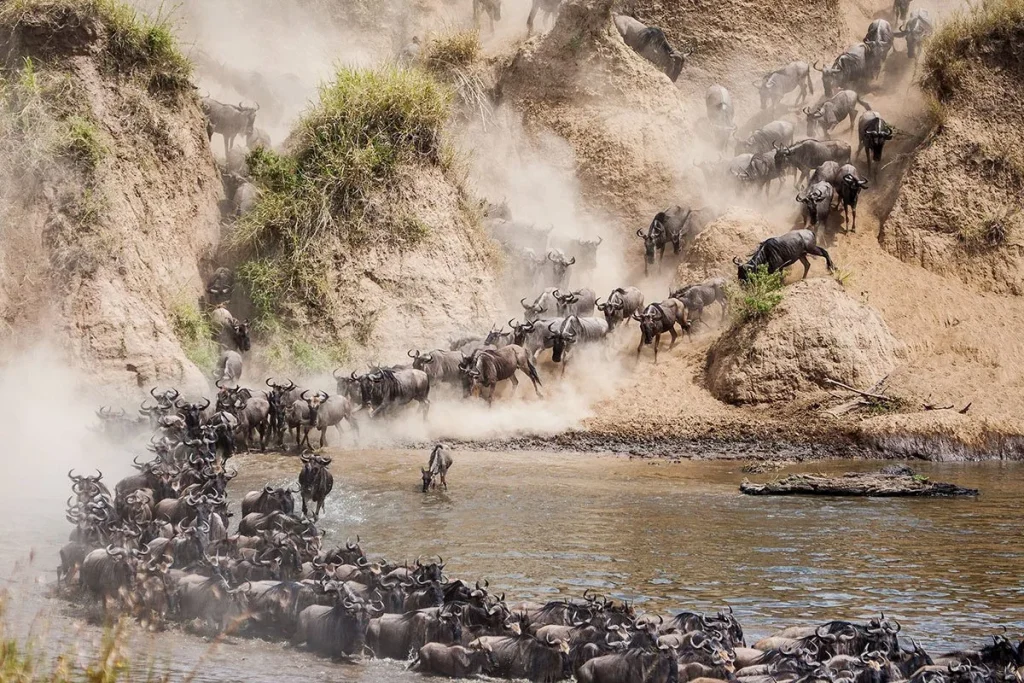
Spend another full day exploring suitable wildlife areas. During the migration season, your guide may recommend visiting the Mara River region if current herd movements make it worthwhile. Crossings remain unpredictable and cannot be guaranteed.
Day 4: Masai Mara to Nairobi
After breakfast, return to Nairobi for your onward travel arrangements. An additional morning game drive may be possible if specifically included in the package.
Budget Migration Camps for Solo Travellers
Solo travellers often face higher per-person costs because accommodation and transport may be priced differently for single occupancy. Joining a scheduled group departure can reduce the cost of the safari vehicle and guide, although a single-room supplement may still apply. Travellers willing to share a room should ask whether suitable arrangements are available, rather than assuming that room sharing is automatically offered.
Budget Migration Camps for Families
Families can enjoy affordable Masai Mara safaris, but accommodation selection requires additional care. Some camps offer family tents or triple rooms, while others have restrictions on children’s ages. Parents should confirm bathroom arrangements, sleeping configurations, food options and safety procedures. Wildlife areas are not suitable for unsupervised wandering, and children should follow camp staff instructions at all times.
Budget Migration Camps for Photographers
Wildlife photography does not require luxury accommodation. However, photographers should consider the practical facilities needed for their equipment. Reliable battery charging, secure storage and early departure arrangements can be important, and the safari vehicle may matter more than the accommodation category. Ask about passenger numbers, window access and whether the guide can accommodate longer stops at suitable sightings.
Best Time for Affordable Migration Accommodation
July through October is generally the main period associated with migrating wildebeest in the Kenyan Masai Mara. However, the exact arrival and departure of herds depend on seasonal conditions. Travellers who want lower accommodation rates may consider the edges of the migration season, but there is greater uncertainty about herd locations. Outside the migration period, the Masai Mara remains rewarding for resident wildlife. If your priority is an affordable wildlife safari rather than specifically seeing migrating herds, travelling during a quieter period may offer better value.
Common Mistakes When Booking Budget Migration Camps
Compare location, inclusions and expectations before you commit.
- Choosing the lowest nightly price without considering the distance to the reserve.
- Assuming that all game drives and park fees are included.
- Booking too late, leaving only expensive or inconvenient accommodation.
- Expecting river crossings to occur at fixed times, when wildlife movements are unpredictable.
- Judging a budget camp solely by photographs instead of requesting current facility and room information.
Frequently Asked Questions
Are Budget Migration Camps Safe?
Reputable camps operate with established guest procedures, but safety standards vary. Choose a properly managed property and follow staff instructions, particularly after dark.
Can I See the Big Five While Staying at a Budget Camp?
You may encounter several Big Five species during game drives, but sightings are never guaranteed. Rhinoceroses are particularly difficult to encounter in some parts of the Masai Mara.
Are Budget Camps Inside the Masai Mara?
Some accommodation is inside the reserve, but many affordable camps are located outside its gates.
Is Food Included?
Many camps offer full-board packages, but inclusions vary. Confirm the meal plan before booking.
Can I Book a Private Safari with Budget Accommodation?
Yes. Budget accommodation can be combined with a private safari vehicle and guide.
How Many Nights Should I Stay?
Three or four nights are a practical choice for many travellers, while longer stays provide greater flexibility.
Book Budget Migration Camps with Safari Trips to Kenya
Choosing the right budget migration camp is about finding a sensible balance between accommodation cost, location, comfort and wildlife-viewing time. At Safari Trips to Kenya, we can recommend suitable Essential and Comfort accommodation, arrange private or scheduled group safaris and explain the total cost before booking. Whether you are planning a three-day escape or a longer budget wildebeest migration safari, we can help create an itinerary suited to your travel dates and budget. Contact our safari team with your preferred month, number of travellers and accommodation requirements to request a personalised quotation.