10 Days Kenya Northern Reserves and Maasai Mara
A 10 day Kenya journey connecting Nairobi, Ol Pejeta, Samburu or Buffalo Springs, Solio, Lake Nakuru, Maasai Mara…
Lake Naivasha, Lake Nakuru, Masai Mara
View SafariHandpicked Lake Nakuru Safari Tours for Every Traveler
Plan a Nairobi to Lake Nakuru safari with rhino viewing, flamingos, Rift Valley scenery, detailed itineraries, accommodation choices and practical travel advice.
Lake Nakuru National Park is situated in Nakuru County, within Kenya's Great Rift Valley. According to the Kenya Wildlife Service, the park covers approximately 188 square kilometres and lies around 156 kilometres northwest of Nairobi along the main highway corridor. The exact road distance from a particular hotel to a park entrance will be greater or smaller depending on the starting location and selected gate.
The park is distinctive because it combines a shallow alkaline lake with surrounding terrestrial habitats. Visitors can explore open areas where grazing animals feed, woodland supporting giraffes and other browsers, and elevated viewpoints overlooking the lake basin. The variety of habitats means that a game drive can produce very different encounters within a relatively short distance.
Lake Nakuru is not simply a birdwatching destination. It is one of Kenya's important rhino conservation areas, and both black and white rhinos occur within its protected boundaries. Lions and leopards also inhabit the park, although sightings of either predator depend on luck, location and the time available.
A safari from Nairobi usually involves a private road transfer followed by guided game drives. Travellers can choose a full-day excursion, a one-night safari or a longer itinerary combining several Rift Valley attractions. The best option depends on the desired pace, interests and available budget.
Showing 1–12 of 17 safaris
A 10 day Kenya journey connecting Nairobi, Ol Pejeta, Samburu or Buffalo Springs, Solio, Lake Nakuru, Maasai Mara…
Lake Naivasha, Lake Nakuru, Masai Mara
View SafariPlan a 11 Days Samburu, Ol Pejeta, Nakuru & Mara with expert guides, game drives and carefully chosen…
Lake Nakuru, Samburu, Ol Pejeta
View SafariA 14 day Kenya journey connecting Nairobi, Ol Pejeta, Samburu, Solio, Lake Nakuru, Maasai Mara, Lake Naivasha, Amboseli,…
Amboseli, Lake Naivasha, Lake Nakuru
View SafariA 15 day Kenya journey connecting Nairobi, Ol Pejeta, Samburu or Buffalo Springs, Solio, Lake Nakuru, Maasai Mara,…
Amboseli, Lake Naivasha, Lake Nakuru
View SafariA 16 day Kenya journey connecting Nairobi, Ol Pejeta, Samburu or Buffalo Springs, Solio, Lake Nakuru, Maasai Mara,…
Amboseli, Diani Beach, Lake Naivasha
View SafariA 18 day Kenya journey connecting Nairobi, Ol Pejeta, Samburu or Buffalo Springs, Solio, Lake Nakuru, Maasai Mara,…
Amboseli, Diani Beach, Lake Naivasha
View SafariPlan a 2 Days Lake Nakuru Safari with expert guides, game drives and carefully chosen camps. Request a…
Lake Nakuru
View SafariPlan a 3 Days Lake Nakuru Safari with expert guides, game drives and carefully chosen camps. Request a…
Lake Nakuru
View SafariExplore the 4 Days Masai Mara & Lake Nakuru with a day-by-day safari plan, key wildlife experiences, destinations,…
Masai Mara, Lake Nakuru
View SafariA 5 day Kenya journey connecting Nairobi, Lake Nakuru and Maasai Mara.
Lake Nakuru, Masai Mara, Nairobi
View SafariExplore a 5 Days Masai Mara & Lake Nakuru safari with Big Five game drives, rhino viewing, Rift…
Masai Mara, Lake Nakuru
View SafariExplore a 6 Days Masai Mara & Lake Nakuru Safari with extensive Mara game drives, rhino viewing, Rift…
Masai Mara, Lake Nakuru
View SafariOne of the strongest reasons to visit Lake Nakuru is its importance for rhino conservation in Kenya. The park became a government-managed rhino sanctuary in the 1980s and continues to support both black and white rhinos. This gives visitors an opportunity to learn about two species with different feeding habits, physical characteristics and conservation challenges.
White rhinos are primarily grazers, using their broad mouths to feed on grasses. Black rhinos are browsers, often selecting leaves, shoots and woody vegetation. These differences influence where each species may be encountered during a game drive. A knowledgeable guide can help travellers identify the animals and understand how they use the park's different habitats.
Although Lake Nakuru offers worthwhile rhino viewing opportunities, no responsible safari operator can guarantee a particular sighting. Wildlife movements remain unpredictable, and animals may be hidden by vegetation or located away from accessible tracks.
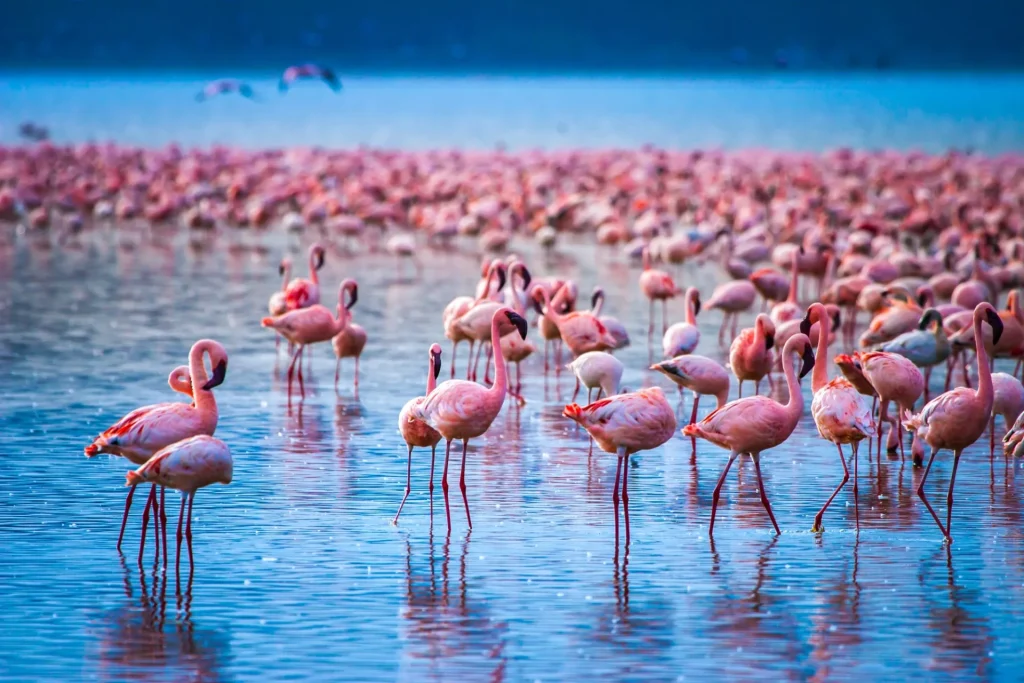
The name Lake Nakuru has long been associated with large gatherings of flamingos. Historically, the lake's alkaline conditions supported algae that attracted substantial numbers of lesser flamingos, alongside greater flamingos and many other waterbirds.
However, changing lake levels and water chemistry have affected flamingo feeding conditions over time. Large pink concentrations are therefore not consistently present. Some visitors may encounter flamingos in modest numbers, while others may see very few during their stay.
The lake remains valuable for birdwatching beyond flamingos. Pelicans, herons, egrets, cormorants, storks and numerous other species may be observed in suitable habitats. Bird enthusiasts should allow enough time for careful observation rather than concentrating exclusively on one species.
The journey from Nairobi to Nakuru introduces travellers to the landscapes of the Great Rift Valley, one of East Africa's most significant geological features. Depending on the selected road route and conditions, travellers may enjoy elevated views across the valley before descending towards the Rift Valley floor.
The scenery changes from Nairobi's urban surroundings to agricultural land, open countryside and settlements associated with the region's farming and commercial activities. This transition is part of the appeal of a road safari, especially for first-time visitors who want to see more of Kenya beyond the national parks.
Within Lake Nakuru National Park, rocky hills and viewpoints provide further opportunities to appreciate the lake basin and surrounding woodland.
Lake Nakuru is comparatively close to Nairobi, making it suitable for travellers with limited time. The journey is substantially shorter than many road safaris to more distant destinations, although traffic can still affect arrival times.
This accessibility also makes the park attractive for families, travellers combining business and leisure, and visitors wanting an additional wildlife destination before continuing to the Masai Mara.
The most common route follows the Nairobi–Nakuru highway through the Rift Valley. Road conditions are generally suitable for standard safari transport on the main highway, although weather and local conditions may influence the choice of vehicle within the park.
Travellers should usually allow approximately three to four hours for the journey, with additional time for traffic, viewpoints and refreshment stops. Heavy traffic around Nairobi or along the highway can increase this estimate considerably.
The Kenya Wildlife Service identifies several access points, including the main gate near Nakuru city and Lanet Gate. Visitors approaching from Nairobi may find Lanet Gate convenient because it can reduce the need to travel through central Nakuru, depending on the intended route.
A professional safari guide will select the appropriate entrance based on current road conditions, accommodation location and the game drive programme.
A Private Lake Nakuru Safari offers flexibility for stops, photography and wildlife viewing. A 4x4 safari vehicle is particularly useful when exploring different park habitats or travelling during wet conditions.
Private transport also allows the itinerary to be adjusted around the needs of children, older travellers or photographers.
Group excursions may offer lower per-person costs by sharing vehicle and guiding expenses. However, the itinerary operates according to a common schedule, and travellers may have less flexibility during game drives.
Before booking, confirm the maximum group size, seating arrangement and whether each traveller will have a suitable viewing position.
The following is a recommended two-day itinerary. It illustrates a practical route and activity schedule rather than representing a confirmed departure with fixed accommodation or included services.
Your safari begins with pickup from your Nairobi hotel or another agreed location. After meeting your professional driver-guide, you travel northwest towards the Great Rift Valley, leaving behind the capital's busy streets and moving through increasingly open landscapes. The journey offers an introduction to Kenya's central highlands, farming regions and the geological features that define the Rift Valley.
Depending on the road conditions and agreed programme, your guide may arrange a short stop at a suitable viewpoint. This is an opportunity to appreciate the scale of the valley and take photographs before continuing towards Nakuru. The stop should be planned around traffic and the desired arrival time rather than treated as an unavoidable commercial shopping visit.
Arrive in the Lake Nakuru area around midday or early afternoon, depending on your departure time. Proceed to your selected lodge or camp for check-in and lunch if included in the confirmed meal plan. Accommodation may be located inside the park, close to a gate or in the surrounding Nakuru area, and this choice will affect transfer times.
In the afternoon, begin your Lake Nakuru National Park Safari. Your guide explores suitable game drive tracks in search of white rhinos, black rhinos, buffaloes, giraffes, zebras and other wildlife. The park's mixture of woodland and grassland provides opportunities to observe different feeding behaviours and habitats.
As the drive continues, you may visit lakeside viewing areas or an elevated viewpoint, subject to access conditions. Birdwatchers can search for waterbirds, while photographers may appreciate the contrast between the lake, surrounding hills and wildlife. Return to your accommodation before the required park closing time or according to the applicable overnight access arrangements.
Approximate road journey: 3–4 hours, potentially longer with traffic and stops.
Accommodation: Selected Essential, Comfort, Premium or Signature property in or around Lake Nakuru.
Meals: As specified in the confirmed quotation.
Begin the day early to take advantage of cooler temperatures and favourable morning light. Depending on your accommodation and agreed programme, enjoy breakfast before entering the park or arrange an early game drive followed by breakfast later. Your guide will plan the timing to maximise wildlife viewing while allowing a comfortable return journey.
The morning offers another opportunity to search for rhinos and other animals that may not have been visible the previous afternoon. A second game drive is valuable because wildlife movements change throughout the day, and different sections of the park can produce contrasting encounters. Visitors interested in birdwatching may also find early morning particularly rewarding.
After the game drive, return to your accommodation for checkout if necessary and begin the journey towards Nairobi. The return route passes through the Rift Valley and the surrounding highland landscapes, with suitable comfort stops along the way. Arrival in Nairobi is normally expected in the afternoon, depending on traffic, departure time and any additional activities.
Your guide will drop you at the agreed Nairobi location. If you have an international flight, allow a generous margin for road delays and airport check-in requirements. A same-day flight connection should be considered carefully rather than assuming that the earliest possible return time is guaranteed.
Approximate return drive: 3–4 hours or longer depending on traffic.
End of safari: Nairobi hotel, residence or agreed transfer point.
A Nairobi to Lake Nakuru Day Trip is possible for travellers who cannot spend a night away from the capital. However, it requires an early departure and involves several hours of driving in both directions.
A typical programme begins before the busiest morning traffic, followed by a direct journey to the park. After completing entrance procedures, visitors enjoy a game drive through selected habitats, with time for wildlife photography and a lunch arrangement suited to the schedule.
The afternoon return journey should begin early enough to avoid an excessively late arrival in Nairobi. This leaves less time inside the park than an overnight itinerary, particularly if traffic or road conditions cause delays.
For travellers primarily interested in rhinos, a day trip can still be worthwhile. However, those hoping to explore multiple viewpoints, photograph birds and spend time observing animal behaviour will generally benefit from staying overnight.
White rhinos are among the park's major attractions. They are large grazing mammals that may be observed in open grassy areas. Their broad mouths are adapted for feeding on short grasses, and their social behaviour differs from that of black rhinos.
A guide can explain the differences between the two species and why suitable habitat and effective protection are essential for their survival.
Black rhinos are generally more elusive because they frequently use bushy or wooded habitats. Their narrower, pointed upper lips help them browse on leaves and shoots.
They can be defensive when disturbed, so guides should maintain appropriate distances and avoid blocking their movements.
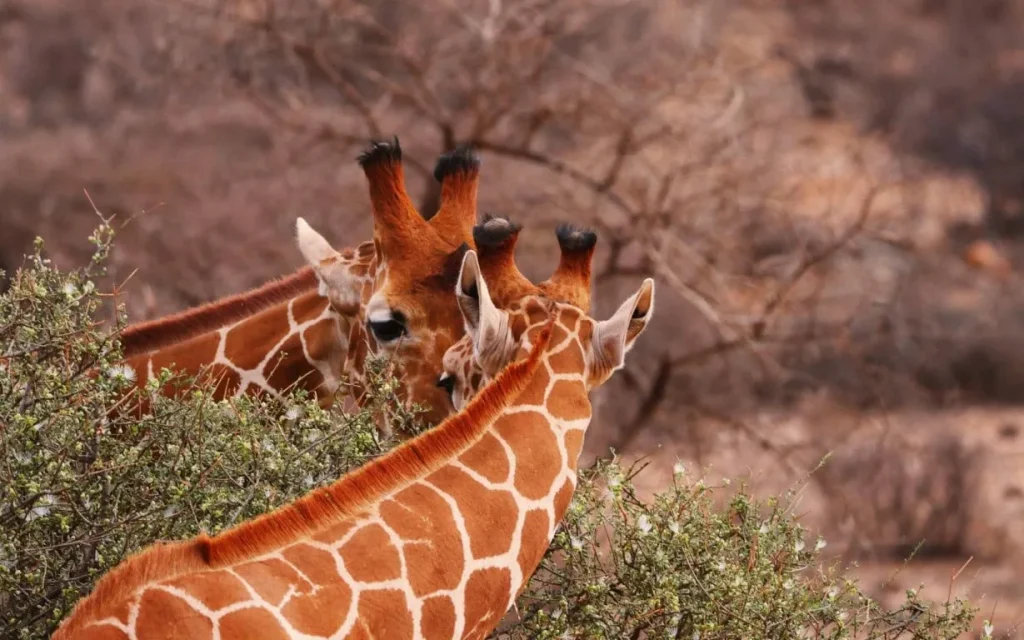
Lake Nakuru supports giraffes associated with conservation efforts for the endangered Rothschild's form of northern giraffe. They may be seen browsing among acacia trees and other suitable vegetation.
Observing giraffes provides an opportunity to learn about feeding adaptations, social interactions and the importance of protecting woodland habitat.
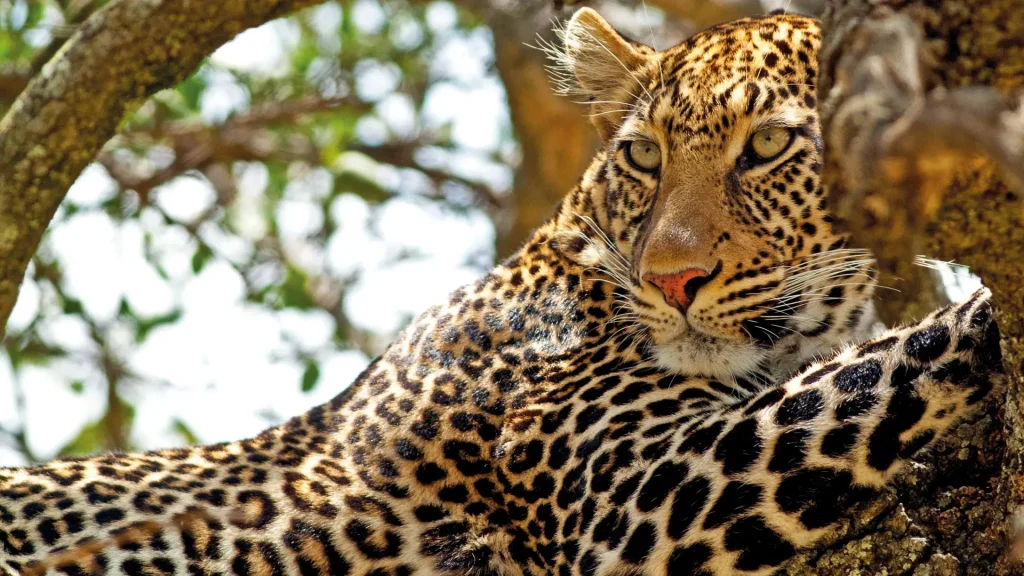
Lions and leopards occur within the park, although they are not guaranteed sightings. Lions may be encountered resting or moving through suitable habitat, while leopards are particularly difficult to locate because of their secretive behaviour.
Visitors should appreciate that a safari is not a checklist in which every predator must appear. Time spent observing more common animals can be equally rewarding.
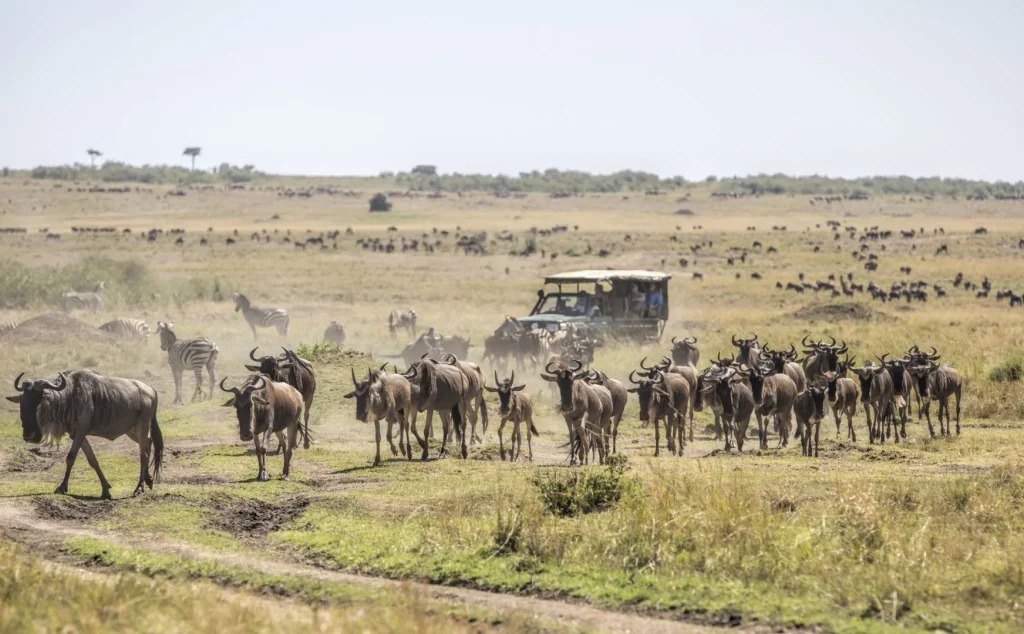
African buffaloes, plains zebras, waterbucks, impalas and other herbivores contribute to the park's varied wildlife population. They occupy different habitats and use vegetation in different ways.
Watching these animals interact with their surroundings can reveal much about the park's ecology, particularly near water sources and grazing areas.
Flamingos remain an important part of Lake Nakuru's identity, but expectations need to reflect changing environmental conditions. Water levels, salinity and food availability influence whether flamingos gather at the lake and in what numbers.
A photograph showing an enormous pink shoreline may represent conditions from a particular period rather than what visitors will necessarily encounter today. Travellers whose main goal is flamingo photography should seek recent information and remain flexible.
Other Rift Valley lakes may offer additional birdwatching opportunities, depending on the season. A knowledgeable operator can suggest an itinerary that prioritises birdlife without promising a specific concentration of flamingos.
Baboon Cliff is a well-known viewpoint offering broad views across the lake and surrounding landscape. It is a useful location for understanding the park's geography and taking scenic photographs.
Visitors should remain alert around baboons, secure food and belongings, and follow guidance at designated stopping areas.
The Lion Hill area provides another perspective on the lake basin and surrounding habitats. Its scenery can be particularly attractive in favourable light.
Wildlife sightings depend on animal movements, and the name of the viewpoint should not be interpreted as a guarantee of seeing lions.
Makalia Falls is a seasonal waterfall in the southern part of the park. Its appearance varies with rainfall, and access may depend on road conditions.
It can be an interesting addition to a longer game drive, especially for travellers who enjoy landscape photography.
Lake Nakuru can be visited throughout the year, although rainfall influences vegetation, road conditions and wildlife distribution.
January to March often brings relatively dry conditions, which can make some wildlife easier to observe. Early morning remains a good time for game drives because temperatures are cooler and light is softer.
April and May generally coincide with the longer rainy season. The surrounding landscape becomes greener, and birdwatching can be rewarding, but wet tracks may require greater care.
June to October often offers comparatively dry conditions and is a popular period for Kenya safaris. Visitor numbers may increase during peak holiday months, especially when travellers combine Lake Nakuru with the Masai Mara.
November and December can bring shorter rains and changing vegetation conditions. Rainfall patterns vary from year to year, so travellers should not assume that any month will be completely dry.
For rhino viewing, there is no single guaranteed best month. A well-planned itinerary with sufficient game drive time is often more important than choosing a particular season.
Accommodation options range from practical hotels in Nakuru city to safari lodges and camps located within or near the park.
Essential Lake Nakuru Accommodation is suitable for travellers prioritising value and basic comfort. Properties may be located outside the park, so daily transfer times should be considered.
Check whether rooms have private bathrooms, whether meals are included and how early breakfast can be arranged.
Comfort Lake Nakuru Safari Lodges provide a balance between cost and facilities. They are often suitable for couples, families and small groups seeking reliable accommodation without extensive luxury services.
Location is particularly important because a property close to a convenient gate can reduce travel time before morning game drives.
Premium Lake Nakuru Lodges may offer upgraded rooms, landscaped settings, swimming pools or attractive views. Properties such as Sarova Lion Hill Game Lodge and Lake Nakuru Sopa Lodge are established accommodation options, subject to availability and current operating arrangements.
Travellers should compare the exact room category and location rather than relying solely on the property's name.
Signature Lake Nakuru Accommodation focuses on distinctive hospitality, exclusive settings and higher-end facilities. The Cliff is one example of a property associated with a premium lakeside experience.
Actual inclusions, room types and views should be verified before booking.
The price of a Nairobi to Lake Nakuru Safari depends on travel duration, accommodation, group size, vehicle choice, park fees and meal arrangements.
Private safaris generally become more economical per person when several travellers share the same vehicle. A solo traveller pays for a larger proportion of transport and guiding costs than a group sharing those services.
Accommodation can also affect the total significantly. Staying inside the park may offer convenient game drive access, while accommodation outside the park may provide a wider range of rates.
Park entry fees are set by the Kenya Wildlife Service and can change. Rates may differ for citizens, residents, other African nationals and international visitors, as well as for adults and children. A written quotation should specify whether the applicable entrance charges are included.
Optional attractions, additional meals, drinks, tips and personal expenses should be identified separately.
A Private Lake Nakuru Safari is especially useful for photographers and birdwatchers because it allows more time at particular sightings. Families may also appreciate the ability to adjust departure times, breaks and the overall pace.
A group safari can reduce costs and provide opportunities to meet other travellers. However, the shared schedule may limit how long the vehicle remains at a wildlife sighting.
Before choosing a group departure, confirm the number of passengers, seating arrangements and the amount of time allocated to the park.
Lake Naivasha offers freshwater lake scenery, birdwatching and optional boat excursions operated under appropriate safety arrangements. It can complement Lake Nakuru's rhino-focused game drives.
A combined itinerary is particularly attractive for travellers interested in different Rift Valley ecosystems.
A Lake Nakuru and Masai Mara Safari combines rhino conservation and Rift Valley scenery with the expansive grasslands and predator populations of the Masai Mara.
This route works well over four to six days or longer, depending on the desired number of game drives and accommodation locations.
Hell's Gate National Park offers dramatic geological scenery and selected outdoor activities subject to current park regulations. It can provide a different experience from conventional vehicle-based wildlife viewing.
The combination is suitable for travellers interested in landscapes and active experiences.
Carry comfortable clothing, a light jacket, sunscreen, insect repellent, drinking water and binoculars. A camera with a telephoto lens is useful for wildlife photography, while a wider lens helps capture the lake and surrounding hills.
Stay inside the safari vehicle except at authorised locations. Wildlife is unpredictable, and visitors should never approach rhinos, buffaloes or other animals on foot.
Follow park regulations, including speed limits and restrictions on off-road driving. Avoid feeding animals, making unnecessary noise or leaving litter.
Travellers should also allow flexibility for road traffic. A journey that appears short on a map may take longer because of congestion, roadworks or weather.
The park lies approximately 156 kilometres northwest of Nairobi according to the Kenya Wildlife Service. The actual distance depends on the starting point and entrance used.
Allow approximately three to four hours under reasonable conditions, with extra time for traffic and stops.
Yes, but it is a long day involving substantial road travel. An overnight safari offers more flexibility.
No. Flamingo numbers change with lake conditions and food availability.
Both species occur in the park, but sightings are not guaranteed.
Yes. Its relatively accessible location and varied wildlife make it suitable for family safaris when the itinerary is planned appropriately.
Lake Nakuru is not a regular elephant-viewing destination. Travellers interested in elephants should consider Amboseli, the Masai Mara or other suitable parks.
A private safari provides flexibility for wildlife photography, birdwatching and family needs, making it attractive for travellers who prefer a personalised experience.
A Nairobi to Lake Nakuru Safari is an excellent choice for travellers who want to explore the Great Rift Valley, learn about rhino conservation and enjoy varied wildlife viewing within a manageable distance of Kenya's capital.
Safari Trips to Kenya can help arrange private safari transport, professional guiding, accommodation and an itinerary suited to your available time. Choose a day trip for a brief introduction or a two-day safari for a more relaxed experience, with options to extend to Lake Naivasha and the Masai Mara.
Contact Safari Trips to Kenya with your preferred travel dates, number of travellers and accommodation category to receive a tailored Lake Nakuru safari proposal.