

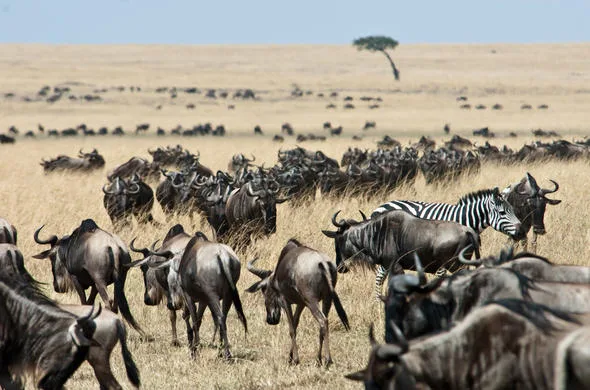
Naboisho camps offer travellers an opportunity to experience the Masai Mara ecosystem through a more exclusive conservancy-based safari. Located within the greater Mara landscape in southwestern Kenya, Mara Naboisho Conservancy is known for its open grasslands, wildlife-rich habitats, community conservation partnerships and a safari experience that differs in several important ways from visiting the main Masai Mara National Reserve.
For travellers interested in wildlife photography, predator viewing, guided walking experiences and a quieter atmosphere, Naboisho can be an excellent choice. The conservancy supports lions, elephants, giraffes, buffaloes, zebras, antelopes and numerous other animals. Leopards and cheetahs may also be encountered, although all sightings depend on natural wildlife movements.
One of Naboisho's principal attractions is its conservancy management model. Tourism operates through arrangements involving local landowners and safari businesses, with the intention of supporting conservation and generating economic benefits for participating communities. This approach links wildlife protection with the long-term value of maintaining suitable habitats outside the national reserve.
Accommodation in Naboisho is primarily associated with established tented safari camps rather than large conventional hotels. Many properties focus on intimate guest experiences, professional guiding and access to conservancy activities. Facilities range from comfortable permanent tents to exclusive suites with refined hospitality.
Choosing the right camp involves more than comparing room photographs. Travellers should consider the location, guiding arrangements, activities included, access to the main Masai Mara National Reserve and the overall cost of the safari. This guide explores the different styles of Naboisho Conservancy accommodation, wildlife experiences, conservancy activities, travel seasons and practical considerations involved in planning a safari with Safari Trips to Kenya.
Where Is Mara Naboisho Conservancy?
Mara Naboisho Conservancy lies within the greater Masai Mara ecosystem, adjoining the wider landscape of protected areas and community conservancies in southwestern Kenya.
- The conservancy is separate from the Masai Mara National Reserve and operates under its own management and access arrangements.
- Its landscape includes open grasslands, wooded areas, drainage lines and habitats used by a wide variety of wildlife.
- The conservancy's location within the larger ecosystem allows animals to move across suitable habitats, subject to landscape conditions and human land-use pressures.
Relationship With the Masai Mara National Reserve
- Naboisho forms part of the wider Mara conservation landscape but should not be confused with the national reserve itself.
- A stay in Naboisho does not automatically include unrestricted access to the Masai Mara National Reserve.
- Travellers who want game drives inside the national reserve should confirm whether the selected camp can arrange them, which fees apply and how much transfer time is involved.
The Conservancy Landscape
Naboisho contains grasslands and areas of woodland that provide habitat for both grazing and browsing animals.
- Seasonal conditions influence the distribution of wildlife.
- During wetter periods, animals may spread across areas with fresh vegetation and water.
- During drier conditions, reliable water sources and suitable grazing can influence animal movements.
What Makes Naboisho Camps Different?
Naboisho camps are associated with a conservancy safari model rather than a conventional national park accommodation experience. The distinction affects the atmosphere, guiding arrangements and activities available.
A More Intimate Safari Experience
- Conservancy tourism generally operates with controls on accommodation capacity and visitor access.
- This can create a quieter atmosphere than heavily visited sections of major national reserves.
- However, the number of vehicles at any particular wildlife sighting depends on local conditions and management rules.
- Travellers should not assume that every sighting will be completely private.
Professional Guiding
- Guiding is central to the Naboisho safari experience.
- A knowledgeable guide helps visitors interpret animal behaviour, identify wildlife and understand the ecological relationships between different species.
- Guides may also explain the conservancy's management model and its relationship with surrounding communities.
Different Safari Activities
- Depending on the camp and current conservancy regulations, Naboisho may offer activities such as guided walking safaris and night game drives.
- These experiences differ from the standard daytime game-drive programme associated with many national parks.
- Activity availability, age restrictions and safety arrangements should be confirmed before booking.
Community Conservation
- Naboisho's conservation model involves partnerships with local landowners.
- Tourism revenue can contribute to land-use arrangements that support wildlife habitat conservation.
- The exact structure of payments and community benefits should be verified through current conservancy information.
Wildlife in Mara Naboisho Conservancy
- Naboisho supports a diverse range of wildlife within the greater Masai Mara ecosystem.
- The conservancy is particularly attractive to travellers interested in predators and animal behaviour.
- However, wildlife sightings are never guaranteed.
Lions
- Lions are among the most sought-after animals in Naboisho.
- They occupy suitable grassland and woodland habitats and may be observed resting, moving or interacting socially.
- The opportunity to spend time observing lion behaviour is one reason wildlife enthusiasts choose conservancy safaris.
- Guides must maintain appropriate distances and avoid disturbing animals.
Leopards
- Leopards are elusive predators associated with habitats providing cover.
- Wooded drainage lines and suitable riverine vegetation can offer favourable environments.
- Sightings depend on animal movements and the experience of the guide.
Cheetahs
- Cheetahs favour relatively open habitats where they can survey their surroundings.
- They may be encountered resting, moving between hunting areas or watching potential prey.
- Visitors should avoid disturbing hunting animals or encouraging guides to approach too closely.
Elephants
- Elephants move through the wider Mara ecosystem in family groups and other social arrangements.
- They may be encountered feeding, travelling or interacting near water sources.
- Observing their behaviour can be one of the most memorable parts of a safari.
Buffaloes
- African buffaloes inhabit suitable grassland and woodland environments.
- They may occur in herds of varying sizes.
- Buffaloes are powerful animals and should always be observed from appropriate distances.
Giraffes
Giraffes browse on suitable trees and shrubs. Their movements provide opportunities to understand how large herbivores use different vegetation types.
Zebras and Antelopes
- Plains zebras, topis, impalas, gazelles and other herbivores occupy the conservancy's grassland habitats.
- Their distribution changes according to grazing and water conditions.
- These animals are also important prey species for large predators.
Hyenas and Other Carnivores
- Spotted hyenas are important predators and scavengers within the Mara ecosystem.
- Their social behaviour and interactions with other carnivores can provide fascinating wildlife encounters.
- Smaller carnivores may also be present, although sightings are often less predictable.
Birdwatching in Naboisho
- Naboisho's grasslands, woodland and seasonal watercourses support a variety of bird species.
- Birdwatchers may encounter raptors, ground-dwelling birds, woodland species and birds associated with open savannah.
- Early morning can be particularly rewarding because birds may be more active before temperatures rise.
- A specialist bird guide can help identify calls, feeding behaviour and habitat preferences.
- Travellers interested in bird photography should bring suitable lenses and binoculars.
Types of Naboisho Camps
Comfortable Tented Camps
- Some Naboisho accommodation focuses on practical comfort and an intimate safari atmosphere.
- Facilities may include permanent tents, proper beds, private bathrooms and organised dining.
- Travellers should verify the exact property because accommodation standards vary.
Premium Safari Camps
- Premium camps may provide spacious tented suites, refined furnishings and attractive views.
- Higher levels of personalised service can add to the experience.
- Guiding arrangements and included activities remain important considerations.
Signature Luxury Camps
- Signature properties emphasise exclusivity, distinctive design and personalised hospitality.
- Some provide private vehicles or specialised guiding arrangements.
- These properties are particularly attractive to couples, honeymooners and travellers seeking a high-end conservancy safari.
Notable Naboisho Safari Camps
The following established camp names are associated with the Naboisho safari accommodation landscape. Current operating arrangements, locations and availability should be confirmed before booking.
Naboisho Camp
- Naboisho Camp is an established safari property associated with Mara Naboisho Conservancy.
- It is known for a tented safari experience focused on wildlife exploration and guiding.
- Travellers should confirm current room categories, included activities and access arrangements.
Encounter Mara
- Encounter Mara is another recognised tented safari property associated with the Naboisho landscape.
- Its safari experience emphasises accommodation in a natural setting and guided wildlife activities.
- Current facilities and package inclusions should be checked before booking.
Eagle View
- Eagle View is associated with conservancy accommodation and scenic views across the Mara landscape.
- Travellers interested in landscape photography may find its setting appealing.
- The exact accommodation arrangements and included activities should be confirmed.
Comparing the Camps
Rather than choosing a camp solely by name, travellers should compare location, room facilities, guiding, activities, meal plans and conservancy fees. A property with a slightly higher accommodation rate may offer better overall value if more activities are included.
Daytime Game Drives in Naboisho
- Daytime game drives are central to the conservancy safari experience.
- Professional guides explore suitable habitats according to wildlife movements and local conditions.
- Morning drives often begin when temperatures are cooler.
- Afternoon drives provide different lighting and opportunities to observe animals becoming more active.
- The exact schedule depends on the selected camp and the activities included.
Night Game Drives
Night game drives are one of the experiences that may distinguish a conservancy safari from a standard national reserve itinerary.
- Where permitted, guided drives after dark can provide opportunities to observe nocturnal wildlife.
- Animals may include smaller carnivores and other species that are less frequently encountered during daylight.
- Sightings remain unpredictable.
Safety and Regulations
- Night drives must follow conservancy regulations and be conducted by authorised guides.
- Visitors should remain in the vehicle unless specifically instructed otherwise.
- Lights should be used responsibly to avoid disturbing wildlife.
Is a Night Drive Suitable for Everyone?
- Night drives can be exciting for adults and older children.
- However, younger children may find the experience tiring or uncomfortable.
- Age restrictions and activity policies should be confirmed with the camp.
Guided Walking Safaris
- Guided walking safaris may be available in Naboisho under appropriate conservancy arrangements.
- Walking provides a different perspective from a vehicle-based safari.
- Instead of focusing only on large mammals, guests can learn about tracks, vegetation, insects, birds and the smaller details of the ecosystem.
What Happens During a Walking Safari?
- A trained guide leads participants through suitable areas while explaining the surrounding environment.
- The route and duration depend on conditions, regulations and the participants' abilities.
- Walking safaris are not designed to approach dangerous animals closely.
Safety Considerations
- Participants must follow guide instructions at all times.
- Age restrictions, fitness requirements and other safety conditions may apply.
- Travellers with mobility limitations should discuss suitable alternatives before booking.
Naboisho and the Great Wildebeest Migration
- The Great Wildebeest Migration involves seasonal movements of large herbivore populations across the Serengeti–Mara ecosystem.
- Migration activity in the Kenyan Masai Mara is commonly associated with July through October.
- However, the exact distribution of migratory herds varies annually.
Can You See Migration Herds in Naboisho?
- Migratory animals may move through parts of the wider Mara ecosystem, including conservancy landscapes.
- However, their presence in a particular area cannot be guaranteed.
- Travellers whose primary objective is observing the large migration herds should discuss current seasonal patterns and reserve access arrangements with their safari operator.
Can You See Mara River Crossings From Naboisho?
- The famous Mara River crossing locations are not automatically accessible from every Naboisho camp.
- A stay in the conservancy does not guarantee convenient access to the main river-crossing areas.
- Travellers specifically interested in crossings should confirm whether a day excursion into the national reserve is available and practical.
Is Naboisho Worth Visiting Outside Migration Season?
- Yes.
- Naboisho's resident wildlife and conservancy activities make it attractive throughout the year.
- Travellers interested in lions, elephants, walking safaris and quieter wildlife experiences may find the conservancy rewarding outside the peak migration period.
Best Time to Stay in Naboisho Camps
January to March
- These months can provide rewarding resident wildlife viewing.
- Conditions vary, and travellers should prepare for warm daytime temperatures.
- The landscape may be relatively dry in some areas.
April to May
- Rainfall can be more substantial during this period.
- The landscape becomes greener, but some tracks may be affected after heavy rain.
- Certain camps may close seasonally.
June to October
- This period is popular for wildlife safaris in the greater Mara ecosystem.
- Migration activity may occur in the region, although herd movements vary.
- Accommodation demand can be high.
November to December
- Short rains may refresh vegetation and influence animal distribution.
- The landscape can be attractive for photography.
- Holiday demand may increase accommodation rates toward Christmas and New Year.
Suggested Four-Day Naboisho Conservancy Safari
Day 1: Nairobi to Mara Naboisho Conservancy
- Begin your safari in Nairobi.
- Travel toward the greater Masai Mara ecosystem by road or suitable domestic flight arrangement.
- Road travel generally occupies a substantial part of the day, depending on the route and accommodation location.
- On arrival, meet your safari guide and transfer to your selected camp.
- Check in and enjoy lunch or refreshments, depending on arrival time.
- An afternoon game drive may be arranged if the schedule permits.
- Your guide introduces the conservancy's landscapes and wildlife habitats.
- Return to camp for dinner and overnight.
Day 2: Full-Day Naboisho Wildlife Safari
- Begin early with breakfast or a morning game drive.
- Explore suitable grassland and woodland habitats in search of lions, elephants, buffaloes, giraffes, zebras and other wildlife.
- Your guide explains animal behaviour and the conservancy's ecological features.
- Return to camp for lunch and rest, or enjoy a longer excursion if included in the programme.
- Continue wildlife exploration during the afternoon.
- Where permitted and included, an evening or night drive may be available.
- Return to accommodation for dinner and overnight.
Day 3: Walking Safari and Additional Game Drives
- Begin the day with a guided walking safari if available and suitable for the participants.
- Learn about tracks, vegetation, birds and smaller wildlife.
- Return to camp for breakfast or lunch, depending on the schedule.
- Spend the afternoon exploring additional conservancy habitats.
- Photographers may choose to concentrate on particular wildlife sightings.
- Return to camp for the final overnight stay.
Day 4: Return to Nairobi
- After breakfast, check out and begin the return journey to Nairobi.
- Depending on the transport arrangement, transfer to the appropriate airstrip or depart by road.
- Arrival time depends on flight schedules, traffic and road conditions.
- Travellers connecting to international flights should allow sufficient time.
Five-Day Naboisho and Masai Mara Safari
A five-day itinerary can combine Naboisho's conservancy experience with game drives in the Masai Mara National Reserve.
- The programme may include three nights in Naboisho and an additional night in or near the reserve.
- Alternatively, travellers can remain at one camp and arrange suitable reserve excursions where permitted.
- The best option depends on accommodation location, access arrangements and the intended wildlife experiences.
- A combined itinerary can provide opportunities to enjoy different safari activities and habitats.
- However, additional park fees and transfer times should be considered.
Naboisho Safari Costs
Naboisho camp prices vary according to accommodation category, season, duration and package inclusions.
- Some conservancy packages include guiding, meals and selected activities, while others may charge separately for certain services.
- Conservancy fees can represent an important part of the total cost.
- Private vehicles, specialised guiding and accommodation upgrades may increase the price.
- Travellers should request a complete written quotation identifying all inclusions and exclusions.
What Is Usually Included?
Depending on the selected camp and package, inclusions may cover accommodation, meals, professional guiding, scheduled game drives and applicable conservancy fees.
- Some packages may include walking safaris or night drives.
- Transfers and domestic flights may be included in certain arrangements.
- The exact services should be confirmed in writing.
Common Exclusions
- International flights, travel insurance, personal expenses, gratuities and optional activities are commonly excluded unless specifically stated.
- Masai Mara National Reserve entry fees may be separate from conservancy fees.
- Travellers should confirm whether reserve excursions are included.
Naboisho Camps for Couples
- Naboisho is particularly attractive to couples seeking an intimate safari atmosphere.
- Tented camps provide opportunities to enjoy wildlife sounds and natural surroundings.
- A private vehicle can offer additional flexibility.
- For special occasions, selected accommodation upgrades may be worthwhile.
Naboisho Camps for Families
Families can enjoy Naboisho safaris, provided accommodation and activities are suitable for the children's ages.
- Some camps may have minimum-age policies for walking safaris or other activities.
- Parents should confirm room arrangements, meal flexibility and safety procedures.
- A private safari programme may allow a more comfortable pace for children.
Naboisho Camps for Photographers
Naboisho can be rewarding for wildlife photographers because of its predator populations, varied habitats and conservancy safari arrangements.
- A private vehicle provides flexibility for positioning and spending time at sightings.
- Early morning and late afternoon often provide attractive light.
- Photographers should bring suitable lenses, spare batteries and dust protection.
- Wildlife should never be disturbed for photographs.
Getting to Naboisho Camps
Road Travel From Nairobi
- Road travel from Nairobi to the greater Mara ecosystem generally takes several hours.
- The exact duration depends on traffic, road conditions and the selected camp.
- A suitable safari vehicle provides transport for transfers and game drives.
Domestic Flights
- Scheduled safari flights operate from Nairobi's Wilson Airport to selected airstrips serving the greater Mara region.
- The most suitable airstrip depends on the selected camp.
- Travellers should confirm baggage allowances and onward transfers.
Responsible Tourism in Naboisho
- Responsible tourism is central to the conservancy experience.
- Visitors should follow conservancy regulations, remain on permitted routes and avoid disturbing wildlife.
- Animals should never be fed or approached unnecessarily.
- Litter must be disposed of appropriately.
- Travellers should respect local communities and their cultural practices.
- At unfenced camps, guests must follow staff safety instructions and use escorts after dark when required.
Practical Travel Advice
Pack neutral-coloured clothing, comfortable footwear, sun protection, insect repellent and a warm jacket for early mornings.
- Binoculars are useful for observing distant wildlife and birds.
- Photographers should bring spare batteries, memory cards and protective equipment for dust.
- Some camps use solar power or generators, so charging arrangements may be limited.
- Internet connectivity can be unreliable in remote areas.
- Travellers with dietary, medical or mobility requirements should communicate them before booking.
- Before departure, confirm current Kenyan entry requirements, travel insurance coverage and relevant health recommendations.
Frequently Asked Questions About Naboisho Camps
Where are Naboisho camps located?
They are situated within Mara Naboisho Conservancy and the surrounding greater Masai Mara landscape.
Is Naboisho part of the Masai Mara National Reserve?
No. Naboisho is a separate conservancy within the greater Mara ecosystem.
What wildlife can I see in Naboisho?
The conservancy supports lions, elephants, buffaloes, giraffes, zebras, antelopes and other wildlife. Leopards and cheetahs may also be encountered.
Are night game drives available?
They may be available through selected camps, subject to current conservancy regulations and package arrangements.
Can I enjoy a walking safari?
Guided walking safaris may be available, subject to safety requirements and activity policies.
Can I visit the Masai Mara National Reserve from Naboisho?
Yes, where suitable access arrangements are available. Additional fees and transfer time may apply.
Is Naboisho suitable for families?
Yes, subject to camp age policies and activity restrictions.
Are luxury camps available?
Yes. Naboisho is associated with several established premium and luxury tented safari properties.
How many nights should I stay?
Three or four nights provide a comfortable introduction, while longer stays are useful for photography and wildlife enthusiasts.
Is Naboisho good for the Great Migration?
It can provide rewarding wildlife experiences during migration season, but herd movements and access to river-crossing areas cannot be guaranteed.
Book Naboisho Camps With Safari Trips to Kenya
A stay in Naboisho Conservancy provides an opportunity to experience the greater Masai Mara ecosystem through a distinctive conservancy safari. The combination of wildlife habitats, professional guiding, community conservation partnerships and selected safari activities makes Naboisho attractive to travellers seeking an intimate wildlife experience. Safari Trips to Kenya can arrange accommodation in Naboisho camps, private conservancy safaris and customised itineraries combining Naboisho with the Masai Mara National Reserve or other Kenyan destinations.
Contact our team to discuss your travel dates, group size, preferred accommodation category and wildlife interests. We can help create a personalised Naboisho safari that balances comfort, conservation and rewarding wildlife exploration.