
10 DAYS / 9 NIGHTS
10 Days Samburu, Ol Pejeta & Masai Mara
Plan a 10 Days Samburu, Ol Pejeta & Masai Mara with expert guides, game drives and carefully chosen camps. Request a quote.
- Wildlife Safari Private Journey
- Private Safari 4x4 Vehicle
- Expert Guide English Speaking
- All Meals Breakfast, Lunch, Dinner
- 24/7 Support We're here to help
01 Overview
Safari Overview
- Duration 10 days / 9 nights
- Destination Masai Mara
- Starts / ends Nairobi
- Safari style Private 4×4 safari
- Accommodation Essential · Comfort · Premium · Signature
- Best for Wildlife viewing, photography
10 Days Samburu, Ol Pejeta & Masai Mara Safari
The 10 Days Samburu, Ol Pejeta & Masai Mara Safari is a remarkably diverse Kenya wildlife journey combining three distinctive conservation landscapes: the rugged semi-arid wilderness of Samburu, the rhino-rich conservation environment of Ol Pejeta, and the legendary predator-filled plains of the Masai Mara. Rather than visiting several parks that offer broadly similar landscapes, this itinerary has been designed around contrast.
In Samburu, the scenery is dry, dramatic and unmistakably northern Kenyan. Wildlife gathers around the life-giving Ewaso Nyiro River, while species adapted to the arid north provide encounters that are difficult or impossible to reproduce in the country's southern safari areas.
At Ol Pejeta, the emphasis shifts toward conservation. The conservancy is particularly important for rhinoceros protection and provides an opportunity to understand the extraordinary effort required to conserve some of Africa's most threatened large mammals.
The journey then reaches the Masai Mara, where extensive grasslands, river systems and high concentrations of prey support one of Africa's most celebrated predator communities. Lions, cheetahs, leopards and spotted hyenas are among the species travelers hope to encounter, while elephants, buffaloes, giraffes, wildebeest, zebras and numerous antelope add extraordinary diversity. The result is a safari that moves beyond simply seeing animals, because you experience three very different versions of wild Kenya.
Ten days also provides sufficient time to enjoy these destinations without reducing the holiday to a constant sequence of arrivals and departures. Several nights in key wildlife areas allow for repeated game drives, giving you more opportunities to observe natural behavior and respond to changing wildlife conditions. This safari is particularly suitable for first-time visitors who want a broad introduction to Kenya, repeat safari travelers seeking more ecological diversity, photographers, couples, honeymooners and families interested in both wildlife and conservation.
Why Choose Samburu, Ol Pejeta and Masai Mara?
These three destinations create one of Kenya's most rewarding safari combinations because each contributes something genuinely different.
Samburu – Northern Kenya's Unique Wildlife
Samburu introduces you to Kenya's semi-arid northern landscapes. The ecosystem supports several species strongly associated with northern Kenya, sometimes collectively referred to by safari guides as the Samburu Special Five:
- Grevy's zebra.
- Reticulated giraffe.
- Beisa oryx.
- Gerenuk.
- Somali ostrich.
These animals provide an immediate contrast to the wildlife encountered farther south. The Ewaso Nyiro River is another defining feature of the region. Wildlife frequently depends heavily on the river and associated vegetation, making it an important focus for game drives.
Ol Pejeta – Rhinos and Conservation
Ol Pejeta provides a different safari experience centered strongly on conservation. The conservancy is internationally known for rhino protection and gives travelers an opportunity to appreciate the challenges involved in protecting threatened wildlife. General game viewing is also rewarding, so Ol Pejeta should not be regarded only as a rhino stop.
Masai Mara – Big Cats and Classic Savannah
The Masai Mara provides the grand finale. Its extensive grasslands and large herbivore populations create excellent conditions for predators. Lions are particularly famous, while cheetahs and leopards add to the attraction. During appropriate seasonal periods, the ecosystem can also receive enormous numbers of migrating wildebeest and zebra, although herd positions and river crossings are never guaranteed.
Together, these three destinations create a safari combining rare northern species, rhino conservation, Big Five possibilities, big cats, elephants, spectacular scenery and the Great Migration ecosystem.
Suggested 10 Days Samburu, Ol Pejeta & Masai Mara Itinerary
The exact itinerary can be customized according to your international flights, accommodation preferences, travel dates and budget. The following program provides a balanced framework.
Itinerary
- Day 1: Arrival in Nairobi, welcome to Kenya
- Day 2: Nairobi to Samburu, journey Into Northern Kenya
- Day 3: Samburu Safari – Special Five, Elephants and Predators
- Day 4: Samburu, second Full Day of Northern Kenya game drive
- Day 5: Samburu to Ol Pejeta, from Northern Wilderness to Rhino Country
- Day 6: Ol Pejeta, rhinos, Conservation and Big Five Wildlife
- Day 7: Ol Pejeta to Masai Mara, journey to Kenya's Legendary Savannah
- Day 8: Masai Mara Safari – Lions, Leopards and Cheetahs
- Day 9: Masai Mara, migration, Big Cats and Final Full Safari Day
- Day 10: Morning game drive – return to Nairobi
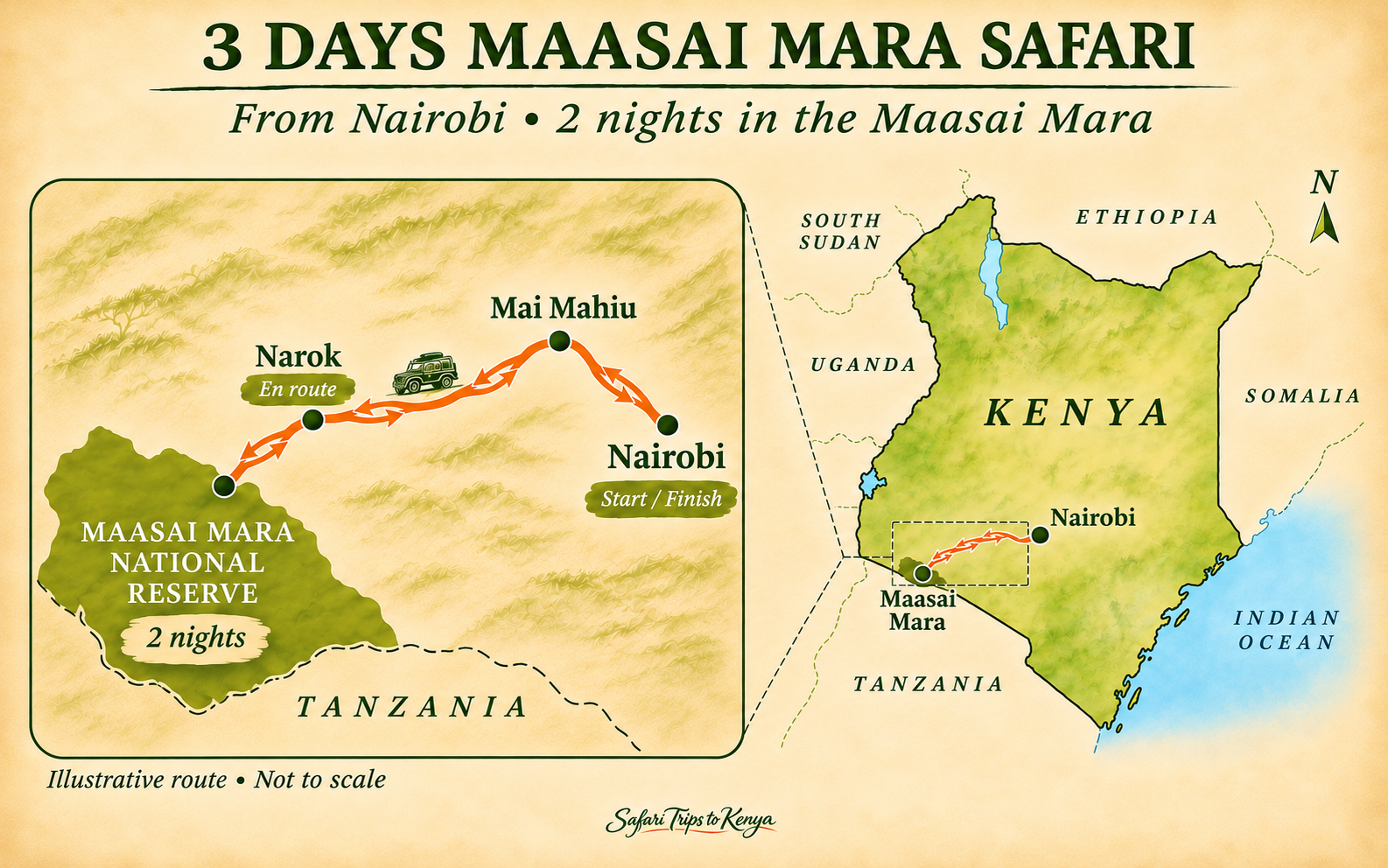
02 Itinerary
10 Days Samburu, Ol Pejeta & Masai Mara: Detailed Itinerary
-

Day 1: Arrival in Nairobi – Welcome to Kenya - Main destination
- Masai Mara National Reserve
- Drive time
- Road transfer as outlined in the itinerary
- Meals
- Lunch, Dinner
Your 10 Days Samburu, Ol Pejeta & Masai Mara Safari begins when you arrive in Nairobi. After completing immigration procedures and collecting your luggage, meet your representative in the arrivals area. You will be transferred privately to your Nairobi hotel.
The first evening is intentionally relaxed. International travel into East Africa can involve long flights and connections, and spending the first night in Nairobi allows you to recover before beginning the overland safari. Depending on your arrival time, you may have an opportunity to relax at the hotel, enjoy dinner or arrange an optional Nairobi activity.
Your representative can brief you about the safari ahead, including expected road conditions, approximate transfer times, park regulations and daily game-drive routines. Use the evening to organize your luggage, keeping items needed frequently during game drives easily accessible:
- Binoculars.
- Camera equipment.
- Sunscreen.
- Hat.
- A light jacket.
Tomorrow, you travel north toward one of Kenya's most distinctive wildlife regions.
Accommodation: Nairobi hotel according to selected category
Meal Plan: According to arrival arrangements
Activity: Airport transfer and safari briefing
Where you stay
-
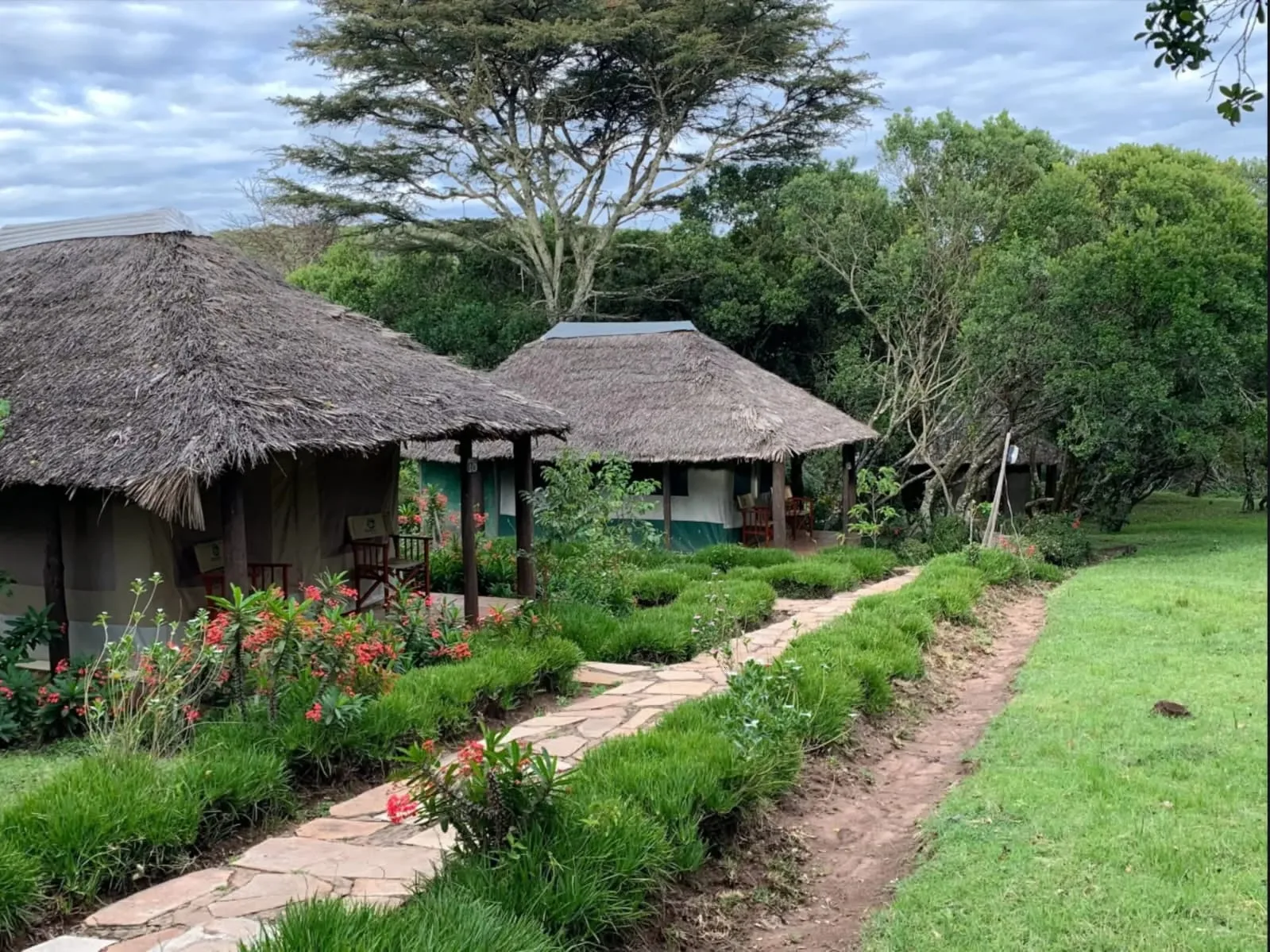
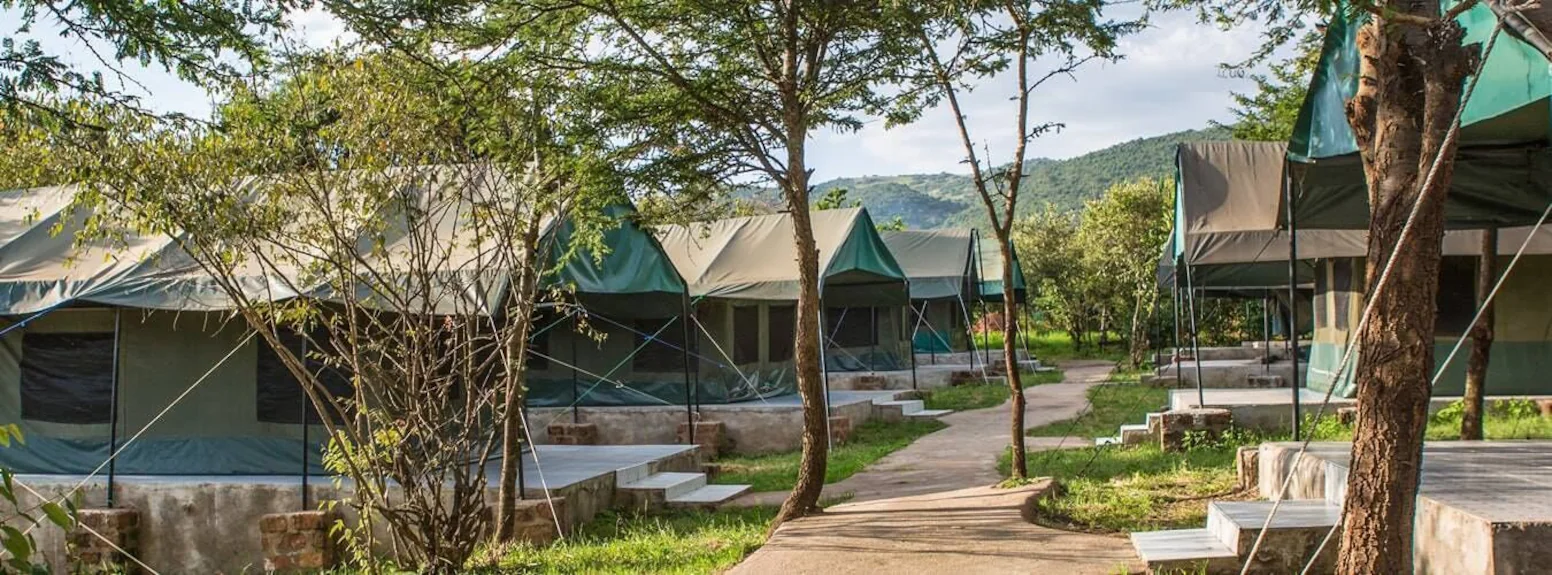
Essential (Budget)
-
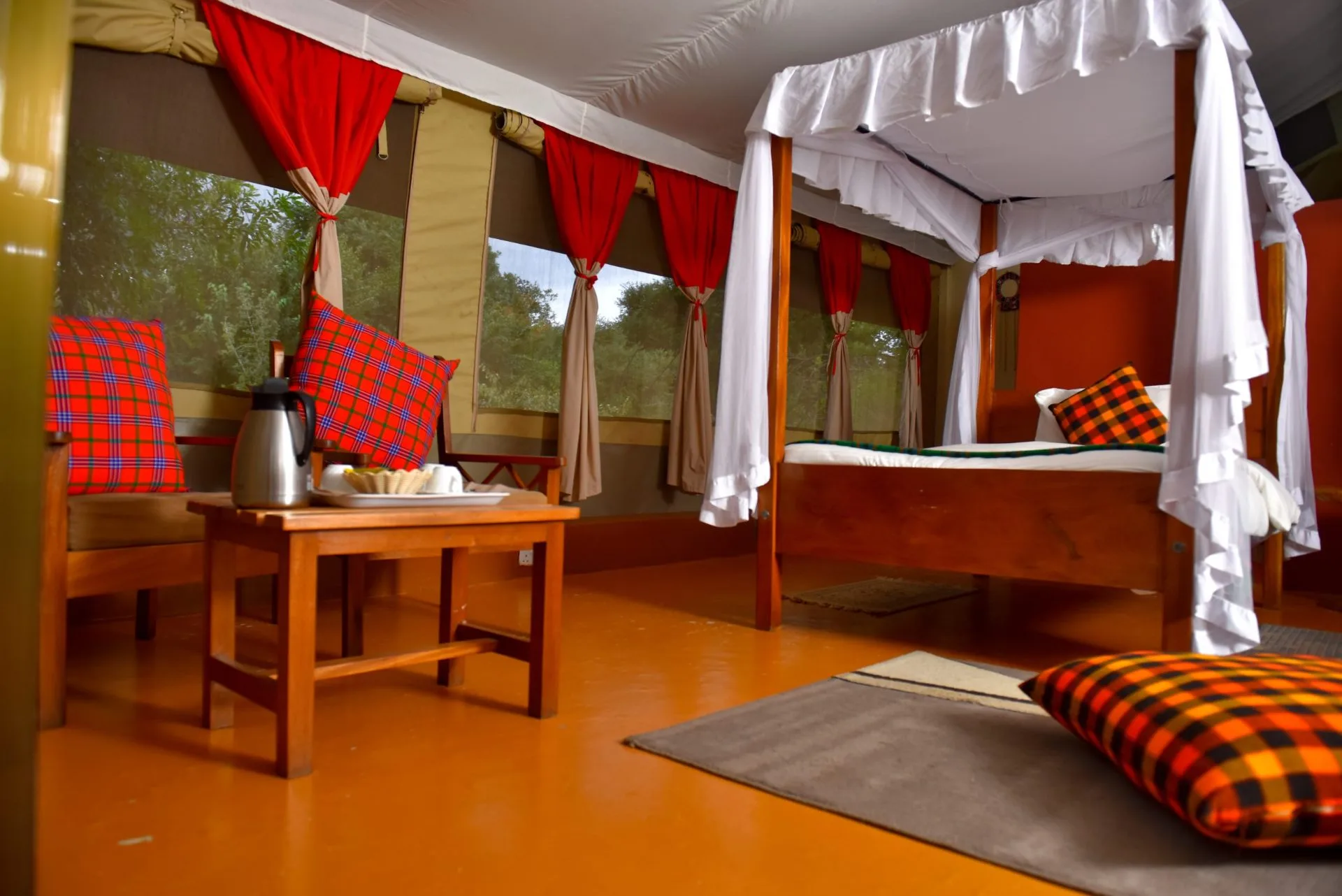
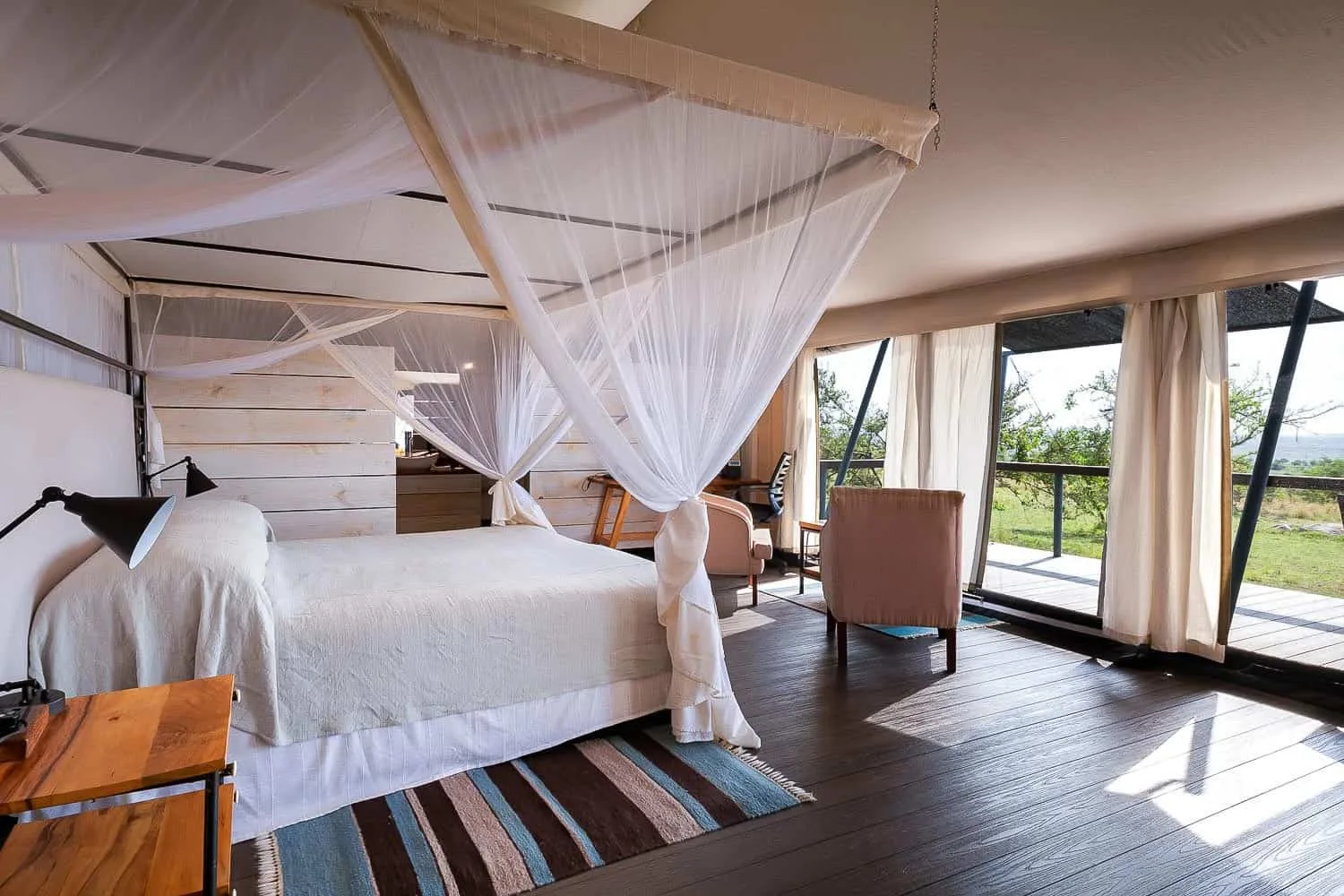
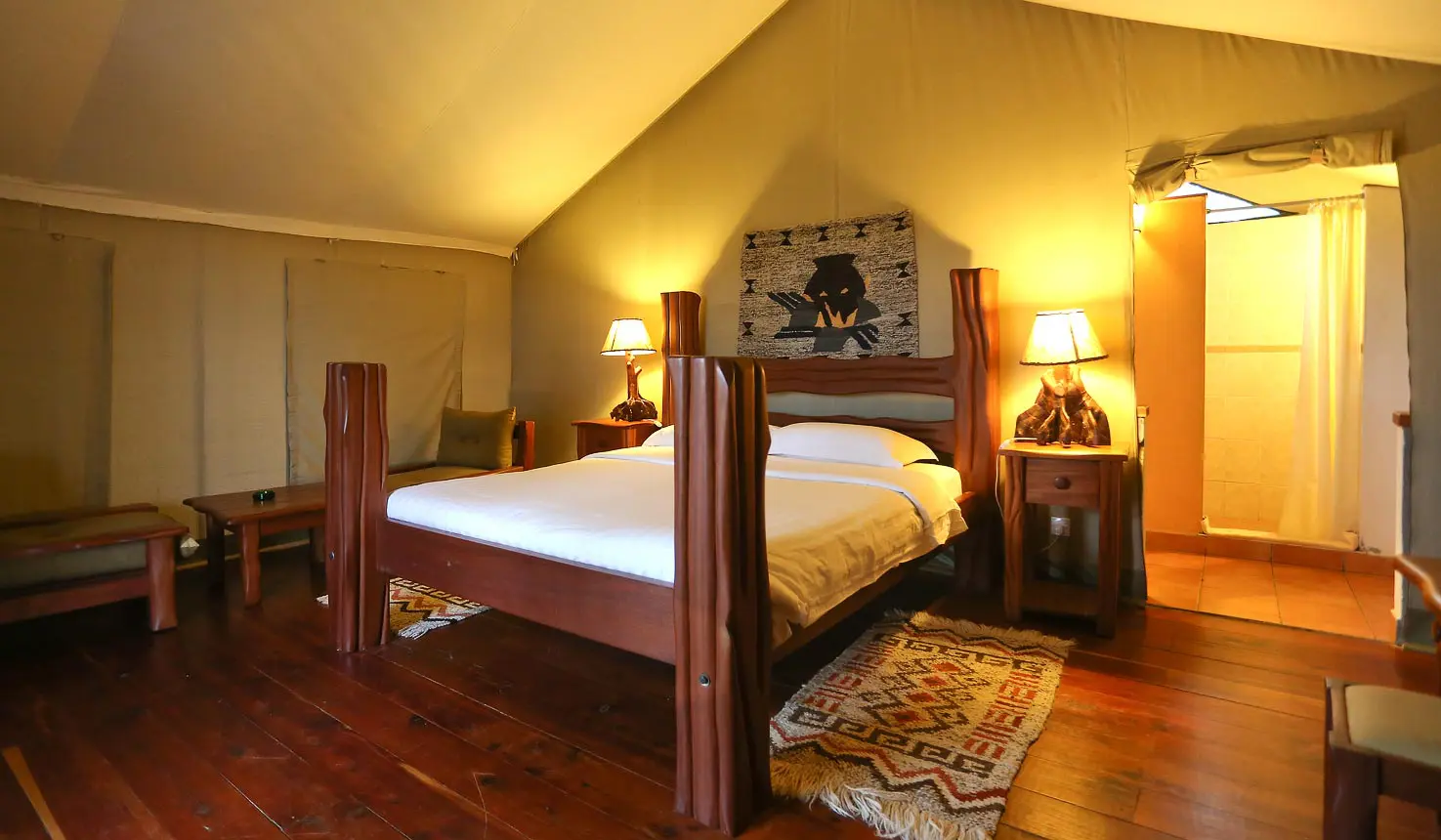
Comfort (Mid-range)
-
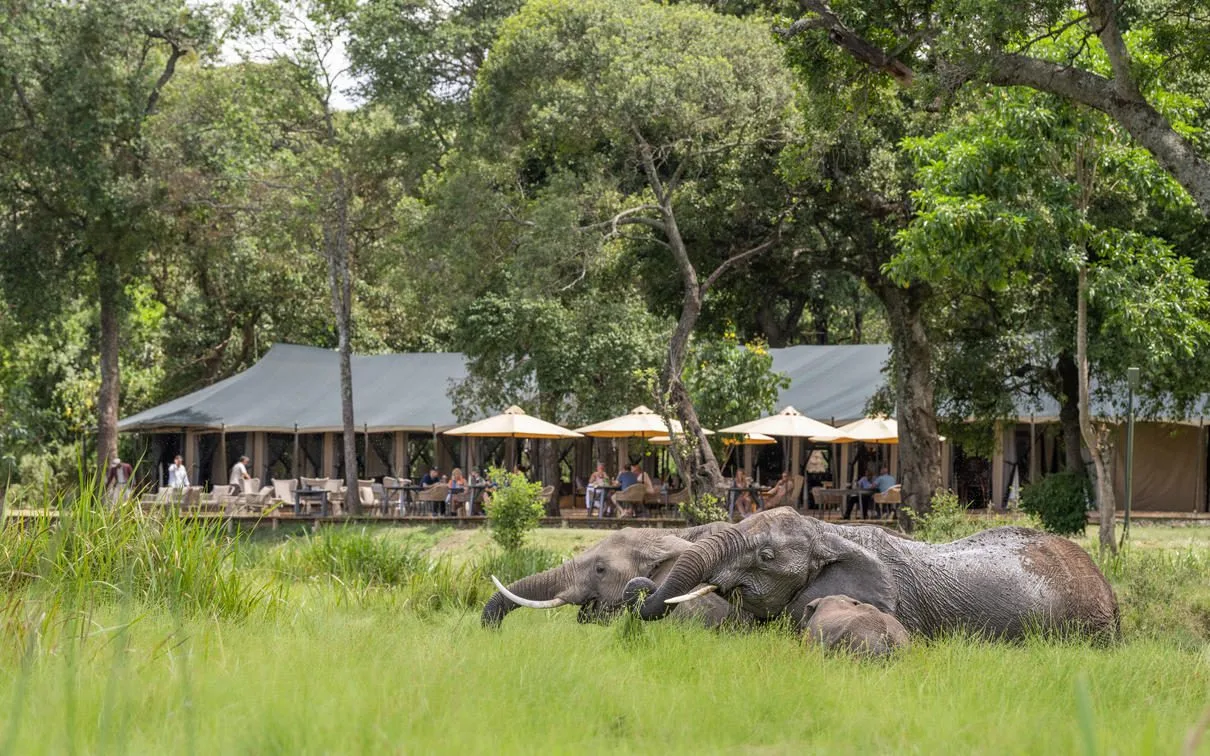
Premium (Luxury)
-
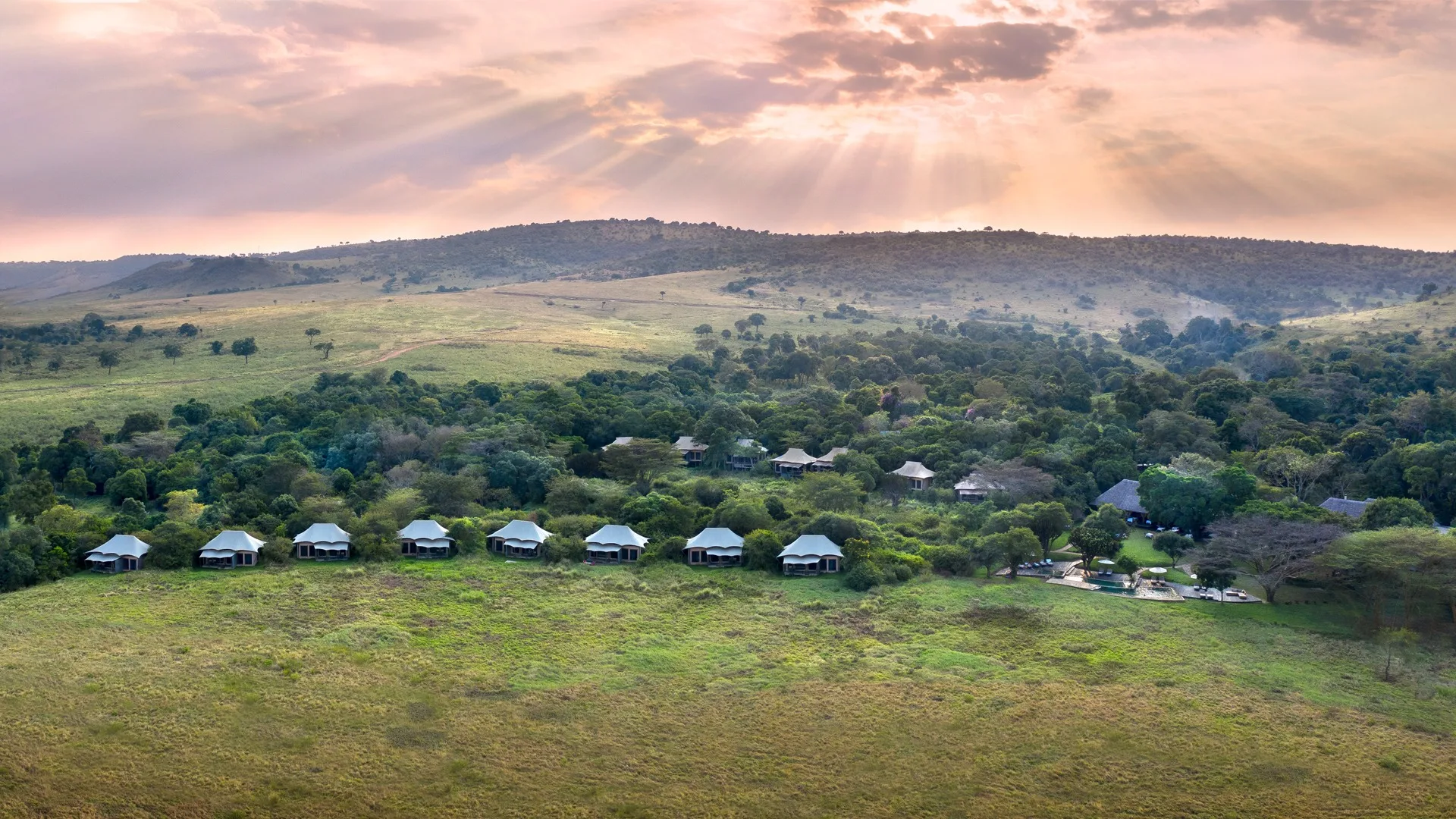
Signature (High-end)
-
Day 2: Nairobi to Samburu – Journey Into Northern Kenya - Main destination
- Masai Mara National Reserve
- Meals
- Breakfast, Lunch, Dinner
After breakfast, meet your professional safari driver-guide and begin the journey north toward the Samburu ecosystem. The drive is fascinating because Kenya's landscapes change substantially as you travel away from Nairobi. Depending on the route, you may pass through fertile central highlands before continuing toward increasingly dry northern landscapes.
Views toward Mount Kenya may be possible in suitable weather, although they are never guaranteed. Africa's second-highest mountain rises dramatically above the surrounding highlands and forms one of the country's most important geographical landmarks. As you continue north, vegetation becomes increasingly adapted to drier conditions, and the transition provides an excellent illustration of how altitude and rainfall influence Kenyan ecosystems.
Eventually, arrive in the Samburu region. Check into your lodge or tented camp and have lunch or refreshments depending on arrival time. Later in the afternoon, begin your first game drive. The difference from southern Kenyan safari landscapes is immediately apparent, as dry plains, rugged hills, riverine woodland and doum palms create a distinctive environment.
Your guide may begin searching for some of northern Kenya's characteristic wildlife, although no individual sighting can be guaranteed:
- A reticulated giraffe can be recognized by its striking geometric coat pattern.
- Grevy's zebras have narrower stripes than the more widespread plains zebra and are among Africa's threatened zebra species.
- Gerenuks are extraordinary antelope capable of standing upright on their hind legs to reach vegetation.
- Beisa oryx are superbly adapted to dry conditions.
- The Somali ostrich adds another distinctive northern species.
- Elephants are also an important part of the Samburu ecosystem.
Return to your accommodation as evening settles over the dry northern landscape.
Accommodation: Samburu lodge or tented camp
Meal Plan: Breakfast, Lunch & Dinner
Activity: Scenic transfer and afternoon game drive
Where you stay
-
Day 3: Full-Day Samburu Safari – Special Five, Elephants and Predators - Main destination
- Masai Mara National Reserve
- Meals
- Breakfast, Lunch, Dinner
Wake early for your first full day of game viewing. Morning is an excellent time to explore Samburu because temperatures are cooler, wildlife is often active and the low-angle light highlights the colors and textures of the landscape.
The Ewaso Nyiro River plays a central ecological role. In a relatively dry environment, reliable water becomes extremely important. Elephants may travel toward the river to drink, buffaloes and antelope use the surrounding vegetation, and predators patrol areas where prey concentrates. Your guide will search both riverine habitat and the drier plains.
Grevy's Zebra
One of the principal wildlife highlights is the Grevy's zebra. This species is larger than the plains zebra and has distinctive narrow stripes. Its conservation status makes every encounter particularly meaningful.
Reticulated Giraffe
The reticulated giraffe is another northern specialty. Its coat consists of sharply defined reddish-brown patches separated by bright lines, producing one of the most striking patterns of any African mammal.
Gerenuk
The gerenuk is sometimes called the giraffe gazelle because of its unusually long neck. One of its most fascinating behaviors is feeding while standing upright on its hind legs, which allows the animal to reach leaves that are unavailable to many other antelope.
Beisa Oryx
Beisa oryx are powerful-looking antelope with long straight horns and striking facial markings. They are exceptionally well adapted to dry environments.
Somali Ostrich
The Somali ostrich completes the group commonly described as the Samburu Special Five. Males can show distinctive coloration, particularly during breeding conditions.
But Samburu offers considerably more than these five species. Elephants can be a major highlight, while lions, leopards and cheetahs also occur in the wider ecosystem. Leopards are particularly associated with riverine vegetation and rocky or wooded areas that provide cover. Spotted hyenas, jackals and smaller predators may also be encountered.
Return to the lodge during the hottest hours or remain in the field with a picnic arrangement according to your preferred safari style. Continue game viewing in the afternoon. As sunset approaches, the northern landscape often takes on beautiful warm colors.
Accommodation: Samburu lodge or tented camp
Meal Plan: Breakfast, Lunch & Dinner
Activity: Morning and afternoon game drives
Where you stay
-
Day 4: Samburu – Second Full Day of Northern Kenya Wildlife Viewing - Main destination
- Masai Mara National Reserve
- Meals
- Breakfast, Lunch, Dinner
Your second complete day in Samburu gives you an opportunity to explore beyond the initial search for special species. A safari becomes much more rewarding when you move from simply identifying animals to understanding their behavior and environment. Begin early.
Perhaps you encountered elephants yesterday. Today, spend longer watching them. Northern Kenya elephants may move considerable distances through dry landscapes in search of food and water, and family groups are led by experienced females whose ecological knowledge is extremely important. Watch how young calves remain close to adults, and observe how elephants use their trunks for feeding, smelling, drinking and social interaction. The river corridor can provide excellent opportunities for observing these animals.
Predators may also become a focus. Lions occupy the ecosystem, while leopards use vegetation and rocky areas extremely effectively and cheetahs favor more open terrain where speed can be used during hunting. No predator sighting is guaranteed, and this unpredictability is one of the reasons multiple game drives are valuable.
Birdlife is another major attraction. Samburu's dry habitats support species different from those encountered later in the Masai Mara. Raptors, hornbills, starlings, weavers, bee-eaters, kingfishers and many other birds can add significant variety. Photography can be particularly rewarding because the northern landscape provides very different backgrounds from classic grassland safari images.
After an afternoon drive, return to camp for your final evening in Samburu.
Accommodation: Samburu lodge or tented camp
Meal Plan: Breakfast, Lunch & Dinner
Activity: Full-day wildlife exploration
Where you stay
-
Day 5: Samburu to Ol Pejeta Conservancy – From Northern Wilderness to Rhino Country - Main destination
- Masai Mara National Reserve
- Meals
- Breakfast, Lunch, Dinner
After breakfast, leave Samburu and begin traveling south toward the Ol Pejeta Conservancy region. The journey again reveals changing landscapes, as dry northern scenery gradually transitions toward the higher and more fertile areas around central Kenya. On clear days, the broader Mount Kenya landscape can be spectacular, although views are never guaranteed.
Arrive at your selected accommodation and have lunch before beginning an afternoon conservation-focused game drive. Ol Pejeta offers an important contrast to Samburu. Here, the safari experience combines wildlife viewing with a stronger understanding of conservation management.
The conservancy is particularly well known for its rhinos. Rhino conservation is extraordinarily demanding, as these animals require protection against poaching, effective habitat management and long-term financial investment. Seeing rhinos in this environment gives travelers an opportunity to understand that wildlife survival is not automatic. Conservation requires continuous effort.
Besides rhinos, Ol Pejeta supports a wide variety of wildlife. Depending on conditions, you may encounter elephants, buffaloes, giraffes, zebras, antelope and predators. Your guide will interpret the ecosystem while searching for wildlife. Return to your accommodation for dinner.
Accommodation: Ol Pejeta area lodge or tented camp
Meal Plan: Breakfast, Lunch & Dinner
Activity: Transfer and afternoon game drive
Where you stay
-
Day 6: Ol Pejeta – Rhinos, Conservation and Big Five Wildlife - Main destination
- Masai Mara National Reserve
- Meals
- Breakfast, Lunch, Dinner
Today is dedicated to exploring Ol Pejeta. Begin early when wildlife is active and temperatures are comfortable. Rhinos naturally become one of the major priorities. Kenya protects both black and white rhinoceroses, and understanding the differences between them can make sightings considerably more interesting.
White Rhino
White rhinos are primarily grazers. Their broad, relatively square mouths are adapted for feeding on grass. They can appear enormous and surprisingly calm when encountered in open habitat.
Black Rhino
Black rhinos are browsers. Their more pointed upper lips help them select leaves and branches from shrubs, and they can be more secretive and may use thicker vegetation.
Both species have suffered devastating losses from poaching. Their horns have made them targets of illegal wildlife trafficking despite having no legitimate medicinal value. A rhino sighting therefore carries substantial conservation significance. Rather than simply taking photographs, consider the security, monitoring and habitat protection required to keep the animal alive.
Ol Pejeta's broader wildlife population means the day is not limited to rhinos. Your guide can search for elephants, buffaloes and predators while exploring the conservancy, and birdlife is also diverse. Depending on the confirmed itinerary and activities available at the time of travel, additional conservation experiences may be incorporated. These should always be confirmed in advance because operating arrangements, fees and access conditions can change.
Spend the afternoon continuing wildlife viewing before returning to your accommodation.
Accommodation: Ol Pejeta area lodge or tented camp
Meal Plan: Breakfast, Lunch & Dinner
Activity: Full-day conservation and wildlife safari
Where you stay
-
Day 7: Ol Pejeta to Masai Mara – Journey to Kenya's Legendary Savannah - Main destination
- Masai Mara National Reserve
- Meals
- Breakfast, Lunch, Dinner
After breakfast, depart Ol Pejeta and begin the journey toward the Masai Mara ecosystem. This is a substantial travel day, but it connects two dramatically different wildlife landscapes. Depending on the selected itinerary, routing can be arranged by road or potentially modified using domestic flights where schedules and budget allow. For a road-based safari, the journey provides a broad view of central Kenya and the changing landscapes leading toward the southwestern grasslands.
Eventually, the scenery becomes increasingly open as you approach the Mara. Arrive at your lodge or tented camp. Depending on arrival time, you may head out for a short introductory game drive.
The first view of the Mara after Samburu and Ol Pejeta is striking. The northern dry-country landscape has disappeared, and now you are surrounded by extensive grasslands and rolling plains. Large herbivore populations become immediately noticeable. Zebras, wildebeest, gazelles, topis, giraffes and buffaloes may be scattered across the landscape, and elephants also occur throughout the ecosystem.
Predators are one of the Mara's greatest attractions. Even on the first evening, your guide may begin searching for lions, cheetahs and leopards, although no sighting can be guaranteed. Return to camp for dinner.
Accommodation: Masai Mara lodge or tented camp
Meal Plan: Breakfast, Lunch & Dinner
Activity: Transfer and possible afternoon game drive
Where you stay
-
Day 8: Full-Day Masai Mara Safari – Lions, Leopards and Cheetahs - Main destination
- Masai Mara National Reserve
- Meals
- Breakfast, Lunch, Dinner
Today is devoted entirely to the Masai Mara. Wake early and head into the ecosystem while temperatures are still cool. Predators may remain active after the night, and lions can sometimes be encountered moving through grassland or resting after hunting. The Mara supports several lion prides, although their exact locations change continually. An experienced guide uses tracks, prey behavior, previous sightings and local knowledge to determine where to search.
Searching for Leopards
Leopards require patience. These solitary cats use riverine woodland, trees, drainage lines and vegetation as cover, and a leopard can remain almost invisible even when relatively close. Your guide may listen for alarm calls from monkeys, baboons, impalas or birds. Sometimes a leopard resting on a tree branch can be located by carefully scanning likely areas.
Cheetahs on the Open Plains
Cheetahs are better suited to open terrain, and they frequently use elevated ground to scan for prey. Their principal advantage is extraordinary acceleration and speed, but high-speed pursuits are energetically expensive and usually brief. Watching a cheetah simply surveying the plains can therefore be fascinating even when no hunt occurs.
Plains Wildlife
Throughout the day, you may encounter: Wildebeest, Plains zebra, Topi, Impala, Thomson's gazelle, Grant's gazelle, Eland, Giraffe, African buffalo, Elephant, Warthog, Spotted hyena, Jackal.
Carry a picnic lunch if you wish to remain in the reserve for an extended game drive. This can provide access to areas farther from your accommodation and reduce time lost returning to camp. Continue exploring during the afternoon before returning around sunset.
Accommodation: Masai Mara lodge or tented camp
Meal Plan: Breakfast, Lunch & Dinner
Activity: Full-day game drive
Where you stay
-
Day 9: Masai Mara – Migration, Big Cats and Final Full Safari Day - Main destination
- Masai Mara National Reserve
- Meals
- Breakfast, Lunch, Dinner
Your final full safari day is spent in the Masai Mara. By this stage, you have already experienced three very different ecosystems. The dry landscapes and northern species of Samburu have given way to Ol Pejeta's conservation environment and finally the enormous wildlife concentrations of the Mara.
Today can be customized around the sightings that matter most to you. If leopard remains elusive, additional time can be spent around suitable habitat. If you found an interesting lion pride yesterday, your guide may return to see how its behavior has changed. If traveling during the migration season, you may devote more time to locating wildebeest and zebra herds.
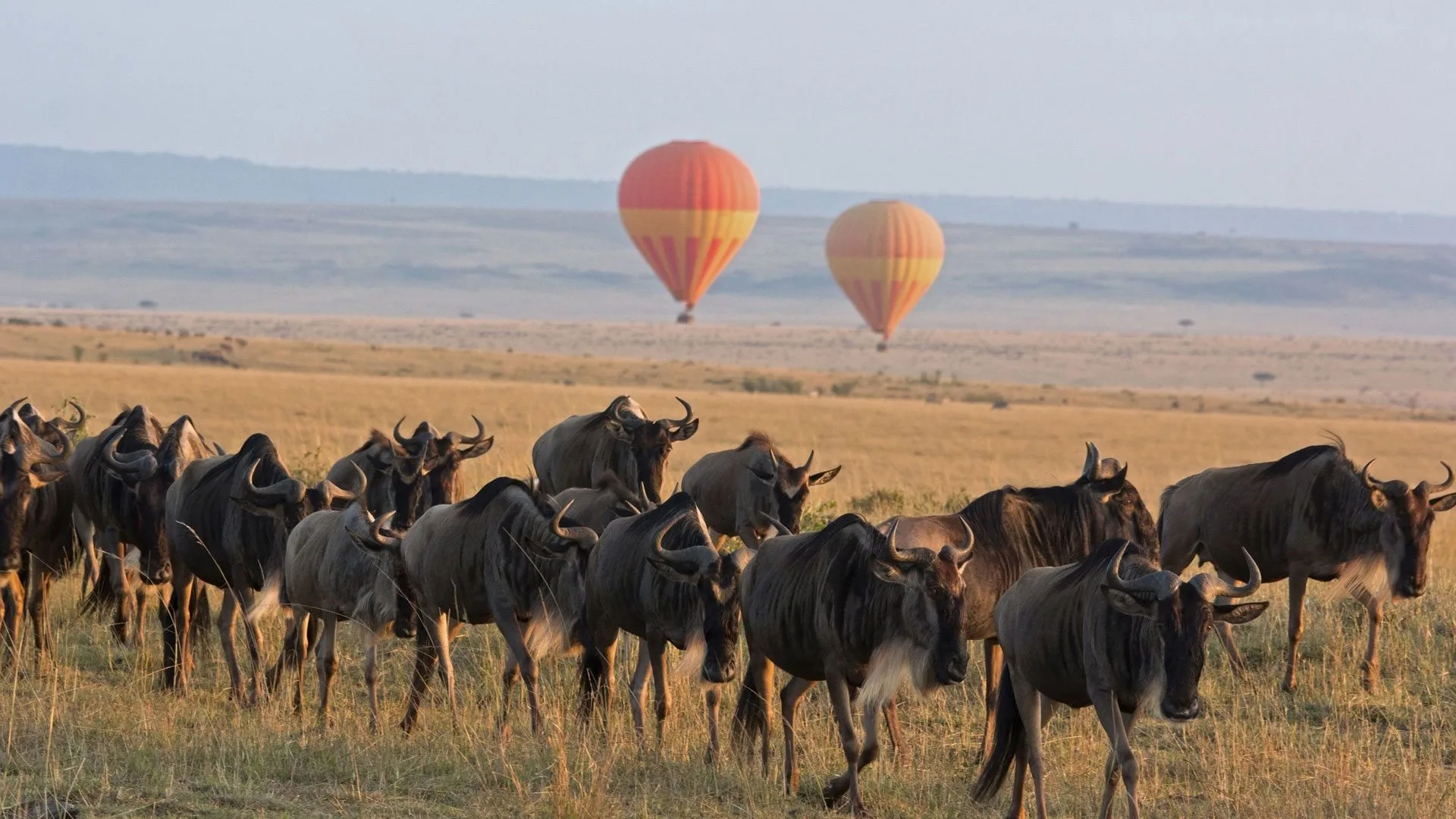
The Great Wildebeest Migration is one of the world's most famous wildlife movements. However, it is important to understand that the migration is a continuous ecological process rather than a scheduled event. Rainfall influences fresh grass, and the herds move in response to food and water availability, so their exact location can vary significantly. River crossings are even more unpredictable. A herd may approach a river and wait for hours before retreating, while another group may suddenly cross with little warning. No responsible safari operator can guarantee a crossing.
Optional Hot-Air Balloon Safari
An optional hot-air balloon flight can potentially be arranged for this morning. The experience generally begins before sunrise and provides an aerial perspective over the Mara landscape. From the air, wildlife trails, river systems and the enormous scale of the plains become visible in a completely different way. Ballooning is optional, subject to weather and availability, and carries an additional charge unless specifically included in your quotation.
After the balloon experience, continue with the regular game-drive program. Spend your final afternoon slowly enjoying the ecosystem. There is no need to chase every sighting. By now, you may find that simply sitting beside a herd of elephants or watching giraffes cross the horizon provides as much satisfaction as finding another predator. Return to camp for your final evening in the Kenyan wilderness.
Accommodation: Masai Mara lodge or tented camp
Meal Plan: Breakfast, Lunch & Dinner
Activity: Full-day wildlife viewing; optional balloon safari
Where you stay
-
Day 10: Masai Mara to Nairobi – Departure - Main destination
- Masai Mara National Reserve
- Drive time
- Return transfer as outlined in the itinerary
- Meals
- Breakfast, Lunch
Wake for your final morning in the Mara. Depending on your departure arrangements, enjoy breakfast and possibly a short early game drive. A final morning drive can produce unexpected highlights: lions may be active, hyenas may be returning toward resting areas, elephants may move across the plains and giraffes can create beautiful silhouettes in early light.
After completing your safari activities, check out and begin the journey to Nairobi. Alternatively, a scheduled domestic flight may be incorporated if included in the customized itinerary. Upon arrival in Nairobi, transfer to your international departure terminal or selected hotel. If your flight leaves late, optional activities or a day room can potentially be arranged.
Your 10 Days Samburu, Ol Pejeta & Masai Mara Safari concludes after an extraordinary journey through three of Kenya's most distinctive wildlife landscapes.
Meal Plan: Breakfast; additional meals according to arrangements
Activity: Final wildlife viewing and transfer to Nairobi
Samburu Special Five
One of the strongest reasons to include Samburu is the opportunity to encounter species that are much more strongly associated with northern Kenya.
Grevy's Zebra
The Grevy's zebra is the largest wild zebra species. Its narrow, closely spaced stripes distinguish it from the plains zebra commonly seen in the Masai Mara. The species has faced serious conservation challenges related to habitat loss, competition for resources and other pressures, so finding Grevy's zebras in their natural northern Kenyan habitat is a significant wildlife experience.
Reticulated Giraffe
Reticulated giraffes have one of Africa's most beautiful mammal coat patterns. Large reddish-brown patches are separated by pale lines, producing a net-like appearance, and the open northern landscape provides excellent opportunities to photograph them.
Gerenuk
The gerenuk is one of the most unusual antelope species encountered on a Kenyan safari. Its long neck allows it to reach higher vegetation than many competing herbivores, and it is famous for standing on its hind legs while feeding. Watching this behavior is often one of the highlights of a Samburu game drive.
Beisa Oryx
The Beisa oryx has long straight horns and striking facial markings. Its ability to survive in dry environments reflects impressive physiological adaptations.
Somali Ostrich
The Somali ostrich is another characteristic northern species. It differs in appearance from the common ostrich encountered elsewhere in East Africa. Together, these five animals give Samburu a wildlife identity completely different from that of the Masai Mara.
Elephants of Samburu
Samburu is also an outstanding elephant destination. The Ewaso Nyiro River is particularly important, and elephants may dig in sandy riverbeds, drink at water points or feed among riverine vegetation. Northern elephants often move across large landscapes beyond individual protected-area boundaries, so their survival depends on maintaining ecological connectivity between conservation areas and community lands. Observing elephants in this environment provides an opportunity to understand the importance of landscape-scale conservation.
Family behavior can be fascinating. Older females provide leadership, calves remain protected within the group, adolescents learn through interaction and mature bulls may travel alone or form loose associations with other males. Spending time watching these relationships is far more rewarding than treating elephants as simply another species to photograph.
Rhino Conservation at Ol Pejeta
Ol Pejeta is internationally recognized for its role in rhino conservation. Rhinos have survived enormous pressure from illegal hunting and trafficking. Their protection can involve:
- Intensive monitoring.
- Ranger patrols.
- Veterinary support.
- Habitat management.
- Security infrastructure.
- Community partnerships.
- Conservation financing.
Safari tourism can contribute to this system by generating revenue connected to wildlife protection. For visitors, seeing a rhino becomes considerably more meaningful when the conservation story is understood. These animals are survivors, and every individual represents decades of conservation effort. A good guide can help explain identification, feeding behavior and the ecological differences between black and white rhinos.
Big Five Opportunities
This itinerary provides opportunities to search for the Big Five:
Lion
Particularly strong opportunities occur in the Masai Mara, although lions also inhabit Samburu and Ol Pejeta.
Leopard
Leopards occur in all three broader ecosystems but are secretive and unpredictable. The Mara and Samburu can both provide rewarding leopard habitat.
Elephant
Elephants may be encountered in Samburu, Ol Pejeta and the Masai Mara.
Buffalo
Buffaloes occur in suitable habitats throughout the route.
Rhinoceros
Ol Pejeta provides the strongest rhino-focused component of the itinerary. Combining these ecosystems substantially improves the diversity of Big Five opportunities. However, wildlife remains free-ranging, so no species should ever be guaranteed.
Big Cats of the Masai Mara
The Masai Mara is internationally celebrated for big cats.
Lions
Lion prides can be found across suitable areas of the ecosystem, and their social behavior makes them especially interesting to observe. Rather than leaving immediately after finding a pride, spend time watching. Cubs may play, females may groom one another and adult males may patrol or rest nearby. Subtle interactions reveal the social complexity of the pride.
Leopards
Leopards are solitary and secretive. They can use trees, vegetation and riverine habitat so effectively that they disappear from view within seconds, so finding one is particularly rewarding.
Cheetahs
Cheetahs prefer open terrain. Their hunting strategy depends on acceleration, speed and precise timing, and they frequently spend long periods scanning for prey before deciding whether an opportunity is worth pursuing.
The Great Wildebeest Migration
Travelers visiting during appropriate months may encounter large concentrations of migrating wildebeest and zebra in the Mara ecosystem. The migration involves enormous numbers of animals moving through the wider Serengeti-Mara ecosystem. However, it should never be described as occurring on fixed dates, because rainfall patterns, grass growth and herd movement all vary. The period most commonly associated with major herds in Kenya is roughly July through October, but conditions can shift.
A ten-day itinerary with several Mara days improves your opportunities to locate migration activity during the relevant season, although herd positions and river crossings are never guaranteed. Even outside migration months, the Masai Mara remains an outstanding general wildlife destination.
Where you stay
03 Rates
Safari rates 2027-2029
Indicative per person. Season, group size and lodge style change the total — your quotation confirms current rates.
-
Essential (Budget)
Essential (Budget)
Budget camps and lodges suit travelers who prioritize wildlife while keeping costs lower.
Great value camps
-
Comfort (Mid-range)
Comfort (Mid-range)
Mid-range tented camps and lodges balance comfort and price with private rooms or tents and en-suite facilities.
Quoted for your dates
-
Premium (Luxury)
Premium (Luxury)
Luxury camps and lodges focus on location, service and more intimate wildlife experiences.
Premium camps and lodges
-
Signature (High-end)
Signature (High-end)
Signature camps and lodges are the most exclusive stays — small, highly private properties with exceptional guiding and setting.
Exclusive signature stays
04 Activities
Safari activities
Game viewing is the core of this itinerary. Optional extras are quoted separately and depend on season, permits and availability. Individual species and river crossings are never guaranteed.
Additional information
Plan This Safari
Best Time for This 10-Day Kenya Safari
This itinerary can be operated throughout much of the year.
January to March
These months can provide excellent general wildlife viewing. Samburu's dry landscapes can be particularly dramatic, predator activity remains rewarding, and photography can be excellent.
June to October
These are popular safari months. Drier conditions can concentrate animals around reliable water sources, and the period also overlaps with the months commonly associated with migration herds in the Masai Mara. Accommodation demand can be high, so early booking is strongly recommended.
April and May
Long rains can transform the landscapes. Vegetation becomes green, skies can be dramatic and visitor numbers may be lower. However, road conditions can become challenging and some seasonal camps may close.
November and December
Short rains can refresh the vegetation. Birdlife can be excellent, the landscapes can become beautifully green and wildlife viewing continues throughout the period.
Birdwatching Across Three Ecosystems
This itinerary is particularly strong for birdwatchers because it crosses dramatically different habitats.
Samburu Birds
Northern dry-country species create a distinctive birding experience. Possible groups include: Hornbills, Bee-eaters, Kingfishers, Raptors, Starlings, Weavers, Bustards, Ostriches.
Ol Pejeta Birds
The conservancy's mix of grassland, woodland and water-associated habitats supports diverse species.
Masai Mara Birds
Even travelers primarily interested in mammals should carry binoculars. The Mara is particularly rewarding for: Eagles, Vultures, Secretary birds, Ground hornbills, Bustards, Storks, Herons, Rollers, Numerous grassland species.
Private Safari Advantages
The 10 Days Samburu, Ol Pejeta & Masai Mara Safari is particularly rewarding as a private journey. Your vehicle can be dedicated exclusively to your traveling party, which gives you control over:
- Game-drive departure times.
- Time spent at sightings.
- Photography priorities.
- Birdwatching stops.
- Rest breaks.
- Family schedules.
- Lunch arrangements.
- General safari pace.
A private guide also becomes increasingly familiar with your interests as the journey progresses. By the time you reach the Masai Mara, your guide may already know whether you would rather spend an hour with a leopard or continue searching for a new species. That personalization can significantly improve the safari experience.
Safari Vehicle
A well-prepared safari vehicle is essential for a road-based ten-day itinerary. Vehicles used for Kenyan safaris are normally modified to provide improved visibility during game drives. A professional driver-guide manages both road transfers and wildlife viewing, and the guide's responsibilities include:
- Safe driving.
- Wildlife identification.
- Bird identification.
- Understanding animal behavior.
- Reading tracks and signs.
- Knowing park road networks.
- Interpreting ecosystems.
- Managing game-drive timing.
- Following wildlife regulations.
- Coordinating the itinerary.
A knowledgeable guide can transform a simple animal sighting into an educational wildlife experience.
Accommodation Categories
The safari can be organized at different accommodation levels, and different categories can also be mixed across the itinerary.
Budget
Budget accommodation focuses on affordability and practicality. Properties may be simpler or located outside the most premium positions.
Mid-Range
Mid-range safari lodges and permanent tented camps generally provide private accommodation, en-suite bathrooms, restaurants and comfortable communal facilities. This category often provides an excellent balance between cost and comfort.
Luxury
Luxury properties emphasize service, location, dining and accommodation quality. Some may be positioned in particularly attractive wildlife areas.
High-End
High-end itineraries can include boutique camps, premium suites, private conservancies, private vehicles and domestic flights.
Road Safari Versus Fly-In Options
The standard itinerary can be arranged primarily by road. Road travel allows you to see rural Kenya and provides continuity with the same driver-guide. However, distances between some destinations are substantial, so travelers prioritizing comfort or reduced transfer time can request domestic flight options where suitable services operate. Flight schedules and luggage restrictions must be considered carefully. Fly-in arrangements are particularly attractive for:
- Luxury travelers.
- Honeymooners.
- Families with younger children.
- Older travelers.
- Visitors who prefer shorter road transfers.
Family Safari
Families can enjoy this itinerary because each destination provides a different theme. Samburu introduces unusual northern wildlife, Ol Pejeta provides a strong conservation and educational component, and the Masai Mara delivers the excitement of big cats and large herds. Parents should provide children's ages when requesting a quotation because camp policies vary. A private family safari can be adapted with:
- Family rooms.
- Interconnecting accommodation.
- Flexible game-drive lengths.
- Swimming breaks where available.
- Child-friendly meals.
- Educational wildlife activities.
- More relaxed departure times where appropriate.
Honeymoon Safari
For couples, this route can be upgraded into an exceptional honeymoon. Luxury tented camps provide the romance of sleeping in the wilderness without sacrificing comfort, and the safari can finish with a beach extension along the Kenyan coast or in Zanzibar. Depending on selected accommodation, honeymoon experiences can potentially include:
- Private dining.
- Sundowners.
- Scenic suites.
- Bush meals.
- Premium tented accommodation.
- Private vehicles.
- Hot-air ballooning in the Masai Mara.
Photography Safari
Few ten-day Kenya itineraries provide this level of visual diversity. In Samburu, photographers can work with dry landscapes, doum palms, reticulated giraffes and Grevy's zebras. At Ol Pejeta, rhinos provide powerful conservation-focused subjects. In the Masai Mara, open grasslands create opportunities for big-cat photography.
A private vehicle is strongly recommended for serious photographers. The ability to wait at a sighting is critical, and photography improves dramatically when you stop chasing animals and begin anticipating behavior.
What to Pack
Temperatures can vary significantly between destinations and times of day. Central highland areas can be considerably cooler than Samburu's lower, drier environment, so layers are useful. Useful safari items include:
- Lightweight neutral-colored clothing.
- Long trousers.
- Short- and long-sleeved shirts.
- Warm fleece or jacket.
- Comfortable closed shoes.
- Sun hat.
- Sunglasses.
- Sunscreen.
- Insect repellent.
- Binoculars.
- Camera equipment.
- Telephoto lens.
- Spare batteries.
- Charging cables.
- Power bank.
- Personal medication.
- Small daypack.
- Travel documents.
What Is Usually Included?
Your final quotation will specify exact inclusions, and additional conservation activities should be clearly identified because some may carry separate fees. Depending on the confirmed package, inclusions can generally cover:
- Airport transfers stated in the itinerary.
- Private safari transportation where confirmed.
- Professional English-speaking driver-guide.
- Accommodation.
- Meals according to the itinerary.
- Scheduled game drives.
- Park and conservancy fees included in the quotation.
- Bottled drinking water in the safari vehicle.
- Applicable taxes included in the confirmed package.
What Is Usually Excluded?
Possible exclusions include:
- International airfare.
- Visas or immigration expenses.
- Travel insurance.
- Optional conservation experiences.
- Hot-air balloon safari.
- Premium alcoholic beverages.
- Personal purchases.
- Laundry where not included.
- Gratuities.
- Additional hotel nights.
- Services not expressly stated in the final quotation.
Responsible Wildlife Tourism
This itinerary visits ecosystems where tourism can make a meaningful contribution to conservation. At rhino conservation areas in particular, visitors should respect any restrictions related to sensitive wildlife information and security, and conservation should always take priority over obtaining a photograph. Responsible safari behavior includes:
- Maintaining appropriate distances from wildlife.
- Following designated road rules.
- Avoiding unnecessary disturbance.
- Never feeding animals.
- Keeping noise controlled.
- Never blocking animals' movement.
- Respecting other safari vehicles.
- Avoiding litter.
- Following instructions from guides and rangers.
- Supporting legitimate conservation programs.
Why This Three-Destination Safari Is So Rewarding
The greatest strength of the 10 Days Samburu, Ol Pejeta & Masai Mara Safari is contrast. In Samburu, you enter an environment shaped by heat, limited water and extraordinary animal adaptations. Grevy's zebras stand on dusty plains, reticulated giraffes move between acacia trees, gerenuks rise onto their hind legs to browse and elephants gather around the Ewaso Nyiro River.
Then the journey changes. At Ol Pejeta, wildlife viewing becomes inseparable from the story of conservation. Seeing a rhino is not simply a photograph. It is evidence of intensive protection, ranger dedication, habitat management and the continuing international struggle against wildlife crime.
Finally, you arrive in the Masai Mara. The landscape opens into sweeping grasslands where large herbivore populations support lions, cheetahs, leopards and hyenas. During migration periods, wildebeest may spread across the plains in enormous numbers. These are not three interchangeable safari stops. They are three different ecological stories, and that diversity is what makes the itinerary so powerful.
Book Your 10 Days Samburu, Ol Pejeta & Masai Mara Safari
Your safari can be customized according to:
- Your preferred travel dates.
- Number of travelers.
- Accommodation category.
- Total safari budget.
- Interest in rare northern wildlife.
- Rhino and conservation priorities.
- Big Five interests.
- Great Migration priorities.
- Photography requirements.
- Family needs.
- Honeymoon arrangements.
- Preferred balance between road travel and domestic flights.
- Interest in private conservancies.
- Beach-extension plans.
For travelers seeking more than a conventional Kenya safari, this route delivers exceptional variety. You can begin among the Grevy's zebras, reticulated giraffes, gerenuks and elephants of Samburu, continue into the rhino conservation landscapes of Ol Pejeta, and finish among the lions, cheetahs, leopards and immense grasslands of the Masai Mara. Ten days provides enough time for these contrasting environments to become experiences rather than merely names on an itinerary. Individual species, river crossings and mountain views can never be guaranteed.
Primary Keyphrase: 10 Days Samburu, Ol Pejeta & Masai Mara
Exact URL: `/safari-packages/10-days-samburu-ol-pejeta-and-masai-mara/`
Planning Questions
Frequently Asked Questions
Is 10 days enough for Samburu, Ol Pejeta and Masai Mara?
Yes. Ten days provides a strong introduction to all three destinations while allowing several full wildlife-viewing days.
Why include Samburu?
Samburu offers a completely different landscape from the Masai Mara and provides opportunities to encounter northern species including Grevy's zebra, reticulated giraffe, gerenuk, Beisa oryx and Somali ostrich.
What are the Samburu Special Five?
The commonly referenced Samburu Special Five are Grevy's zebra, reticulated giraffe, gerenuk, Beisa oryx and Somali ostrich.
Is Samburu good for elephants?
Yes. Elephants are an important part of the ecosystem, particularly around the Ewaso Nyiro River and surrounding habitats.
Why visit Ol Pejeta?
Ol Pejeta adds a major rhino and conservation component to the itinerary while also offering broader wildlife viewing.
Can I see rhinos?
Ol Pejeta provides strong rhino-viewing opportunities, although all wildlife sightings remain dependent on natural conditions.
Can I see the Big Five?
The combination of Ol Pejeta and the Masai Mara provides excellent opportunities to search for all five species, but sightings cannot be guaranteed.
Is Masai Mara included?
Yes. The final section of the itinerary provides several days in the Masai Mara ecosystem.
Can I see lions?
The Masai Mara is particularly renowned for lions, while lions also occur in the other ecosystems.
Can I see leopards?
Leopards occur in Samburu, Ol Pejeta and the Mara, but their secretive behavior makes sightings unpredictable.
Can I see cheetahs?
Cheetahs occur in suitable open habitats, particularly in the Masai Mara and parts of northern Kenya.
Can I see the wildebeest migration?
During appropriate months, the Masai Mara portion may coincide with large migration herds. Their exact position cannot be guaranteed.
Are river crossings guaranteed?
No. Wildebeest river crossings are completely natural and unpredictable.
Can I take a hot-air balloon safari?
Yes, an optional Masai Mara balloon safari can normally be requested subject to availability and operating conditions.
Is this safari private?
It can be arranged as a private safari with a dedicated vehicle and guide.
Can the itinerary be upgraded to luxury?
Yes. Mid-range, luxury and high-end accommodation combinations can be created.
Is the safari suitable for families?
Yes. Accommodation and daily schedules can be selected according to children's ages and family requirements.
Is this suitable for honeymooners?
Yes. Luxury camps, private arrangements and a beach extension can create an excellent honeymoon.
Can solo travelers book?
Yes. Solo private safaris can be arranged, although single accommodation and private vehicle costs affect pricing.
Can I fly between destinations?
Domestic flights can potentially replace selected road sectors depending on available schedules and budget.
Can I extend the safari?
Yes. Additional destinations can be incorporated, or the safari can finish with a beach stay.
05 Request Quote
Request Quote
Tell us your dates, group size, and preferred lodge style — we will send a tailored quote for this safari.
Want to extend your safari?
Add Amboseli, Diani Beach, Tanzania and Zanzibar, or gorilla trekking in Uganda or Rwanda — we tailor the journey to your dates.