

Choosing the right migration camp in the Masai Mara is one of the most important decisions when planning a Great Wildebeest Migration safari in Kenya. The Masai Mara forms part of the vast Serengeti–Mara ecosystem, where enormous herds of wildebeest and zebra move seasonally in response to rainfall, fresh grazing and water availability, and may approach the Mara River during parts of the year. The best migration camp is not necessarily the property closest to the river or the most expensive lodge in the reserve; its value depends on location, access to productive game-viewing areas, guiding quality, vehicle arrangements and the number of nights available, and no accommodation can guarantee a river crossing or predict exactly where migratory herds will gather.
Migration camps vary from permanent tented properties to seasonal camps and from comfortable canvas tents to exclusive luxury suites, and popular properties often fill many months in advance during August and September. This guide explains how to select Masai Mara migration accommodation, the advantages of different locations, the best time to travel, what to expect from river-crossing safaris and how to plan a comfortable, responsible wildlife experience.
Understanding the Great Wildebeest Migration
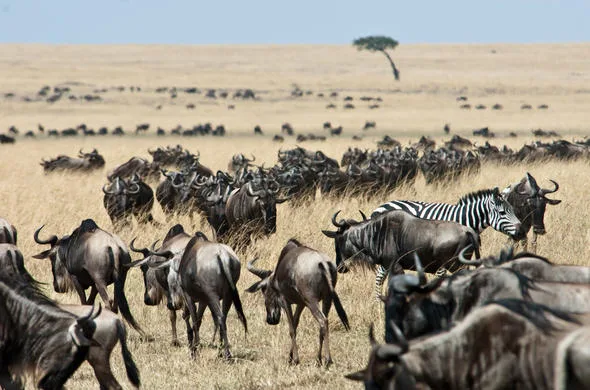
The Great Wildebeest Migration is a continuous seasonal movement of large herbivore populations across the Serengeti–Mara ecosystem. Wildebeest form the most recognisable component of the migration, while zebras and other grazing animals may travel alongside them in response to rainfall, grazing availability and access to water. The migration does not follow an exact annual timetable, and herds may move earlier or later depending on conditions, with different groups sometimes occupying different parts of the ecosystem simultaneously.
Migration Activity in Kenya
The period from approximately July through October is commonly associated with migration activity in the Kenyan Masai Mara. During these months, large herds may occupy the reserve and surrounding wildlife areas. However, the precise timing of arrival and departure varies. Travellers should not assume that a particular date guarantees large herds near their accommodation.
Mara River Crossings
The Mara River is one of the migration's most famous geographical features. Some herds approach the river and attempt crossings, sometimes gathering along the banks for extended periods. Animals may hesitate, retreat or cross at unexpected locations. Crocodiles, strong currents and difficult riverbanks can make crossings dangerous.
These events are unpredictable and cannot be guaranteed by any safari camp.
Why Camp Location Matters
A camp with practical access to relevant wildlife areas can reduce daily transfer time. This is particularly useful when guides need to respond to changing herd movements. However, the location of migratory animals changes throughout the season. A property that is convenient during one week may be less ideally positioned during another.
Types of Migration Camps in the Masai Mara
Permanent Tented Camps
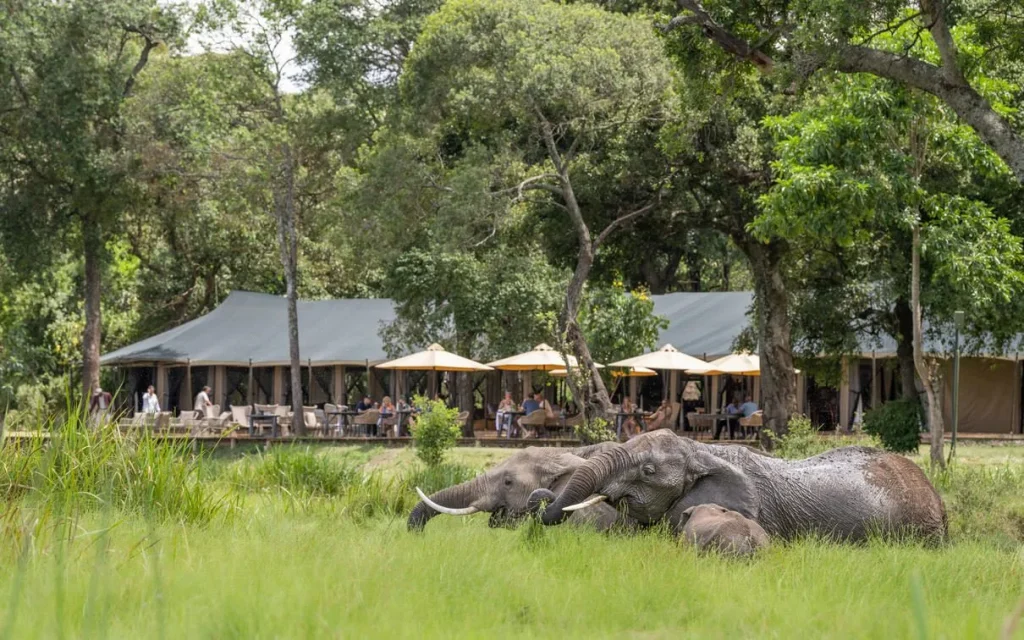
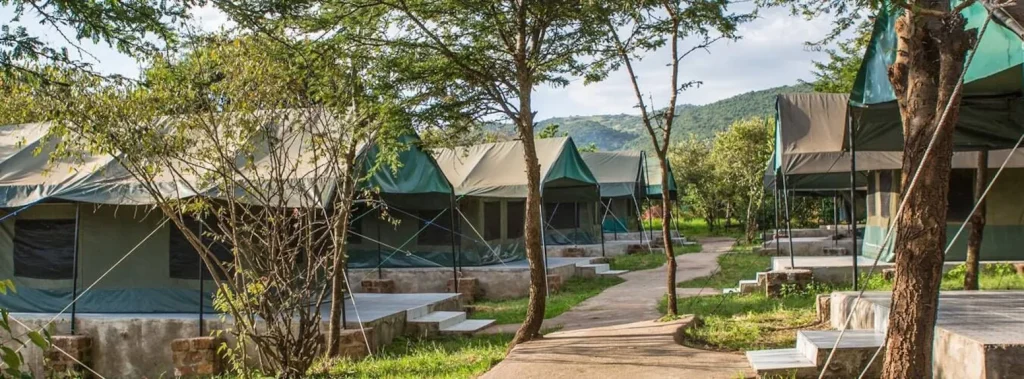
Permanent camps operate from established locations and may remain open throughout much of the year. They generally provide more developed facilities, such as en-suite accommodation, dining areas and established service arrangements. These camps can be suitable for travellers who want comfort and reliable infrastructure during the migration season.
Seasonal Migration Camps
Seasonal camps may operate during selected periods associated with wildlife movements. They often emphasise an intimate safari atmosphere and a closer connection to the surrounding landscape. Facilities vary considerably. Some provide comfortable en-suite tents and high-quality dining, while others offer simpler accommodation.
Travellers should confirm operating dates, exact location and facilities before booking.
Riverfront Camps
Riverfront accommodation appeals to travellers interested in hippos, crocodiles, birdlife and the scenery of the Mara River. Some properties overlook the main river, while others are situated near tributaries or different watercourses. A river view does not guarantee a migration crossing.
Travellers should verify the exact location and access to recognised game-drive routes.
Conservancy Camps
Some camps are located in conservancies surrounding the Masai Mara National Reserve. These areas may provide a quieter atmosphere and different safari activity arrangements. However, conservancy accommodation does not automatically include unrestricted access to the national reserve.
Entry fees, transfers and permitted activities should be confirmed.
Best Areas for Migration Camps
Mara Triangle
The Mara Triangle occupies the western section of the Masai Mara National Reserve. It includes open grasslands, riverine habitats and access to sections of the Mara River. The Oloololo Escarpment provides a dramatic backdrop. Accommodation in or near this area can be attractive for migration-focused travellers, depending on the exact property and herd movements.
Central Masai Mara
The central Masai Mara contains important wildlife habitats and access routes. Some accommodation provides convenient access to open plains and riverine environments. However, camp locations differ, and travellers should verify driving times rather than relying on broad descriptions.
Talek Area
The Talek area provides access to sections of the greater Masai Mara landscape. Accommodation includes different categories of tented camps and lodges. Some properties may be suitable for migration-focused safaris, depending on their exact location and daily game-drive arrangements.
Western Masai Mara
The western Masai Mara includes areas associated with the Mara River and the Oloololo Escarpment. Properties may offer attractive views and access to different wildlife habitats. Travellers should distinguish between accommodation inside the reserve and properties outside its boundaries.
Choosing Between Riverfront and Plains Camps
A riverfront camp may be attractive because of its scenery and opportunities to observe river-associated wildlife. Hippos, crocodiles and birds can provide interesting sightings even when migratory herds are absent. However, a riverfront location may not offer the best access to every part of the reserve.
A plains camp may provide convenient access to grassland habitats where large herds gather. The best choice depends on travel dates, wildlife interests and the specific game-drive routes available. For migration-focused travellers, guiding quality and flexibility are often more important than a river view alone.
Accommodation Categories for Migration Safaris
Essential Migration Accommodation
Essential accommodation focuses on affordability and practical facilities. Travellers may stay in simpler camps outside the most expensive reserve locations. This category can be suitable for guests who prioritise wildlife viewing over luxury. However, daily transfer times and park entry arrangements should be considered carefully.
Comfort Migration Camps
Comfort-category camps generally provide en-suite tents, comfortable beds and organised dining. They offer a balance between affordability and a traditional safari atmosphere. This category is popular with couples, families and first-time migration travellers.
Premium Migration Camps
Premium camps may offer spacious tented suites, refined furnishings and attractive locations. Higher levels of service and carefully organised guiding arrangements can add to the experience. Travellers should compare the exact location and safari programme alongside room facilities.
Signature Migration Camps
Signature properties emphasise exclusivity, personalised hospitality and distinctive settings. Some provide private vehicles, dedicated guides and spacious accommodation. They are particularly suitable for luxury migration safaris, honeymoons and photography-focused travellers.
Best Time to Book Migration Camps
June and Early July
Some migratory herds may begin approaching the Kenyan section of the ecosystem during this period, depending on conditions. However, timing varies considerably. Travellers should not assume that the main migration will be established in the Masai Mara by a specific date.
Late July and August
These months are popular for migration-focused safaris. Large herds may occupy the ecosystem, and river crossings can occur. Accommodation demand is often high.
September
September is another popular period for migration viewing. Herd distribution varies, and some animals may remain in different parts of the ecosystem. River crossings remain unpredictable.
October
Migration activity may continue during parts of October, depending on rainfall and grazing conditions. Some herds may begin moving toward other areas of the ecosystem. Travellers should plan with flexibility.
November and Beyond
The large migration herds generally move away from much of the Kenyan Masai Mara as seasonal conditions change. However, resident wildlife remains present throughout the year. The reserve continues to offer rewarding general wildlife safaris outside the main migration period.
How Many Nights Should You Stay in a Migration Camp?
Length of stay affects how flexibly your guide can respond to herd movements. Typical approaches include:
- Two nights: Provides an introduction but offers limited flexibility.
- Three nights: Allows more time to explore different habitats and respond to herd movements.
- Four or five nights: Preferable for travellers whose main priority is observing migration activity.
- Longer stays: Particularly useful for photographers who want to spend time studying animal behaviour.
However, no number of nights guarantees a river crossing.
Suggested Five-Day Masai Mara Migration Safari
Day 1: Nairobi to the Masai Mara
Depart Nairobi in the morning and travel southwest toward the Masai Mara. The road journey generally takes approximately five to seven hours or longer, depending on traffic, road conditions and camp location. Arrive at your selected migration camp and check in. Depending on timing, enjoy lunch before an afternoon game drive.
Your guide introduces the surrounding wildlife habitats. Return to camp for dinner and overnight.
Day 2: Full-Day Migration Exploration
Begin early with breakfast or a packed meal. Your guide explores areas where migratory herds have been reported, subject to current conditions and park regulations. The day's route may include open grasslands and suitable riverine habitats. A picnic lunch can be arranged at an appropriate location if included in the package.
Continue wildlife exploration during the afternoon.
Day 3: Mara River and Wildlife Viewing
Spend another day exploring the reserve. Depending on herd movements, your guide may visit accessible sections of the Mara River. The river supports hippos, crocodiles and birdlife. If wildebeest or zebra herds are present, you may have opportunities to observe their behaviour.
A crossing cannot be guaranteed.
Day 4: Additional Migration and Predator Viewing
Enjoy another full day of game drives. The additional time allows your guide to respond to changing wildlife movements. The Masai Mara also supports lions, leopards, cheetahs, elephants and numerous other resident animals. Photographers may spend longer observing particular species.
Return to camp for the final overnight stay.
Day 5: Return to Nairobi
After breakfast, depart the Masai Mara for Nairobi. Depending on the itinerary, an early game drive may be possible. Arrival time depends on traffic and road conditions. Travellers may alternatively arrange a domestic flight, subject to schedules and availability.
Migration Camp Activities
Morning Game Drives
Morning drives often begin when temperatures are cooler. Guides explore suitable habitats and respond to recent wildlife movements. The changing light can be particularly attractive for photography.
Full-Day Game Drives
Full-day drives allow visitors to explore a wider area without returning to camp for lunch. This can be useful when migratory herds are concentrated far from the accommodation. Packed meals may be arranged at designated locations.
Predator Viewing
The Masai Mara supports lions, leopards and cheetahs. Migration season can provide opportunities to observe predator–prey relationships, although specific encounters cannot be guaranteed. Guides should maintain appropriate distances and avoid disturbing hunting animals.
Hot-Air Balloon Safaris
Balloon safaris may be arranged through appropriate operators. Flights normally take place early in the morning and depend on weather conditions. They are generally optional unless included in the package.
Wildlife Photography
Migration safaris are attractive to photographers because of the scale of the herds and the variety of wildlife behaviour. Private vehicles can provide flexibility for positioning and spending time at sightings. Long lenses, spare batteries and dust protection are useful.
What to Expect From a Mara River Crossing
A river crossing is not a scheduled event. Herds may approach the water, hesitate and retreat several times before crossing. Some crossings involve relatively small groups, while others include large numbers of animals. The event may occur at a different location from the one being watched.
Travellers should approach the experience with patience and realistic expectations. Even without a crossing, observing herd behaviour, predators and the wider ecosystem can be highly rewarding.
Responsible Migration Viewing
Responsible wildlife viewing is particularly important during migration season. Vehicles should not block animals from approaching or leaving the river. Guides must follow applicable park regulations and avoid crowding wildlife. Visitors should never encourage drivers to interfere with animal movements for photographs.
The welfare of wildlife and the protection of the ecosystem must take priority over obtaining a particular sighting.
Migration Camp Prices
Migration camp prices vary according to accommodation category, location, travel dates and package inclusions. Peak migration months often attract higher rates. Properties inside the reserve or near popular wildlife areas may be more expensive. Private vehicles and specialised guiding arrangements can increase the overall cost.
Travellers should compare complete safari packages rather than accommodation rates alone. Park fees, guiding, vehicles, meals and transfers should be clearly identified in the quotation.
Private Versus Group Migration Safaris
Private Migration Safaris
Private safaris provide exclusive use of the vehicle for the travelling party. This allows greater flexibility when responding to herd movements. Photographers and travellers particularly interested in river crossings may appreciate the ability to spend longer in suitable areas.
Group Migration Safaris
Group safaris share transport and guiding costs. They can be more affordable but generally provide less flexibility. Before booking, confirm group size, vehicle arrangements and the number of game-drive hours included.
Getting to Migration Camps
Road Transfers
Road travel from Nairobi commonly takes approximately five to seven hours or longer. The exact duration depends on the selected camp, traffic and road conditions. A suitable safari vehicle provides transport for transfers and game drives.
Domestic Flights
Scheduled flights operate from Nairobi's Wilson Airport to selected Masai Mara airstrips. Flying can reduce travel time considerably. Travellers should confirm baggage allowances and onward camp transfers.
Migration Camps for Families
Families can enjoy migration safaris, provided accommodation and activities are suitable for the children's ages. Some camps offer family tents or additional beds. Parents should consider the length of game drives and the need for rest periods. Children must be supervised, particularly at unfenced properties.
Migration Camps for Honeymooners
Couples may prefer smaller camps with attractive settings and personalised hospitality. A private vehicle can provide flexibility and privacy. Selected accommodation upgrades may be worthwhile for special occasions. However, wildlife viewing should remain the central consideration when choosing a migration camp.
Migration Camps for Photographers
Photographers should prioritise guiding quality, vehicle arrangements and location. A private vehicle allows greater flexibility for positioning and spending time at sightings. Charging facilities and secure equipment storage are useful considerations. Longer stays can provide opportunities to work with different lighting conditions and animal behaviour.
Practical Packing Advice
Pack neutral-coloured clothing, comfortable footwear, sun protection, insect repellent and a warm jacket for early mornings. Binoculars are valuable for observing distant herds. Photographers should bring suitable lenses, spare batteries, memory cards and dust protection. Rain protection may be useful depending on the season.
At unfenced camps, wildlife may move through the grounds. Guests should follow staff safety procedures and avoid walking independently after dark.
Frequently Asked Questions About Migration Camps in the Masai Mara
Which camp is best for the Great Migration?
The best camp depends on travel dates, location, guiding arrangements and current herd movements. No camp guarantees a crossing.
Do I need a riverfront camp?
No. A well-positioned camp with good access to wildlife areas can provide an excellent migration safari.
What months are best for migration camps?
July through October is commonly associated with migration activity in the Kenyan Masai Mara, although timing varies.
Can I see a river crossing from my camp?
Some camps overlook river sections, but crossings occur unpredictably and cannot be guaranteed.
How many nights should I book?
Four or five nights provide greater flexibility for migration-focused travellers.
Are migration camps expensive?
Prices vary by accommodation category and season. Peak migration months generally attract higher rates.
Are private migration safaris available?
Yes. Private safaris can be customised according to travel dates, accommodation and wildlife interests.
Can children stay in migration camps?
Many camps welcome families, although age policies and room arrangements differ.
Are game drives included?
This depends on the package. Confirm the written inclusions before booking.
Can I fly to the Masai Mara?
Yes. Scheduled flights operate from Nairobi to selected airstrips.
Book Migration Camps in the Masai Mara With Safari Trips to Kenya
Choosing the right migration camp in the Masai Mara involves balancing accommodation comfort, location, guiding quality and realistic expectations about wildlife movements. The Great Wildebeest Migration is a natural event that cannot be scheduled, but a well-planned safari can provide exceptional opportunities to observe large herds, predators and the wider ecosystem. Safari Trips to Kenya helps travellers compare Essential, Comfort, Premium and Signature migration accommodation and arrange private or group safaris.
Contact our team to discuss your preferred travel dates, accommodation category and wildlife interests. We can help create a personalised Masai Mara migration safari with suitable camps and practical game-viewing arrangements.