
5 DAYS / 4 NIGHTS
5 Days Migration Safari
Plan a 5 Days Migration Safari in Kenya's Masai Mara, with three full days of wildlife viewing, seasonal wildebeest herds, big cats and Mara River excursions.
- Wildlife SafariPrivate Journey
- Private Safari4x4 Vehicle
- Expert GuideEnglish Speaking
- All MealsBreakfast, Lunch, Dinner
- 24/7 SupportWe're here to help
01 Overview
Safari Overview
- Duration5 days / 4 nights
- DestinationWildebeest Migration
- Starts / endsOn request
- Safari stylePrivate safari
- AccommodationEssential · Comfort · Premium · Signature
- Best forCouples, families, first-timers
The sight of thousands of wildebeest moving across the grasslands of the Masai Mara is one of East Africa's most memorable wildlife experiences. During the migration season, the landscape can be filled with grazing herds, zebras moving alongside wildebeest, and predators watching for opportunities. The scale of the movement is remarkable, but what makes the Great Wildebeest Migration fascinating is the way it connects rainfall, grass growth, predator behaviour and the survival of millions of animals across the wider Serengeti–Mara ecosystem.
Our 5 Days Migration Safari is designed for travellers who want more time in the Masai Mara National Reserve than a short weekend safari can provide. Beginning and ending in Nairobi, the itinerary allows four nights in the Masai Mara region, giving you three full days for game drives, wildlife photography and exploration of different habitats.
Five days is a particularly practical duration for travellers interested in the migration. Rather than spending most of the holiday on road transfers, you can dedicate several consecutive days to following wildlife movements, observing predator behaviour and visiting productive parts of the reserve.
The itinerary is especially attractive between approximately July and October, when migrating wildebeest and zebras may be present in the Kenyan section of the ecosystem. However, the migration is not governed by a fixed calendar. Herd locations depend on rainfall and grazing conditions, and no safari operator can guarantee that animals will be in a particular area on a specific date.
Even when migrating herds are elsewhere, the Masai Mara remains an outstanding destination for resident wildlife, including lions, elephants, buffaloes, giraffes, cheetahs, leopards and numerous bird species.
Itinerary
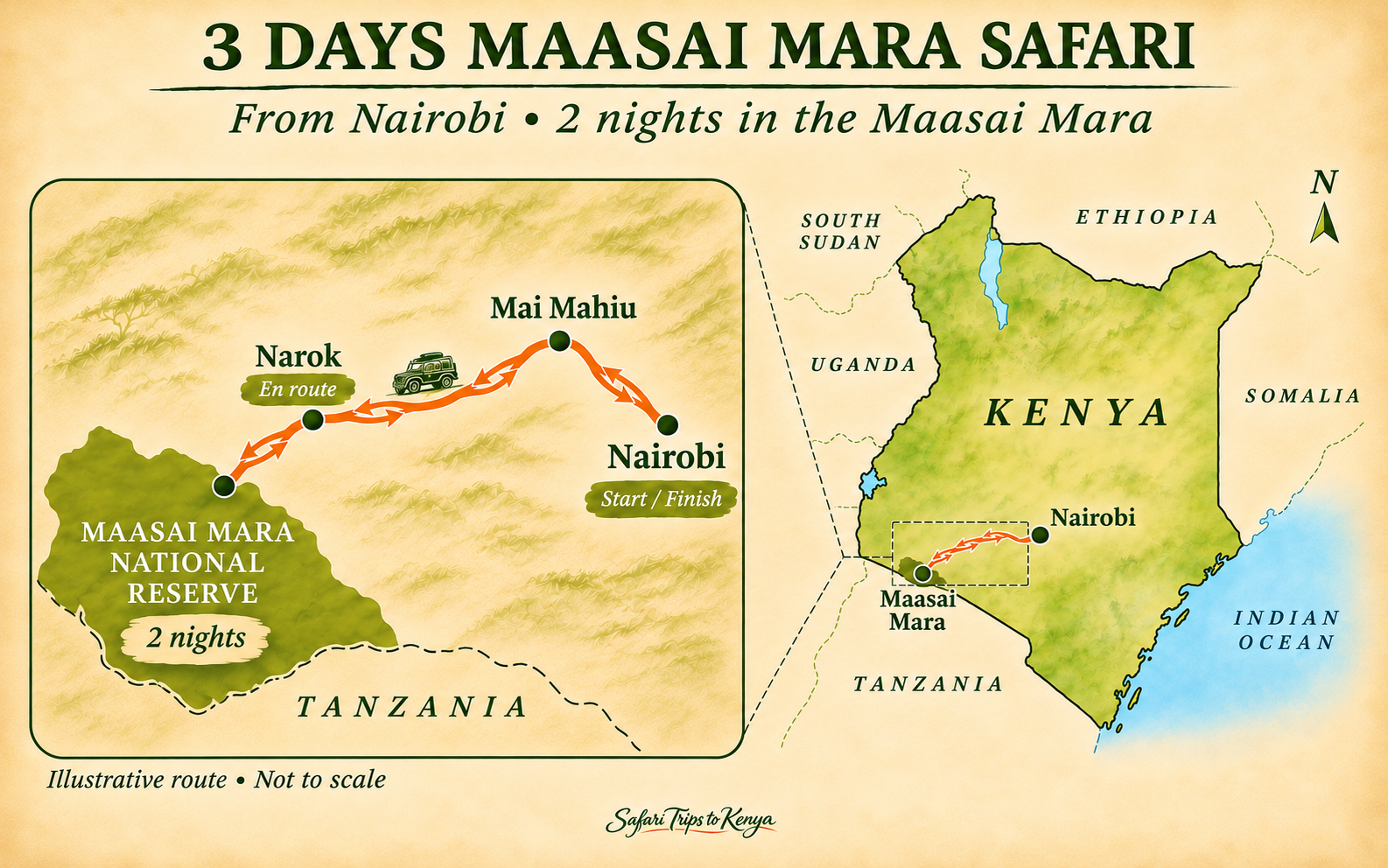
- Day 1:Nairobi to Masai Mara, great Rift Valley Journey and Afternoon Game Drive
- Day 2:Masai Mara Safari – Wildebeest Herds and Big Cat Country
- Day 3:Mara River Exploration, migration Crossings and River Wildlife
- Day 4:Masai Mara Wildlife Photography and Optional Balloon Safari
- Day 5:Morning game drive – return to On request
02 Itinerary
5 Days Migration Safari: Detailed Itinerary

Day 1: Nairobi to Masai Mara – Great Rift Valley Journey and Afternoon Game Drive - Main destination
- Masai Mara National Reserve
- Drive time
- 5–7 hours
- Meals
- Lunch, Dinner
Your 5 Days Migration Safari begins with an early morning pickup from your Nairobi hotel, residence or an agreed meeting point. Meet your safari driver-guide and depart westwards towards the Great Rift Valley, travelling through the highlands before descending towards the valley floor.
Where practical, stop at a suitable viewpoint to appreciate the Rift Valley scenery. Continue towards Narok, an important town along the road to the Masai Mara, before travelling through Maasai countryside towards your accommodation.
The journey generally takes approximately five to seven hours, although traffic, road conditions, stops and the location of your lodge can affect the duration. The final approach to some camps may involve unpaved roads, particularly during the rainy season.
Arrive at your lodge or tented camp and enjoy lunch if timing permits. After a short rest, depart for an introductory afternoon game drive. Your guide will explore suitable areas while looking for giraffes, zebras, elephants, buffaloes, antelopes and predators.
During the migration season, wildebeest herds may already be present in accessible areas. Your guide will explain how the seasonal movement of the herds influences wildlife activity and discuss possible routes for the following days.
Return to your accommodation for dinner and overnight relaxation.
Accommodation: Masai Mara lodge or tented camp
Day 2: Full-Day Masai Mara Safari – Wildebeest Herds and Big Cat Country - Main destination
- Masai Mara National Reserve
- Meals
- Breakfast, Lunch, Dinner
Wake early for breakfast before setting out on your first full-day Masai Mara game drive. The cooler morning hours are often productive for wildlife viewing, particularly when predators are active and grazing animals are moving between feeding areas.
Your guide will consider current wildlife reports, road conditions and the location of your accommodation when planning the route. During the main migration season, wildebeest and zebras may be scattered across large areas of the ecosystem. Some herds graze in dense concentrations, while others move in long lines across the grasslands.
The Masai Mara is also famous for its resident predators. Lions may be encountered resting, travelling or interacting within their prides. Cheetahs often use open habitats where they can scan for prey, while leopards are more elusive and frequently occupy woodland or riverine areas.
Spend time observing natural behaviour rather than rushing between sightings. The interaction between predators and grazing animals is an important part of the ecosystem, but hunting events are unpredictable and should never be promised.
Enjoy a picnic lunch at an authorised location before continuing the afternoon game drive. The changing light provides opportunities for landscape and wildlife photography.
Return to your lodge or camp in the evening for dinner and overnight accommodation.
Accommodation: Masai Mara lodge or tented camp
Day 3: Mara River Exploration – Migration Crossings and River Wildlife - Main destination
- Masai Mara National Reserve
- Meals
- Breakfast, Lunch, Dinner
After breakfast, depart for another full day exploring the Masai Mara National Reserve, with particular attention to the Mara River region when migration conditions and access arrangements make a visit worthwhile.
The Mara River is internationally recognised for the dramatic crossings that may occur when wildebeest move between different grazing areas. However, river crossings are unpredictable. Herds may gather near the banks, hesitate for long periods, change direction or cross at another location.
Your guide will assess current wildlife movements before deciding how much time to spend in the river region. If large herds are present, observing their behaviour can be fascinating even when no crossing takes place.
The river environment also supports hippos, crocodiles and numerous waterbirds. Surrounding grasslands and woodland may provide opportunities to encounter elephants, giraffes, buffaloes and predators.
Enjoy a picnic lunch at an authorised location and continue exploring during the afternoon. The day may include additional stops in productive wildlife areas, depending on animal activity and road conditions.
Return to your accommodation in the evening.
Accommodation: Masai Mara lodge or tented camp
Day 4: Masai Mara Wildlife Photography and Optional Balloon Safari - Main destination
- Masai Mara National Reserve
- Meals
- Breakfast, Lunch, Dinner
Your third full day in the Masai Mara provides an opportunity to revisit productive wildlife areas or explore habitats that were not covered during the previous days.
An optional hot air balloon safari may be arranged before sunrise, subject to weather conditions, availability and additional charges. Balloon flights offer aerial views of the savannah and surrounding landscapes, although they cannot guarantee sightings of migrating herds.
Travellers remaining on the ground can enjoy an early morning game drive. Your guide may concentrate on wildlife photography, predator observation or areas where interesting animal activity has been reported.
The extended stay is particularly valuable for photographers because it allows more time to work with changing light and animal behaviour. Rather than relying on one brief encounter, you may have opportunities to observe animals in different settings.
Enjoy lunch at your lodge or as a picnic, depending on the day's arrangements. Continue with an afternoon game drive before returning to your accommodation for the final evening in the Masai Mara.
Accommodation: Masai Mara lodge or tented camp
Day 5: Masai Mara to Nairobi – Optional Maasai Village Visit and Departure - Main destination
- Masai Mara National Reserve
- Drive time
- 5–7 hours
- Meals
- Breakfast
After breakfast, check out of your accommodation and begin the return journey to Nairobi. Depending on your lodge location, park access arrangements and onward travel schedule, an early morning game drive may be possible if specifically included in the package.
An optional visit to a participating Maasai community can be arranged along the route. Such visits provide opportunities to learn about aspects of Maasai culture, contemporary livelihoods and community traditions. Participation should be respectful, and any community fees should be confirmed beforehand.
Continue through Narok and the Great Rift Valley towards Nairobi. Lunch may be taken at a suitable restaurant along the route, depending on the package.
Arrival in Nairobi is generally expected during the afternoon or early evening, depending on traffic and road conditions. Drop-off can be arranged at your hotel, residence or another agreed location.
Your 5 Days Migration Safari concludes with four nights in the Masai Mara and three full days dedicated to exploring one of Africa's most celebrated wildlife ecosystems.
03 Rates
Safari rates 2027-2029
Indicative per person. Season, group size and lodge style change the total — your quotation confirms current rates.
- Essential (Budget)
Essential (Budget)
Budget camps and lodges suit travelers who prioritize wildlife while keeping costs lower.
Great value camps
- Comfort (Mid-range)
Comfort (Mid-range)
Mid-range tented camps and lodges balance comfort and price with private rooms or tents and en-suite facilities.
Quoted for your dates
- Premium (Luxury)
Premium (Luxury)
Luxury camps and lodges focus on location, service and more intimate wildlife experiences.
Premium camps and lodges
- Signature (High-end)
Signature (High-end)
Signature camps and lodges are the most exclusive stays — small, highly private properties with exceptional guiding and setting.
Exclusive signature stays
04 Activities
Safari activities
Game viewing is the core of this itinerary. Optional extras are quoted separately and depend on season, permits and availability. Individual species and river crossings are never guaranteed.

Included
Photograph the Masai Mara's grasslands and riverine
Included in a typical day on this safari. Exact timing follows the confirmed itinerary.
View activity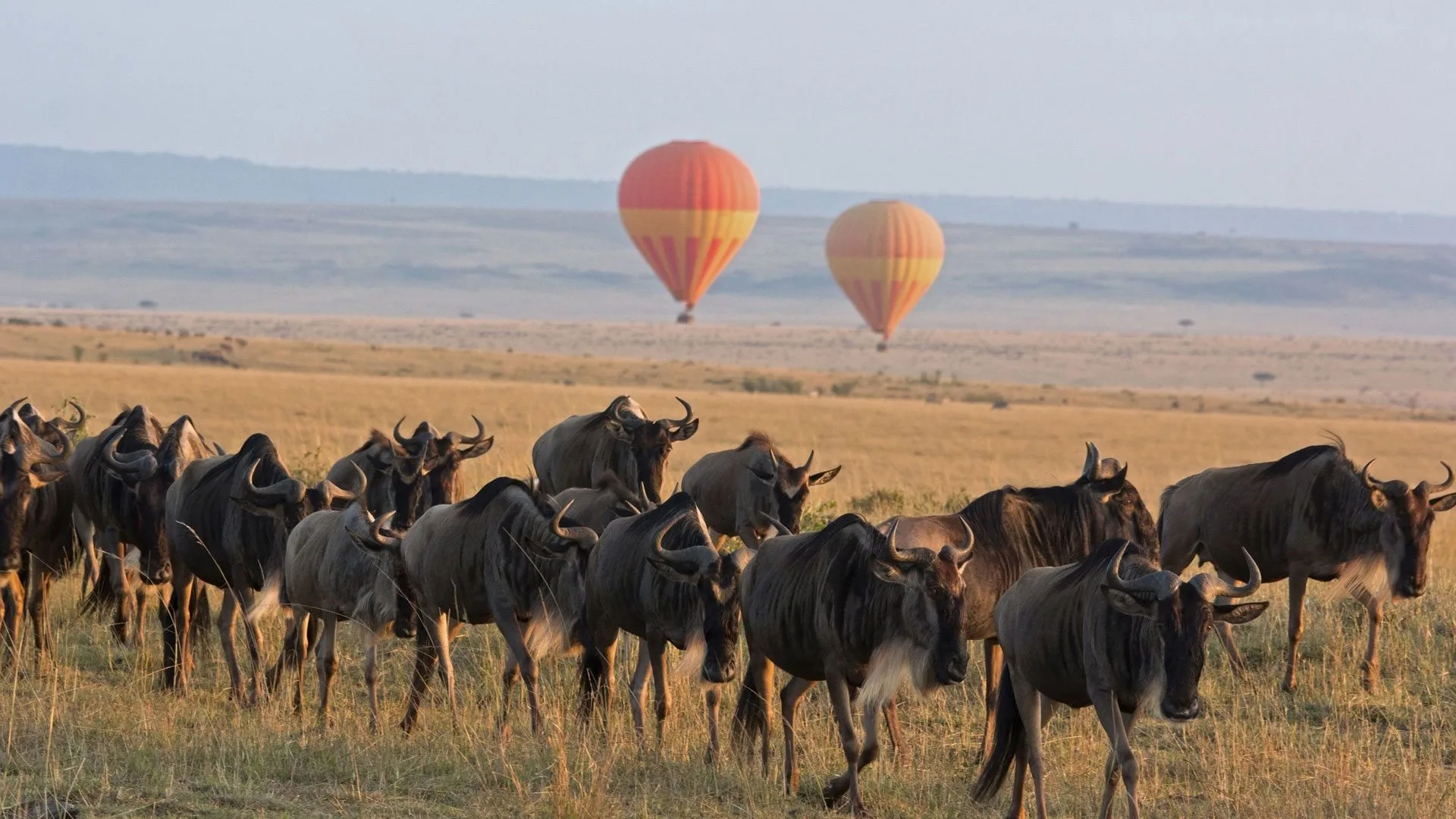
Optional
Consider an optional sunrise hot air balloon
Available at extra cost when conditions, permits and your dates allow. Not guaranteed.
View activity
Additional information
Plan This Safari
Why Five Days Is a Good Duration for a Migration Safari
A 5 Days Migration Safari offers a useful balance between wildlife-viewing time and overall holiday length. The first and final days are partly devoted to road travel, but the three intervening days can be dedicated to exploring the Masai Mara.
This additional time is particularly valuable during the migration season because wildebeest herds may be widely dispersed. A guide can explore different areas, revisit productive habitats and respond to current wildlife movements.
Five days also provide opportunities to appreciate resident wildlife rather than concentrating entirely on the migration. Lions, elephants, giraffes, buffaloes, cheetahs and numerous birds can make the experience rewarding even when the main herds are elsewhere.
For photographers, the extended duration allows more opportunities to work with early morning and late afternoon light.
Best Time for a 5 Days Migration Safari
The most popular period for a Masai Mara migration safari is generally July through October, although the timing varies annually.
July – Beginning of the Main Mara Migration Period
During July, migrating wildebeest may begin entering the Masai Mara from Tanzania's Serengeti, depending on rainfall and grazing conditions.
Travellers should understand that some herds may still be farther south, particularly during years when seasonal conditions differ from the usual pattern.
August – Popular Migration Viewing
August is often associated with substantial wildebeest concentrations in the Masai Mara. The possibility of river crossings attracts considerable visitor interest, making this one of the busiest safari months.
Accommodation demand can be high, so early booking is recommended.
September – Herds and Predator Activity
September can provide excellent migration viewing when large herds remain in the Mara ecosystem. Predators continue to use the surrounding habitats, and the reserve offers numerous wildlife photography opportunities.
However, herd locations vary and cannot be predicted precisely.
October – Changing Herd Movements
During October, migrating animals may begin moving south as rainfall and grazing conditions change. Some herds may remain in Kenya, while others return towards Tanzania.
A safari during this period can still be rewarding, but expectations should reflect current conditions.
Understanding the Great Wildebeest Migration
The Great Wildebeest Migration is a continuous movement of grazing animals through the Serengeti–Mara ecosystem. Wildebeest follow seasonal rainfall and the growth of nutritious grass, moving through different habitats during the year.
The migration is often described as a circular journey, but individual herds do not follow one perfectly synchronised route. Animals may spread across large areas, move in different directions and respond differently to local conditions.
Zebras frequently accompany wildebeest, while predators such as lions, cheetahs and hyenas occupy the surrounding landscape.
The movement of these animals plays an important ecological role by influencing grazing patterns, nutrient cycling and predator-prey relationships.
Can You See a Mara River Crossing in Five Days?
A Mara River crossing is possible during suitable migration periods, but it cannot be guaranteed.
Wildebeest may gather near the river for hours or days without crossing. Sometimes herds change direction or cross at locations that are difficult to reach.
Five days provide more flexibility than a shorter safari, but the experience should not be judged solely by whether a crossing occurs.
The sight of large herds moving across the plains, predator interactions and the diversity of resident wildlife can be equally memorable.
Wildlife Beyond the Migration
The Masai Mara National Reserve supports a wide variety of wildlife throughout the year.
Lions are among the reserve's most famous predators and may be encountered in family groups. Cheetahs favour open grasslands where they can watch for prey, while leopards often use woodland and riverine habitats.
Elephants, buffaloes, giraffes, zebras, wildebeest, topis, hartebeests and numerous other antelopes occupy different parts of the ecosystem.
The Mara River and its tributaries support hippos, crocodiles and waterbirds. Birdwatchers may encounter eagles, vultures, ostriches, bustards and many smaller species.
Wildlife sightings remain unpredictable, and the quality of the safari depends on observing animals responsibly in their natural environment.
Masai Mara Migration Photography
A 5 Days Migration Safari is particularly suitable for travellers interested in wildlife photography.
Three full days provide opportunities to revisit productive areas and photograph animals under different lighting conditions. Early morning and late afternoon light can create attractive images of wildlife against the grasslands.
Telephoto lenses are useful for distant animals, while wider lenses can capture the scale of the landscape and migrating herds.
Photographers should carry spare batteries, memory cards and equipment protection against dust.
Ethical photography is essential. Vehicles must respect reserve regulations, maintain suitable distances and avoid obstructing animal movements.
Private Migration Safari Versus Group Departure
A private migration safari provides flexibility with departure dates, game-drive schedules and wildlife interests. It is particularly suitable for couples, families and photographers who want to spend longer observing particular animals.
A shared group safari can reduce transport costs, especially for solo travellers. However, participants normally follow fixed dates and predetermined itineraries.
The choice depends on budget, preferred travel style and the importance of flexibility.
Where to Stay During the Migration
Accommodation location is an important consideration when planning a Masai Mara migration safari.
Properties inside the reserve, outside its gates and within neighbouring conservancies operate under different access arrangements. A lodge outside the reserve may require additional travel time to reach certain wildlife-viewing areas.
Safari Trips to Kenya offers accommodation within the Essential, Comfort, Premium and Signature categories.
Essential properties focus on clean, comfortable lodging and value. Comfort accommodation provides additional facilities, while Premium and Signature properties offer higher standards of service and more exclusive experiences.
The best choice depends on travel dates, budget, preferred wildlife-viewing areas and the services included.
How Much Does a 5 Days Migration Safari Cost?
The cost of a 5 Days Migration Safari depends on travel dates, accommodation category, number of travellers, vehicle arrangements and applicable reserve fees.
During the main migration season, accommodation rates may increase significantly because of high demand.
Private vehicle costs are generally shared among travellers, so group size influences the per-person price.
A personalised quotation should clearly identify accommodation, meals, transport, game drives, reserve entrance fees and optional activities.
What to Pack for Your Migration Safari
Bring lightweight neutral-coloured clothing, comfortable closed shoes, a warm jacket for early morning game drives and rain protection where appropriate.
Binoculars are strongly recommended for observing distant wildlife.
Photographers should carry spare batteries, memory cards and protective equipment for dust.
Sunscreen, sunglasses, insect repellent and personal medication are also useful.
Book Your 5 Days Migration Safari
Our 5 Days Migration Safari provides four nights in the Masai Mara and three full days dedicated to exploring the reserve's wildlife and landscapes.
At Safari Trips to Kenya, we can arrange private or shared departures, recommend accommodation according to your travel dates and advise on seasonal migration conditions.
Contact our safari planning team to request a personalised quotation for your 5 Days Migration Safari.
Planning Questions
Frequently Asked Questions
Is Five Days Enough for the Great Migration?
Five days provide a rewarding opportunity to explore the Masai Mara, with three full days dedicated to wildlife viewing. However, specific migration encounters cannot be guaranteed.
What Is the Best Month for a Migration Safari?
August and September are often popular choices, although migration timing varies annually.
Can I See a River Crossing?
Possibly, but river crossings are unpredictable and cannot be guaranteed.
Can I Fly to the Masai Mara?
Yes. Scheduled flights may be available from Nairobi to suitable Mara airstrips, subject to availability and luggage restrictions.
Is the Safari Suitable for Families?
Yes. Families can participate, although children's ages, accommodation policies and road travel should be considered.
Can I Add More Nights?
Yes. Additional nights can provide greater flexibility for migration viewing and photography.
05 Request Quote
Request Quote
Tell us your dates, group size, and preferred lodge style — we will send a tailored quote for this safari.
Want to extend your safari?
Add Amboseli, Diani Beach, Tanzania and Zanzibar, or gorilla trekking in Uganda or Rwanda — we tailor the journey to your dates.